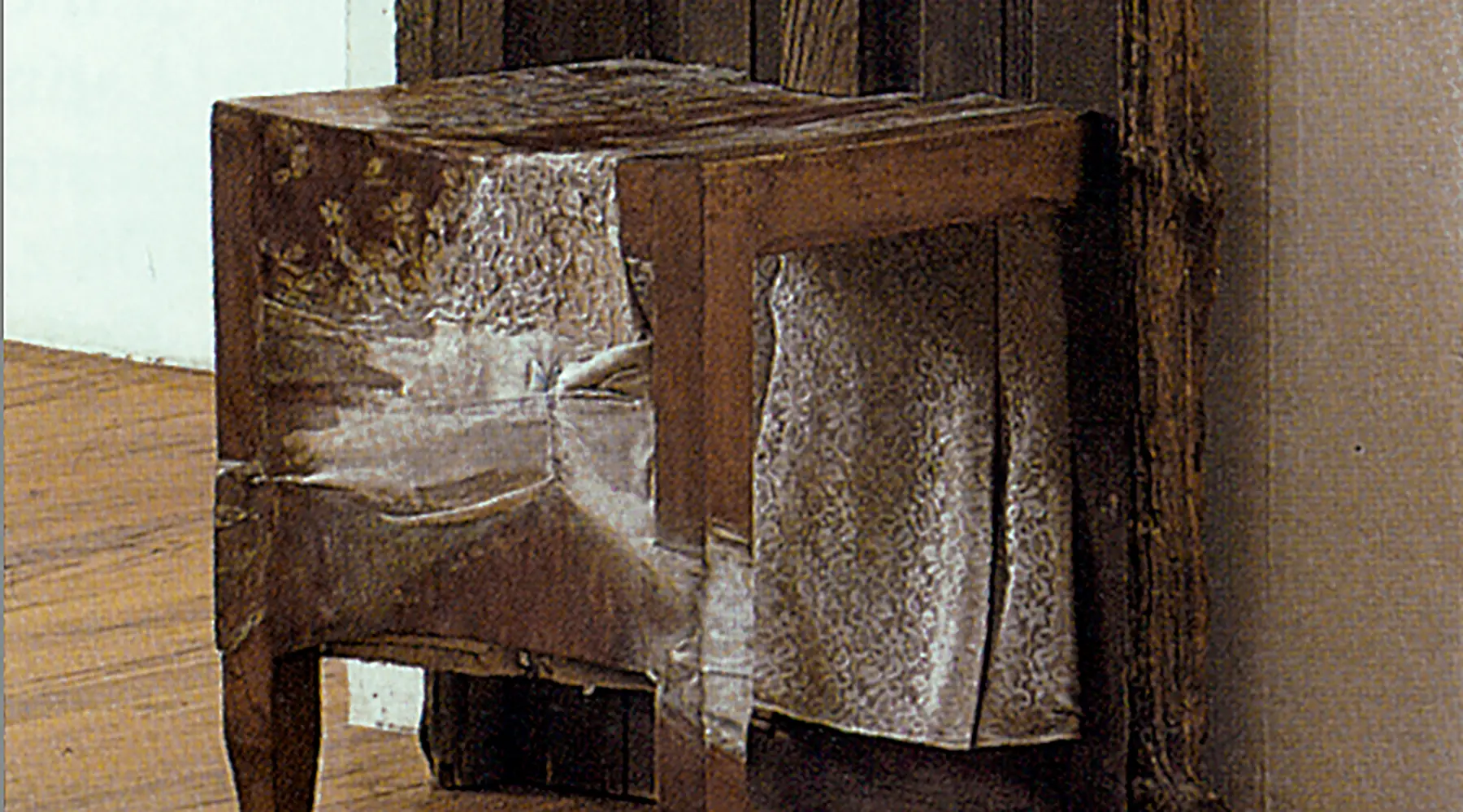
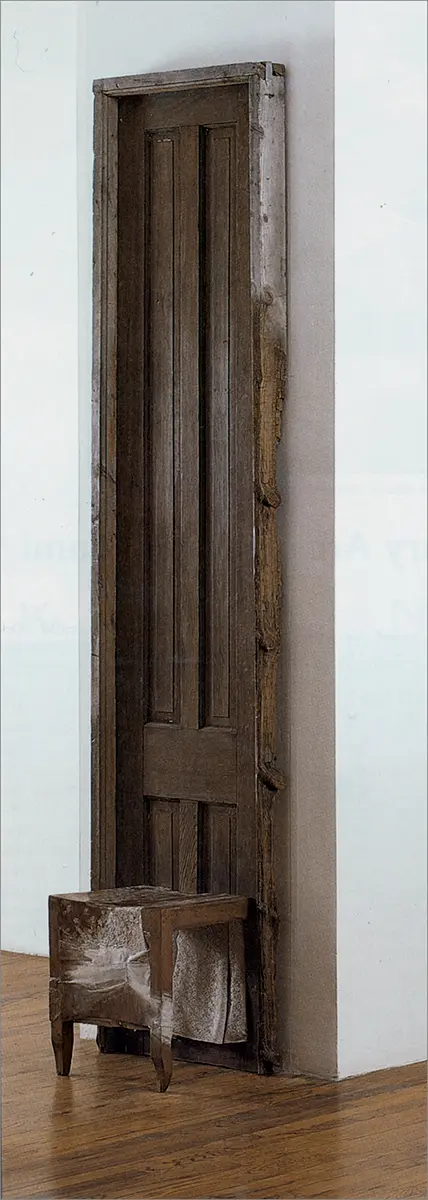
Natalia Gutiérrez: I would like to begin by referring to something that Richard Rorty mentions in his book Contingency, Irony, and Solidarity, and that I think is very relevant to art and your own work. He says that if we accept that we are historical beings, we also have to accept that we construct our own desires and beliefs; for example, we construct violence and solidarity. How is solidarity constructed? When we can see others as ourselves, we become sensitive to the little things. Looking at your work, the spectator establishes a kind of emotional link, based on some texture or piece of fabric which he cannot stop looking at, as in the case of The Widowed House.
Doris Salcedo: I do not work with textures or use pieces of fabric to establish an emotional link. I am interested in working images in which the spectator can recognize something from his or her own experience.
NG: Do you start with dialogue in your search for this relationship with man?
DS: No, I start with a recognition of the other. I displace myself and try to encounter the experience of the direct victims of violence in Colombia. I try to engage in a dialogue with these victims, which will allow me to establish a connection with the affective dimension of their experience of pain.
NG: Asa participating observer?
DS: It is not possible to be a tactical observer of violence. First, because human pain is intimately related, and second, because all the members of a community participate in violence, either directly or because indifference has allowed these things to happen.
NG: Do you make recordings?
DS: No. I simply listen and memorize certain words on which I base my works. I believe that these people express themselves accurately, their words are precise, and reflect their experience. I learn from them.
NG: What you say is interesting, because the social investigation is not only a matter of observation but of dialogue and acceptance of the fact that in the interaction process, the researcher too will change.
DS: It is not enough just to speak of change. At the time of creating a sculpture, I am the victim in the simultaneous act of telling and living their story. To use a term from Deleuze: I am a connection between the victims, with their invisible and marginalized experience, and the public that looks at my work.
NG: How do you do that?
DS: In my work, I try to juxtapose ritual space with the space of sculpture. Art can restore the dignity that has been ripped away from the victims at the time of their violent death. Goya, for example, in the Executions of 3 May does this —he restores dignity and humanity to the victims.
NG: How do you move from words to the object?
DS: It is not a question of passing automatically from words to objects. It is not something mechanical. I listen carefully to the words of the victims, but I do not do a "translation' from a verbal language into a figurative one, I work with images.
NG: And you begin to select objects?
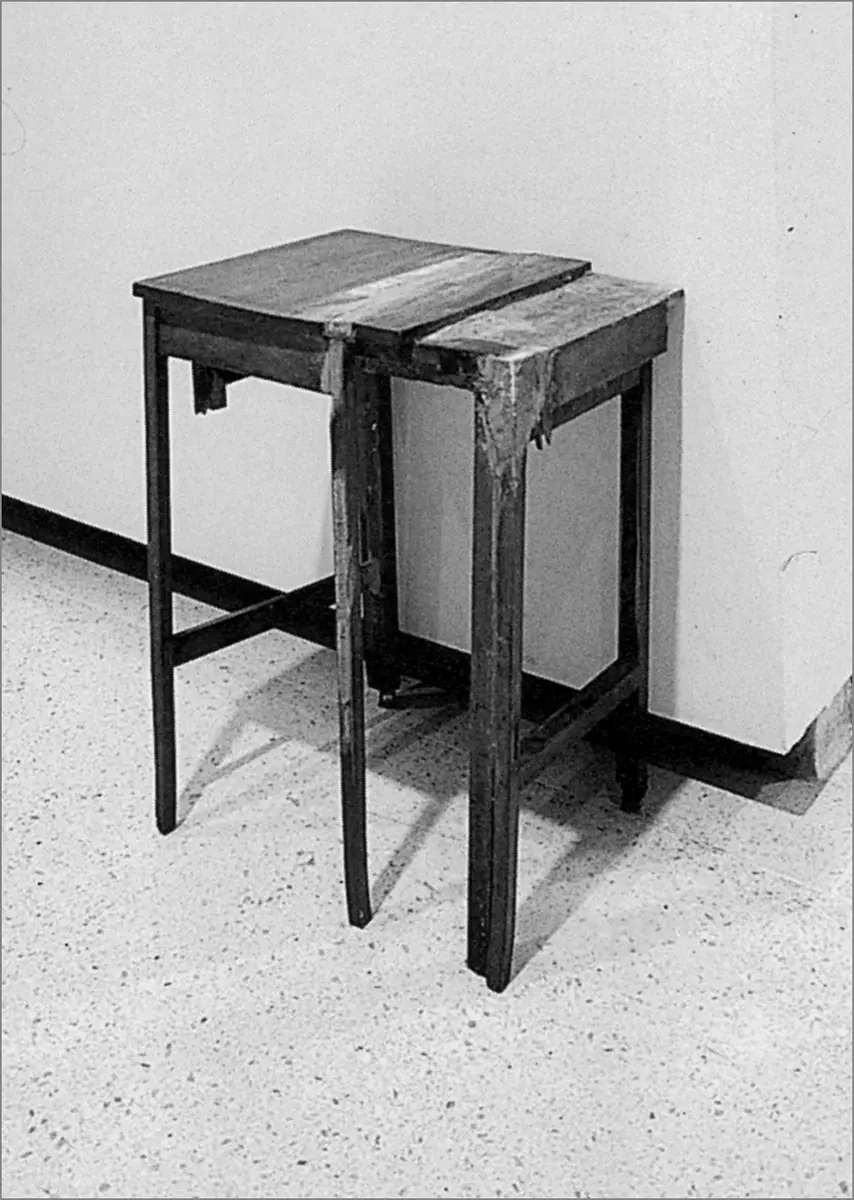
DS: The selection of the objects is different in each work. The only common denominator is that they are objects used and transformed by each individual in his everyday life. The surface of each object bears the marks or the particular kind of life of the person using it. In some cases, I have received objects that belonged to victims, and this fact is decisive in the selection process. In other cases, I choose objects intuitively. My task is limited to bringing out a mark that already existed —albeit in a subtle and almost imperceptible way— in the selected object.
NG: This process that you are describing implies an almost existential concept of technique, which would be useful to explore.
DS: Over time, I slowly construct images. On some physical axis—which is at the same time referent, signifier, and signified, I try to superimpose elements of various origins: images, different kinds of time, words, texts, everyday objects, and experiences foreign to me. I work on this for a long time until the assembled elements are transformed into a scene.
NG: Like, for example, space, violence?
DS: I undertake theoretical research, which guides my intuition during the process of preparing the work. Philosophy is a basic tool in the creation of sculpture. Each work has specific readings, but the decisive element is the existence of a real victim behind each piece.
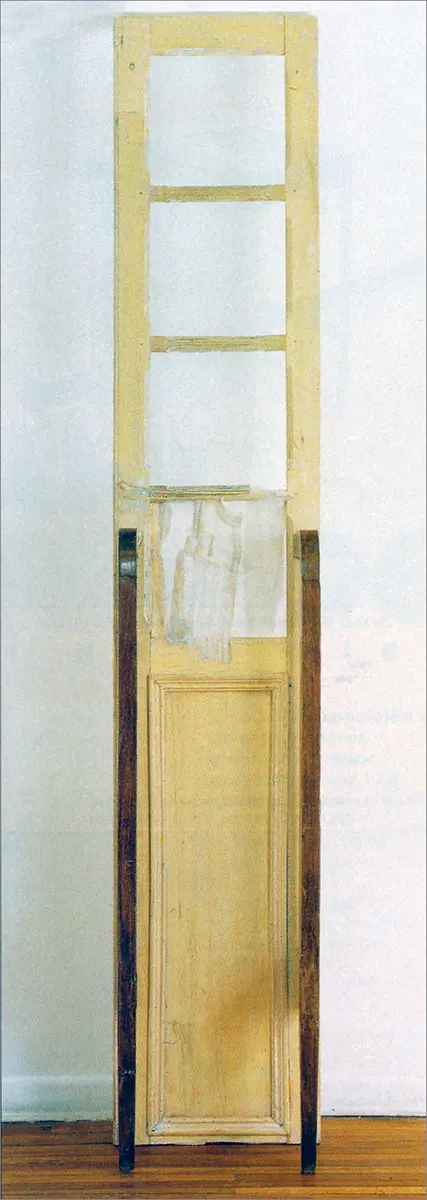
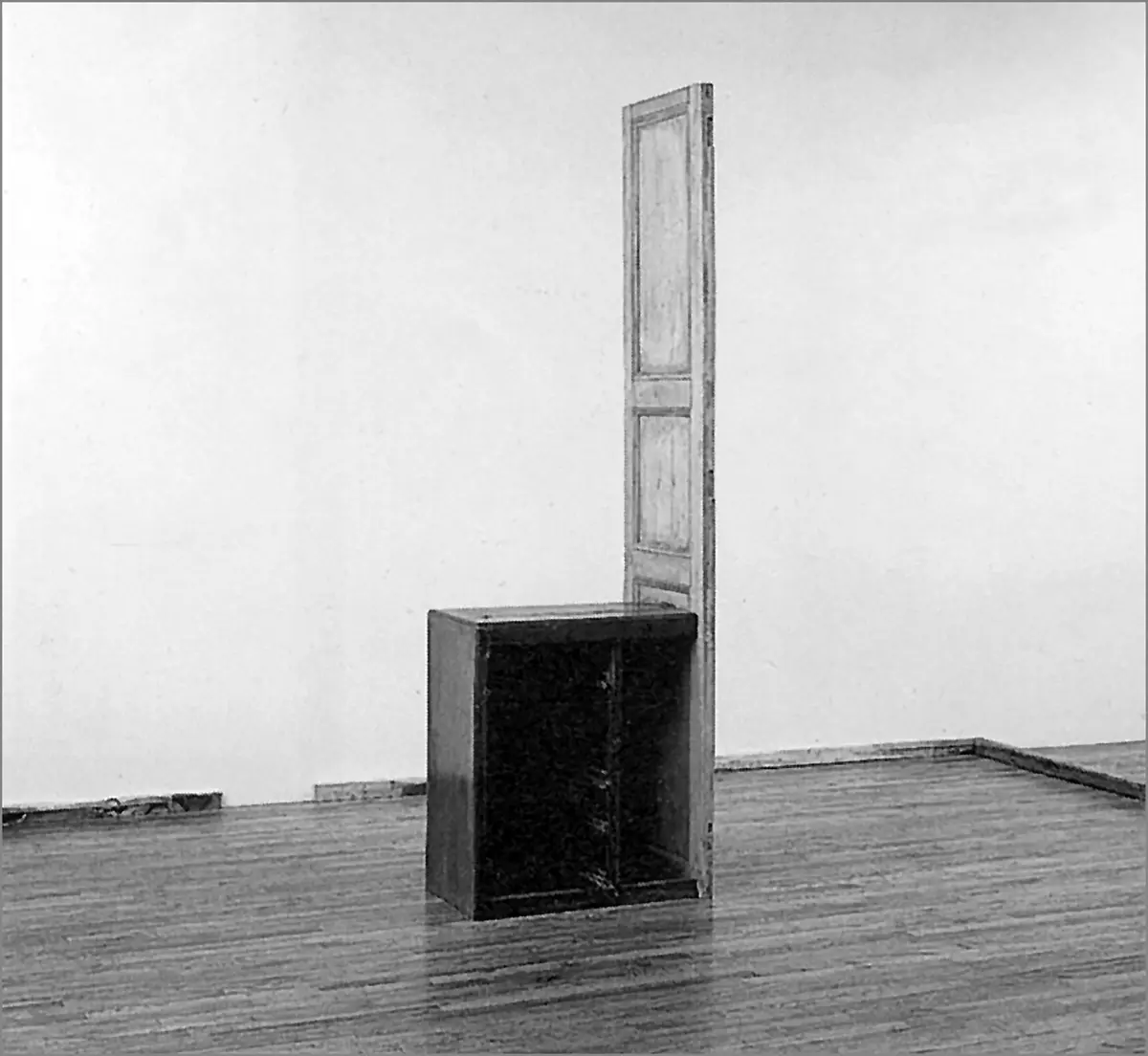
NG: In The Widowed House, the doors are there, in the space, but without any separation between the public and private.
DS: In this case, the specific pacing of the work is an essential element because it reports on a way of life in areas of extreme violence, where life or existence in a "private" place of one's own is impossible. We know that the victims are forced to leave their homes and are put to death or made to leave. The Widowed House makes use of what Smithson has called a non-place, that is, a place of passage, where it is impossible to live. The replacement of the sculptures in space is a way of working our memory, of drawing closer to the conscience of the spectator, to disappearance and forced displacement, by emphasizing absence through images that fade away.
NG: Working as you do with space, what do you think about the concept of installations, which in Colombia almost always seem to be very simplistic?
DS: It is difficult to speak of something like an installation in Colombia. The word "installation' does not denote a specific aspect of sensibility, as painting or music does. Installations are not a historical or universal category, with an internal logic that guides us, with codes or rules that can be used by artists. What I can say is that the emphasis placed on visual elements in art has been devalued in favor of spatial elements. Art today is moving away from the symbolic and the imaginary. For the last four decades, the relationship between the body (whether of the artist or the spectator) and space has been essential for understanding the meaning of sculpture. The political aspect of this kind of construction is evident, particularly when we think of exile, in the impossibility of inhabiting a space which is one of the most decisive aspects of our century. It seems that installation work in Colombia is like a kind of imposition, the only possible way of being contemporary. The ideology of the new is welcomed with open arms, even to the point of eliminating differences, not only between painting, sculpture, and video but between artists. Everything becomes fused and lumped together.
NG: We arrive here at something which is fundamental in your work: memory, both in terms of doing and of not forgetting.
DS: I am interested in working with a specific memory, the memory of violence in Colombia. For this reason, I work with political themes. I believe that the artist who produces in marginalized places, in times that are convulsive and difficult, immediately establishes contact with the political dimension. The history of each individual is intimately related to that of all the other members of a community because events all around are overwhelming and do not let them escape. By presenting the story of a victim of violence in Colombia, I am calling on the memory of pain that all human beings have, here or anywhere else in the world. Rene Girard said that violence accelerates our perception of the passing of time. Art, on the other hand, can slow down this process. This was pointed out by J.L. Borges in his story The Secret Miracle and Marcel Duchamp, who said that the Grand Verre was not only an oilwork on canvas but a delay in glass. I believe that art offers such a delayed process, allowing us to etch events in our memories, which the dizzying speed of violence makes us forget.
NG: Let us go back to the beginning, to the "little" things through which we can establish ever-deepening links. Art would then have an important function because it can help us re-establish this lost sensibility.
DS: I do not believe in a lost sensibility. I am not interested in working with nostalgia. On the contrary, I believe that the function of the artist is to depict a sensibility that is different from what has taken us to a crisis. In this sense, I believe that the artist's attitude is essential. The artist must be on the edge of his or her fragile community, like a kind of cartographer, making maps of countries that might be created in the future, the countries of utopia, perhaps. The artist must be a foreigner within the community if he is to conquer the distance that his task involves.
Dean of the Faculty of Arts of the Jorge Tadeo Lozano University, Bogotá.