
The painter Luis Felipe Noé (1933) recently presented a panoramic exhibition entitled Paintings at the National Museum of Fine Arts. Noé, who was born in the city of Buenos Aires, has on several occasions said that his «theme is chaos.» Perhaps the visitors to this show would have agreed, since more than eighty works, including paintings, object-paintings, and installations, formed a kind of visual avalanche, creating the most contradictory effects, ranging from the impression that we were in some sort of disquieting labyrinth to a refusal by some visitors to continue looking.
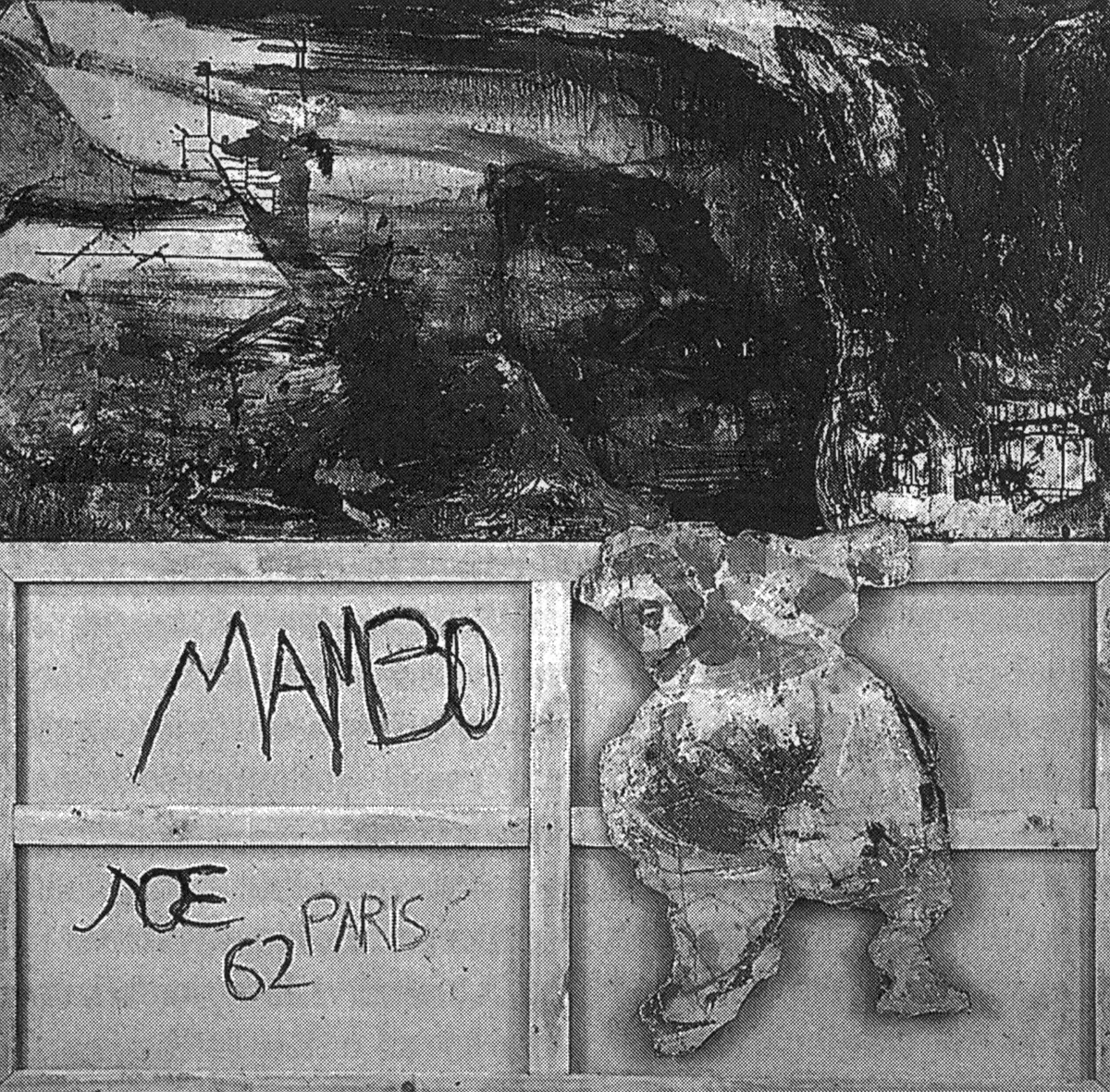
It is worth recalling that at the beginning of the 1960s, Noé, along with Maccio, de la Vega, and Deira, made up the group known as The Other Figuration, which was one of the most vigorous expressions by young artists at the time. This show was divided into ten periods: 1) "1960-1961: Federal Series and Other Figuration;" 2) "1962-1965: Broken Vision and the Assumption of Chaos;" 3) "1966-1972: The Abandoning of Painting; 1966-1968: Flat-Concave Mirrors;" 4) "1975: Return to Painting; Series: Nature and Myths, Conquest and Violation of Nature;" 5) "1976-1979: Series: This Has no Name, Everything is Truth, Nothing is Lies, Perceptions;" 6) "After 1980: a) Landscape of the Amazon and Memory;" 7) "After 1980: b) Structural Games. Front and Back. The Fold;" 8) "After 1980: c) Sagas between Space and Time;" 9) "After 1980: d) The Spirit of History;" 10) "The 90s: Hieroglyphs and Gibberish."
Although this rather detailed division was justified in itself, it did not reveal any substantial changes. The changes are rather thematic, since Noé’s conceptual attitudes to painting are not always the same, and the modifications are to be found in the greater maturity and treatment of the plastic language. The show had the virtue of clarifying one of the strongest currents of the 1960s, which has remained vigorous down to the present, with Noé being one of its most important representatives.
Noé has the virtue of combining marked expressionism with graphic elements and thematic intentionality, so that his best work is never merely psychological fireworks.
It is interesting to note the changes since his early work from the Federal series, for example, between Agonizing image of Dorrego (1961) and When the Sun Heats up Here in the Fatherland of two years later. In the works done after an absence of nine years from painting, there is a greater sense of ordering in the color planes, and the linework is used to structure observation, as in Nature and Myths (1975), down to The Upbraided Thief is Barking (1992). The powerful expression and equally vigorous sense of creativity in exploring our national experience make Luis Felipe Noé one of the most representative artists of his generation.
ALBERTO COLLAZO