Without doubt, the most important exhibition in Santo Domingo in 1995 was the Fourth Drawing Salon, an opinion already voiced by several commentators. Originally a national event, the fourth edition became an international gathering, with a surprising number of entries from all over Latin America and the Caribbean. One person, more than any other, is responsible for this cultural manifestation unprecedented in the Dominican Republic: Mildred Cañahuate.
With varying degrees of splendor, as well as mistakes, the National Visual Arts Biennial—an official event, now fifty years old, and the E. León Jiménez Art Competition, a private event sponsored by a powerful business group and still going strong after thirty years, are important dates on the country’s art calendar. Then came along the owner of the Arawak Gallery, Mildred Canahuate, who has always dedicated herself, outside the market, to promoting young artists and engaging in all kinds of art-related events, with the idea of organizing a Salon which would give impetus to drawing, a medium which lagged far behind the other visual arts. Three editions of the Drawing Salon followed, which presented exclusively national works, despite the international jury, with specially invited participants and "selected artists" side by side.
There followed the establishment of the Arawak Foundation, and ties were strengthened with the Museum of Modern Art. The organizational staff was increased, and invitations were sent out all over the continent, from Mexico to Chile, for artists to participate in the fourth edition, where there would be only one "selection" category. In addition to the foreign and national entries, invitations were sent out to artists hors concours within the framework of a series of special exhibitions, which gave added brilliance to the event.
Given the event’s historic and cultural dimension, no other Biennial—not even the Caribbean Biennial—has reflected such ambition or achieved such results.
The Museum of Modern Art presented an anthological survey, of excellent quality, of the emergence of modern drawing in the Dominican Republic, which included work by European immigrants in the 1940s. There was also a selection of work by the masters, such as Ramón Oviedo, to whom the Salon was dedicated, and previous prize-winners, as well as a. small but prestigious selection of work by major artists from the continent, including Enrique Grau and Santiago Cárdenas from Colombia, Fernando de Szyszlo (Peru), Victor Chab and Luis Felipe Noé (Argentina), and Guillermo Núñez (Chile). In themselves, these exhibitions formed a kind of Hall of Fame Salon.
Seventeen countries from the region participated, in addition to the host country. This was a very large number, bearing in mind that this was the first international edition, and the fact that other large "established" Biennials in the region rarely gather together so many countries. Works - up to two per artist—were received from Argentina, Barbados, Chile, Cuba, Colombia, Costa Rica, Ecuador, El Salvador, Guatemala, Haiti, Mexico, Martinique, Peru, Puerto Rico, Venezuela, and the Virgin Islands, and from a group of Latin residents in the United States. The selection from the Dominican Republic—approximately sixty per cent of the works on show—and the national exhibitions occupied all the first floor, including the corridors. The foreign representations housed on the second floor would have benefited from the entire space of that floor, which would have improved the museographical aspects.
The selection jury was made up of three art critics from the Dominican Republic: Dionisio Blanco, Sara Hermann, and Danilo de los Santos. The prize-awarding jury was comprised of the North American Laura Hoptman, of the Museum of Modern Art of New York, and Guillermo Santamaria, a Mexican and curator of Africus 95, who replaced the Colombian Félix Ángel, who was unable to travel to Santo Domingo. The verdict—which in the official Biennial would have caused an outcry and a deluge of public protest by the artists and even by certain critics —was received coldly. Fortunately, private competitions in this country generate moderate and even rational reactions.
Given the number of drawings that were strong, well-defined, agile, and expressive, in a great variety of styles, there is no doubt that the prizes were disturbing, to say the least. Obviously, the jury acted according to a pre-established criterion, with emphasis on conceptual and even "anti-drawing" aspects, and disregarding any features of traditional figuration, closed structures, and constructivist, organic rigor. Instead, it opted for drawing based on rupture, drawing which was marginal, subversive, half writing, half gesture, with lightness and deliberately infantile features. With rare exceptions, the jury awarded the prizes and mentions to the very few drawings that met these criteria.
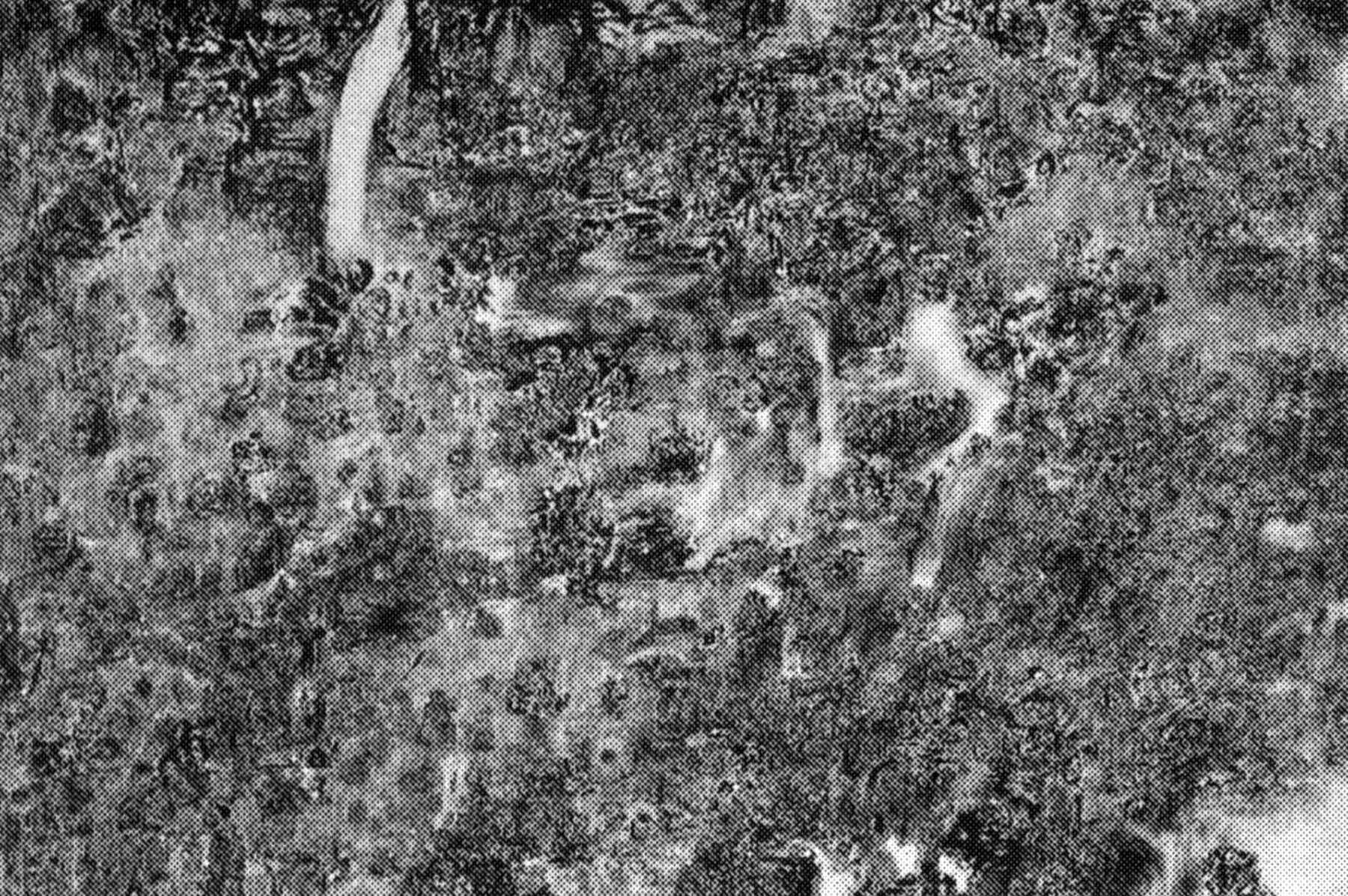
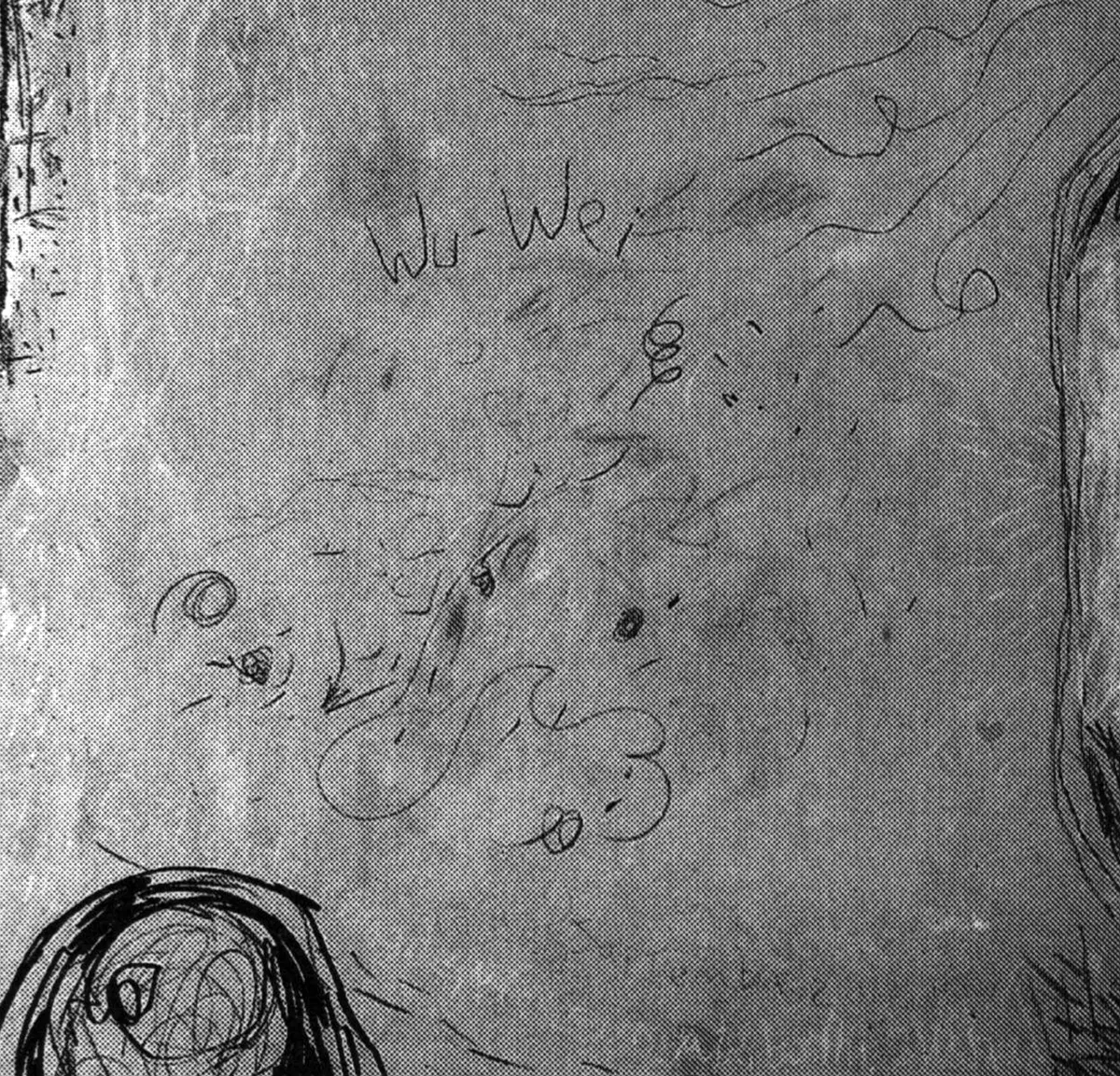
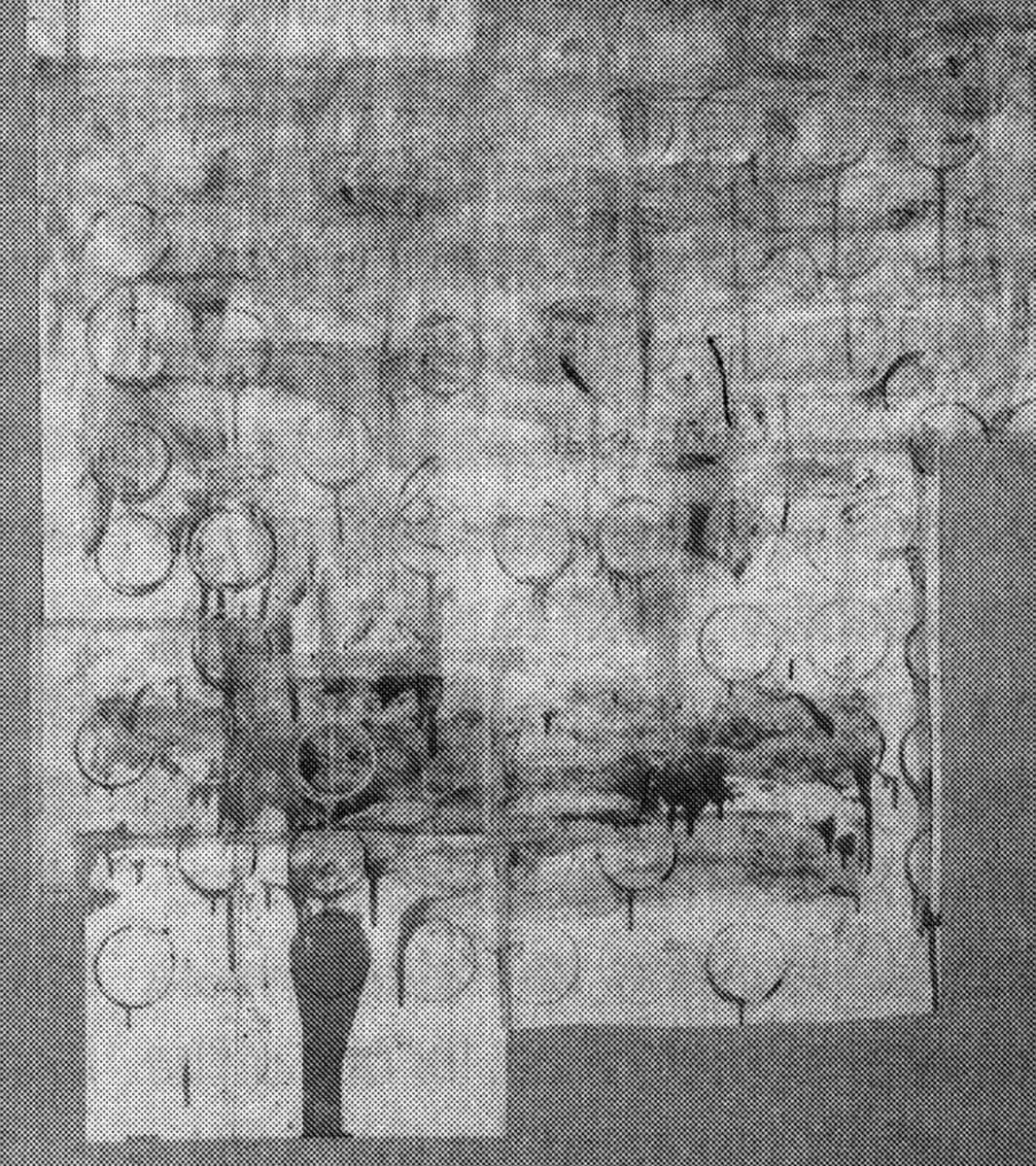
The prize awarded to José Manuel Romero of Mexico was the most polemical and representative: it was for a work entitled Homage to Van Gogh, which demystified the artist with a series of diluted circles and suns, perhaps intended as a re-evaluation of linework and visible elements. Chiqui Mendoza, from the Dominican Republic, obtained another prize for his "neo-puerile" signs, scribbled forms of energy intended to be a return to an "essence" and an approximation to Cy Twombly, which contrasted with the kinetic and textural work (even in drawing) which we associate with him. Another prize (the third, without there being any order) was more plausible, and was awarded to the "new landscape" work of the Argentinian artist Eduardo Stupía, which was meticulous and detailed, an orientalist rewriting of the frontier geography of Iguazu.
Less radical—probably because of the lack of more drawings of this kind—but consistent with the aesthetic ideology of the judges, were the honorary mentions. Two went to Santo Domingo—to Jorge Pineda with his transvanguard drawing, which was both humorous and implacable, and to Elvis Avilés, who transformed the paper support into something vital and vibrating. Another mention went to Dioscórides, from Colombia, who proposed an interesting and closely worked set of signs in the line of the codices of Francisco Toledo, and to Rafael Rivera Rosa, from Puerto Rico, for one of the best works produced by this artist —skillful, unusual, and passionate. A sort of "consolation" mention was also awarded to Mayra Barraza, from El Salvador, which honored all the participants in the Salon who had opted for a revised kind of classicism.
It is true that artists from the Dominican Republic are usually convinced that their works ought to win prizes, although this time, they had indeed worked seriously and competitively: Luz Severino, with a neo-abstract expressionist work, organized into polyptychs; Grecia Rivera, with a very personal kind of geometry; Carmen de Pool, with a new dramatism and Ines Tolentino, who proposed an effusive demystification of classicism; Tete Marella, who used paper with a refined technique. Exceptionally, the women artists stood out this time, although apart from the two well-deserved mentions, there was also some very individual work from Aquiles Azar Billini, Magno Laracuente, Pascal Meccariello, and the young Eliu Almonte, a name to watch in the future.
Mention should also be made of the surprising response from the Latin American countries, with very solid representations full of vigor and the "pleasure of drawing."The works were more figurative than abstract, and frequently tended to preserve within a contemporary context the purism of black and white and the variations of linework. In particular, the selection from Chile was impressive, especially Patricia Figueroa, Humberto Nilo, and Francisco Javier Smythe, as was that of Colombia, with work by Dioscorides and López Arango, Costa Rica, with Gustavo Araya and Adrian Arquedas, Peru, with Eduardo Tokeshi and Jacqueline Rodriguez, and a rich selection of work from El Salvador. The Caribbean islands were also represented by impressive pieces by Gustavo Acosta, Moises Finale, and Eleomar Puente from Cuba, Haydée Landing from Puerto Rico, Ernest Broleur from Martinique, Alicia Chapman from Barbados, Philippe Dodard from Haiti, and many others.
"Fortune smiles on those who are bold,"... and this was indeed the case with this Fourth Drawing Salon, organized by the Arawak Foundation with logistical support from the Museum of Modern Art. Special congratulations, too, for the impressive efforts made in the two catalogues.
MARIANNE DE TOLENTINO