This exhibition, entitled Altering History/Alternating Histories (1995- 1996), curated by Mónica Amor and organized by the Museum of Fine Arts of Caracas (MBA), was made up of work by six artists, all based in New York with the exception of Venezuelan Roberto Obregón, as well as Miguel Ríos, Sowon Kwon, Kenneth Goldsmith, Anton Vidokle, and Michele White (most who are from countries other than the United States.)
The curatorial proposal of the show —Amor’s first incursion into this domain— did not forgo the possibility of a metaphorically guided reading; it also avoided a series of obstacles characteristic of contemporary curatorial work, whether in multicultural contexts or in hegemonic settings: the invited artists were not organized according to geopolitical, ethnographic, or socio-political criteria. Yet despite this refusal to share an activist or "nationalistic" approach, depending on the perspective adopted, the show did not disregard the individual experiences that each artist incorporated into his or her work.
The metaphorical thread —the "hypertext" of the exhibition’s content, although not the only one, took the form of ephemeral sculpture (or interventions) on the wall, including one case in which one artist decided to abandon the Museum walls (a decisive renunciation in the content of the work). As a whole, this could be seen as a means by which the participating artists comprehend, if not renew, certain traditional concepts of history and their metaphorization. The relationship with the wall, which was emphasized in these works to some extent, highlights the predominance of the sign over the void. What "history" may encode within a given classification no longer matters very much: what is important is the consequence of the sign on the observer.
Altering History/Alternating Histories was presented in a room of the MBA simultaneously with a large exhibition in the main areas (with specific and space-sensitive interventions by the participating artists, which also extended to secondary and residual spaces). The exhibition montage laid out by Amor evoked one of the premises to which she referred in a text that will, in due course, appear in the catalogue: the clear absence of any pivotal center from which the spectator could relate to the works as a whole. Each of the installations was developed through the delineation of its own (self-contained) space, while at the same time leaving free an open area (in both cases, the result of the disarticulation of the wall angles), an area of potential conciliation or conflict.
One of the obstacles most clearly facing the curator concerns the view that the proliferation of exhibitions based on a curatorial argument no longer fulfills the functions that they used to have. The arguments endeavoring to make the figure of the curator into a kind of organizer who presents a given artistic product have been promoted by nostalgic figures who want to recover the status they enjoyed when exhibitions were controlled by "invisible threads, " rather than by someone like a curator who makes his proposal to the public, just as an artist does, thus opening up a further avenue to critical thought and active participation (it is worth asking to whom the authority of the curator might be transferred). The most serious aspect of this view is that it is in general based on propaganda which tries to convince us that any curatorial discourse which goes beyond the most arbitrary accumulations of well-known names (whether local or international is irrelevant, since the mechanisms are the same) is contrary to the supposed ignorance of the public, which would be unable to gain access to the intellectual level of such discourse. Nothing is further from the truth. We all know that the main centers in which art circulates have promoted an idea which forces institutions to exalt and praise the individual figure of the artist, a process which from the spectator’s standpoint result in blind admiration, similar to that felt for any of the many other idols promoted every day by the media. Amor’s exhibition created a critical space in which the spectator was not treated as a mentally backward person, able to cope only with dates and details about the size of the works. This was achieved by taking into account the different levels of reading of her different audiences. The mere fact that the exhibition was focused around a theme-concept (irrespective of the success or failure of the central hypothesis) allowed to spectator himself to decide: as has been the case with art since the modern revolution, the spectator was free to decide not only if a work was beautiful or not, but whether the work was actually art or not.
The curator accepted the challenge of engaging in dialogues with the audience, which alternated from the discourse of domination, as did the participating artists themselves. They were all present in Caracas to carry out their work. The artist of Russian origin, Anton Vidokle, for example, offered a revision of the Renaissance theories of perspective. His works consisted of the construction of delicate opaque mesh that protruded from the wall in the form of a pyramid (or inverted cone), and whose images of little cabinets of curiosities inside the pyramids were partially hidden by the opaque mesh. Once materialized as an object in a dimension in which the representation tended to abandon the supporting conventions and transformed into reality, the irony revealed the mechanisms replacing the object by its sign, exposing its virtues and defects. For Amor, who decided to organize the exhibition around six areas of knowledge (cartography, the museum as an institution, modern art, science, communication media, and language), the work of Vidokle "renders complex, through the opacity which impedes any direct apprehension of the graphic image reproduced, the concept of the museum as a natural setting for the objects it houses and the representative models on which its origin is based."1 Just as Vidokle offered a revision of perspective as an ideal model of depicting reality, Miguel Ríos (of Argentine origin) created three large works that used cartography as a means of reinterpreting history, in this case, the history of the reconquest and domination of the Americas. Many of the maps used by Ríos in his works, created over the last five years (in particular, during the Gulf War, which clearly illustrated the use of representation through the media for the purposes of domination), correspond to the first cartographies of the Americas. The improper names, as Lothar Baumgarten once called them (in a work which functioned in a reverse manner to that of Ríos), have filled our cartographies. For Ríos, this science has ceased being offensive: each of the traces and lines which define it are transformed or intercepted by folds and cuts, new and terrible geographical accidents which redefine the landscape of an entire continental territory.
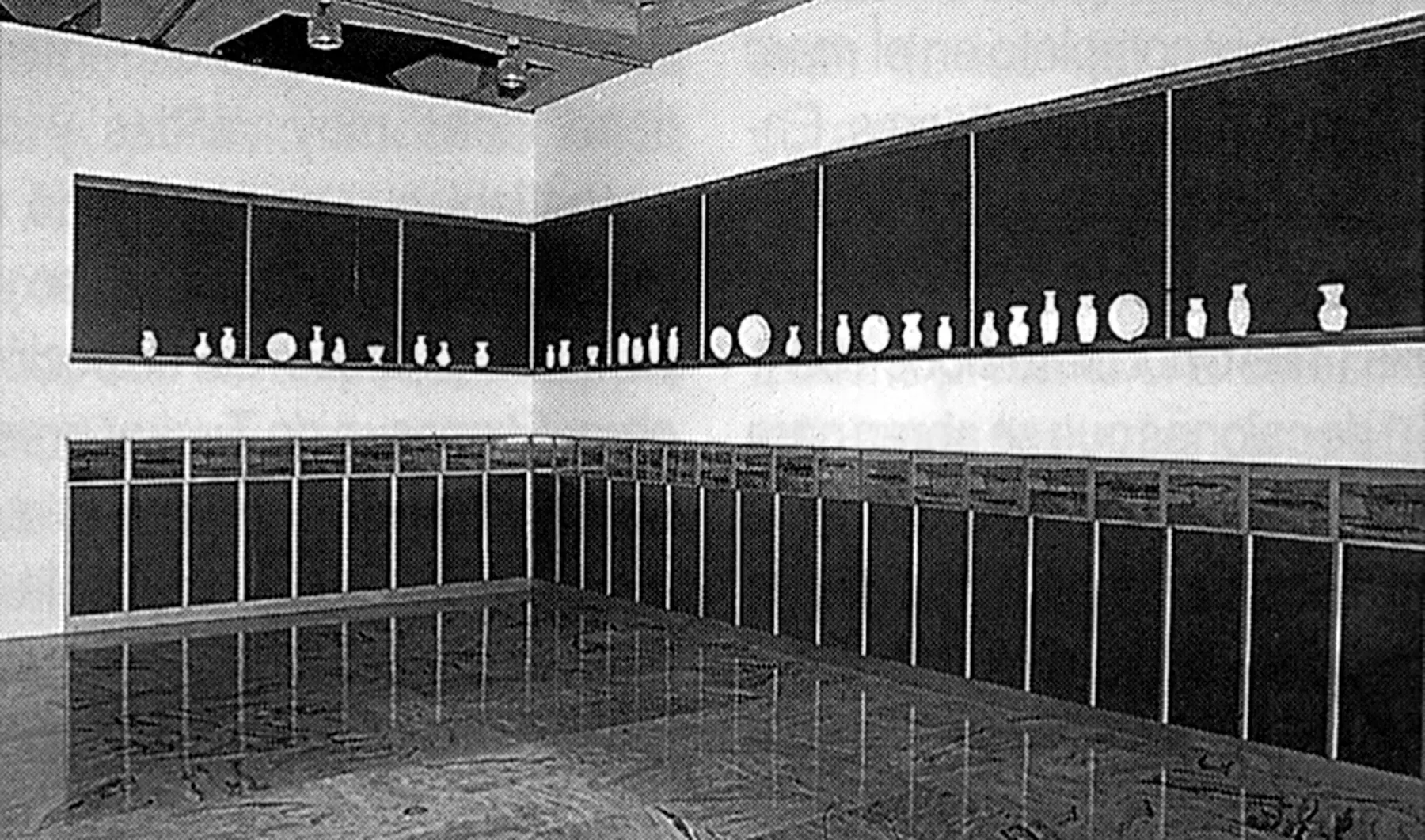
Along with Ríos and Vidokle, the other work that established a number of connections with the central curatorial proposal was that of Sowon Kwon (an artist from Korea). Kwon presented an installation that depicted many objects evoking ancestral oriental cultures. It was an environment that functioned like a kind of showcase in which the objects, instead of being exhibited in accordance with museographical rules, were presented in a kind of laboratory, dissected and classified for careful examination by the spectator. The installation was a dark corner among the waste materials of modernity, a setting out of what lies hidden behind the achievements of the latter: behind the individual freedom, the totalitarian bourgeois taste for exotic objects; behind the uses of equality, the spectator ever ready to become an accomplice to the mechanisms of power.
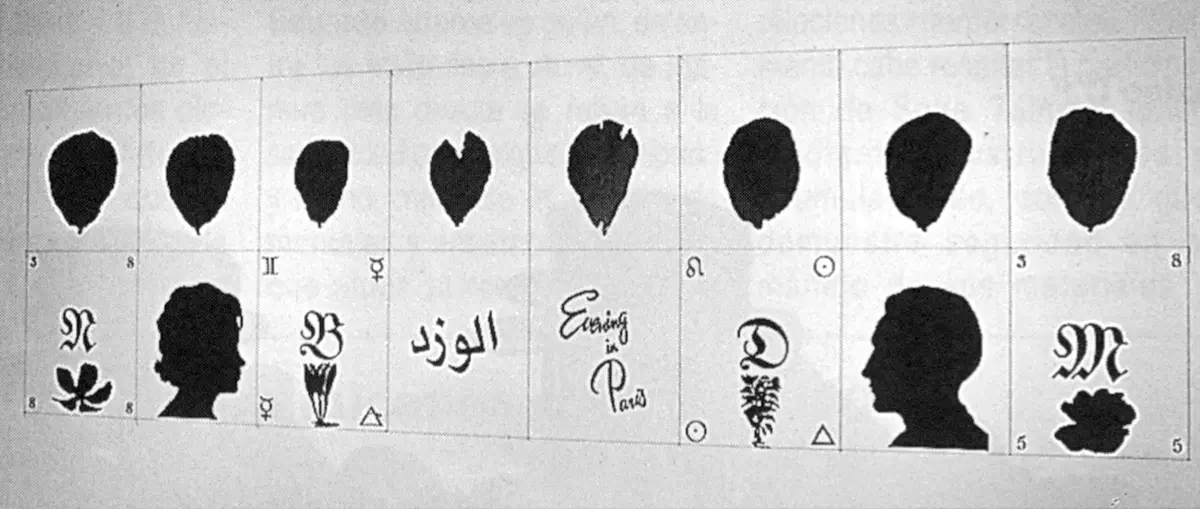
The other three artists included in the show were Kenneth Goldsmith, Michele White, and Roberto Obregón. Obregón’s work functioned at the taxonomic level (and in this respect, although there was something of the protocol of scientific methodologies, there was an undeniable reference to the celebrated cabinets of Renaissance curiosities). Like the large buildings of glass curtains which both eliminate their own identity and yet create new cities within the city in the distorted reflected images of the surrounding buildings, Obregón uses both serial techniques and silhouette references to eliminate the identity of his subjects (almost always dissected roses, sometimes faces and names), which he then turns into echoes with new features and new natures. The rose has often appeared in contemporary art as a symbol of the artist’s alter ego. Rose Selavy, according to Duchamp, for Obregón, the dissected rose, one of the very few instances in the artistic production of our country in which an artist uses the feminine implications of an object.
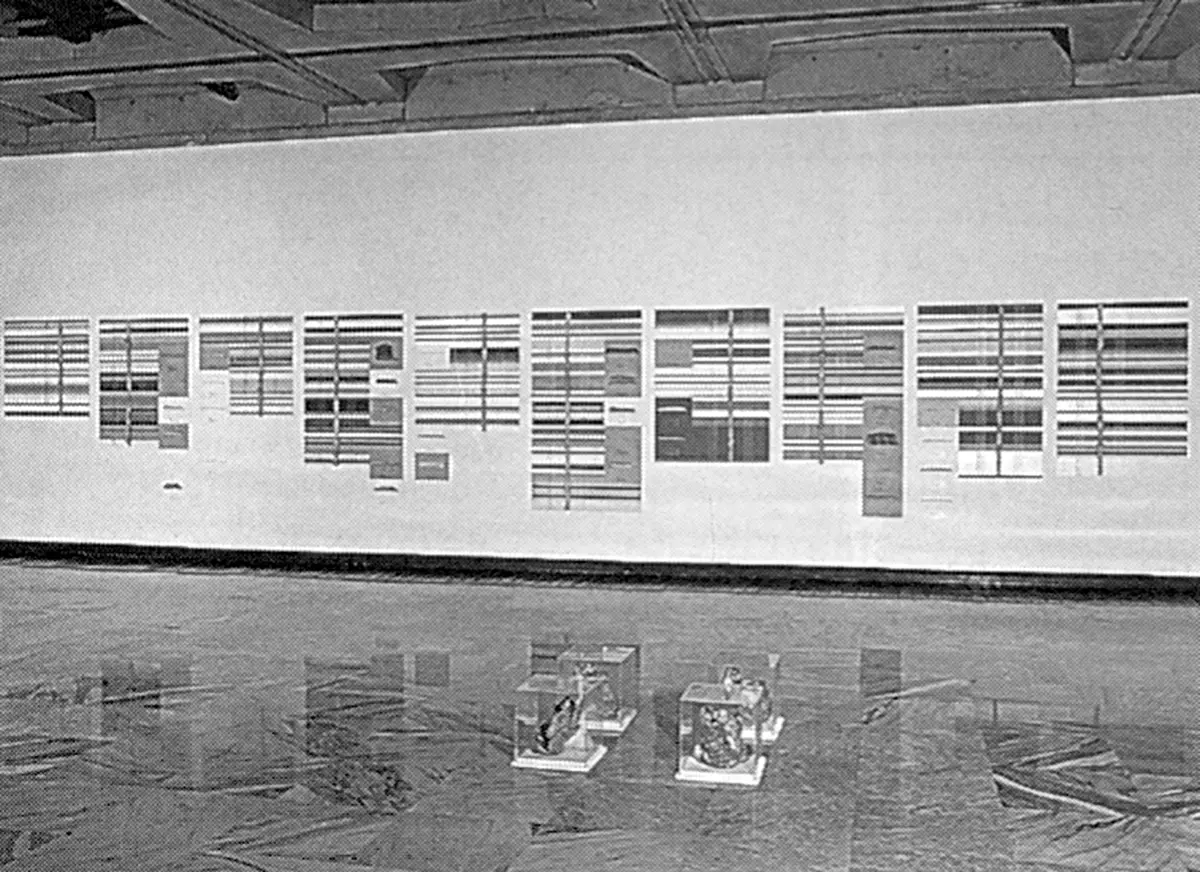
The fact that the relationship of the work of two other participating artists (White and Goldsmith) with the overall curatorial proposal was less intense does not mean that their selection was misguided. The acceptance of contradictions that might arise between the central thesis of the curator and that of the participating artists should be an established component of curatorial practice. In formal terms, White’s work consisted of a large color mural based on the idea of a comparative graph of public and private communication systems (the press and electronic mail). In the text quoted earlier, Amor pointed out: "Using as a basis the same strategy of altering the form of the conventional structures which create History used by Ríos, who cancels out the reading of a map, or by Vidokle, as regards the museistic image, by Kwon as regards the collections of Japanese ceramics, or by Obregón as regards the identities of the profiles used in his installation, so White impedes the reading of the informational content, and hence apprehension, of her referent."2
In Goldsmith’s work, as noted above, the artist made use of the option of abandoning the walls and exhibition space. Goldsmith gathered together loose phrases and words encountered by chance (taken from passers-by near the Museum) and placed them in a pamphlet-poem titled with the dates marking the period of his "field" work. Since one of the subtexts proposed by Amor is the confrontation between scientific methodology and artistic imagination, we can assume that this work was examining the problems of communication. The ready-made poem, which resulted from the found words, was obviously unreadable. It was, therefore, a Babel-like poem, where everyone spoke in unison, perhaps a metaphor of that open area left by the other works in the show.
There is always the risk for a curator who repeats what has already been said that he or she will find himself without a public. It is to Amor’s credit that she assumed full responsibility for the proposals made in this show.
NOTES
1. Mónica Amor, Alterando Historia/ Alternando Historias, catalogue text, p. 28 of manuscript text.
2. Ibid, p. 50.
JESÚS FUENMAYOR