The situation at this year’s edition was well expressed in a remark by gallery owner Juana de Aizpuru: “ARCO enjoys great prestige, but it lacks a market.”
This year, the Spanish Contemporary Art Fair held its fifteenth edition amidst a mood of optimism amongst the Spanish galleries and a lack of enthusiasm from those from other countries. If we look back over time, the balance sheet is undoubtedly a positive one, and the fair has now become one of the most attractive in Europe, although it still ranks behind the Basel art fair.
For the Spanish market, this has involved an important degree of cohesion, and the galleries have been obliged to make a real effort towards achieving an impact in the international market, although such an objective has so far been attained by only a few. This edition undoubtedly had much to offer in terms of quality and presentation, from Picasso (with the exceptional piece of sculpture entitled Woman in the Garden, acquired by the Queen Sofía Museum) down to the youngest artists, as well as Torres-García, Julio González, Tàpies, Warhol, Yves Klein, Dan Flavin, Donald Judd, Anthony Caro, Mario Merz, Louise Bourgeoise, Nam June Paik, Rebecca Horn, Pedro Cabrita Reis, João Sarmento, Susana Solano, Thomas Ruff, Leonel Moura, Annette Messager, Jaume Plensa, Rosemarie Tröckel, Kiki Smith, to mention but a few. Although the Spanish galleries appeared very satisfied this year with their sales, the foreign galleries had a very different opinion, The Spanish market is an exclusively local one: there are few collectors, whether private or public, and the museums prefer to acquire work by Spanish artists who, in many cases lack international stature. This was the opinion of such gallery owners as the Italian Giorgio Persano and the Portuguese Luis Serpa (with one of the best aesthetic presentations at the fair), who also regretted that the museum directors had not even visited their stands.
On the other hand, ARCO is the world’s most visited fair, where the public is young and keen to learn about international art. Such a public might well bear the seeds of future collectors. One of the attractions explaining this mass attendance is the effort made to generate a cultural debate (often controversial, but real nevertheless).
The German presence
This year, the invited country was Germany, with the participation of twelve galleries selected by Kasper König and José Lebrero, although the former withdrew before the opening since his proposals had not been fully accepted. The selection was, in the end, based on criteria that favoured galleries willing to take a risk. In addition, there were lectures and debates organized with young German and Spanish critics.
For the first time, there was a section entitled Cutting Edge, which gathered together galleries from various countries with different (and uneven, although often stimulating) proposals. They included the Ileana Tounta Contemporary Center (Greece), Studio Bocchi (Italy), Galerie des Archives (France), Camargo Vilaça (Brazil), Ze dos Bois (Portugal), and, from North America, Elga Wirnmer, Segura Publishing Company, P.P.O.W., Lawrence Miller, Rona Hoffman, Christopher Grimes, and Feigen Inc., Chicago.
Latin American Art
There were twelve Latin American galleries present this year, and the quality was higher than in the past. The Argentinian gallery Der Brücke brought work of a primitivist kind by Hernán Dompé, wood sculptures by Tulio Romano, and pictorial work by Óscar Suárez, Mario Machado, and Silvia Rivas. Special mention must be made of Eduardo Médici, with his original handling of photography, Carlos Gallardo, and Patricio Forrester, whose work was full of mystery and suggestion.
From Brazil, there was, for the first time, within the Cutting Edge section, the Camargo Vilaça Gallery, one of the most outstanding at the fair. There was an important piece entitled The Widowed House III by Doris Salcedo, an artist who has already acquired a major international reputation. Especially interesting was the impressive work of Valeska Soares, as was the sensitive imagery of Vik Muniz and the powerful image and text-based work of Rosângela Rennó. Within a similarly innovative line, mention must also be made of the pictures of Adriana Varejão, with their liquid blue, Beatriz Milhazes, the pieces by José Antonio Hernández Diez, and the works done with pieces of plastic by Jac Leirner.
The Garcés Velásquez Gallery from Colombia presented some trouvailles, including some works from the Narcissus series by Óscar Muñoz and an attractive installation, one of the few in the fair, by Luis Fernando Peláez, as well as paintings by Jimmy Arango and Germán Londoño.
Also from Colombia, the El Museo Gallery, on its first visit to ARCO, showed works by Bernardo Salcedo, along with pieces of oniric realism by José Ballester, Carlos Salas, and sculpture by Hugo Zapata.
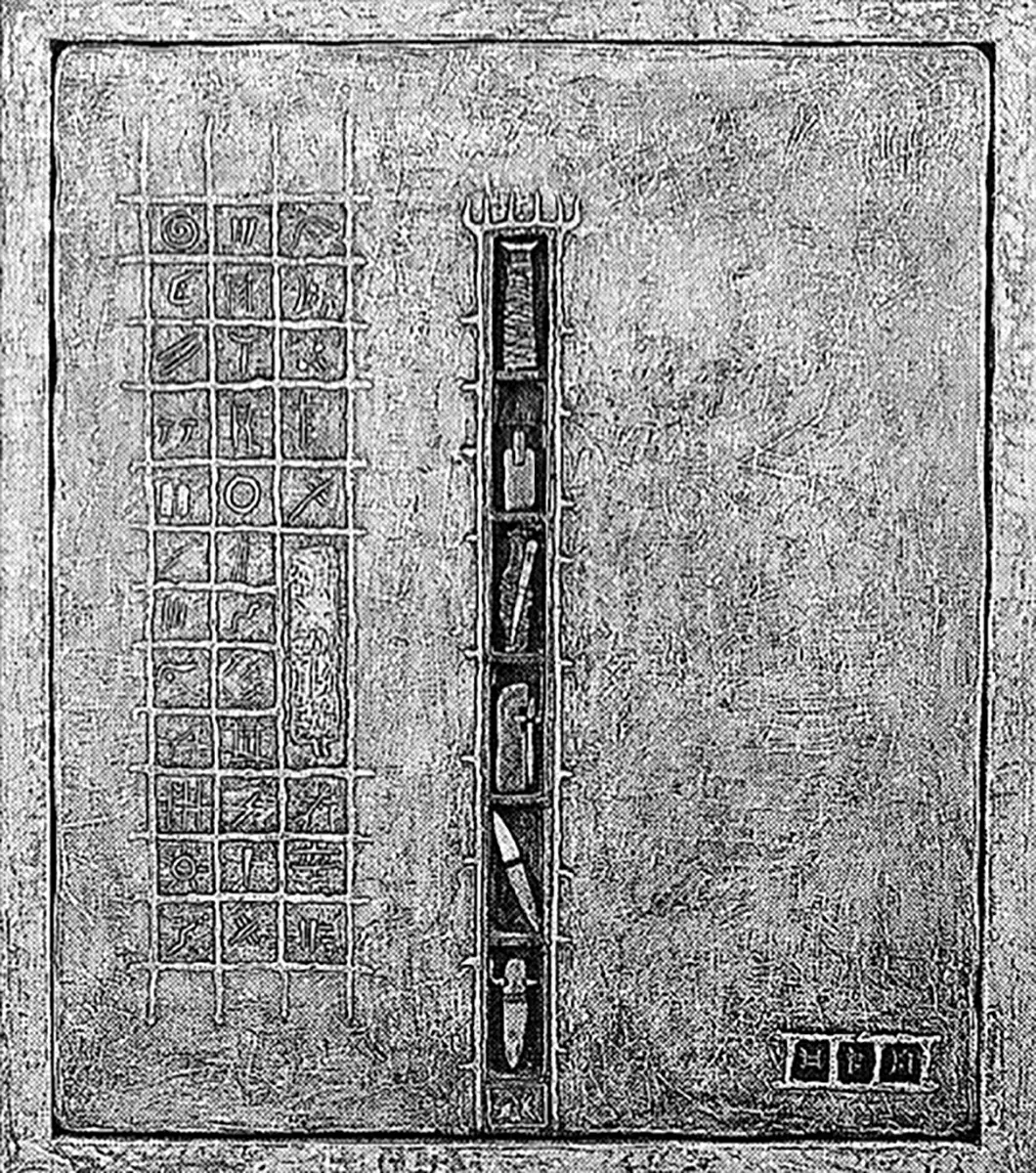
The Jacob Karpio Atma Gallery from Costa Rica proposed some eye-catching pieces by Bernardi Roig, paintings by Conte and Lluís Barba, a magnificent work by Paloma Navares, an oniric piece by Tarzan, as well as airbrush paintings and a strange alphabet work by Scheimberg. In addition, Canovas was well represented, and there were some mysterious nudes by Bernárdez, some attractive geometric work by Ballesteros, and finally, some very handsome yellow paintings by Guagnini.
The La Acacia Gallery, from Cuba, showcased three artists: Manuel Mendive, Alfredo Sosa Bravo, and Joel Jovert (with works characterized by their simple geometry). The Thomas Andreu Gallery, from Chile, devoted its stand to the interesting painting of Arturo Duclos, a very risky operation given the present circumstances, and the only gallery in the fair to offer a one-man show.
The mexican Ramis Barquet Gallery has the reputation of presenting high-level exhibitions, and this year was no exception, with drypoint prints and a number of paintings by Ray Smith, some outstanding pieces by Guillermo Kuitca, including Plant with Garment of Death, interesting work by Mario Mery (Iron Age), and sculpture by Laura Anderson, a head done in resin alongside a powerful canvas by Schnabel. Francis Alÿs’s glass works were unusual, as were Teresa Serrano’s red sculptures and a small piece by the Spanish artist Eugenio Ampudia. All in all, an excellent stand.
The GAM Gallery from Mexico presented a range of prints that oscillated between realism, a certain kind of primitivism, and oniric figuration: the artists included Alberto Castañedo, Mary Stuart, Lupe Ordoñez, Magali Lara, and Elena Climent.
The López Quiroga Gallery, also from Mexico, showed works by Roberto Matta from 1942-1945 and 1957-1958, a nude by Rufino Tamayo from 1931, as well as works by Francisco Toledo and Miguel Castro Leñero.
Another Mexican gallery, OMR, also brought some interesting work by Arturo Elizondo, such as the canvas entitled Europa, and by Mónica Castillo (Box with Stones), as well as sculptures and photo drawings by Yishai Jusidman, with his Sumo wrestlers. The Scappini Lamarca Gallery from Paraguay presented paintings and sculptures by Carlos Colombino, as well as colorist paintings by Ricardo Migliorisi.
Latin American artists were also represented in galleries from other countries. This was the case with Andres Serrano, whose work appeared in several stands, including Segura Publishing (along with a piece by Annette Messager), Elga Wimmer (Black Rembrandts), and the Portuguese Luis Serpa Gallery (in a show entitled Mo(nu)ments, one of the most attractive at the fair, including works by Cabrita Reis, Calapez, Badiola, Sicilia, Biberstein, and Klinquenholer). Jorge Horta, with his projected alphabet photographs, was represented at the Yvonamor Palix Gallery from France, as was José Bedia at the Ángel Romero Gallery from Spain, and Botero, Claudio Bravo, and Paula Rego at the Marlborough Gallery. Finally, there were some stupendous pieces by Félix Gónzalez-Torres at Ghislaine Hussenot.
The next edition of ARCO will be devoted to Latin American art, and participating galleries will, in principle, be selected by the Spanish critic Octavio Zaya.
Brief Panorama
Of the Spanish galleries, especial mention should be made of the following: Luis Adelantado (Sophie Calle, Schlosser, Zorio, Susi Gómez), Juana de Aizpuru (Art and Language, Jordi Colomer, Kosuth, Franz West, Cabrita Reis), Helga de Alvear (Corbeira, Palacín, Miura, Maldonado), Oliva Arauna (Barclay, Herrera, Álvaro González, Jaar, Romano, Marion Thieme), Elba Benítez (Pep Agut, Francesc Torres, Teixidor), Soledad Lorenzo (Irazu, Tony Oursler, Ross Bleckner, Calzolari), Tomás March (Guzmán, Agredano), Moryarty (Paloma Muñoz and Walter Martin), Joan Prats (Hannah Collins, García Sevilla, Miguel Navarro), Ángel Romero (José Bedia, Manuel Rufo), Aele (Marisa González, Paloma Navares), Spectrum (Oriola, Navarro), Carles Taché (Jaume Plensa, Sean Scully), Visor (A.T. Ortega), Trayecto (Ángeles Marco, Fernando Illana, Paloma Navares), Espacio Mínimo (Chelo Matesanz). Of the foreign galleries, congratulations must also go to the German presence (Bárbara Gross, Philomene Magers, Bärbel Grässlin, Monika Sprüth, Bárbara Weiss), the North American galleries (Pace Wildenstein, P.P.O.W., Uncomfortable Spaces, Elga Wimmer, Rhona Hoffman), as well as the galleries from France (Ghislaine Hussenot, Ibonamor Palix), Italy (Persano, Christian Stein, Studio Bocchi) and Portugal (Graça Fonseca, Gilde, Alda Cortez, Arte Periférica, Luis Serpa) where in all cases the level was high.
ALICIA MURRIA