Spirit, by its very nature, is impossible to define. Dictionaries attempt to classify it as an animating principle or vital force, but spirit eludes fixed definition and, instead, remains fluid, better described by what it is not than what it is. Spirit does not matter, to assert a classic polarization. It is not visible, it has no shape of its own.
Visualizing the spiritual, then, through the material means of art, would seem at best a challenging, and at worst, a fricative, even futile enterprise. But artists have risen to that challenge since the earliest scratchings on cave walls, and the innate tension between matter and spirit is what charges many a timeless work of art. That frictive energy is hard at work in Espíritu, a compelling show of eleven contemporary Mexican artists: Alfredo Castañeda, Mónica Castillo, Elena Climent, Julio Galán, Graciela Iturbide, Rodolfo Morales, Dulce María Nuñez, Georgina Quintana, Adolfo Riestra, Germán Venegas, and Nahum B. Zenil.
Imposing such a theme on artists whose own proclivities could just as easily have landed them elsewhere is potentially oppressive, especially considering U.S. scholars' history of condescension toward Latin American art, their tendency to pigeonhole it as either politically didactic or exotic and mysterious, bred by unconscious, irrational impulses linked to a pagan past.
In the exhibition's handsome catalogue, curator Reesey Shaw neither reinforces the art of the fantastic stereotype nor dismantles it. Essayist Luis Carlos Emerich accounts for the pluralism of contemporary Mexican art in a concise review of the muralism movement, rupture, and subsequent offshoots. Neither addresses the fact that all eleven artists in a show with an abstract theme work in a more or less figurative vein. How matter embodies spirit and how spirit shapes matter are questions underlying all of the work presented here.
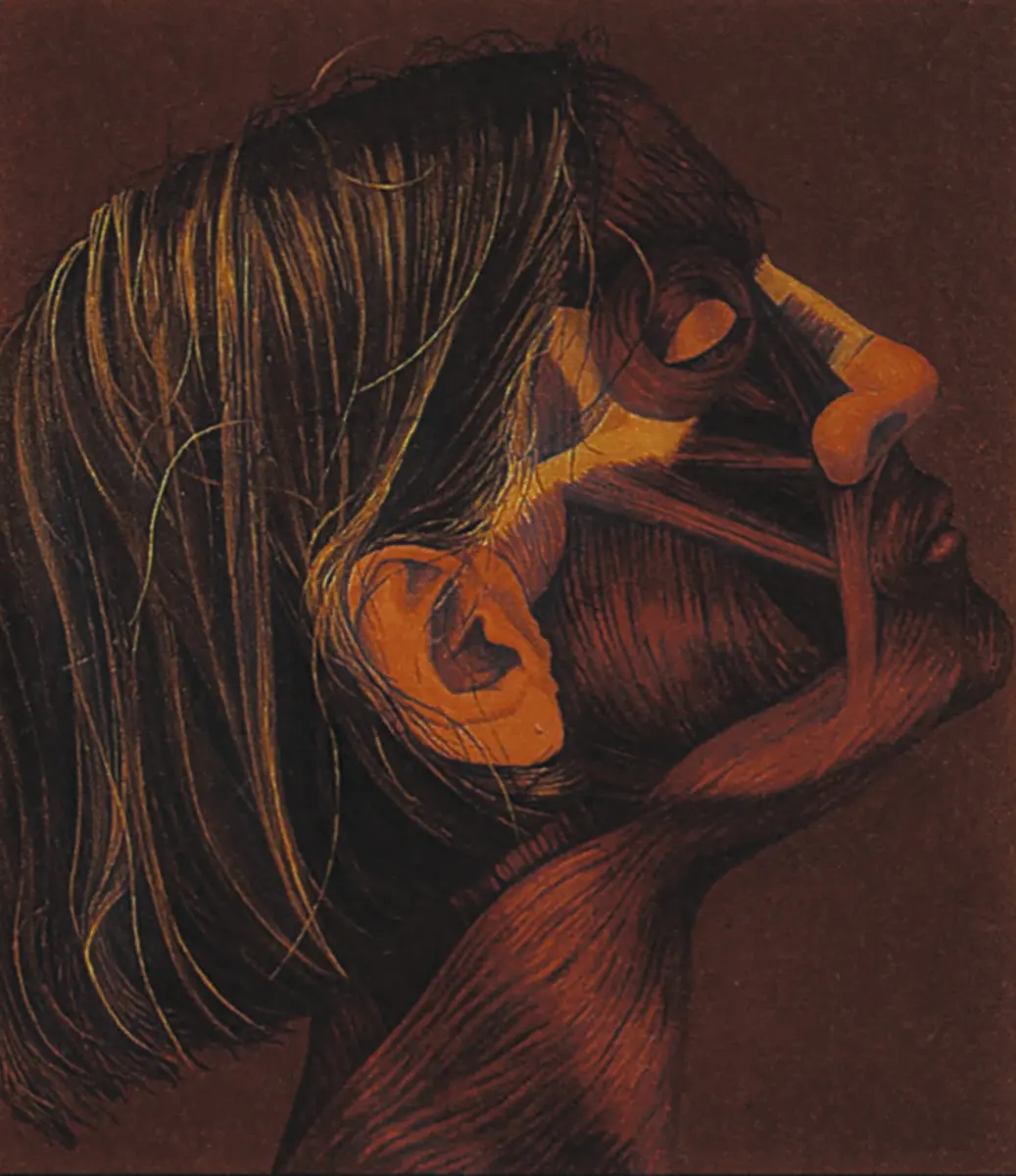
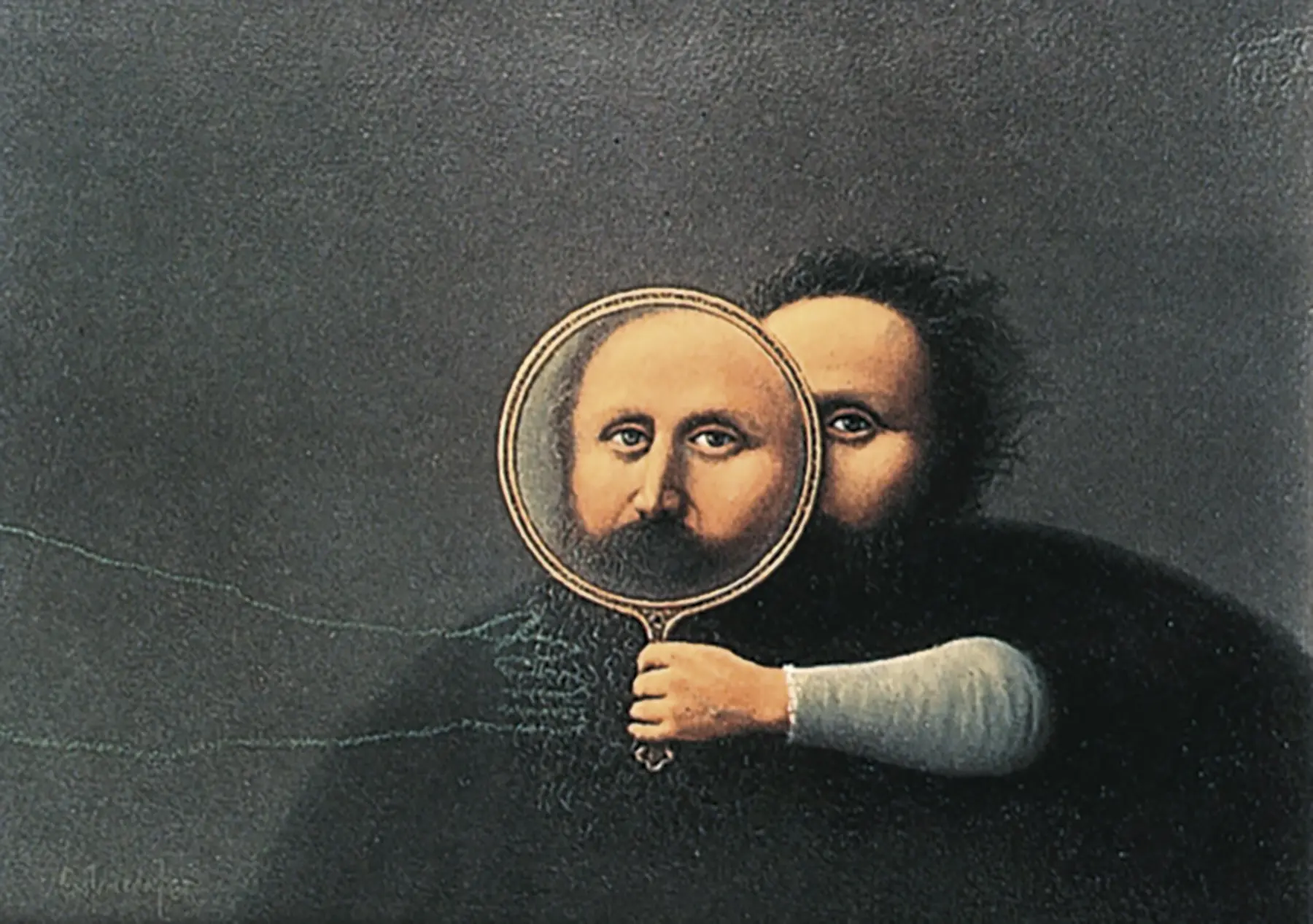
Pushing the boundaries of familiar, recognizable forms to evoke a force or sensibility that transcends the real has been one of the most effective strategies of surrealism. Indeed, Espíritu is permeated by the aura of surrealism and haunted, more specifically, by the ghost of Frida Kahlo. Nahum B. Zenil's exacting self-portraits in various guises bear Kahlo's legacy most overtly. As the infant Jesus offering his blessing, as a high priest, an avenging angel, or several different personages at once, Zenil and his somber-eyed role-playing prompt a dialogue between religion's twin engines —personal faith and collective pageantry.
Alfredo Castañeda and Mónica Castillo stare repeatedly out of their canvases as well. Castañeda's meticulous renderings of lone figures multiplying within themselves or decomposing question a different kind of faith that we have in representation and material reality. When surfaces erode, are we left with substance, or nothing at all, mere disillusionment? Castillo's painfully detailed self-portraits are equally obsessed with surface and just as ambivalent about the existence of an essence or spirit that might anchor life's charades.
Julio Galán, one of the two artists specially featured in this show with a gallery to himself, has less in common with Kahlo visually, but matches her ruthless intimacy, her ability to merge the symbolic and brutally real. Galán's paintings are mesmerizing, opaque, and at the same time familiar and strangely nostalgic. Forces beyond comprehension manipulate the world, his paintings suggest, and it is up to the individual to adapt and cope. With a powerful blend of metaphor and candor, Galán's paintings document his own confrontations with sex, death, faith, sensuality, and loss.
He imagines what lies on the other side of life in Niño fingiéndose muerto (Child Playing Dead, 1985), trying for transfiguration through simple masquerade. In Roma (Rome, 1990), he entombs himself in an impossibly long bed, whose coverlet meanders off into a playfully abstract pattern by the time it reaches the far end, so that the foot of the bed appears to belong to an entirely different order of things than the head.
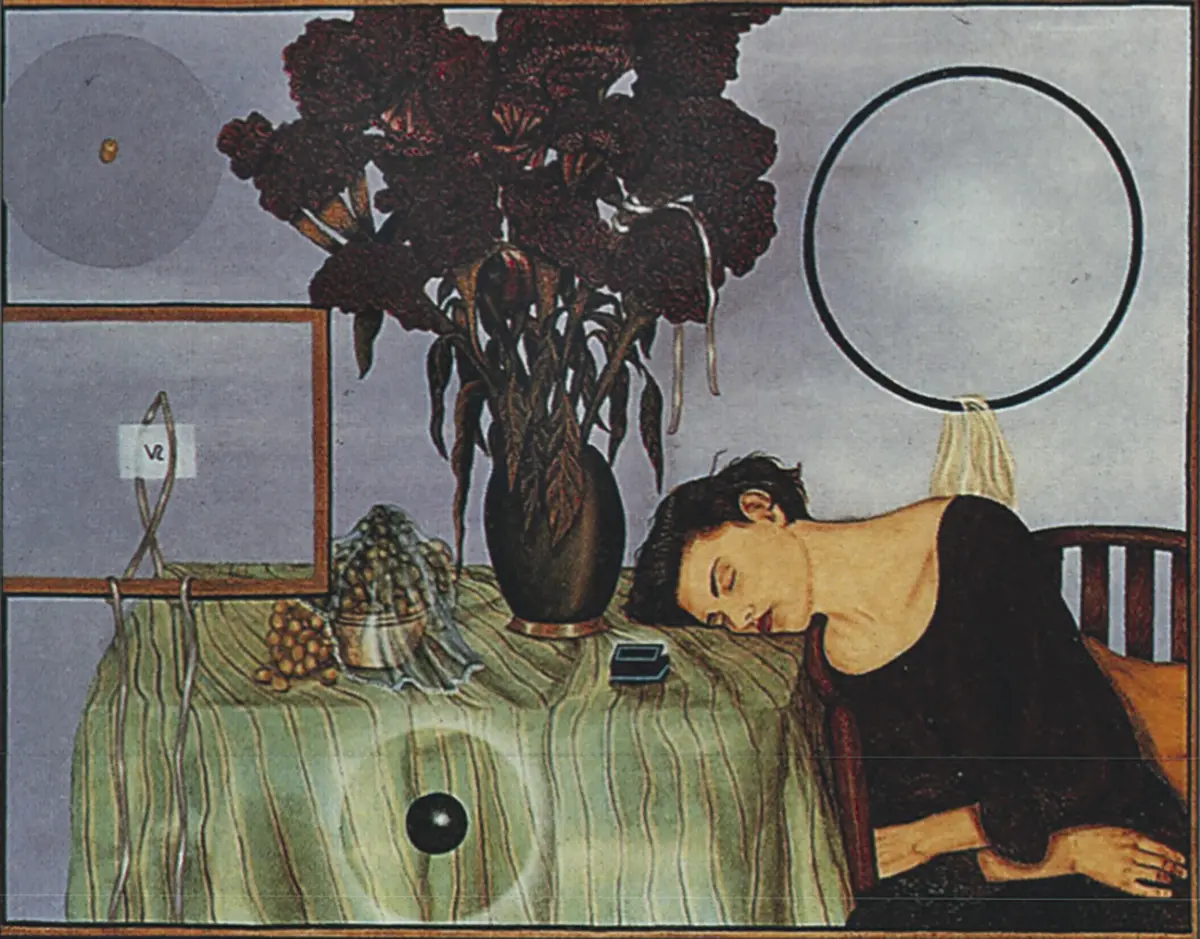
The fragments, holes, and obfuscations in Galán's work echo those in the non-narrative flow of life. Retrato de Luisa (Portrait of Luisa, 1990) is brilliantly beautiful, a portrait of the artist's sister in an oneiric trance, the images from her dream taking concrete form all around her. Only when our eyes are closed, Galán suggests, do certain things reveal themselves, but their meaning always eludes our grasp.
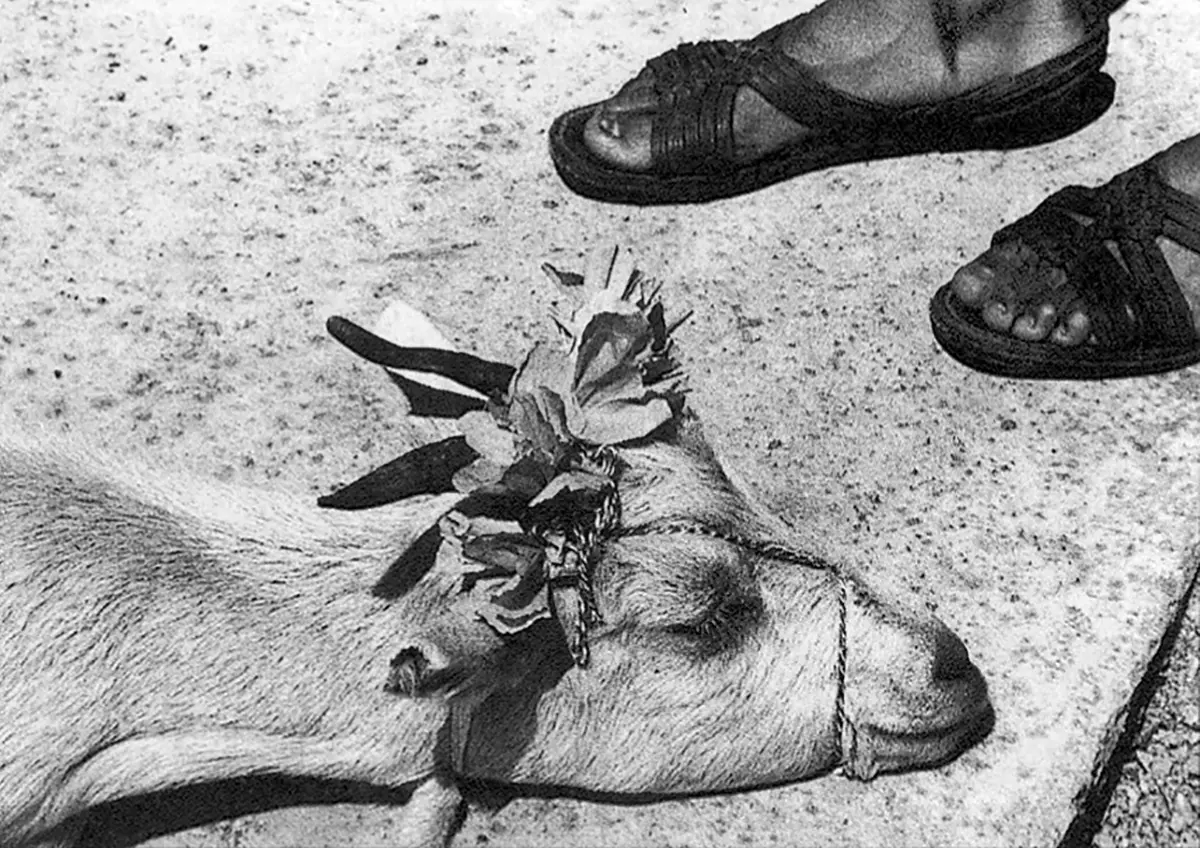
Graciela Iturbide, the other featured artist in Espíritu, uses the camera, the tool presumed to have ultimate fidelity to external life, to visualize spiritual strivings and currents in the everyday. Her images abound with disjunctions-live goats encircled by drying goat skins or a bride in virginal white wearing a mask with the cynical, all-knowing face of death. Though this is a weak selection of Iturbide's generally stunning work, it reveals her respect for the way ritual is entwined with routine. In Nuestra Señora (Our Lady, 1974), intense sunlight transforms a load of fiber on a woman's back into a luminous halo, in the process bestowing a humble working woman with great spiritual integrity.
Germán Venegas wood-carved La muerte de Zapata (The Death of Zapata, 1987) similarly conflates social reality and Christian symbolism. This engrossing and poignant sculpture reads instantly as a depiction of Christ; Zapata's sombrero and a few other telling details anchor the scene in the real, 20th-century Mexico of politics, social unrest, and revolution. Venegas, like Iturbide, sees people in grand-historic terms and events as epic struggles of the spirit.
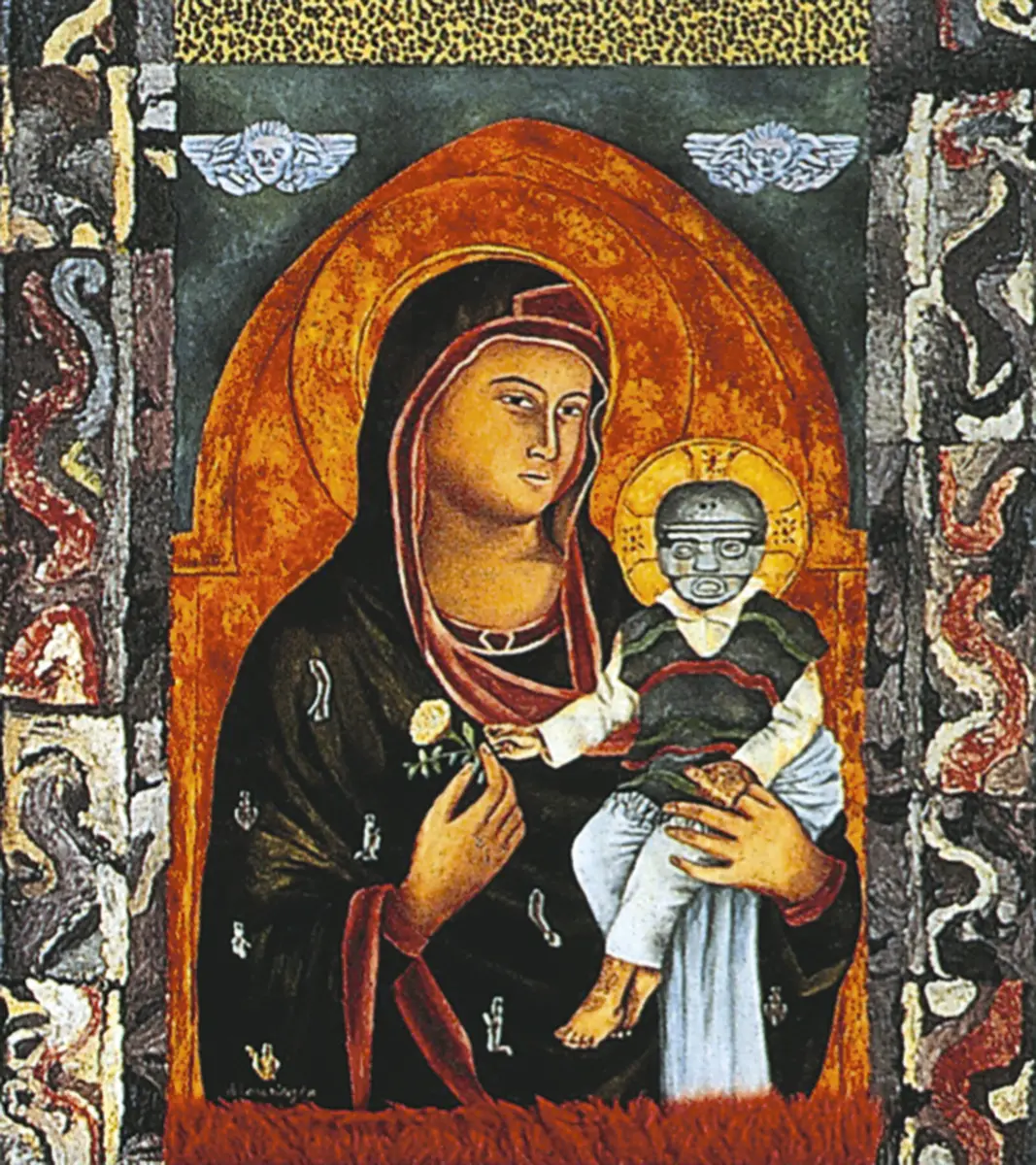
Naturally, many works in the show address the collision between indigenous cultures and Spanish-sent Catholicism. In one painting, Dulce María Nuñez recasts and updates a traditional image of the Virgin and Child, making the Christ figure into a stone-carved pre-Hispanic god wearing a sarape, and embellishing the icon with strips of leopard-spot fabric and fake fur.
Disjunction (and one of its corollaries, syncretization) is as central to the art here as it is to any country with a colonized past, and it gives the show a provocative edge.
Resonances between artists abound throughout Espíritu, whether the spirit and spiritual are regarded in monolithic religious terms, in terms of the personal soul, or as a disembodied, evolutionary force (as in Georgina Quintana's marvellous paintings). The artists included were born over a span of nearly 40 years (1925-1961), but the generational divide is bridged by the common focus on fundamental issues of origin, belief, and ritual practice.
LEAH OLLMAN
American Critic. Lives in San Diego.