
From the second decade of the twentieth century in Europe, Dutch neo-plasticism, the Russian avant-garde movements, and the Bauhaus established the theoretical and practical bases of constructivism. This first wave of incom parable brilliance was succeeded by the period between the two wars, when France moved in a similar direction in the exceptional effervescence of Parisian life of those years, with active colonies of artists of different nationalities, groups such as the Cercle et Carré, Art Concret, and later the Abstraction-Création Association, as well as the appearance of various journals and exhibitions.
The conceptual terms on which constructivism is based are reflected in problems concerning the social mission of art, the receptiveness of the public, the legibility of the artwork, the demands of a technological society, and the adaptation to a new social life. Groups were subsequently established in other countries, such as Italy, Switzerland, and the United States. The extraordinary figure of Max Bill defined the terms of the universe of concrete art as a proposal for a new organization of surroundings, a confir mation of the ethical content of artistic praxis, the refusal to accept the fragmentation of culture and an attempt, through the fundamental norms of simplicity, clarity, and har mony, to exalt the best possibilities of man.
With the emergence of its constructive avant-garde move ments in the 1940s, Argentina, perhaps for the first time ever, managed to play a relevant role in the art of the period and began to act in a way which combined local, vital, and militant development with the maintenance of active links with the problems faced by the international avant-garde groups. The groups that made up these "avant-garde" movements of the 1940s, both as regards membership and artistic and theoretical action, were to give coherence to a direction which over time proved to be important to art in the country. These early years, however, formed a stage which could well be called heroic.
The political situation in Argentina at the time was tumultuous. Tomás Maldonado, Alfredo Hlito, Claudio Girola, the future protagonists of the constructivist avant-garde movements, along with Jorge Brito, published in 1941 a Manifesto by Four Young People which reflected the ideological agitation in the student milieu concerning the events which were shaking the world during the Second World War. These were years of decisive change for Argentinian society, marking the end of a cycle—the power of the Conservatives—and transforming the political, social, and economic orders.
In Buenos Aires, in October 1945, a multitude of supporters flocked to defend the doctrines advocated by Juan Domingo Perón, which, since then, have become incorporated into the struggles of the working class.
One month after that historic October 17, in November 1945, a group of graduates of the School of Fine Arts set up the Arte Concreto-Invención Association, whose members were Tomás Maldonado, Lidi Prati, Raúl Lozza, Ennio Iommi, Alberto Molemberg, Matilde Werbin, Jorge Souza, Antonio Caraduje, Primaldo Monaco, Claudio Girola, Óscar Nuñez, and Simón Contreras. They were joined shortly after by Juan Melé, Gregorio Vardanega, and Virgilio Villalba.
The Association was involved in the publication of the single issue of the magazine Arturo1 in 1944, which led to a series of events that were to shake the artistic scene in Argentina.
Modernity did not suddenly arrive in Buenos Aires with this publication. It had already done so in the 1920s with the appearance of other journals, first Prisma and then Proa, Inicial, and Martín Fierro (1924-1927),2 which were landmarks in the avant-garde renewal that was taking place in Latin America. In fact, through such texts as the declaration by Mario de Andrade (1922) in the Klaxon magazine, Semana de arte (1922) in Brazil, the Cannibalist Manifesto of Oswald de Andrade (1928), Actual and El Machete (1924) in Mexico, Amauta (1926) in Peru, as well as in lectures and exhibitions, Latin America's renewed presence was being reaffirmed.
It was in the magazine Martín Fierro that the reference to the autonomous laws of the picture was first mentioned in the Argentinian cultural context—a subject of heated theoretical affirmation at the international artistic level.
The journal Arturo differed from its predecessors by its marked orientation to the plastic arts and because the collaboration of poets now passed to a secondary level. Jorge López Anaya has also pointed out that "Arturo appeared at the very end of a process which began with the return of Pettoruti and Xul Solar to the country in 1924."3
Both these painters were protagonists of the cosmopolitan atmosphere of Buenos Aires during the 1920s. Pettoruti was the first Argentinian painter to be firmly non-figurative in his drawings in pencil, charcoal, and oils done in Italy, in the 1910s, at a time when he was sharing the experiences of the Italian futurists, in particular Balla.
He also caused a scandal with his first exhibition in Buenos Aires in 1924.
However, several Argentinian critics believe that the only real precursor4 was Juan del Prete, without, of course, denying the importance of the presence of Lucio Fontana in Buenos Aires in the 1940s. It was here that he published his White Manifesto in 1946 and undertook such splendid figurative sculptural works of customary high quality as The Man from the Delta, as well as terracotta and polychrome ceramic pieces of a neo-baroque kind.
The publication of Arturo in 1944, with its belligerent texts, signalled the definitive affirmation of constructivist non-figuration in Argentina.
Collaborators of the journal included Arden Quin, Gyula Kosice, Edgar Bayley, Rhod Rothfuss, and Torres-García, and there were also poems by Vicente Huidobro, Edgar Bayley, Murillo Madanes, Torres-García, Gyula Kosice, and Arden Quin. The cover was designed by Maldonado, one of whose works was also reproduced inside the magazine, as well as by Lidi Prati, who did the vignettes, and by Rhod Rothfuss, Vieira da Silva, Augusto Torres, Kandinsky, Piet Mondrian, and Torres-García.
One of the first pages of the journal included the following text:
"INVENT: To find or discover through inventiveness or meditation or by mere chance some new thing, unknown/To find, imagine, create a work done by a poet or artist/
INVENTION: The action or effect of inventing/Something invented/A discovery.
INVENTION AGAINST AUTOMATISM."
To understand the polemical scope of the word "invention" in the journal, reference can be made to what Arden Quin and Bayley wrote. The former contrasts "expression, which in art has been the basis of natural primitivism, with invention, the characteristic of modern, scientific primitivism."
Invention appears as a symbol of pure creation, and its affirmation implies various kinds of rejection: "neither expression (primitivism), nor representation (realism), nor symbol (decadence)."
This article by Arden Quin showed him as an ideological defender of dialectical materialism, which characterizes the article as a whole.
Bayley's text, which is presented very poetically, provides some interesting clarification:
"Novelty can no longer be found today in image-invention.
All realism is false, all expressionism is false, all romanticism is false.
The image-invention is the interpreter of the unknown, it accustoms man to freedom."
This image-invention contrasts with "...any concern for representation, any desire to transform the work of art into an interpreter of any kind of interior reality, any kind of subtle, complex, and new attitude, any symbolism, however diffuse, falsifies the image and strips it of any aesthetic value. ...a work has never gained validity through its conformity with any reality outside itself but through its capacity for newness."
In addition to these passionate affirmations of the autonomy of the pictorial image and the obsolete nature of representational painting, he also attacks Dali, although he recognizes the desire of Dadaism and Surrealism to create pure images, irrespective of whether they match external realities, and which established the bases for a new orientation.
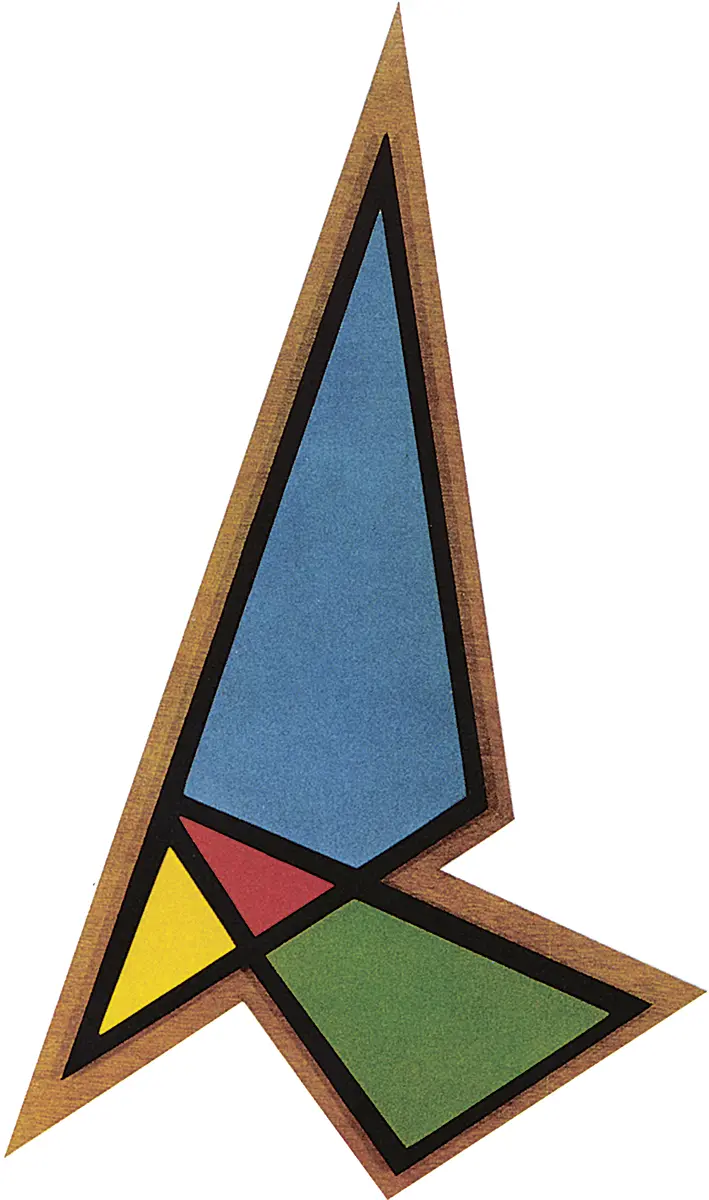
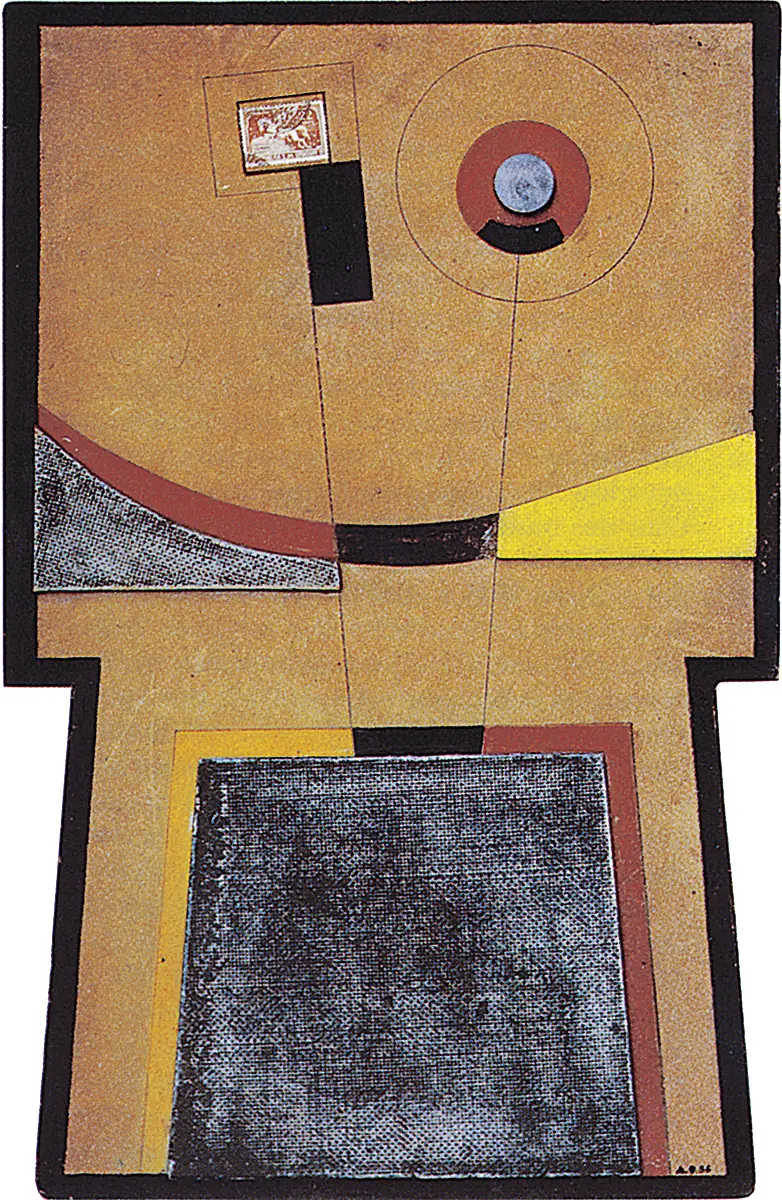
Kosice also speaks in his article about the pure image, and Rhod Rothfuss expounds his theory of the uneven frame, which is worth noting for the fact that, from the beginning, it reflected one of the main innovations of the movement. He begins by making an historical review from the repre sentational fidelity of naturalism down to constructivism, with references to Cézanne and all the isms which emerged during the early decades of the century, and concludes with a defense of pure creation based on the words of Vicente Huidobro that nature should be imitated not in its appear ances but in the essence of its laws of construction.
Rothfuss then moves on to an aspect of the problem of form: the frame. He rebukes the use of the regular frame in current use, which fragments form, and maintains that the frame should be structured according to the composition of the painting and that the edge of the canvas should play an active role in artistic creation.
The article by Torres-García, entitled "Concerning a future literary creation," is a text that can also be applied to the plastic arts as regards the concept of construction.
The cover of the magazine by Maldonado can be set in general within the lines of expressionist abstraction. The first vignette, also by Maldonado, includes biomorphous references vaguely reminiscent of Arp. The vignettes by Lidi Prati are more related to the plastic objects of a concrete kind that the artist was using at the time.
Two exhibitions were held the year following the publication of Arturo, one in the house of Dr. Enrique Pichón Riviere on October 8, under the title of Art Concrete Invention. The invitation read: "Theory, proposals, music, painting, sculpture, and concrete-elemental poems. Ramón Melgar, Juan C. Paz, Rhod Rhotfuss, Esteban Eitler, Gyula Kosice, Valdo Wellington, and Arden Quin." The photograph taken for the occasion included Arden Quin, G. Kosice, Dr. Pichon Rivie re, Lise Steiner, Dr. Marie Langer, Dr. Rascowsky, Renate Schottelius, among others.
The second exhibition was held on December 2 in the house of the photographer Grete Stern in Ramos Mejía, under the title of Concrete Art-Invention Movement. The participants included Elizabeth Steiner, Rasas Pet, Arden Quin, Rhod Rhotfuss, and Klaus Erhardt in painting; Kosice and Rhotfuss in sculpture; and Rhotfuss, Arden Quin, Alejandro Havas, Rasas Pet, and Lise Steiner in drawing. Other names appeared in dance, music, literature, photography, children's drawing, architecture, and urbanism. The group was once again photographed for the occasion, and included Lise Steiner, G. Kosice, Arden Quin, M. Blaszko, and Rhod Rhotfuss. Raul Lozza and Alfredo Hlito appeared in the photographs but not in the exhibition because personal differences and disagreements about theory had led Tomás Maldonado, who did not show any works in either of these shows, to create the Concrete Art-Invention Association, which these two artists joined.
In 1945, J.M. Sorge published in Zurich his Einführung in die Betrachtung der abstrakten und konkreten Malerei,5 and the following year the Concrete Art exhibition was held in Basel, inspired by Max Bill, who also founded (in 1944) the journal Abstract-Concrete. In France, the Drouin Gallery organized an exhibition entitled Abstract Concret, whose participants included Arp, Domela, Delaunay, Gorin, Herbin, Kandinsky, Mondrian, Pevsner, Sophie Tauber, and Van Doesburg, among others.
In 1946, the Salon des Réalités Nouvelles was established, which showcased concrete and abstract artists. This was the time that the Denise Rene Gallery began its activities, which from the beginning focused on abstract art, with the Gallery becoming a bastion of concrete art in Paris.
In Rome, the Forma movement (Turcato, Consagra, Perilli, Accardi, D'Orazio) was established the following year, and in 1948 in Milan, Fontana and Dova published the Second Spatialist Manifesto. The M.A.C. (Concrete Art Movement) was established in the same city by Gillo Dorfles, Atanasio Soldati, Bruno Munari, and Gianni Monnet. All these events highlight the synchronic relationship between the Argentinian concrete movement and the development of the international concrete movement.
The Manifesto of the Association accompanied the first exhibition of the group held on March 18, 1946, in the Peuser Salon. As I pointed out on an earlier occasion,6 the three fundamen tal ideas of the Manifesto were: a) the break with figuration and the affirma tion of the values of concretism, with the position taken up vis-à-vis the representation of what is real implying a position vis-à-vis what is actually real; b) a concern with the intelligibleness of the works and a desire to become a part and participate actively in the transformation of contemporary reality, i.e. the support of an art of commitment; c) the celebration and exaltation of creation.
As Maldonado was subsequently to write: “I drafted this manifesto in 1946, but in doing so I followed two previous texts published in the magazine Arturo in 1946 by the poet-painter Arden Quin and by the poet Edgar Bayley (there follows the list of those who signed the manifesto). In those years, we were truly convinced that our conclusion marked the end of "the pre-history of the human spirit." We could not imagine at the time that "the old phantasmagoria" would continue satisfying the aesthetic requirements of the new man. The pre-history, therefore, continued.”7
The text by the poet Edgar Bayley, Maldonado's brother, to which reference is made here was that of a small plaquette published in 1945, which included the follow ing remarks: “To invent specific objects which belong to the everyday lives of men, which help in the task of establishing a direct relationship with the things which we want to modify... It is necessary to reconstruct the world. The artist does not have a kingdom that is separate from ordinary reality. The New A rt is born of a desire for participation in the world. In his Manifesto, Maldonado points out: A poem or a painting should not serve as a justification for a renunciation of action, but on the contrary, they should contribute to the placing of man in the world. (...) Art should not be a support for indifference. We want art in the service of a new communion.”
He was also concerned about the legibility of the work and the integration of art into society.
The debate on a collective art which would be in the service of man had already proved to be a matter of concern to the artistic world since the 1910s. De Styl, the Bauhaus, and Russian Constructivism had proposed different solutions, which did not lessen the concerns felt by the constructivist painters who subsequently intervened.
The first issue of the Review of the Association was published in August 1946, and the last issue appeared in December of the same year, under the name of the Bulletin of the Concrete Art-Invention Association.
The magazine had some 15 pages, an austere black and white cover with concrete characteristics and the name and place (designed by Amanda Lucia Turcheto, who had worked in design and film), black and white illustrations of works by members of the group, as well as individual and group photographs of the members. It included a poetry supplement directed by Simon Contreras and Edgar Bayley, who also wrote about poetic invention and several poems in the main part of the magazine.
From the documentary point of view, the publication reproduced the text of the Inventionist Manifesto and Maldonado's definition of concrete art: “We say that it is not abstract because it does not seek to reflect an illusion ofnature on a surface, a specifically abstract procedure; on the other hand, we say that it is concrete because it seeks the invention ofan objective beauty through equally objective elements.”
In the same issue, Maldonado also reported on the position of its members concerning the irregular edge, which they had all initially supported. The experiment with the irregular edge had been attempted in Europe on isolated occasions (in several texts, the name of the Hungarian Peri is mentioned), but for the members of the Association, this technique was only one stage in a process. Maldonado and Hlito wrote in detail about their position on the subject.8
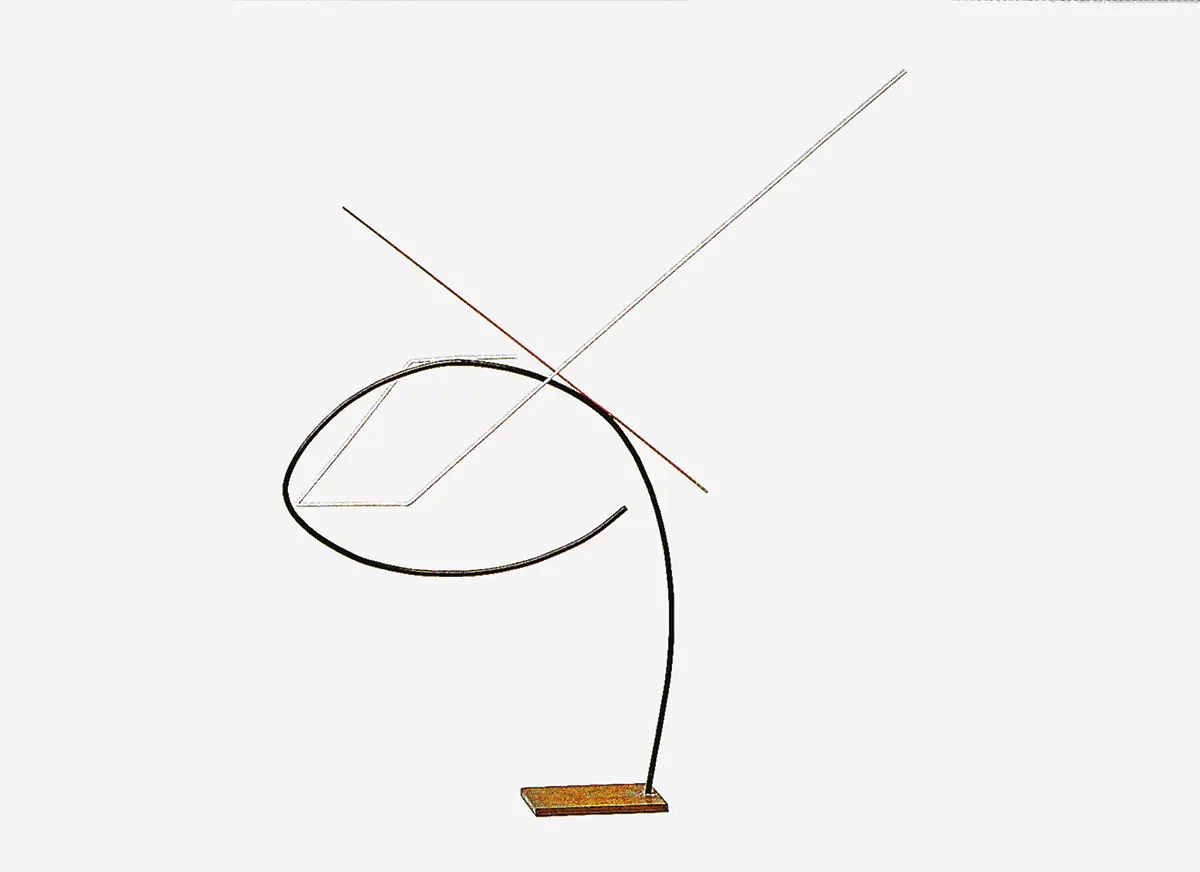
The painters—in line with the process described by Maldonado—finally arrived at the separation of the constituent elements of a picture without abandoning their view that the objects they constructed should be separated into the forms which made them up, which meant that the picture, "as a containing organism, was totally abolished."
At that time, Lidi Prati, Juan Melé, Raúl Lozza, Caraduje, and Claudio Girola proposed a variety of interesting solutions.
But, as Hlito pointed out, some artists in the group later believed that the wall repeated in turn the background-figure relationship without resolving the problem of two-dimensionality, and returned to the traditional support which they considered sufficient for their purposes.9
In a confirmation of their belligerancy and the need to translate their ideas into action, the artists of the Association held a number of exhibitions in 1946: the already mentioned March show at the Peuser Salon; Molemberg and Iommi reported on an exhibition held under the central cupola of the Galerias Pacifico in Florida Street in Buenos Aires, but about which no other information is available. This must have been the reason why the exhibition held in the Center of Secondary Education Teachers was referred to as the third exhibition, although the word third was also used for an exhibition they held in the Argentinian Society of Plastic Artists (SAAP). The fourth exhibition was held at the Ateneo Popular in La Boca in October of the same year.
In 1947, the Association suffered a split when Raúl Lozza and his brothers, who were bent on continuing their investigations on coplanarity, established what was called Perceptism.
In the same year, two New Art salons were held, one in the Kraft Gallery and the other in the Payer Gallery, the name encompassing, as they themselves said, new painters.
In 1948, the New Realities Salon received the following commentary by the critic Córdova Iturburu: “None of the previous exhibitions of work by non-figurative artists had acquired such resonance (...) It might be said that from this 1948 New Realities Salon onwards, non-figurative art has passed through its rites of passage in our country, and there now begins a decisive conquering of disciples and practitioners among the new generations.”10
It was an important event, because the architect Ernesto Rogers, who presented some of his own works in the show, came from Italy and even gave a lecture and put Tomás Maldonado in contact with Max Bill, who was a friend of his. An entire group of artists, architects, students, and intellectuals became mobilized in Buenos Aires as a result of these events.
The Bulletin of the Center of Architecture Students published Maldonado's first article on design. At that time, the new typography created in the Bauhaus by Moholy-Nagy and Herbert Bayer, and continued by Max Bill, was being introduced in Buenos Aires.
In 1951, Nueva Vision appeared, which from the first issue was an avant-garde journal in the field of visual culture.
In 1954, Tomás Maldonado left the country for good, invited by Max Bill to take up a teaching post in Ulm.
Protagonists of the modernist utopia, at a time when the position of Argentina in the world seemed to be opening up towards a promising future, plastic artists, designers, architects, and musicians felt themselves part of the creation of a new language which responded to the expectations within which “technology seemed to promise a way of combining rational knowledge with the deliberate transformation of the world.”11
It might be asked what relationship there is between the modernist utopia, as followed in the highly industrialized countries, with societies such as that of Argentina, which had only recently embarked on such a path. As the Brazilian critic Roberto Pontual pointed out: “In societies such as our own, where everything still remains to be done, an art which includes an attempt to define a national or continental vision gives the sensation of organizing existence, transforming it, and constructing a new society.” The fact is that with these pioneers, a brilliant new chapter was inaugurated in the history of Argentinian and Latin American art.12
In their subsequent activities, the key figures of the Concrete-Art Invention Association demonstrated at the individual level a quality of action of which not many movements can boast.
While Alfredo Hlito (1923-1993), who was also a graphic designer and theorist, found in the continuity of his pictorial work the best means of achieving his objectives, Tomás Maldonado, in the many activities which he undertook in Europe, where he still lives, revealed his versatile talents. A researcher in education, semiotics, and the philosophy of language and a teacher of environmental projection, he has been a major figure in the modernity / post-modernity debate, some of the themes of which are examined in his study on Il Futuro della Modernità (1987).
We can summarize aspects of his position in recent years in the following manner: Aware of the risk pointed out by Adorno that criticism of certain forms of modernism can be used to deny the validity of the modernist project as a whole, and of Habermas's proposal for a distinction to be made between modernism as a sectoral program for culture and modernism as a project for the total renewal of society, Maldonado has moved towards the theme of modernization—the focal point of the studies on the dynamics of social change—and gone beyond any regressive use of it by post modernism. Maldonado's idea concerns the rejection of the criterion which totally assimilated the idea of modernization as an intervention by the hegemonic centers into the dependent peripheral areas, in order to promote a concept of modernity which embodies the great non-traditional tradition, and subjecting it to a critical examination with a view to establishing a modern project centered on the idea of emancipation.13
NOTES
1. The Faculty of Arts of the University of Aberdeen, Scotland, recently published a facsimile edition of the magazine Arturo.
2. The National Fund for the Arts has just published in Buenos Aires a facsimile edition of the magazine Martín Fierro.
3. López Anaya, Jorge, Concrete Art, Avant-garde and Utopia in the 1940s, exhibition of Argentinian concrete artists, Jacques Martínez Gallery, Buenos Aires, 1986.
4. This expression is used by the Argentinian critic Aldo Pellegrini.
5. Quoted by López Anaya, Jorge, op .cit.
6. Perazzo, Nelly, El arte concerto en la Argentina, Ed. Gaglianone, BuenosAires, 1983.
7. Maldonado, Tomás, Vanguardia y racionalidad. Artículos, ensayos y otros escritos 1946-1974, Ed. GustavoGilli, Barcelona, 1977.
8. Maldonado, Tomás, Revista de Arte Concreto Invención, No. I, Buenos Aires, 1946. Hlito, Alfredo, "El tema del espacio en la pintura actual," Nueva Visión, Buenos Aires, 1955.
9. Alfredo Hlito’s texts were published in 1995 in Buenos Aires by the National Academy of Fine Arts.
10. Córdova Ituburu, C., La pintura argentina del siglo XX, Ed. Atlantida, Buenos Aires, 1958.
11. Perazzo, Nelly, op. cit .
12. Perazzo, Nelly, "Los periodos de la pintura argentina: 1920-1960," in Cien obras maestras. Cien pintores argentinas 1810-1994, Ed. Fundación Konex, Buenos Aires, 1994.
13. Perazzo, Nelly, "Tomás Maldonado," in Breve Diccionario de pensadores contemporáneos, under the direction of Patricio Loizaga, Ed. Emece, Buenos Aires, 1994.
NELLY PERAZZO
Critic, professor, and historian of Contemporary art. Member of the Argentinian National Academy of Fine Arts. Curator of the Líbero Badii Collection for Credit Bank Foundation, Argentina.