This panoramic view of the last 13 years of work by the Buenos Aires sculptor Hernán Dompé (1946) at the National Museum of Fine Arts sheds light on his current work and illustrates the level of artistic maturity that he has now acquired. The show included some 20 sculptures and ten drawings from 1982 to 1994, the starting point of which is a symbolic context generated by the image and materials, which form a meaningful whole. Wood, stone, metals, and other materials, often found and recycled in new contexts, made these sculptures into the components of a ritual that attempted to recreate a mythical time and space.
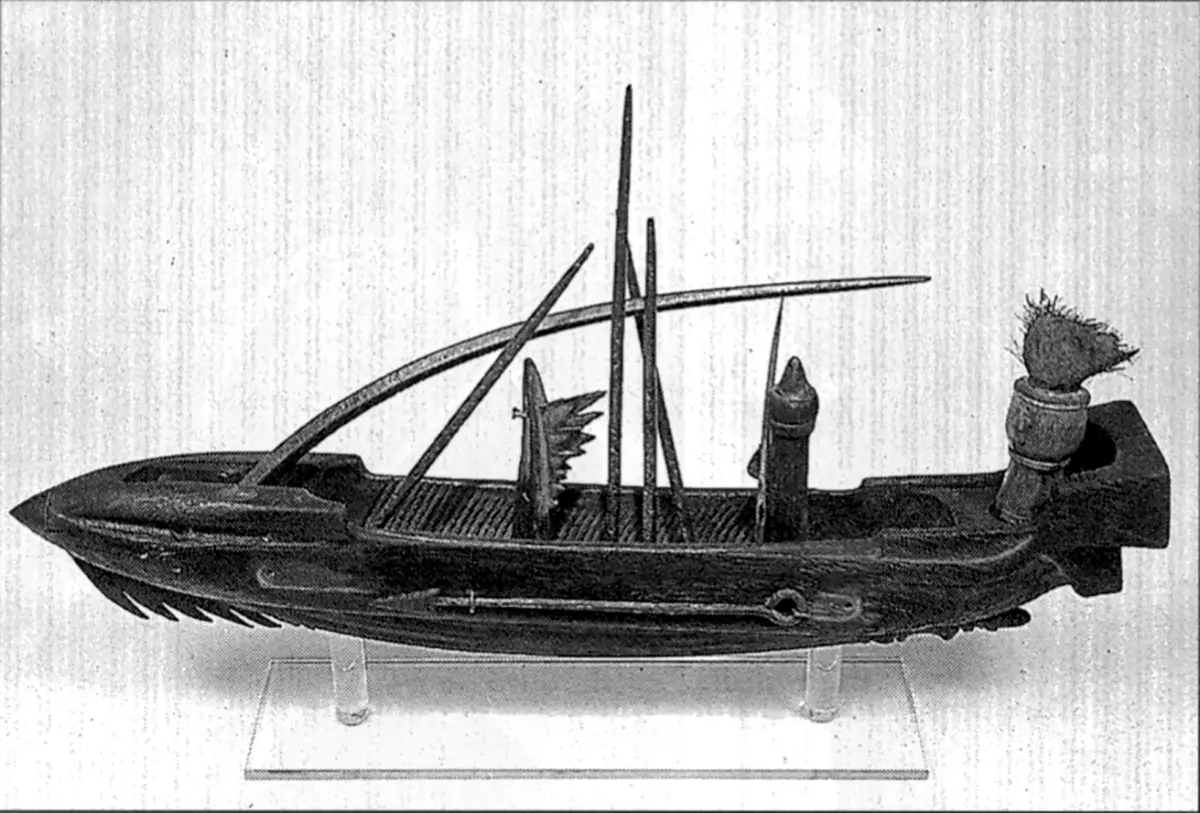
The thematic elements included totems, boats, knives, fish, pointed weapons, and tools, which referred to the constant relationship between the cosmos and man.
This mythical proposal was based on the archeological appropriation of the myths and beliefs of pre-Columbian cultures, as well as those from other latitudes. In a clear attempt to reactivate the underlying dimensions of cast-off materials, Dompé also uses rusty nails, scissors, scythes, hoes, knives, horseshoes, spurs, keys, and various other metal objects, combined with wood and stone. Thus, his boats are made of very different elements, creating an image which is half surreal, half ghostly. Fantasy and a sense of fine form come together at, but never transgress, the borders of kitsch, as in Hope Has No Shore (1994).
The sculptor’s hand flourishes in such works as Ritual Site (1982), a work measuring 62 x 51 in. in wood and stone; Orsa (1986), in iron, wood, and pigment; and Totem (1987), a large-scale work in violet Brescia and Carrara marble. In all these pieces, there is an emphasis on the integration of the different materials and their harmonization with color.
ALBERTO COLLAZO