With the advent of the twenty-first century, and the crisis in the major social and economic structures generated by the Industrial Revolution, we are faced with a system that manipulates reality through images and objects of commodification, distances us from the physical dimension of the universe, and leads us towards the concepts of abstract and virtual reality. This process has resulted in a total distortion of nature and our world.
The society of the spectacle, as described by Guy Debord,1 has affected the arts to such an extent that objects that are substituted images and symbols of reality are now used formally. The work of María Fernanda Cardoso takes advantage of this phenomenon by making an observation about nature. It is an indirect observation, founded on the analytical classification of objects imposed by science and industrialization, which does not correspond to an observation or direct experimentation in the field. María Fernanda Cardoso uses everyday objects which, within the context of an urban society, we are unable to understand or experience directly. These are considered exotic or simply symbols of the myth of man's cohabitation with nature.
Nevertheless, these objects belong to the concept of the society of the spectacle, where image and appearance are everything, where unity with life is lost forever and reality takes the form of a pseudo-world, a mere object of contemplation. Today no one pretends to be original or true, everything is pure representation. Real life, which has suffered from the assaults of the industrial and post-industrial ages, has been incorporated into daily experience through appearance, the visual formula invented for consumer society.
Even contemporary philosophy —the product of late capitalism— has fashioned a system of production that has become fragmented and individualized through a series of mechanisms that lead to particular and precise investigations, which are in turn, increasingly personalized in their semiotic codes and markedly differentiated each from the other. The concept of the useful majority has been replaced by that of the specific minority, and the standard product which is good for everyone has given way to the interactive product capable of motivating the individual and awakening a series of specific reactions and behaviors, each according to the consumer in question.2
Over the last 20 years, the individuality-based concept of normalcy has led to a new adventure of the object within contemporary sculpture. A conceptual object current has been developed, wherein the object is neither invented nor modified but is rather taken from and readjusted within the work of art. Artists now manipulate our perception of reality through the decontextualization of the objects which are its products, changing both the meaning and content of reality in the process. Manipulation becomes a presentation representation, forever changing the normal meaning of the images and objects used.3
The objects used are undeniably possessed of a memory derived from their reality within consumer society. So, it is that, in the work of María Fernanda Cardoso, the objects used require no creation; rather they present the image that we should already have of nature, which is to say what nature really is not. The objects become usable and their value is transformed from the economic to that which resides in their functional memory, their legacy.
According to Foucault's theory of knowledge, the demarcation line between what is true and what is false has been eliminated, and there is a new order which remains in limbo, within the space of images, and which furthermore mystifies all human experience vis-a-vis the natural world. The work of art is not the reality of the commodified object, nor does it portray the objective reality of nature: it is rather something else, neither real nor false, but an approximation, through the ironic use of readymade objects, of an understanding of nature derived from a personal contemplative experience.
The myth of nature legitimizes itself through the relationships created between people and images. These images and objects that predominate in an urban social order, these mercantile phenomena whose value is weighted according to their appearances are simply erroneous —which leads to a myth that is still more distant from reality. Cardoso takes advantage not only of commodification but also of the dislocation in meaning that nature acquires when expressed through mercantile and exchangeable objects and images.
Cardoso's work creates a new, equally unreal order of nature, which by its ritual or ceremonious character allows for a more real contemplation of nature than that provided by consumer society. She uses the vulgar manifestations of the market, such as tourist souvenirs, to produce new meanings.
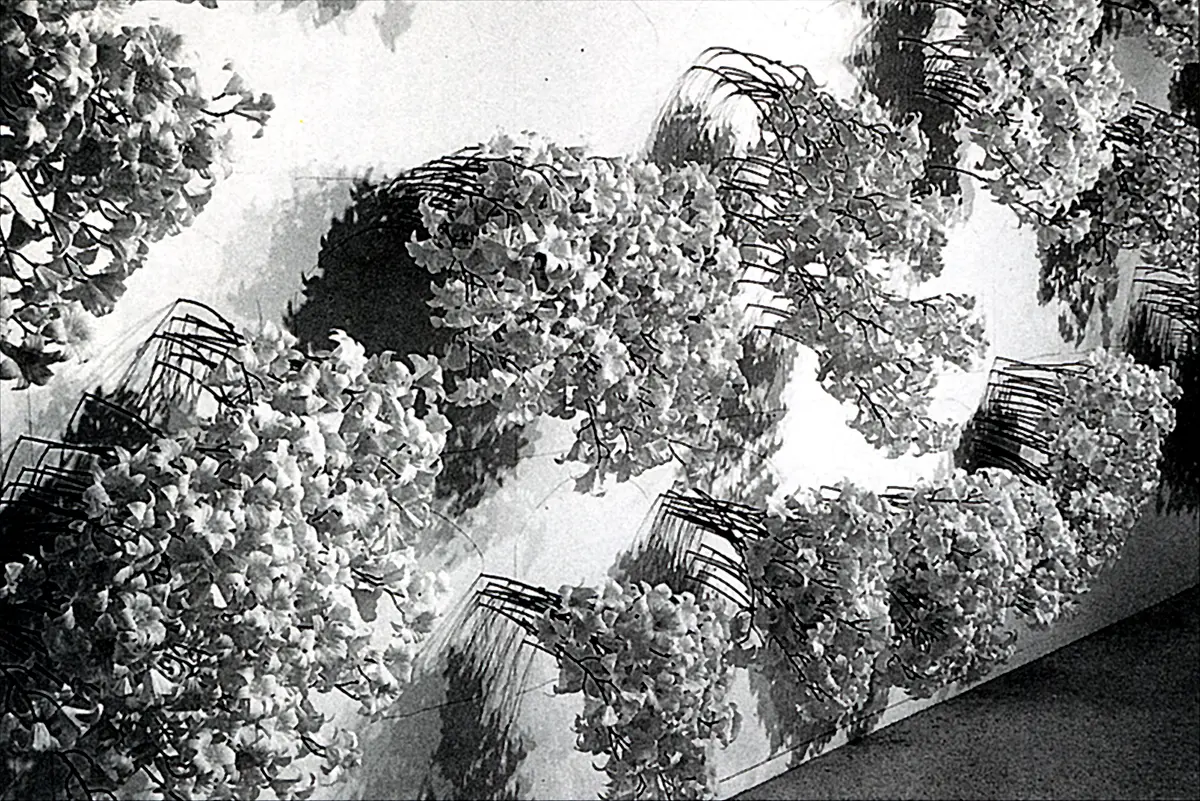
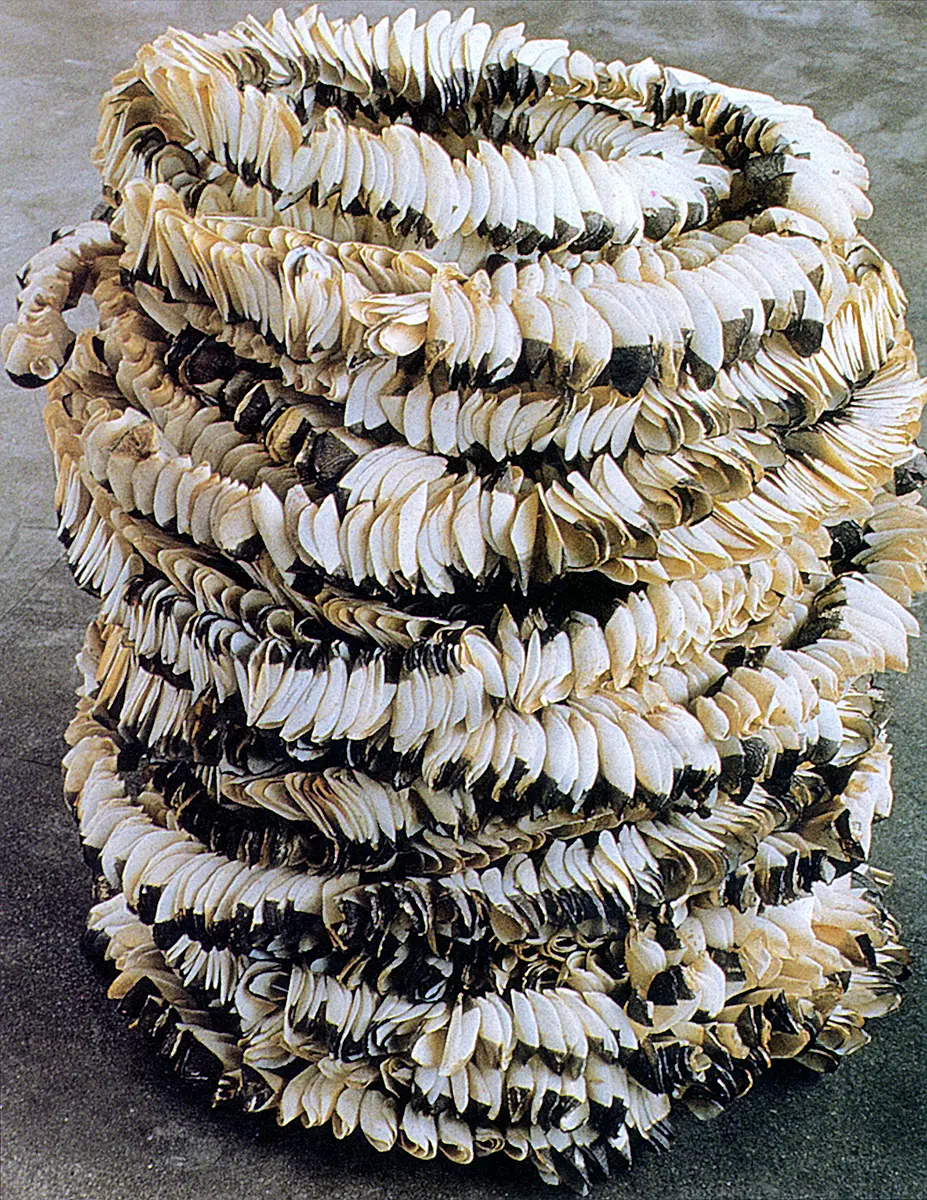
Cardoso invents her own chimeras about nature, occupying a specific but unreal space and suggesting that an understanding of reality will not be found in the world of such objects. This idealism seems derived from a melancholy sense of memories experienced at some given moment by the artist, which, despite the search for a better understanding of the world's reality, remains within the realm of dreams. The installation titled Woven Water (1994), which recreates an underwater landscape, is made up of marine life which can be found wholesale in California. The space, lit softly by a blue/greenish tint recreates, like a sort of Alice in Wonderland, the underwater world without abandoning the cultural baggage of starfish, sea urchins, and shells as collectible objects or things that remind us of travel.
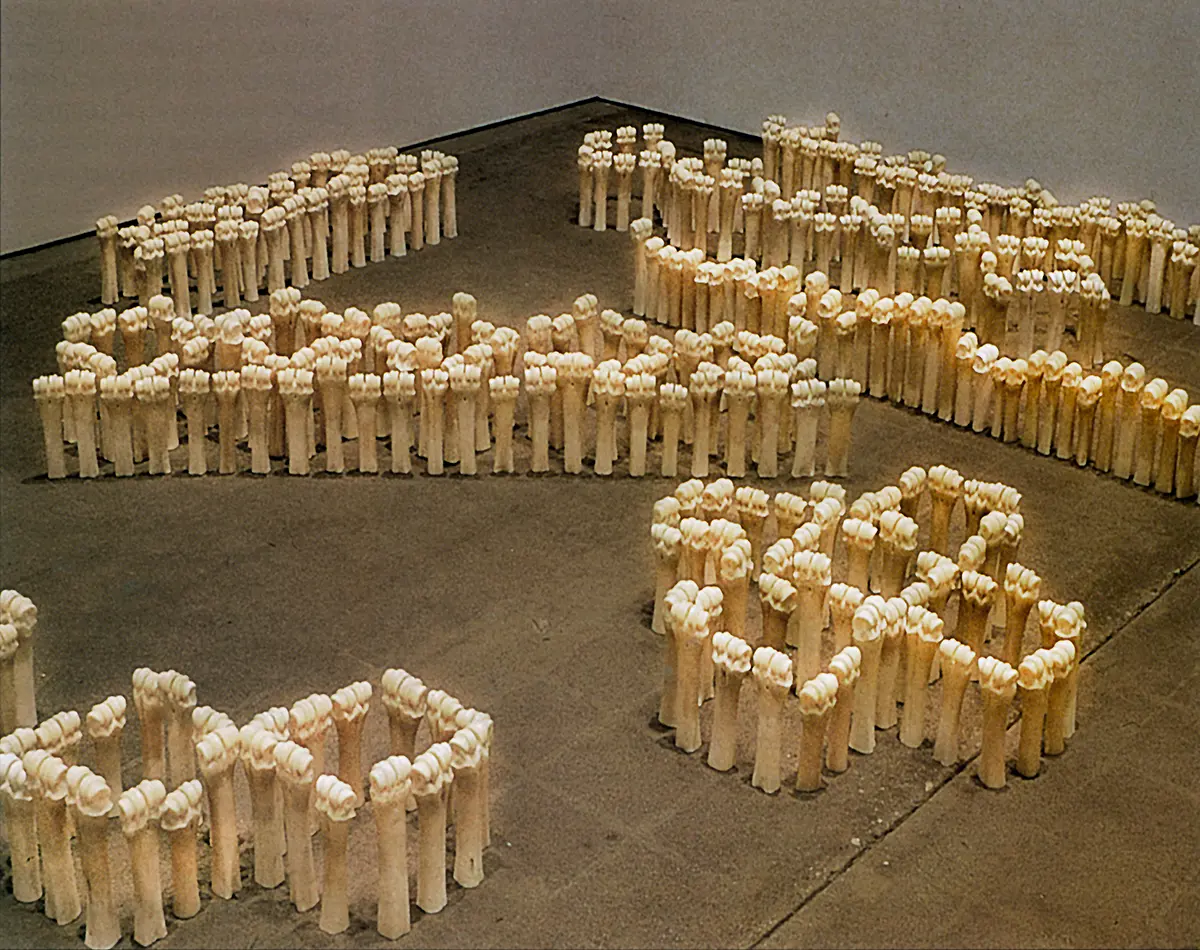
Cemetery (1992) is another work that recreates a contemplative state of death. The morbid element is not the content of the work, but rather pain and its manifestations are suggested in the clustering of flowers, symbols of beauty, fertility, and life, in order to celebrate death and the sense of loss that it entails.
The submergence of the spectator into these spaces allows for a vision of or reaction to nature, animals, and the human dimension, by which their fantastic condition does not deny the industrialization of the objects gathered together. On the contrary, for Cardoso industrialization and the economy play a twin role, since the artist uses these phenomena in her production and at the same time criticizes them. At the level of production, Cardoso orders her already dissected animals or flowers in large quantities. This enables her to participate actively in the consumer society, maximizing her energy to obtain a specific result or product. The effective production of a work of art turns the artist into a powerful being who can create in detail a universe that captivates the spectator and makes him participate in this new reality.
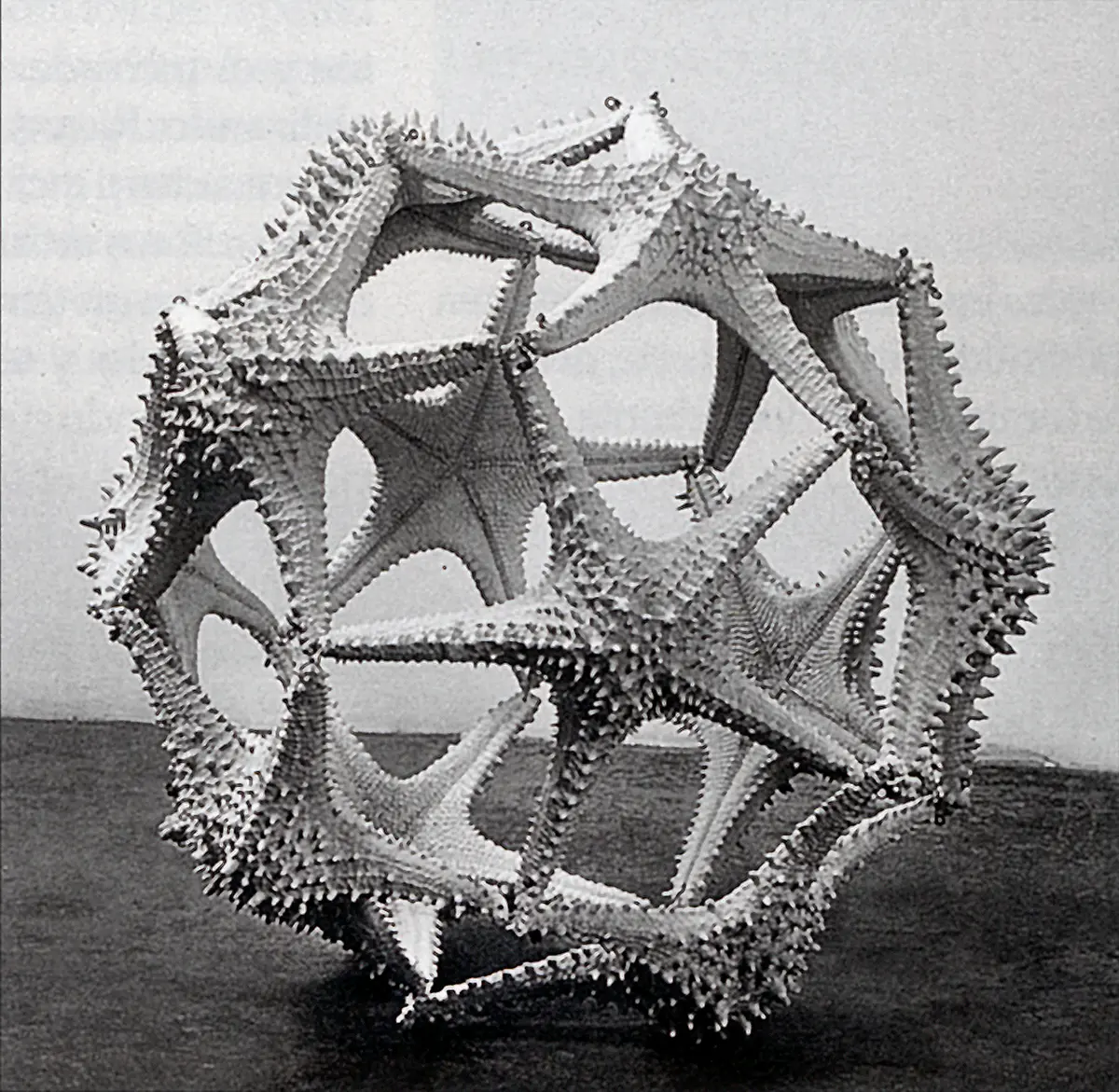
At a critical level, this relatively complex handling of images means that the work becomes more distant from the world's experimental reality. Cardoso manages to avoid this distancing through observation. An observation used in the selection of objects for their natural characteristics, and an observation on the part of the spectator confronted by things that are normally seen as banal.
The industrialization of nature has been extended by man's activities in the field of tourism. Excursions that promise nature in the wild are in reality an adaptation of the idea of wilderness and of the commodities and needs of modern man. They are an unreal experience of that myth. Similarly, the souvenir the tourist brings home will allow him or her to keep the image of that experience alive in his or her living room. This object, which has no other value outside the representation of an idea, does not necessarily have to be true either to the reality experienced or to the idealization of this reality. How many times do tourists buy a replica of the Statue of Liberty in New York without actually having visited the monument? And then there are the tourists in the Caribbean who take home with them a starfish from waters that are so polluted that they have no marine life at all.
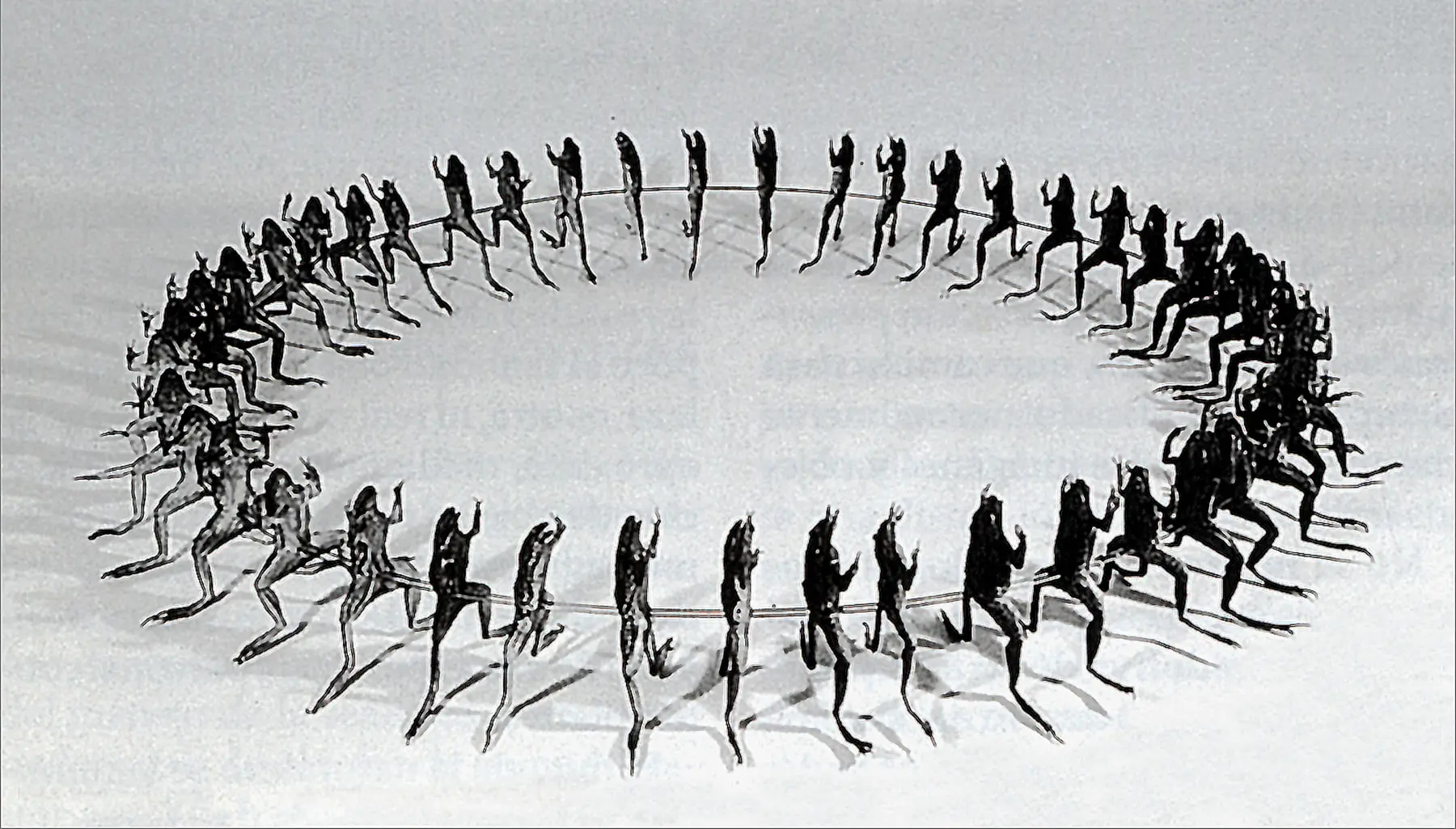
In addition to the presentation of the objects as such, Cardoso's interventions emphasize the arrangement of the objects and their morphology. The series of works Untitled (from 1990) presents frogs, lizards, crickets, and other dissected animals, arranged in circular, spiral, or other geometrical forms that refer back to the abstract designs of primitive cultures. They also represent the forms of nature where symmetry and the balance of things —at first sight arbitrary— reflect a delicate equilibrium. The resulting compositions recreate an age-old secular atmosphere: the installations evoke sacred places, and the works are ritual objects. Crown for a Chibcha Princess (1990) looks like an altar below which the princess prostates herself to be crowned. The crown of lizards recalls the laurel crown of the Roman emperors and Christ's crown of thorns. In our contemporary context, it may also suggest the suffering of local cultures as a result of modernization, or their triumph in remaining marginalized. Once again, through the interplay of assemblage, Cardoso subtly places us before contemporary social problems.
In formal terms, her work shares compositional characteristics with minimalism and Arte Povera. From these movements, she has acquired a taste for experimenting with the organic nature of objects, their natural geometry, and their appearance, creating repetitive compositions through the multiplication of objects. From Arte Povera, she has learned to use poor and recycled material within a critical context. With a dash of irony, Cardoso manipulates the idealization of nature which is characteristic of our world, transforming her pseudo-critical elements into objects of contemplation, as in the work titled Frogs Dancing (1990).
María Fernanda Cardoso was bom in Bogota, and studied in both Colombia and the United States. She has concentrated her research on the physical and individual associations of the unusual materials she has used in her sculptures and installations. Very much aware of artistic trends in the twentieth century, she has also made use of her country's cultural heritage, employing elements from pre-Columbian, colonial, and present-day traditions. Cardoso's cultural and individual identity is based on a global awareness of ecological destruction and on the survival of the individual within the post-industrial system. Her work touches obliquely upon the themes of multiculturalism and other social processes that are characteristic of Latin American art. Nevertheless, her work does encompass and link up the idea of the universal conditions of our destruction and the failures in today's economies derived from advanced capitalism.
The work of María Fernanda Cardoso has always had a metaphysical dimension that leads toward a contemplation of the environment. This contemplation is of a critical and ironic type, which at once seems full of an extreme idealism. In her unreal worlds, Cardoso restores dignity to objects that have been expropriated from nature and used as symbols within the language of the industrial and post-industrial marketplace. In a similar fashion, the idea or object that they symbolize can be viewed and analyzed from another angle.
With her work titled Flea Circus, Cardoso embarks on a new adventure. Working this time with real animals, she moves from a passive observation of animal characteristics to a more active stance where she as an artist and human being exercises control over the natural environment. Through direct contact with the animals, their training, and the process of study and care which this requires, Cardoso ceases to be a mere spectator of the natural world to become a mediator. She creates an order in which she is the driving force without disregarding the contingencies which arise from a lack of understanding of the animal world, or the meaning that this work might acquire in the context of present-day art.
NOTES
1. Guy Debord, The Society of the Spectacle, Zone Books, New York, 1994, p.12.
2. Pierre Restany, Les Objets-plus, La Différence, Paris, 1989, p. 51.
3. Reference could be made to the work of Ann Hamilton, Bruce Nauman, or Bertrand Lavier, where objects are used without being substitutes for reality. Nor should we discount the work of Marcel Duchamp, the pioneer of ready-made, and the incorporation into art of objects resulting from industrialization.
ANA SOKOLOFF