In the course of the past decade, new modes of seeing and thinking critically about information, communication, and culture have appeared. These radical changes are at once the culmination of a process and the beginning of another. The new technologies of communication have not only assumed a central place in the industrial network ... but also in the strategies of social resistance; and in the Third World as well as in the "First.”1
If one considers—as I do—that the "fine arts" are one aspect within the wide spectrum of contemporary communications —an aspect that serves, it is true, a very specialized audience calculated to be an international elite of about 10 percent—then it becomes possible to examine both art and the mass media and the ways they intersect, with a revised set of determinants. In fact, as we enter a new phase of global communication and worldwide informational highways, it becomes even more necessary to consider these conjunctions.
I propose to do so by bringing together what appear to be not only disconnected phenomena, but forms of communication operating in totally different spheres of action: one in the global public domain; the other in the narrowly constricted and constructed arena of the fine arts. Both modes of communication in this instance have been set into motion by Latin Ameri can practitioners; both have impreg nated with political or subversive content; both deal with contemporary political events and their personal fall out; both address new forms of power confrontations that are rooted in past history, but are being reconfigured in the present.
The first event to be considered is that of the encounter in Chiapas, Mexico, between the federal government and the Zapatista National Liberation Army (Ejército Zapatista de Liberación Nacional; or EZLN), composed of Maya guerrillas, that began January 1, 1994. The recognized leader of the Zapatistas, Sub-comandante Marcos, brought this cause to worldwide attention through his use of contemporary communications technology.
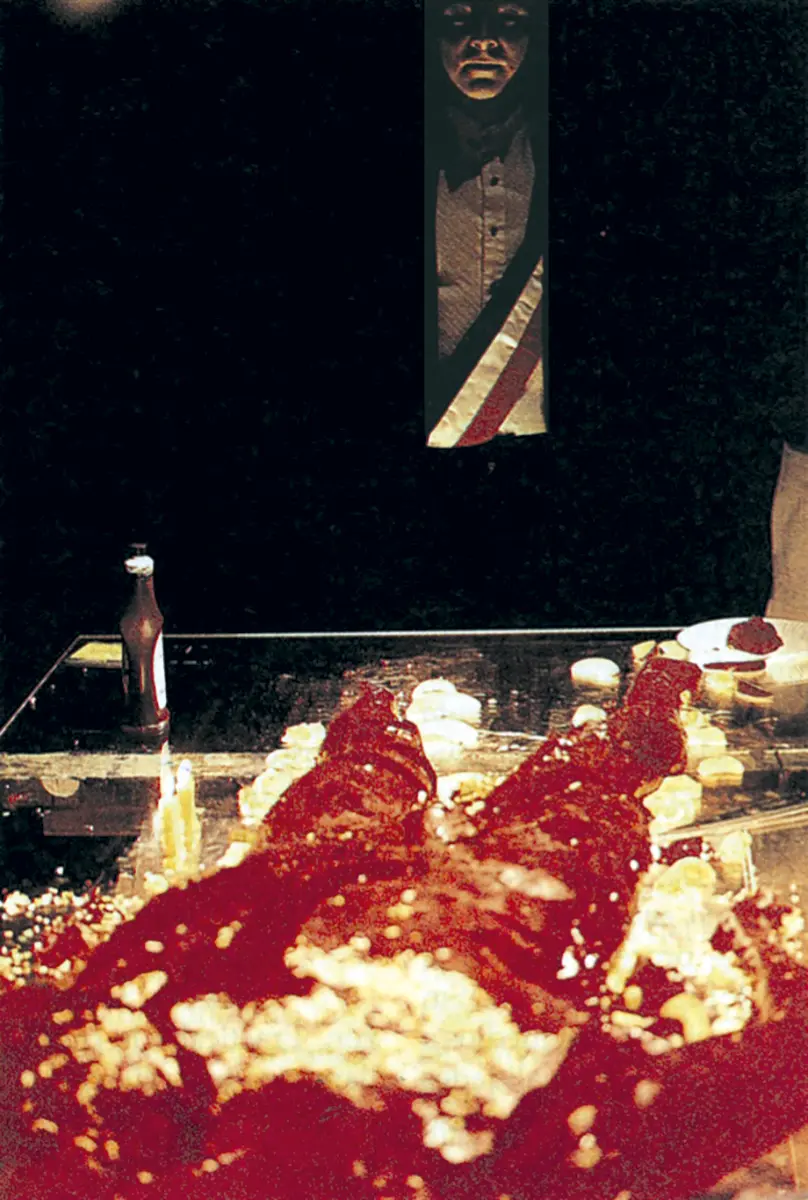
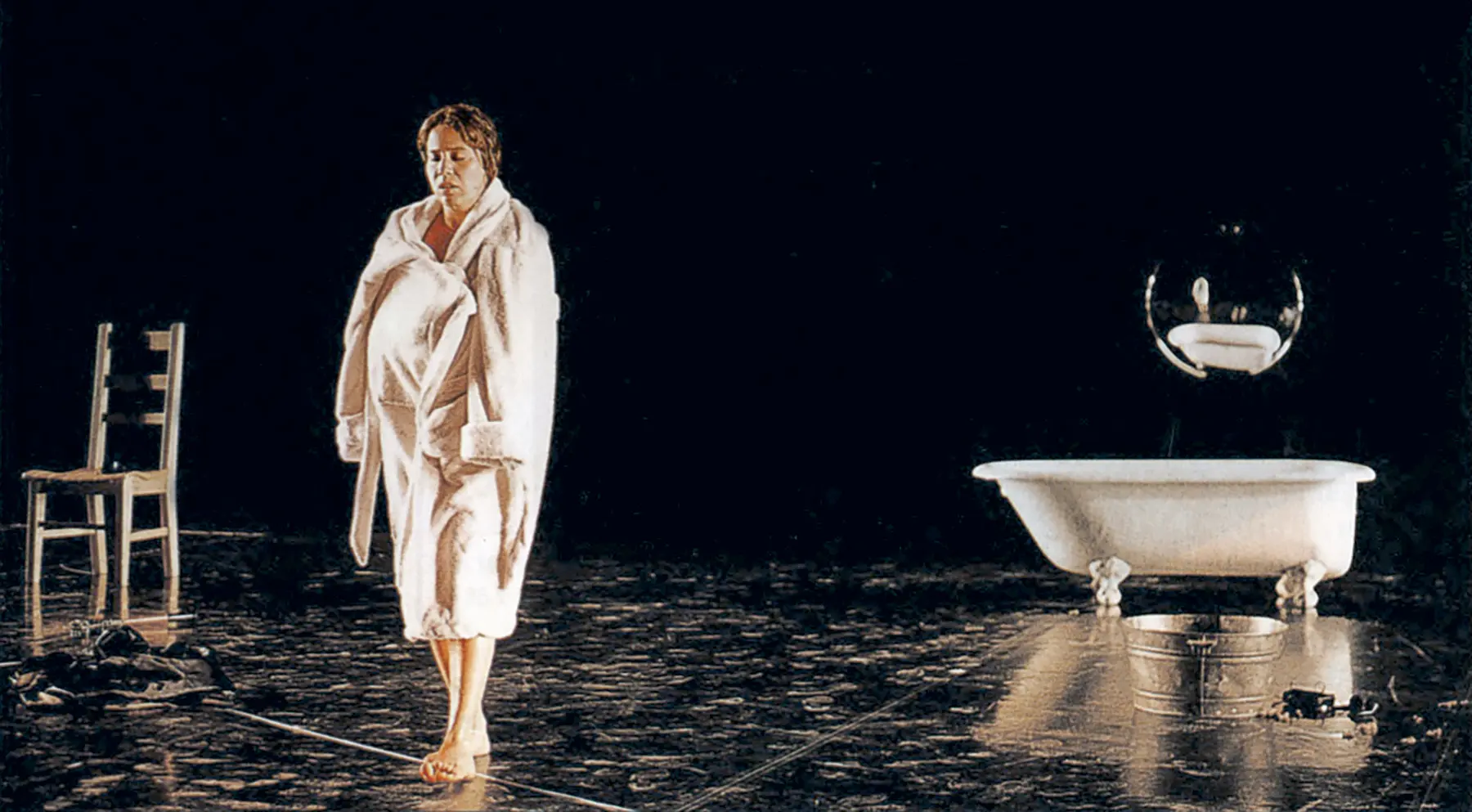
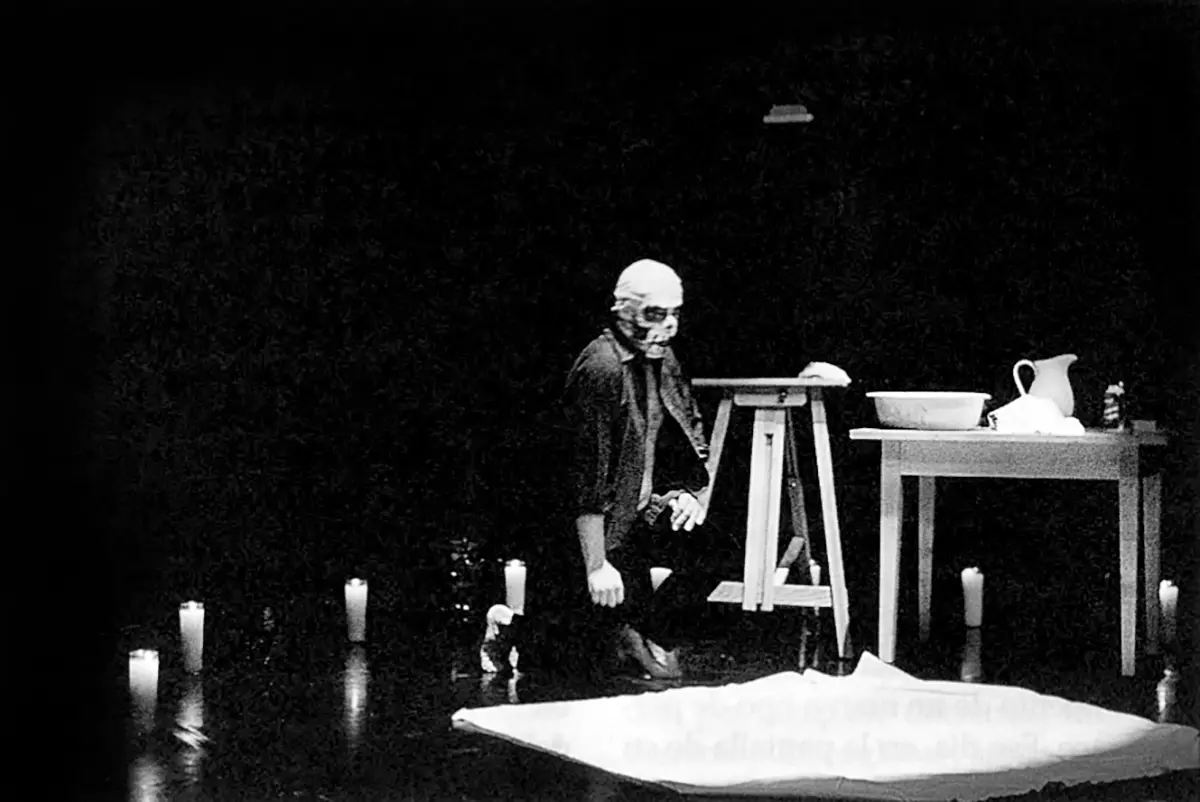
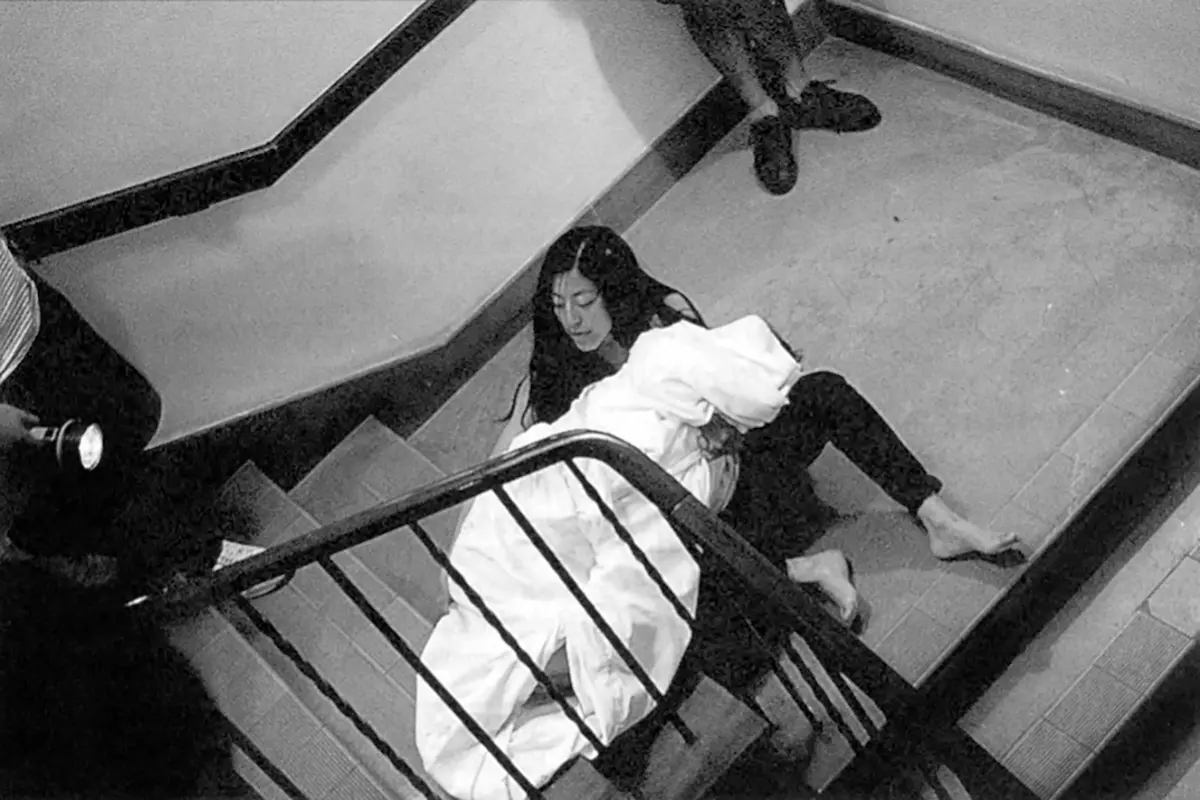
The second event is the month-long performance art cycle, which took place in Los Angeles and Mexico City by Chilangos (from Mexico City) and Latino/Chicano artists from the state of California. Under the title of Terreno Peligroso/Danger Zone, ten performance artists were brought together through funding provided by both nations in the name of advancing their economic/political collaborations under NAFTA, the North American Free Trade Agreement (Tratado de Libre Comercio, or TLC).
Though seemingly remote from each other in time, place, and action, both these events are organically linked. The signing of NAFTA/TLC was the final event in a long history of oppression and exploitation of the indigenous peoples of southern Mexico that triggered the EZLN uprising. In the almost two years that have gone by since then, the Mexican economy and its corrupt political infrastructure (that almost disintegrated in the last presidential election), have been clearly exposed on both sides of the border. Furthermore, the EZLN uprising has once again raised the specter in Mexi co (and Latin America at large) of the most important feature underlying most revolutions of the 20th century, beginning with the 1910 Mexican Revolution: the fundamental failure of agrarian reform programs and, as a result, the continuing devastation of indigenous (and mestizo) communities that began with the Spanish conquest.
Warfare also exists on the almost 2000 miles of the U.S.-Mexican border between the militarized U.S. Immigration and Naturalization Service agents and undocumented workers, primarily from Mexico and Central America. Xenophobic North Ameri cans have never understood that U.S. economic policies (carried out in col laboration with Latin American elites and military forces) have been a root cause of recent impoverishment in the countries concerned—beginning with investment in Mexico's oil extractive industry during the 1970s, to U.S. support of Central American dictatorships that led to mass exodus in the 1980s, with great numbers migrating to Cal ifornia. The recent passage of Proposition 187 in California directed against the undocumented has exacerbated the conflictive encounter between Anglo-Saxons and Latin Americans (as well as Asians) in a state where people of Third World extraction are practically a majority. It is obvious that Mexicans and Latinos/Chicanos are unified on these issues and that they also share an empathy for the personal and psychological fallout that afflicts residents in each of these "danger zones."
Politics as Performance
According to visual poet and performance artist Guillermo Gómez-Peña, the morning of January 1, 1994, marked the birth of a new type of performance. Appearing on his television set in Mexico City that day were the armed guerrillas calling themselves Zapatistas. The ensuing war under the direction of "Sub-comandante Marcos", writes Gómez-Peña, was carried on as if it were a performance. Not only had it begun precisely on the day that the NAFTA / TLC went into effect, but the participants wore black pasamontañas (ski masks), while some carried wooden rifles, like props in a theatrical event. Even more suggestive was the self-conscious and sophisticated use of the media. As important as the military strategy itself was the employment of Fax messages, the Internet Superhighway, and the staging of press conferences reaching international audiences that underlined the symbolic power of the EZLN's military actions. Gómez-Peña considers Sub-comandante Marcos the latest populist hero in a noble Mexican tradition that includes Super barrio (the "Superman" of the damnificados after the disastrous 1985 earthquake in Mexico City), Fray Tormenta (the wrestler priest), and Super-Ecologista, all offshoots of a U.S. comic book hero and the popular masked wrestlers of Mexico.
Such a reading is thoroughly postmodern, but not unprecedented, and must be seen as a continuation of strategies associated with the New Left in both Latin America and the United States. Rooted in the transformation of communications technology that signaled the emerging Age of Information during the late 1950s, the use of images and texts (posters, handbills, costuming, masking, public theater, floats, and all the paraphernalia of Old Left agit-prop) generally aimed at audiences in the streets of urban cities, was, by the 1960s, redirected toward much larger and non-local audiences by channeling them through the mass media. In his book The Whole World is Watching, Todd Gitlin called this process "making the most of the glare (of the spotlight)."3 Nevertheless, the media's tendency to certify a movement's leaders and its outstanding personalities, and even their power to convert leadership into celebrity, implicate the media in a movement's own and public image. It is worth noting that the EZLN monitored the media's intrusion by selectively refusing information and access (to Mexico's Televisa, for example). That fact notwithstanding, it was the media that situated Sub Comandante Marcos as the most important leader of the EZLN, and ferreted out what they considered his "true" name and identity.
Crucial to this shift in focus was the large-scale availability of television that preempted and eventually displaced newspapers and the radio as the major vehicles of dissemination. Emblematic of this transformation was a song (c. 1960s) by African American composer Gil Scott-Heron titled The Revolution Will Not be Televised a reference to the Black Power movement in cities of the United States. Implicit in the words of the song was a denial of what had already occurred, namely, the mass mediaization, the consumption (commercials and all) of political protest. "Serious" revolutions, according to Scott-Heron, were not media events; if they were, he seemed to say, they were not "revolutions."
Scott-Heron, of course, was correct. He was exercising what Coco Fusco has called "a critical reflection on media culture,"3 on the fact that "real" revolutions become the nutrients of mass media circulation after the fact, when historians and analysts have had an opportunity to sort out what has occurred, provide visual and textual explanations, and title the event based on a critical assessment of its results. In the process, the ideological position of the newscasters who presented the raw material is taken into account. Thus, we might consider those engagements that do not result in profound structural change as "rebellions," "riots," "revolts," or "protests," but not as revolutions. Clearly the participants cannot accurately categorize themselves during the process, even if they possessed such a historical self-consciousness, although many terminologies and ideologies flower prior to, and in the course of, the action, and "revolution" may be named as the goal. Since the advent of mass television, such events, of course, are televised, which was doubtless Scott-Heron's ironic point.
The New Left of the sixties quickly grasped this unorthodox approach to public protest. For example, Uruguay's conceptual artist Luis Camnitzer, who lives in New York, remembers the mass demonstrations against the war in Vietnam. One, held in the huge Sheep's Meadow area of Central Park, featured many thousands of people lying on their backs in order to sloganize as they faced the media helicopters flying above to film the demonstrators.4 From 1965 on, Hippies, Yippies, and artists executed their performances before the cameras rather than in the streets for the passing public. Depending on the vagaries and ideological agendas of the press, they could reach far greater audiences and deliver the burden of their political program to other cities and other nations. This is precisely what Sub-comandante Marcos accomplished, by functioning with a Fax, a laptop computer with a modem, and a connection with Internet, relaying information and strategic statements on the EZLN worldwide from the cities and remote Maya hamlets of Chiapas. Further more, Marcos, speaking for the EZLN, repeatedly claimed that the Army's goals were "reform," not revolution: the redress of unbearable living conditions accentuated under the neoliberal policies of the Mexican government since 1982, and on the advent of TLC, which allowed the Mexican elite, in collaboration with multinationals from the United States, to further deterritorialize and exploit rural and indigenous communities throughout the nation.
Communications, Commercialism, Pop Art
It is generally acknowledged that "happenings" and subsequent "performance art " developed from the base of Pop art, the whole labeled "neo-Dada" at the time. Paradoxically, the alliance with commercial art that triggered the Pop art phenomenon exploded into the happenings and performances of the early 1960s, many by the Pop artists themselves, as a means of rejecting the commodification of fine arts by art market forces. Such commodification took the several forms of purchasing art as an investment; of turning the artists themselves into heroes or "stars" like those in film, as a commodity for newspaper and magazine gossip and even the endorsement of products; and also by integrating visual segments of art, past and present, with images of the products themselves and their ad vertising texts.
One of the earliest critics to raise the rapprochement between elite art and mass culture was John Berger, who evaluated the nature of "publicity" (or advertising) as early as 1972 in his film sequence Ways of Seeing, aired on British Broadcasting in four segments. Three of the sequences were dedicated to the demystification of traditional European painting; the fourth dealt with images used for commercial purposes by television, billboard, and print media. The snob value for elite viewers of images derived from traditional European paintings, combined with plugs for a particular product, or adapted from paintings and redesigned for product promotion directed at mass audiences, formed the gist of Berger's presentations. In deconstructing the commercials we have come to accept as part of the urban landscape, Berger was careful to separate "publicity," - which has been explained as a medium that presumably benefits both the public (the consumer) and the most efficient manufacturers by bringing knowledge of choices to that public and thus stimulating the economy - from the pleasures or benefits to be enjoyed from the things it advertises. "Publicity—he said—begins by working on a natural appetite for pleasure. But it cannot offer the real object of pleasure." Publicity is never a celebration of a pleasure-in-itself, but about the future buyer, made glamorous by the product or the opportunity offered, which requires that he or she will be transformed by buying something, will be made richer through spending money.
Images that draw on traditional works of art are seen as a set of signifies: that art indicates affluence, and that it is part of the furnishings which the world gives the rich and the beautiful. Since glamour (and the ensuing envy of those possessed of glamour) is promised to the consumer as a key to happiness and pleasure, both the future-oriented nature of advertising and its inevitable frustration give rise to a type of alienation that translates happiness as the possession of objects. To this advanced state of alienation we owe car bumper stickers proclaiming "I was born to shop" that circulate in the United States (usually associated with women, who are the chief targets of much consumerist publicity), as well as the phobias that combine credit cards with consumerism, articulating for the frustrated, through overspending and personal bankruptcy, the internalization of consumerist ideology.
The most compelling Pop image representing these dilemmas is probably Richard Hamilton's piece displayed at London's Whitechapel Art Gallery in 1956, Just What is it that Makes Today's Homes so Different, so Appealing? In the picture is a muscle man from a physique magazine carrying a giant lollipop labeled "POP," and a stripper with sequinned breasts. Surrounding them are collaged images of all types of consumer items (including a large television set), of which their own sexy bodies have become a part.
While Hamilton obviously understood the argument Berger was to advance almost twenty years later on television, U.S. Pop artists bought into the consumer culture. The success of this movement, claims one observer, was due to the integral relationship between Pop art and U.S. consumer culture, which reached its zenith in the 1960s. “Pop art not only depicted and reflected this rampant consumption but also appropriated the mechanisms and strategies of corporate society, ensuring the effective marketing of this movement and its absorption into the matrix of consumer institutions.” The era of Pop art is generally viewed as that cultural juncture during which modernism passed into postmodernism; it was also the era that signified the intensified commodification and commercialization of fine art itself.
If Pop art deliberately integrated mass media into its presentations, happenings, and performances rejected them. Earthworks and environmental installations, for example, which could not be carried out in galleries, long remained unknown except to a small group of aficionados. Eventually, the gap between fine art as a private activity and the necessity for such art to be museumized or collected in order to be validated as art became too large and rapidly led to a certain "institutionalization" of "non-object" and performance art. The preservation of documentation, which is guarded in museum and gallery archives and can be included in exhibitions without the presence of the artist, showed the same facility to preserve, conserve, and collect the ephemeral as a cultural artifact as occurred within the "precious object" syndrome. Artists discovered that the voracious appetite to collect "things"—even those objects and activities invented specifically to thwart this type of possessiveness characteristic of capitalist societies from the 16th century forward, but now informed by artistic consumerism, elite and popular—could not be short-circuited unless it so out raged social and political norms as to become 'outcast,' and subject to censorship and/or destruction. And even in these cases, the tendency toward the fetishization of the fine arts eventually admitted their collectibility through the passage of time (which allowed contested issues to be forgotten), or a change of venue (to another country, for example, with a different set of standards).5
In actuality, the re-emergence of painting in the early 1980s after two decades of conceptual and performance art bifurcated art production. Paintings could again be directed to the art market, while conceptual and performance art—often using subtle and coded languages—could be directed to more narrow audiences in both authoritarian and democratic situations. Both forms, nevertheless, still contained subversive elements not yet acceptable to institutionalized art structures, but either unrecognized or reified by a language of formalism.
Performance as Politics
It has been argued that performance art in Europe and Latin America had a more political/social consciousness than that of the United States. This is generally true if one considers that U.S. happenings and performances either were contained within the boundaries of art world concerns, were autobiographical or generally self-referential, or framed whatever social concept they might have contained within formalist concerns, or within a formula of experimentation-for-its-own-sake. From the 1970s on, however, with the emergence of feminist, African American, Asian, Native American, Latino, and gay/lesbian artists, this aspect of performance began to change as a politicization of issues formerly subsumed under social categories was aesthetized as part of a need for symbolic communication.
In Europe, the most socially-oriented performance artists were those associated with the Fluxus movement, some members of which (like Joseph Beuys and Wolf Vostell) influenced Latin American artists by reputation or by personal example. Other Latin Americans either preceded or contributed to the evolving development. Even a short list of Latin Americans and Latinos involved gives an insight into the exploration of this artistic field. Without attempting any more than a small sampling, happenings/performances emerged in Venezuela (Rolando Peña critiquing a society based on oil production as early as 1963, Diego Barbosa, Eugenio Espinoza, Antonieta Sosa, Pedro Terán, and Carlos Zerpa on issues of violence); in Brazil (Lygia Clark, Hélio Oticica, and later Regina Vater, all with interactive activities; León Ferrari, Anna Bella Geiger, Gabriel Borba, Sonia Andrade, Jonas Dos Santos); in Puerto Rico and New York (Papo Colo, Antonio Martorell, Rosa Luisa Márquez, Pepón Osorio, and Merián Soto on questions of identity); in Cuba (Manuel Men- dive, Magdalena Campos-Pons reflect ing on African history and beliefs); in México (Alejandro Jodorowsky and Felipe Ehrenberg in the 1960s; Maris Bustamante and the No Grupo, Guillermo Gómez-Peña, Guadalupe García, Marcos Kurtycz); in Chile (Lotty Rosenfeld, Juan Castillo and the Colectivo de Asociaciones de Arte, or CADA, and Carlos Leppe on the restrictions and abuses of the Pinochet dictatorship); in Colombia (Antonio Caro); in Costa Rica and Los Angeles (Elia Arce); in Uruguay (Clemente Padin with street activities and hand-carried texts, Nelbia Romero with multimedia performances during the dictatorship); in Argentina (Leopoldo Maler, Alberto Greco, Marta MinujÍn—with Allan Kaprow and Wolf Vostell in New York—Oscar Masotta, Rubén Santantonín, Oscar Bony, Alfredo Rodríguez Arias, and the writers of a 1966 manifiesto on happenings: Roberto Jacoby, Eduardo Costa, and Raúl Escari); U.S. Cubans (Ana Mendieta on her identity as a woman and a Cuban exile, Coco Fusco with Guillermo Gómez-Peña); U.S. Chicanos (the ASCO group of Harry Gamboa, Jr., Patssi Valdez, Willie Herrón and Gronk in the 1970s on the invisibility of Chicanos in civic life, and on police and social violence; Nao Bustamante, Luis Alfaro, Rubén Martínez, and the Chicano Secret Service); U.S. Puerto Ricans (Rafael Montañez Ortiz / Ralph Ortiz, in the early 1960s).
NOTES
1. Armand Mattelart and Michèle Mattelart, Rethinking Media Theory: Signposts and New Directions, trans, by James A. Cohen and Marina Urquidi, Minn: University of Minnesota Press, 1992, VII.
2. Todd Gitlin, The Whole World is Watching: Mass Media in the Making and the Unmaking of the New Left, Berkeley: University of California Press, 1980, p. 90. Gitlin's own lens was pointed at the mass events of 1965 in the United States against the war in Vietnam and Southeast Asia, using as a thesis the history of a “fateful conflict over control of the public cultural space in a society saturated with mass media” (p. 1).
3. Coco Fusco, English is Broken Here: Notes on Cultural Fusion in The Americas, New York: The New York Press, 1995, p. 136.
4. Camnitzer has argued for understanding the activities of the Tupamaros (urban guerrillas in Uruguay, early 1960s) as a form of performance in that the group's primary goal became publicity and communication, not military victories. Luis Camnitzer, "Art and Politics: The Aesthetics of Resistance, "NACLA: Report on the Americas, 28, No. 2 (September/October 1994): 39.
5. Several works of Edward Kienholz provide excellent examples. His installation of a couple making love in the back seat of an automobile went from censorship to centerpiece in the Los Angeles County Museum of Art. His large installation of white racists, lighted by the headlamps of their cars as they initiated the lynching of a black man, was sold into a German collection.
SHIFRA M. GOLDMAN
Art historian and researcher with the Latin American Center and the Art History Department of the University of California, Los Angeles.