
This exhibition, entitled Tamayo, From Reflection to Dream 1920-1950, offered an overview of the early work of this artist from Oaxaca, covering some thirty years of his life, from his graduation from the National School of Fine Arts (1921) up to the emergence of the themes and style which were to characterize his production in the following decades. Despite its chronological structure, the show did not emphasize the biographical aspects of Tamayo’s work. Rather, it offered a revisionist reading of his years of training, which showed, above all, the consolidation of his painting as perception and as an artistic expression of his surroundings. It also covered his years in New York, a city in which he established his first links with the European avant-garde movements.
However, Tamayo was not a follower of schools or movements. Although we can follow his initial incursions into the impressionist style and the Cubist influences in some of his canvases (The Phonograph or The Plane, 1925), Tamayo sacrificed his personal experience to the integration of pictorial vocabulary. His careful observance of the serene and well-constructed work of Braque (The Smokers, 1931) and the explosive, expressionist vein of Picasso. (Children Playing with Fire, 1947) allowed him, over the years, to adapt his means and language to his needs of expression.
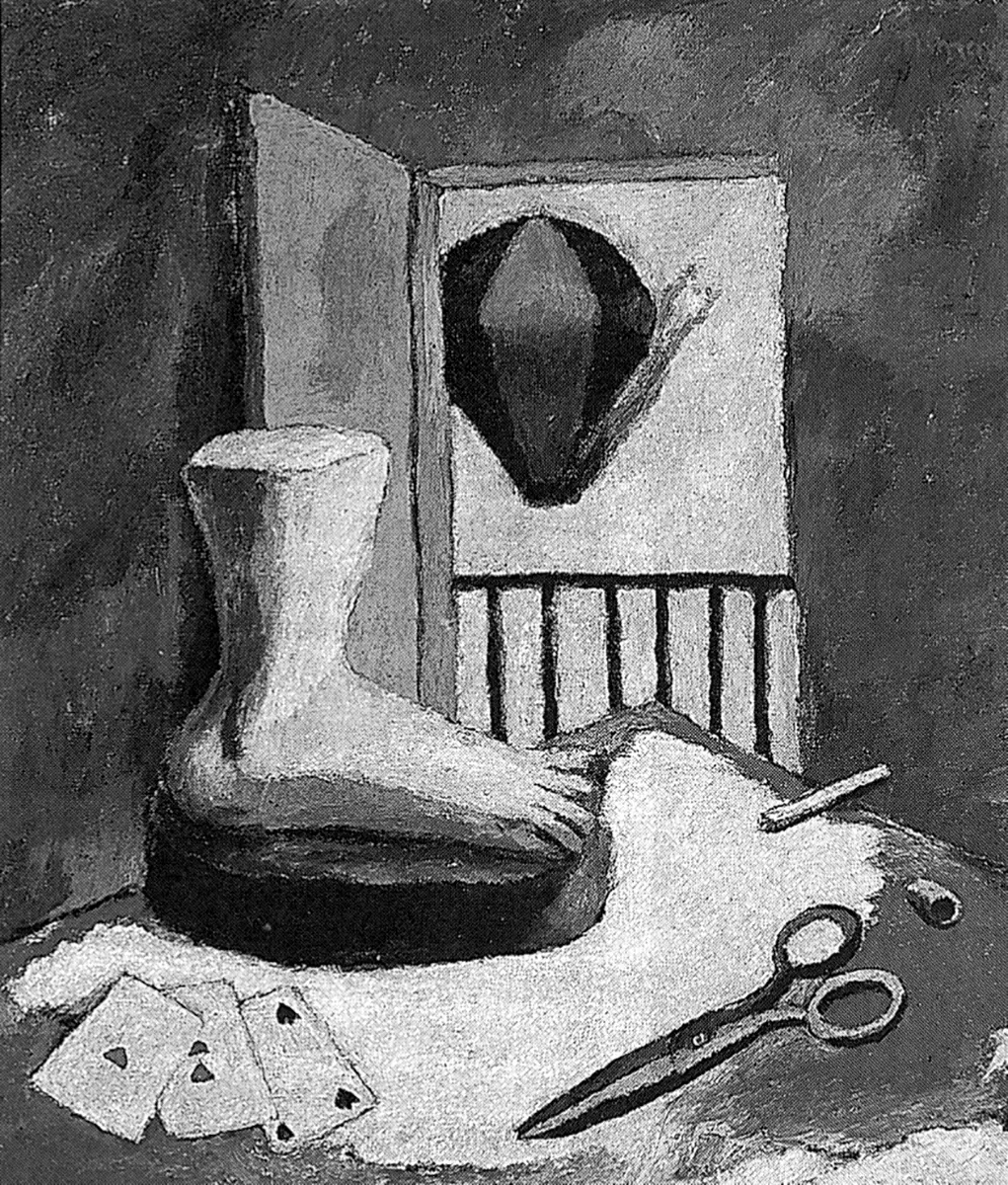
For Tamayo, "there is a message in painting, but it is mysterious and not subject to the will of the artist." Indeed, in his still-lifes from 1928, the monumentality he achieved in the juxtaposition of fruits, mandolins, and fragments of bodies acquired a symbolic dimension, which in turn showed a rare understanding of space. The unfolding of the forms on successive planes created a setting in which objects and figures became but a pretext for creation.
Tamayo did not systematically follow a strict line of formal experimentation: he did not shun his trouvailles, but adapted them to the experiences and situations which he wanted to depict. Thus, the contained delicacy of a picture such as Girl (1929) recurs in the multiple figures of Olga, and contrasts with the sculptural formalism and indigenous features which characterize his Virgin of Guadalupe (1926) or the subsequent Portrait of Maria Izquierdo (1932), for example. Even though Tamayo broke with the doctrinaire discourse which dominated post-revolutionary Mexico, his work never lost its contact with nationalist themes, which, rather than reflecting the militant commitment adopted by many of his contemporaries, constituted a commentary of a social kind. After exploring the different artistic expressions of his time, Tamayo managed to achieve, in such works as Worker Rhythm (1935) and Man Shouting (1936), a synthesis of Mexican culture and contemporary reality; for Tamayo, "the form of expression must be consonant with the needs of the moment in question."
Although in some of his pictures the painter took up a position about the events of his time, at the same time he developed a personal poetics in which his painting, without losing its impact, became lighter and more spontaneous: women and cows, men and horses gaze towards horizons and deep perspectives, in what was perhaps a prefiguration of some of his future works. Tamayo undertook a simplification of forms which, from 1940, led him towards a different treatment of the surface of his works: he no longer modulated the volumes with tones and shades but constructed his figures with contrasting chromatic planes. Thus, the figures and animals that successively appeared in his works acquired an exalted kind of strength and ferocity, with the backgrounds seeming to merge into the texture.
Women Reaching the Moon (1946), Man Looking at Planes (1950), beings silently gesticulating moments of joy and sadness "are constant reminders to man of his greatness and fragility; above ail, they are reminders because they offer him the spectacle of his unbridled imagination, the search without limit, creation without any external limitation".
After achieving the universality of artistic creation, Tamayo’s work in the following decades managed to transfigure, with undeniable freedom, the inexorable secret of humanity.
MAGALÍ ARRIOLA