Between November 1995 and February 1996, the Museum of Modern Art presented a group exhibition entitled Acne or the New Illustrated Social Contract, with work by six artists aged between 27 and 31 years, and four or five years professional activity—two of whom had already participated two years earlier in another group show at the same Museum. Acne was previously presented at the Baños Venecia in the city of Guadalajara, and, although there is no official confirmation as yet, the show might travel to the United States, since it has been partially financed by the Trust for Mexico-United States Culture. The lack of information (at least in the catalogue) about its itinerary, its double title, the two kinds of typography used in publications and advertisements about the show, the addition of two—and almost three—subtitles (Crossroads, New Scenarios: The Nineties) and the presence of two curators/co-authors (Carlos Ashida and Patrick Charpenel) are some of the features which made Acne as a whole a kind of apology for vagueness.
The effect of giving the show a name which evoked a kind of dermatitis was perhaps to create a sense of slight repulsion in the case of some conservatively inclined persons, although the impact was not very forceful. The reference to the social contract—a political term which is modern and not very much used—contrasted with the absence of any work in the show with a strictly political theme (except for one or two timid references to the former President Salinas), and heightened the confusion in a country which is trying to find a political solution to a war. And since any "light” kind of daring is more concessionary than a lack of boldness, the sense of vagueness became even more pronounced. The participants have kept their distance from the official bodies of cultural activity in the country, although it seems they did so in order to prepare a kind of triumphal entry into the Government ambit. However, they do seem to have retained some of their initial independence, as could be seen in the precariousness of some of their solutions, if not the smallness (in dimension) of some of their results.
They were almost all students of José Miguel González Casanova and/or Rosario García Crespo, and were included on the recommendation of the promoter and curator Guillermo Santamarina. Their work reflected a mannerist attitude towards cultural activities—a feature which referred back to the lack of definition in the show, since such an attitude denotes an unconfessed fear about the present situation—about whether to adopt existing norms or to make new proposals. The participants did not express their views (and their supporters would say there was no reason for them to do so) about the social usefulness of their work—and it was not clear to which sectors of the public that work was directed. It might be inferred that they were against something which it is not easy to define, but it was not easy to decide whether they were in favor of or supported any specific view.
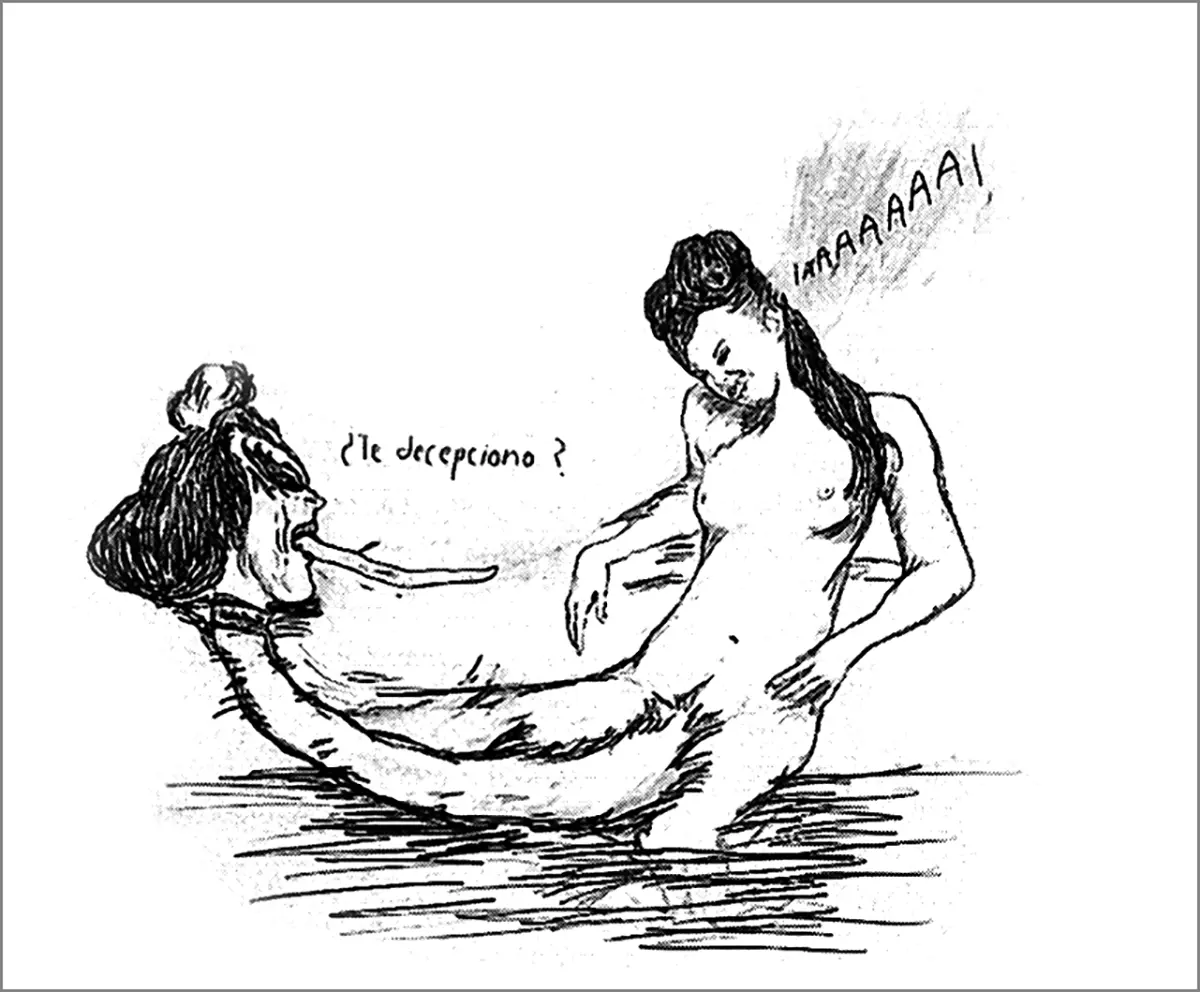
Yet despite all these vaguely defined characteristics, (which were the result of a mixture between the spirit of the times and an unassumed national and Latin American identity), the mainstream seen from the periphery, as well as an unobjectionable series of references, in particular to Cuban art of the 1980s, the participants in Acne were artists of promise. Without any doubt, therefore, the error was at the curatorial level, since, seen individually, the artists achieved some success. For example, although still submerged in the originality of non-originality, Pablo Vargas Lugo proposed, among his various options, a series of collages in which, using fine cuts, he showed a certain boldness in his linework, surfaces, and colors. Daniel Guzmán, despite his desire to shock the conservatives and to make his relief posters conjure up the splendid series entitled From the Practical Stage by Glexis Novoa, has an irreverent side that could be developed, and makes effective use of brutality in the context of sex.
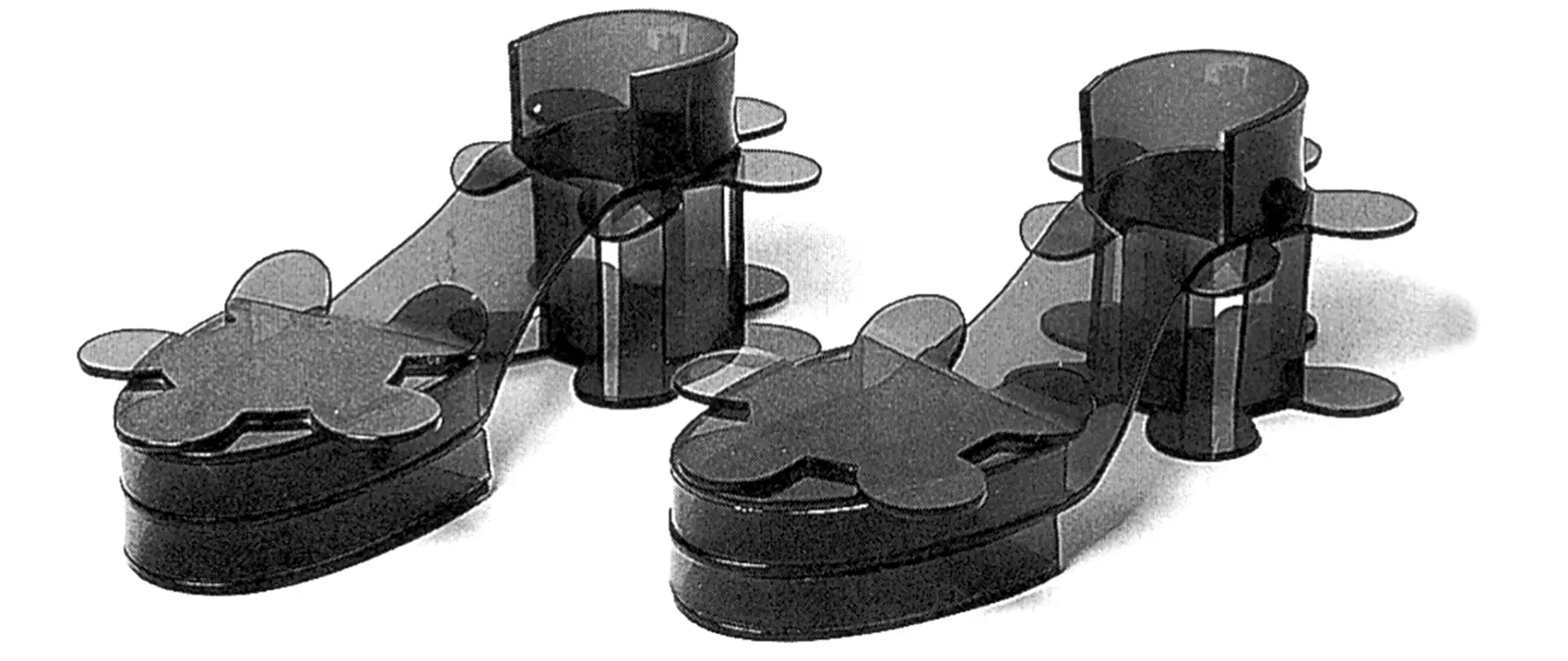
Perhaps because of the emotion generated by many of the works by Abraham Cruzvillegas, especially the three-dimensional pieces in which he refers to vulnerable human health, the curators did not include the more powerful examples of his work. The most formalist representative of the new visual tradition was Marco Arce, who nevertheless achieved some successful effects in his drawing references to mass communication and the history of Mexican art in his pictorial allusions to the work of Alfonso Michel. Eduardo Abaroa is an artist who sometimes recalls the work of certain periods of Ciro Quintana, and of the participating artists, was the one who made the most direct reference to sexuality as something stereotyped and distant, through the use of montages and assemblages which referred to the substitution of inter-personal relations. Finally, mention must also be made of the work of Sofía Táboas, whose constructions and accumulations revealed a sureness in her handling of materials and a control over her processes, in her exploration of the social role of women. In conclusion, therefore, the show failed to exploit to the full the qualities of its participants.
CARLOS BLAS GALINDO