Of the Salons held in Paris and the neighboring suburbs, one which is proving especially attractive to artists at present is MAC 2000. The letters stand for Manifestation d’Art Contemporain, and the number 2000 defines the visual expressions to be found there. While not belonging to the “art of rupture,” at least these works make innovative and original proposals which are forward-looking, an art of today for the world of tomorrow.
The show has the reputation of a well-respected salon of high quality, with around 100 participants selected from 2500 applicants, and the public is equally selective, made up of not only the curious but a good number of collectors. It is the only Paris salon in which each artist has a space of 20-40 linear meters, which is enough for an individual show. Another advantage, not to be overlooked, is the low participation cost, without any percentage being levied on sales. The participants can thus sell their works directly, and surprisingly enough, they do sell in these times of crisis on the French market. This means that the artists must be present at all times, from morning to evening, receiving visitors and hypothetical clients.
For this eleventh edition of MAC 2000, which was held between November 9 and 20,1995,117 entries were accepted, including work by four artists from the Dominican Republic—a very high figure for a Salon which for the most part exhibits work by French artists, and particularly significant for a country in the Caribbean which is too often marginalized. The categories were sculpture, which achieved an unexpected level of quality and success, and painting. The Dominican artists present were José Castillo, Radhames Mejía, Víctor Ulloa, who resides most of the year in Paris, and Fernando Varela, resident in Santo Domingo, and all of whom presented paintings.
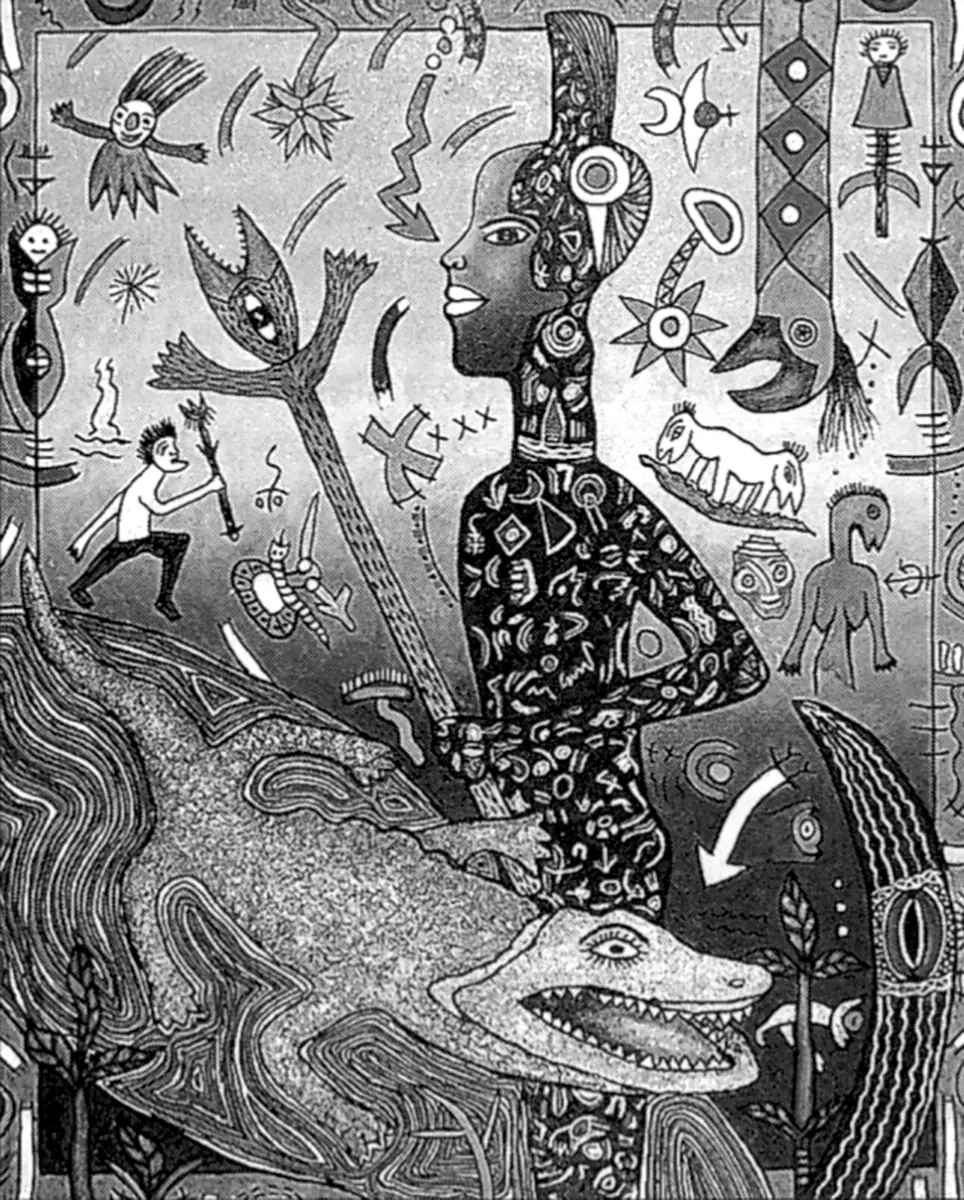
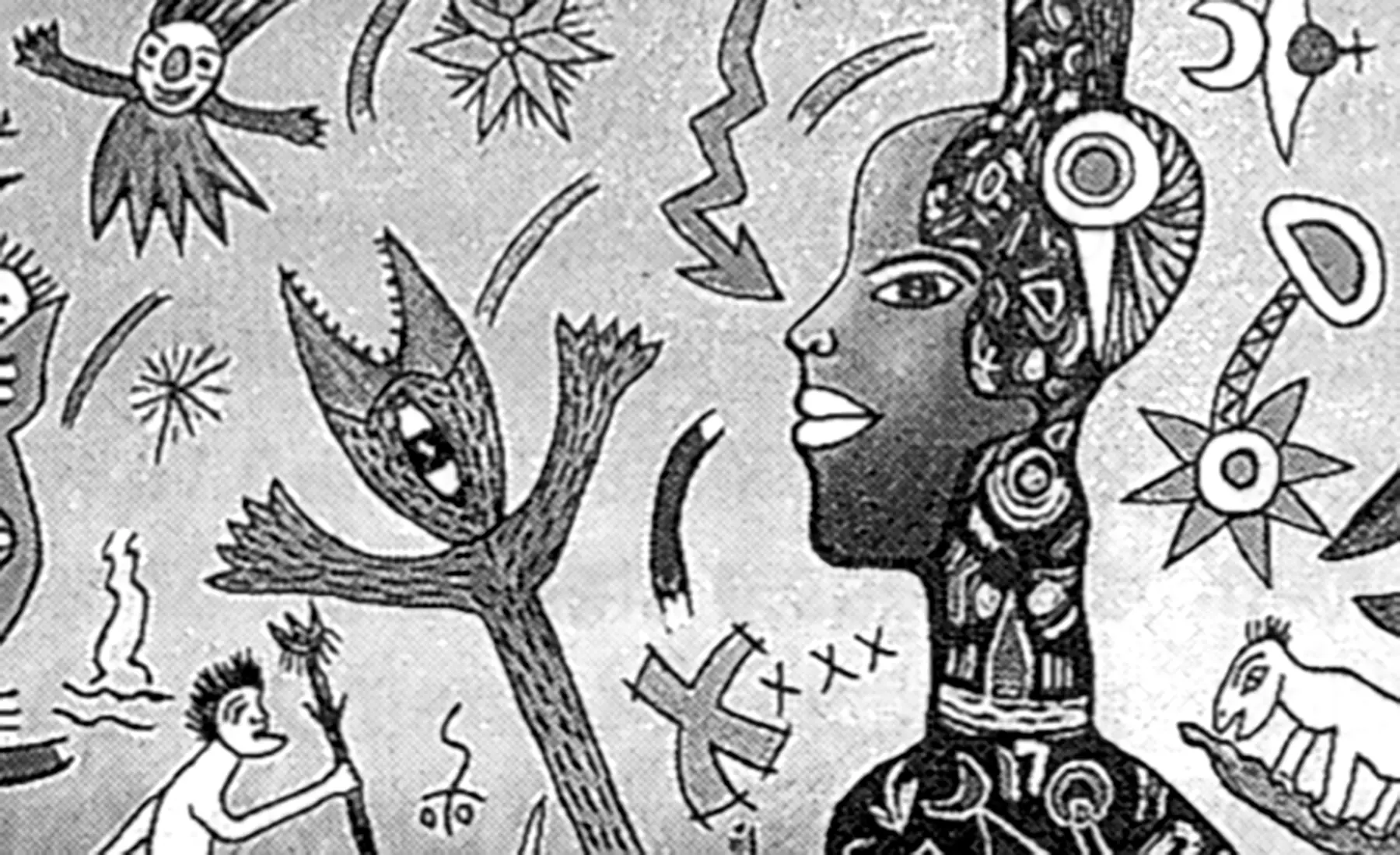
José Castillo, who in 1995 obtained a Golden Palette at the International Festival of Cagnes-sur-Mer, is an artist to discover and enjoy. His syncretic imagery is rooted in the environment and the myths of the Antilles. Even his small-format works are full of figures that are both surreal and well-known. Mistresses, spirits, lizards, birds, fish, creatures which are simultaneously fauna and anthropomorphic, make up a swarming world of magical signs, where the ancestral Afro-West Indian spirits echo between the tamtam and the totem.
The success that José Castillo has gradually won was also reflected in MAC 2000, where the spectators were seduced and intrigued in a process of an initiatory kind. While the variety and mobility of the signs in his work create exotic effects, the visual dynamism, which is felt by anyone looking at these pictures, is also the result of the artist’s handling of color. People have spoken of his "insolent red," but his flaming yellow, his greenish-blue vibrations, and his muffled half-tints are also appealing and create an enchanting kind of glow in which "primordial" elements are combined with others of a recontemporary kind.
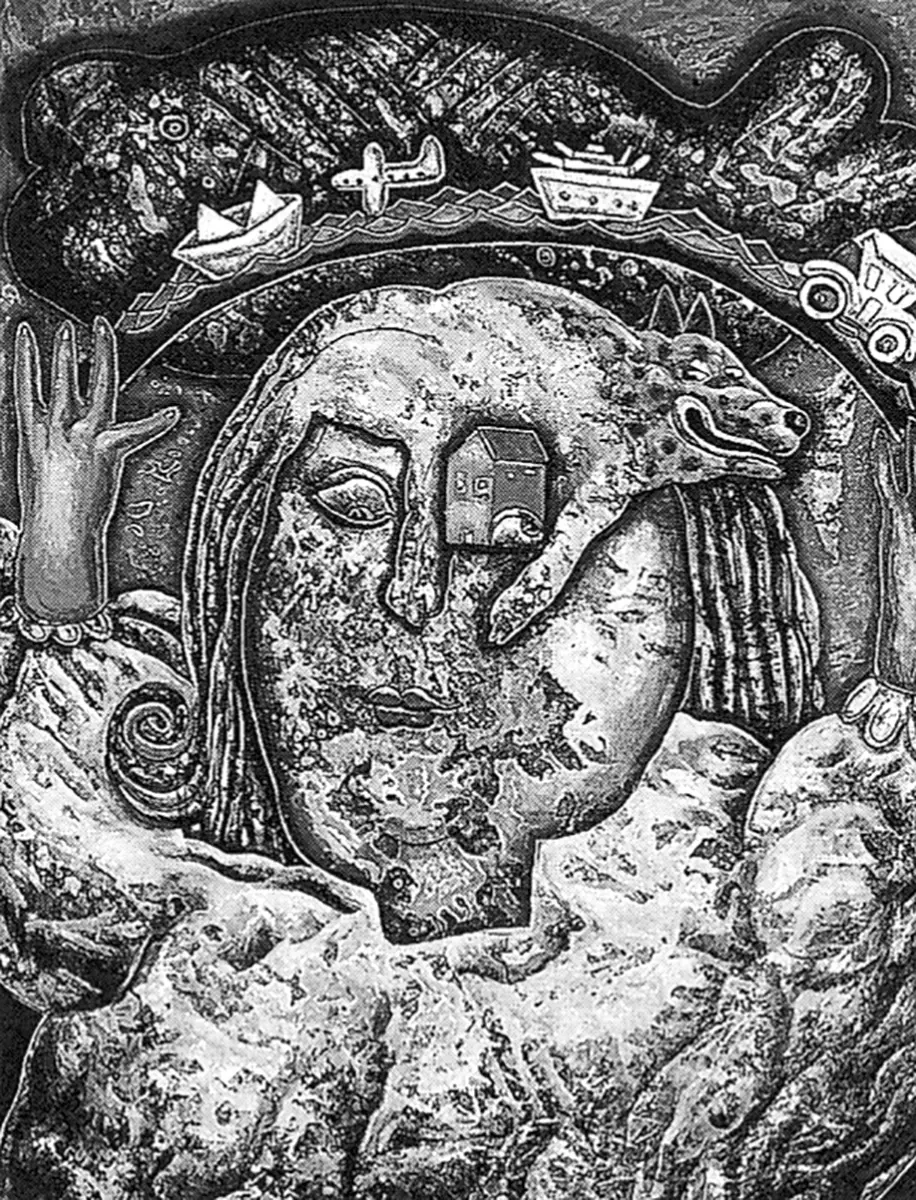
Radhamés Mejía participated in the Salon for the second time. Shortly before, he had returned from Santo Domingo and Santiago de Chile, where he was the first artist from his country to be invited by Cuerpos Pintados. In MAC 2000, he presented works done on papier marouflé, his favorite support, in various formats, and in which the painting and drawing are inseparable.
He continues to compartmentalize composition and motifs, through a fragmentation of space which is then "recrystallized" into a homogenous formal and chromatic combination. Within this very personal style, one or two main figures, mythical and neo-primitive, are highlighted as visual axes of the image. Inventive and skilful, fantastical and meticulous, Radhamés Mejía infuses life into his scenes, beings, things, and fossils, through his handling of texture and the working of the paper rich in fibers, reminiscent of skins and bark.
Víctor Ulloa also varies the size of his paintings. The tendency towards the presentation of small and medium format works can be explained by their better sales potential, and this was the case not only with the participants from the Dominican Republic. This virtuoso draftsman continues to create his anatomical monstrosities, with a great sense of freedom and verisimilitude, currently superimposing and embedding them. Once again, they were characterized by their habitual mixture of unbridled fantasy and careful elaboration. However, there was also a move in these new works towards a sense of rationalization, a deliberate control of the baroque elements, and a symbolic connotation in the signs.
The coloring, alternating between night and day, a secret kind of luminosity, maintained its range of unexpected harmonies, with elements being taken from all the realms of nature. The use of trompe l’oeil converted undiscovered interior landscapes into low reliefs: they lost their smallness and became monumental, the fruit of Ulloa’s versatility.
Fernando Varela, who is very active internationally, went on to present his work in Brussels, after MAC 2000, and from there will go on to Copenhagen. He presented pieces on canvas and paper, but in each case, the symbolic and aesthetic importance of the color highlighted the pictorial qualities. I am not referring only to the dark reds of his Songs of Spain, but to the repeated and yet always different versions of the theme of genesis, the relations between man and woman, who, although separate, feel themselves linked by some intangible aura.
Varela certainly handles the spiritual element and his attraction to mysticism very well. His work never contains stereotypes which diminish its originality, but is a personal and contemporary transformation of beliefs which are simultaneously Christian, Judaic, and Oriental. The result of this symbiosis is convincing at the emotional and intellectual levels as well as in visual terms, inviting us to look and reflect, which is what many visitors did.
Castillo, Mejía, Ulloa, and Varela have given Santo Domingo an unusual and meaningful presence in this edition of MAC 2000/1995.
MARIANNE DE TOLENTINO