Despite the economic crisis, the Venezuelan art scene seems to be refocusing itself after a period of political instability. Paradoxically, the economic problems are perhaps encouraging a greater cultural meaning in art, which is now replacing the marketing spirit that predominated from the 1980s. In Venezuela, state institutions have had a major influence on the management of culture, based on the strong economic role of the state. Venezuela is the Latin American country with the highest relative number of museums with a tradition of good museography based on open policies. But the scope and resources of this system have, at the same time, discouraged alternative initiatives from society in general. This effect is more noticeable as budgets and the market are affected by economic restraints. Hence, the importance of the work being carried out by Ricardo Benaím is an example of collective projects organized and even financed by an artist. The most recent example is the publication of artbooks each quarter, each of which is focused on a specific theme, and with the participation of artists of all specialities and tendencies, who have responded with creativity and a willingness to adapt their proposals to the project. The three volumes which have appeared to date have a freshness and wealth of ideas which contrast with the sumptuary rigidity of the past.
There are also a number of flexible and bold projects underway in the museums, such as the one linking a nearby popular market with the Alejandro Otero Museum, in which Abdel Hernández is one of the curators. Interventions in Space, at the Museum of Fine Arts of Caracas, is an unusual example of a rigorous trans continental project organized by a Latin American institution. It was curated by María Elena Ramos, the Director of the Museum, who invited Luis Camnitzer (Uruguay/United States), Ernst Caramelle (Austria), Lawrence Carroll (Australia), Gonzalo Díaz (Chile), Dan Graham (United States), Joseph Kosuth (United States), Brigitte Kowanz (Austria), Víctor Lucena (Venezuela), Buky Schwartz (Israel), Terry Smith (England), and Micha Ullman (Israel) to carry out site-specific works in the Museum and its surrounding areas. Projects of this kind revert to the customary Latin American pattern of curatorship based on fast food exhibitions. "We live from adversity, " Oiticica said, but a certain kind of adjustment to economic precariousness has tended to diminish the sense of initiative in Latin American museums in the preparation of their own international shows, encouraging them to prefer "canned products" imported from the museums and embassies of the United States and Europe. The "international" projects are always carried out by institutions from the centers of economic and symbolic power, which now curate the world in the same way as they used to collect it. Art is not usually exhibited and made legitimate in terms of the plurality of its different aspects, but rather through centralized curatorships. The international circulation is thus between "curating" countries and those which are "curated. "
Interventions in Space was intended to give attention to the artists, not their passports. The neurosis of identity, that Latin American disease, was forgotten in order to concentrate on the final objective. This also helped avoid the mechanism that sometimes affects the multicultural quota system in the United States, or so many international exhibitions where priority is given to a kind of global sample over and above the actual discourse proposed. The felicitous result was reflected in the selection made according to the capacity of the artists to participate in and achieve a specific project. The only disturbing feature was the small presence of women artists.
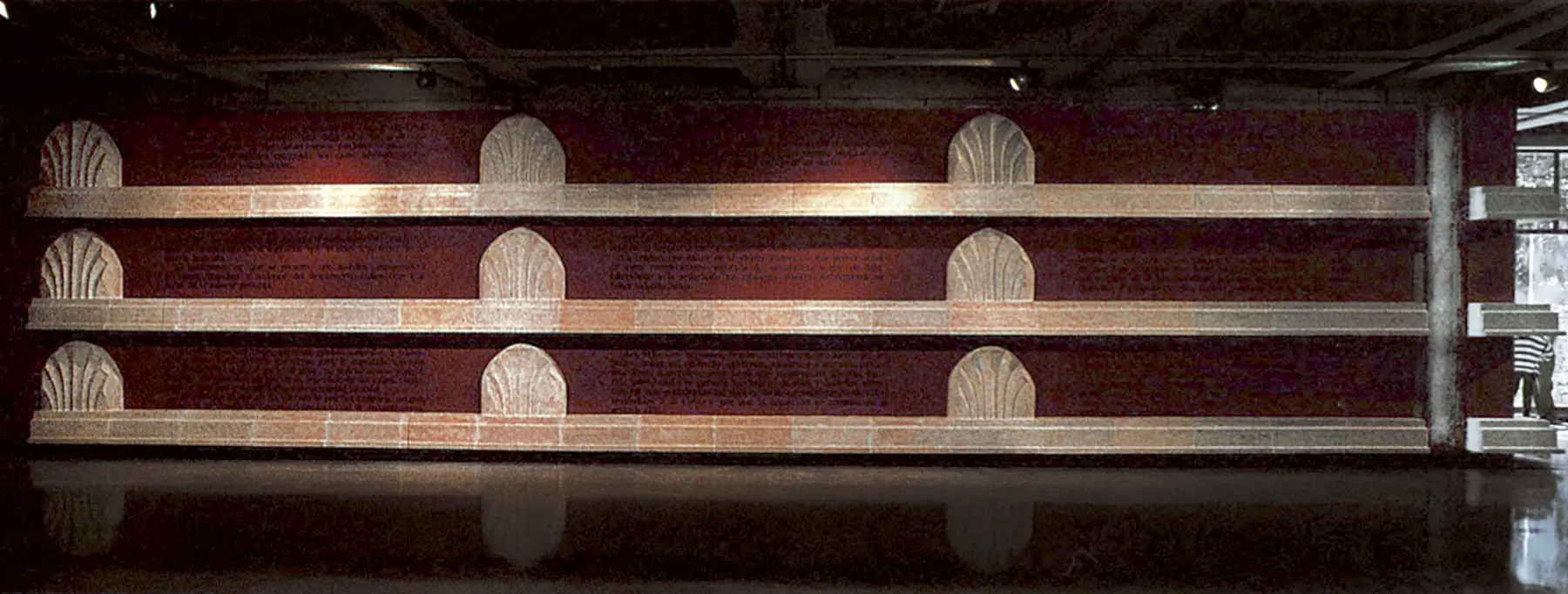
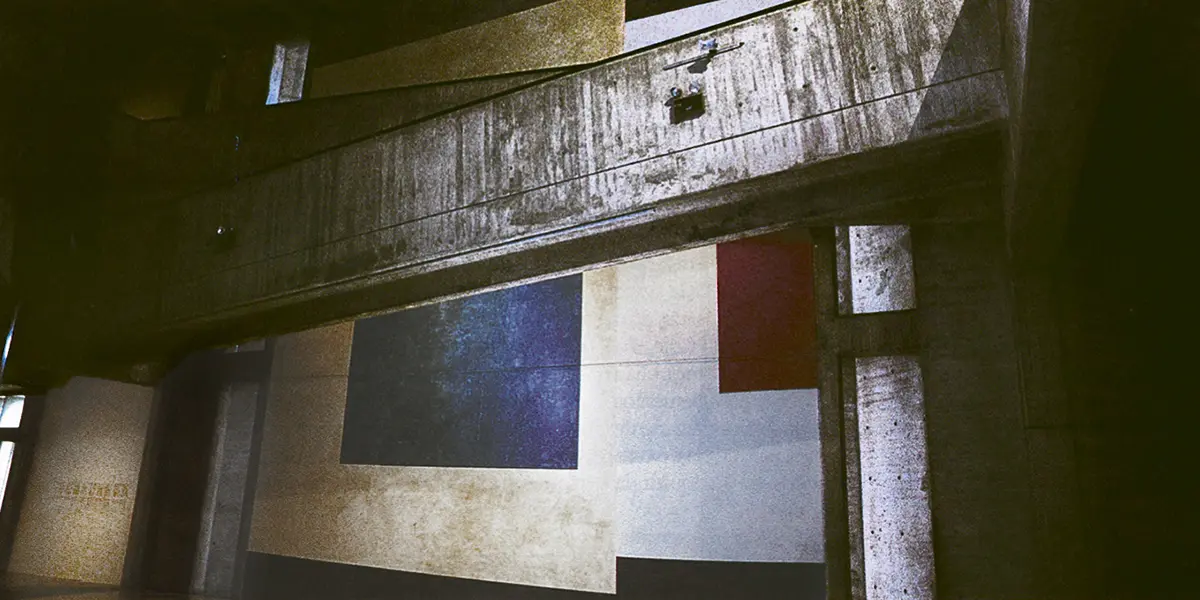
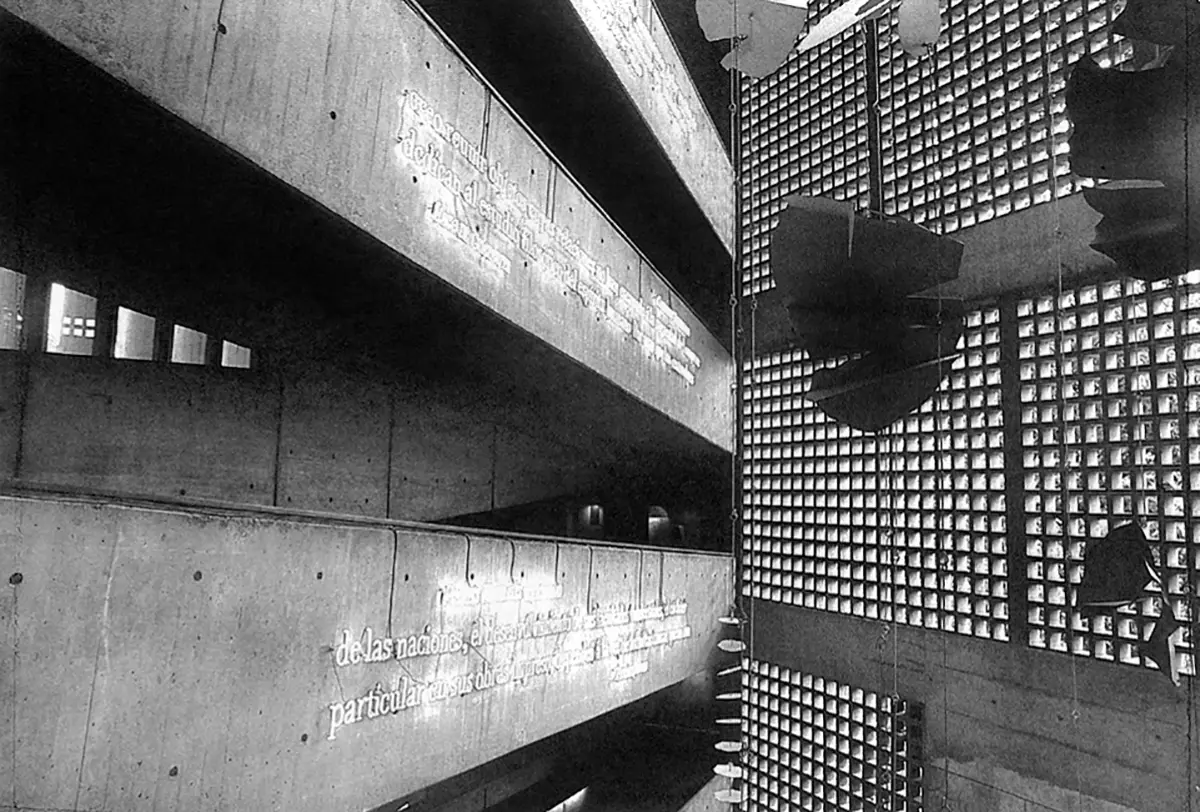
The interventions provided a better appreciation of the building by Carlos Raúl Villanueva, which serves as the Museum's headquarters. By focusing attention on its structures and spaces, the works—which were often set in unusual places—also indirectly led to an enhanced appreciation of just how well the building is being used under Ramos's guidance. She and her team have totally revitalized it by using new spaces and exploiting others to the maximum. Atkins and Caramelle worked on the building itself. The first proposed a kind of literal deconstruction by removing layers of the wall materials in various places. It was an archaeology that poetically explored the interior space of the construction, although the introspection also served as a critique of the museum as a showcase for art: the work went from the wall towards the inside, not the outside. Caramelle showed us the presence of a strange wall, half-hidden between two ramps, through the simple device of painting it with geometrical forms which created a three-dimensional effect, in an act of Gestalt in which the ramps themselves participated. This mural could not be seen in full from any angle: the visitor was allowed only partial and different views. It also provided a commentary on the broken and fragmented character of the building, which was designed in a small space as an amplified version of the original art deco-neoclassical building created by Villanueva himself almost 40 years ago. Two other artists referred to the building, but this time symbolically. Díaz is an artist who is able to integrate all the aspects (physical, historical, symbolic, imaginary, etc.) of a locus into his work, as in his memorable intervention at the Blanes Museum in Montevideo. In that work, he stripped the building of its status as a museum and revealed its earlier life, its ancient legends. This time, he sought inspiration in the antagonism between the two buildings by Villanueva, built side by side in different styles and as parts of the same unit. He reproduced elements from the first one within the second, with an entablature along with texts of sections of the Civil Code of Chile (drafted by the Venezuelan Andrés Bello). This architecture within an architecture created an open metaphor, which was both physical and discursive, on the relationship between art and power.
Lucena, a very singular personality, proposed the most subtle and sophisticated work: a mystical architecture. It consisted of a "space of happiness" constructed on the measurements of the Roman Pantheon, the Temple of Solomon, and the Museum of Fine Arts, with a wide range of cabbalistic and numerological references. It was a cube that formed an open sphere, placed on a terrace. The missing slice, which would have closed the cube—and the mystical cycle—was alluded to in a very simple structure of copper tubes in one of the rooms in the Museum. Another piece reworked the artist's long-standing interest in transcending visuality. It consisted of three tubes the size of "the Angel's staff,” which formed a letter Y on the floor: one was heavy, another light, and the other flexible. The austerity of this work functioned within a classical minimal poetics, the effect of which was deepened further since it went beyond the visual towards the physicality of its pure elements of industrial construction. However, it paradoxically eliminates the self-referentiality of the minimal code by becoming a synthesis of very complex concepts which are external to the work, and even acquires the meaningful concentration of a mystical object.
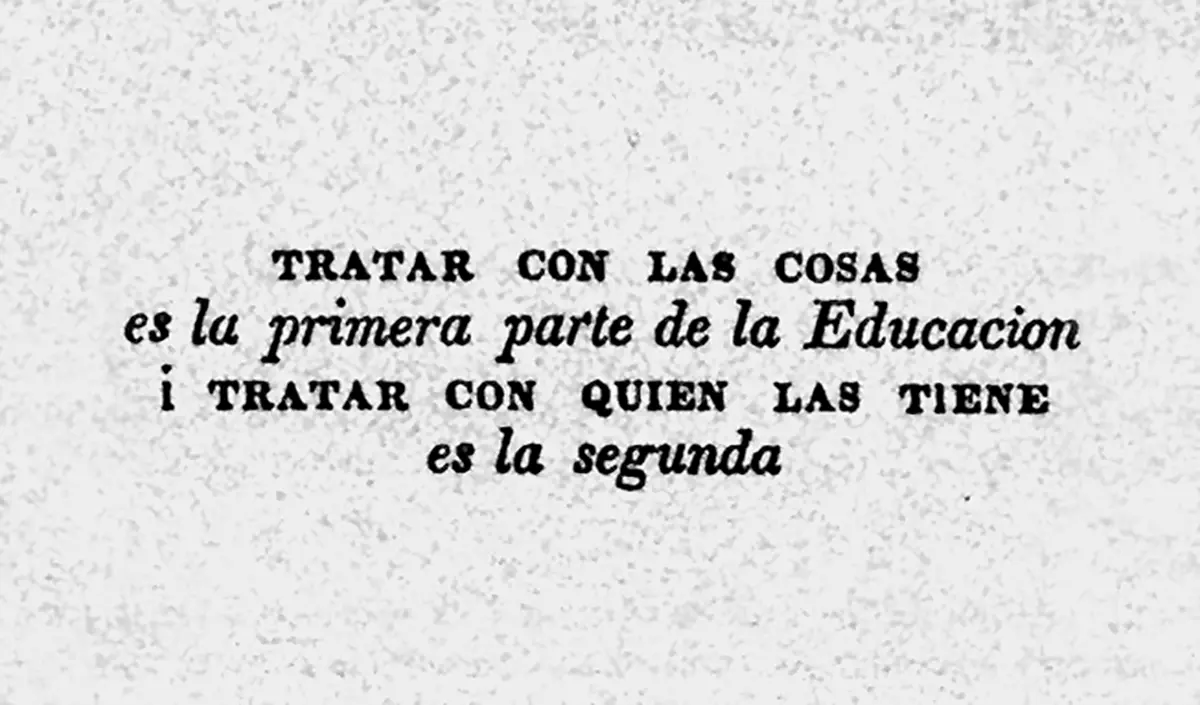
The most impressive work in the show was the simplest: a printed sheet with a text by Simón Rodríguez, which was distributed to the public in different places. Although this idea by Camnitzer recalls the work of the recently deceased Felix González-Torres, it differed from the latter in that the printed sheets did not make up an artifact within the gallery, but functioned rather as a political-artistic pamphlet which was related to the artist's other two pieces. The link with González-Torres was rather one of a friendly kind of conceptualism, oriented towards a direct relationship with people. The other two pieces by Camnitzer were also based on Rodríguez and his peculiar textuality, which combined visual aspects and linguistic meaning (something which Gary Hill would love) into a post-colonial discourse. With these works, the artist managed to communicate his interest in historical research within an impressive synthesis full of suggestion. The works also included a critique of the museum as a tomb of art. Ironically, the Museum itself provided such a tomb for one of Camnitzer's own works from its collection, which it presented totally out of context.
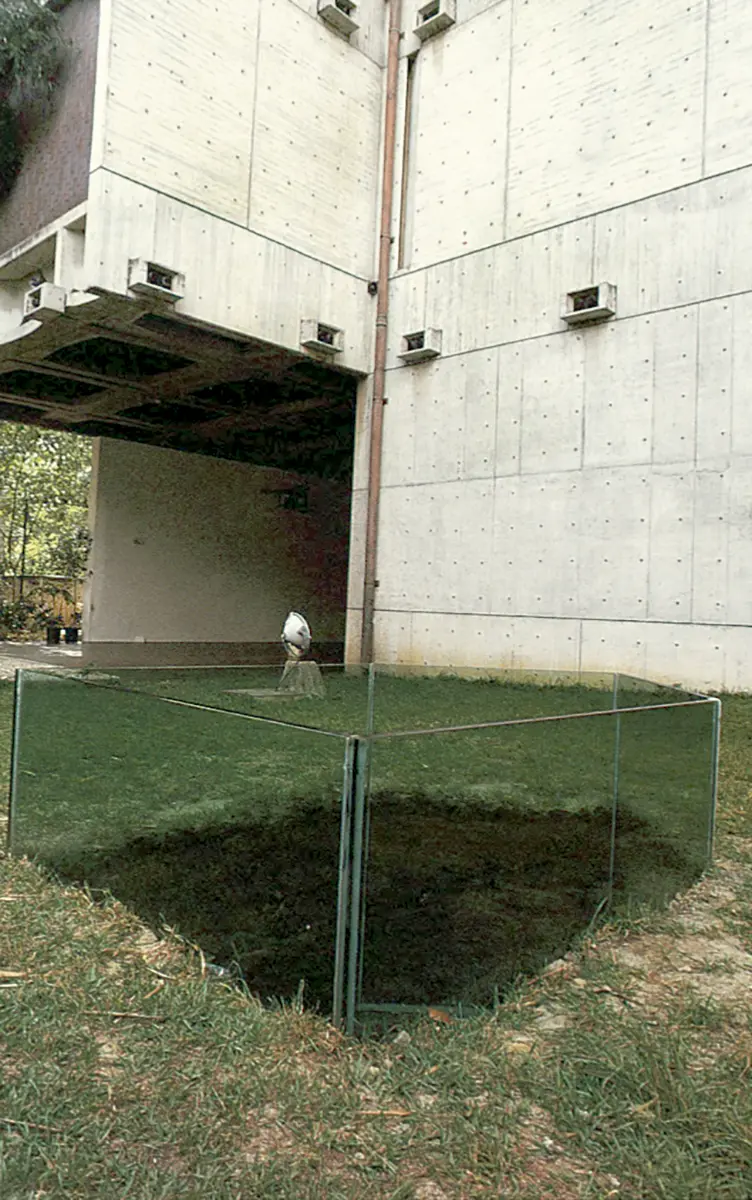
The problems of the museum as an institution appeared in a way that was both real and symbolic in the same exhibition. In several places, there were warning notices about the high voltage of certain works. They seemed to express, at one level, the difficulties of art to escape from certain habitual frameworks; yet at the same time, they reflected the inability of the institution to house that art. Here I am referring to an almost metaphorical impression, rather than errors in the museography, which itself managed to achieve a compromise in the presentation of a conceptual type of art to a public which was not used to such works, through texts which in no way created obstacles to the latter. Another interesting aspect was the presence of a sheet of glass behind the service area at the back of the building, perhaps a leftover from the excellent work by Micha Ullman in the gardens (a work which, without intending to do so, established an unusual cohabitation of Smithson with Ana Mendieta). It was a fortuitous kind of "intervention in space,” which the context transformed into a ready-made.
In this way, the Museum evoked its own affinities and contradictions. Alongside Lucena's "space of happiness," there was a guard who prevented anyone from entering.
GERARDO MOSQUERA
Cuban writer and critic. Guggenheim Foundation Fellow.