There are two internationally known Peruvian artists. The first is the painter Fernando de Szyszlo, and the second is the photographer Martín Chambi. The works done by the latter in Cusco between 1920 and 1950 have been seen in a good number of our countries, and Chambi's reputation was consolidated in 1979 when the Museum of Modern Art of New York presented his first major retrospective exhibition.
Born in 1891 in Puno, Chambi went to Cusco, where he spent 30 years taking photographs of what Vargas Llosa has called “the social complexity of the Andes.” For the writer, these photographs “place us at the heart of the highland feudalism of the haciendas, with their lords, their servants and concubines, the colonial processions of the contrite and intoxicated crowds, the chicha stores which another illustrious Cusco resident from those years, Uriel Garcia, called ‘the caverns of nationality.’” Chambi died in 1973, but photography had already ceased to be the center of his life for more than two decades. An earthquake that shook Cusco also extinguished Chambi's passion. However, he left a total of some 30,000 photographic plates, which provide a formidable account of three decades of history in Latin America.
Chambi's workshop in Cusco was one of the focal points of interest for local and international photographers. It was here that Irving Penn, for example, did his series on Peru. Thus, it would have been logical to expect the Chambi saga to extend throughout the country, including unequivocally those photographers who succeeded him. Perhaps at the beginning it was so, and the admiration became veneration. Cusco is the navel of the world, they say, and in a sense, it is also the navel of photography in Peru. And it was a tradition in previous decades for our most gifted photographers to begin their journey by paying homage to Chambi.
However, in the 1970s, there was a visit that was to be of transcendental significance to Latin American photography. Aaron Siskind came to do a series on Lima, taking pictures of fragments of the political graffiti left on the flaking Lima walls by the current political agitation. It was at this time that the young people in the country learned about Siskind, and he responded by funding the studies for two of the most gifted at the Rhode Island School of Design in Providence.
At the beginning of the 1970s, when Peru was experiencing a military dictatorship, the photographer Fernando La Rosa, who had studied at the Minor White School, returned to Lima with a deep desire to help others educate their sense of perception through meditation. It was thanks to his initiative that the most important photography workshops of the period were established. And it was around Fernando La Rosa that a number of young photographers established in 1976 the Secuencia Photo Gallery, located in a residential district of Lima, an altogether new experience for the country.
In the 1980s, all the earlier efforts began to take shape. Peru returned to democracy and a spiral of violence began. Nevertheless, photography was enriched by a number of different proposals, making it the most important visual expression in the country during the last decade.
Our photographers, most of whom are erudite and unpressured by the commercial demands of art, were free to express themselves in a way that reflected their own realities. Strangely enough, they were not particularly interested in opening up a market, but rather in achieving recognition for their work. This was the time when the great names of today were acquiring prestige and adapting their visions to a language that captured our contemporary life.
A decade later, photographers were no longer trying to reproduce reality but to create something new. The concern with documentary work gave way to the power of the imagination, and they began, as never before, to speak of art and artists, and to question the very nature of photography.
In the 1990s—the period marking the end of postmodernity—our photographers seem to have understood the enormous potential of the camera to create, over and above, the capturing of time or of reality. They have abandoned their manichean approach and have combined photography with painting and sculpture, created installations, and used video, breaking the illusory barriers between disciplines in their search for plurality.
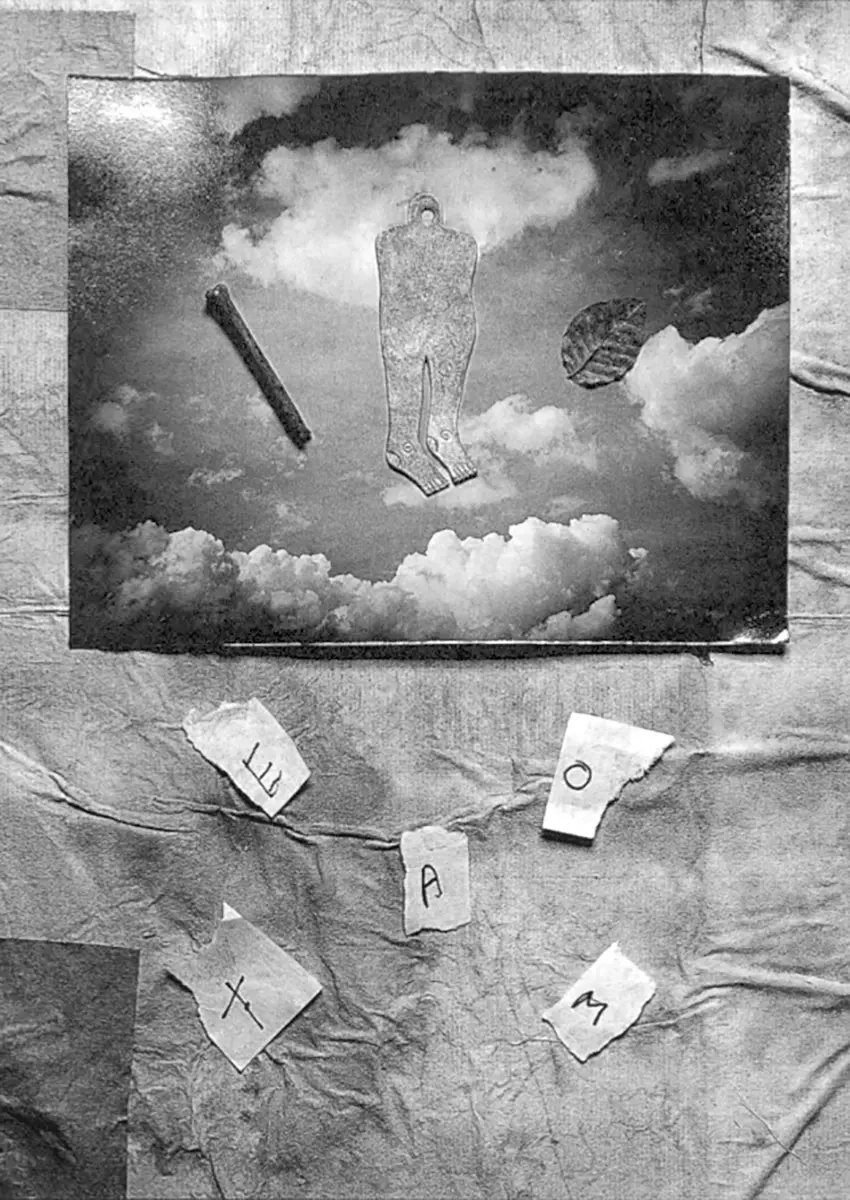
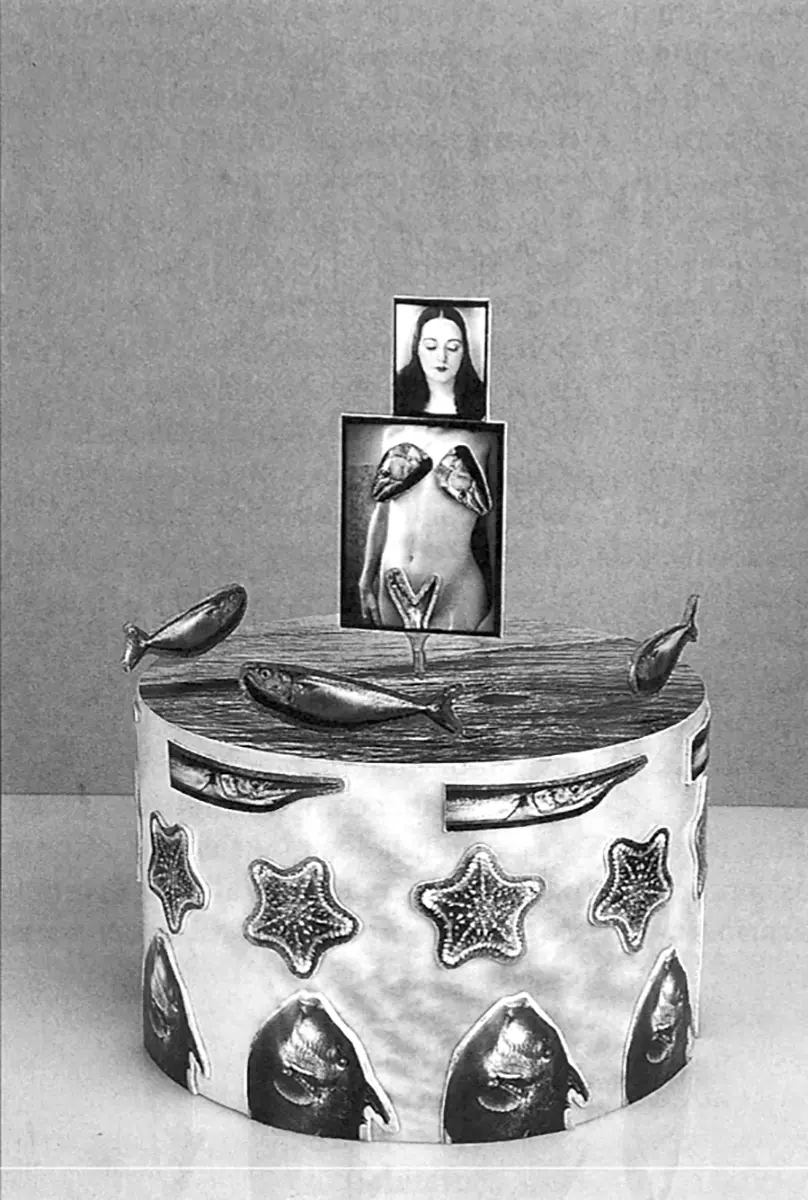
Within this context, special mention must be made of Billy Haré. With a great economy of visual resources, Haré transposes a kind of post-conceptualism to desolate landscapes and natural architectures, a process which leads to the creation of his “ritual tables” in which he records the different objects of his composition. The result is a visual poetics which, in some cases, might recall Joseph Cornell; in other cases, the assemblage of images takes us towards symbols of violence or reflections on humanity.
Roberto Fantozzi is perhaps one of the photographers with the most theoretical knowledge about 20th-century art. After having alternated between the world of Cusco, collages, painted photography, and commissioned works, he has moved towards a thorough investigation of the integration of sculpture and photography, doing portraits with Rocio Rodrigo, one of our most talented sculptresses. Javier Silva, on the other hand, prefers to explore the Andean and popular image, and has recently introduced pictorial elements into his work in a process closer to Gonzalez Palma than his original documentary experiments.
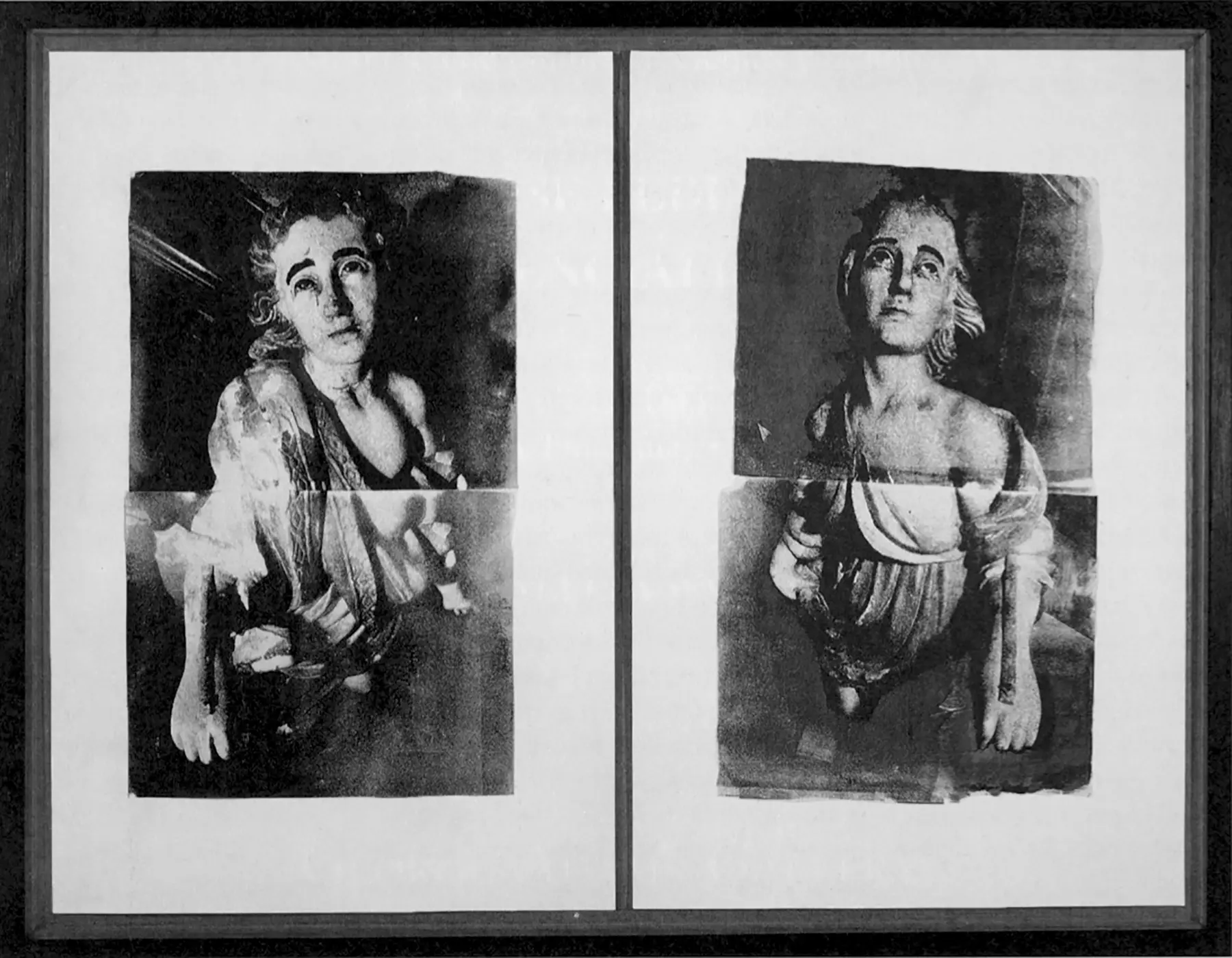
María Cecilia Piazza was one of the youngest members of Secuencia. She is currently exploring emblems of our men and women in statues of angels and saints, in photographs enlarged into enormous formats and then worked in a complex serigraphic process in which the black and white work is transformed into colors with symbolic implications. Her work is closer to colonial religious iconography than to Rauschenberg or Warhol. A visit to any of the towns or churches of our highlands is sufficient to confirm how well Piazza has captured this spirit.
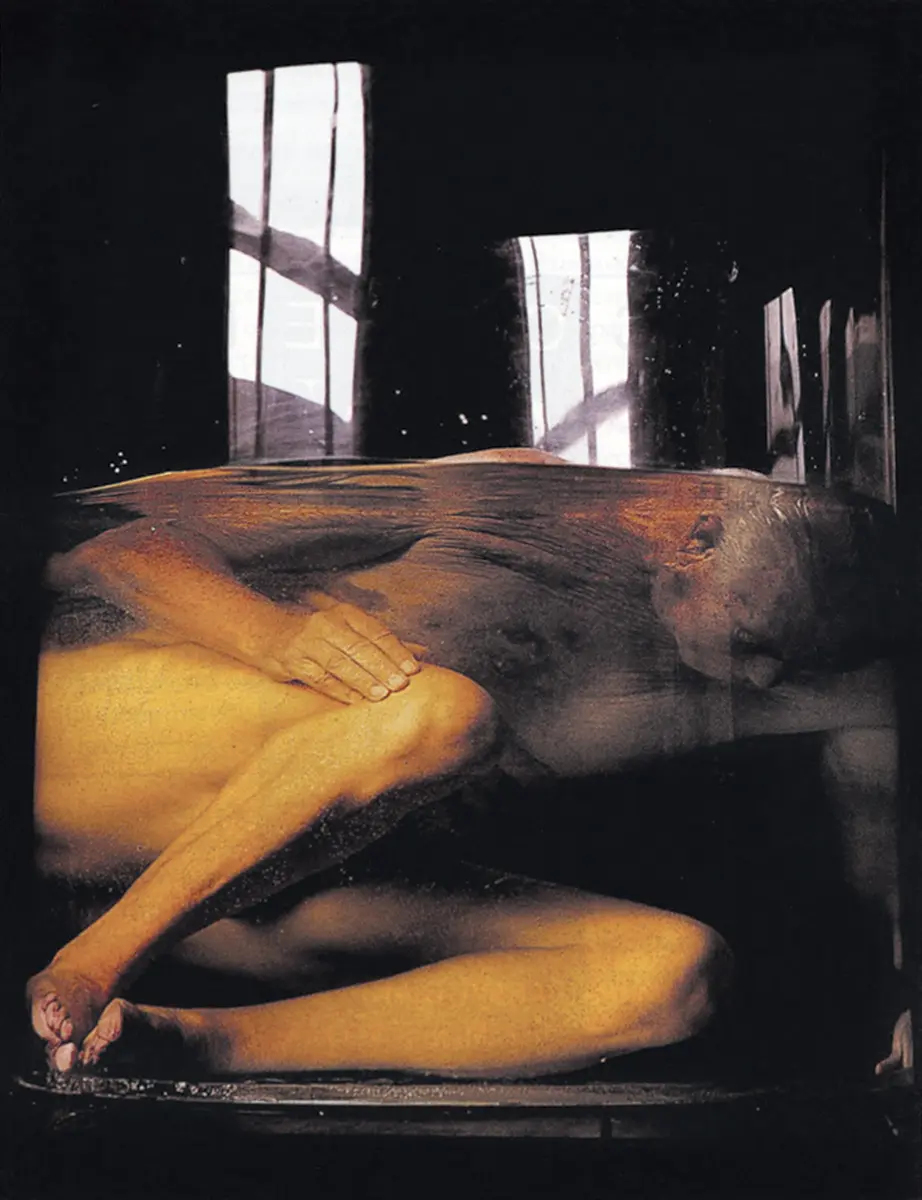
Of the photographers who followed, mention should also be made of Roberto Huarcaya, who works in the depths of psychoanalysis. By his use of everyday elements, Huarcaya creates a final installation in which he speaks about life and death, transforming the rooms into a mortal circle in which he contrasts his series of fetuses in jars and his own naked body floating in a huge transparent jar. Antonio Ramos works essentially with color, whereas Anamaría McCarthy has turned to photography after considerable experience in ceramics. In her photography, she manipulates and alters the images to create metaphors about violence and the human condition, particularly as regards women.
Of the youngest artists, particularly interesting are the installations of Juan Enrique Bedoya and the work of Luz María Bedoya, who creates objects with a surface made of printed photographic paper that covers the entire volumetry.
An exhaustive survey of all the photographers of interest and their works would exceed the limits of this short article. What is really important, however, is the fact that much has happened to photography in Peru since the pioneering work of Chambi. Schools, such as the Gaudí, which specializes in vocational teaching, and institutions such as the IAF, which is concerned with the promotion of photographic activities, are actively engaged in ensuring that the current interest is maintained in the future. Many of our photographers, both men and women, can now be seen as having made one of the most important contributions to the development of contemporary visual education in Peru.
LUIS LAMA
Peruvian art critic. Lives in Lima.