The Rational Twist, a show organized by Carlos Basualdo, gathered together work by eight Argentinian artists who confirm the continuing validity of concrete art and its legacy in contemporary artistic practice. The exhibition included several pieces by Raúl Lozza, a founder member of the Concrete Art-Invention Association (AACI), established in Buenos Aires in 1945. Concrete art—the inheritor of modernism and the “Constructive universalism" conceived by the Uruguayan artist Torres-García in the 1930s—was an attempt to strip art of any figures or representation in preference to elements which had traditionally been relegated to a secondary level: color, surface, and abstract forms.
The other seven participating artists were from the young generation that emerged after the fall of the military dictatorship in 1983. Although varied and diverse, their work is a continuation of many of the questions and research initially pursued by the AACI members. For example, Tomás Maldonado, in his Invention in 1946, had called for "the destruction of the traditional form of the picture," a recommendation which Lozza (like Jorge Gumier Maier, Favio Kacero, and the late Omar Schiliro) seems to have followed to the letter.
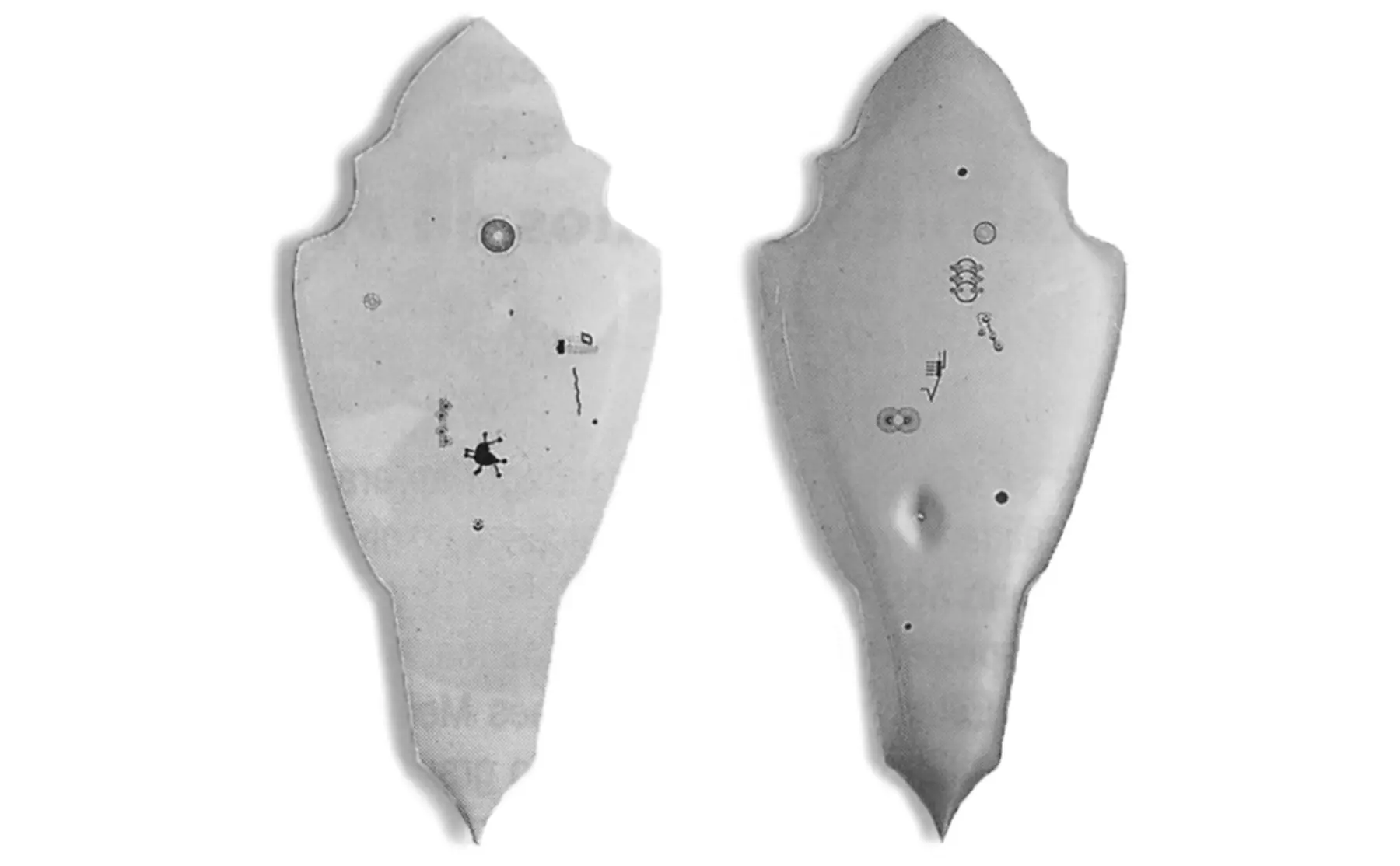
Lozza’s pieces reject the traditional form of the stretcher, whether square or rectangular, and emerge as colored rhomboids or brilliant parallelipeds which are incorporated into the wall. There is a similar effect in the baroque and complicated wood structures by Gumier Maier (Untitled, 1993), in which the rigidity of the stretcher has been twisted (and even perverted) to create voluptuous forms in which the arabesques of the frame invade and take hold of the surface of the composition. Using another technique, Favio Kacero also attacks the traditional quadrature of the stretcher. His works (Untitled, 1995) seem to be made of cushions covered with taut plastic and cut into oblong and irregular forms. On the surface, which is voluptuous, like some recently made bed, the artist has stuck stickers with abstract designs which invite us to draw closer and examine their strange messages.
Omar Schiliro’s "lamps" (Untitled, 1993) were perhaps the works in this show that were the most distant from the “traditional art forms." Made of bulbs and plastic trimmings, these light sculptures—with colors and forms suggesting a three-dimensional work by Frank Stella—could be seen as candelabra lighting up the nights of urban decadence.
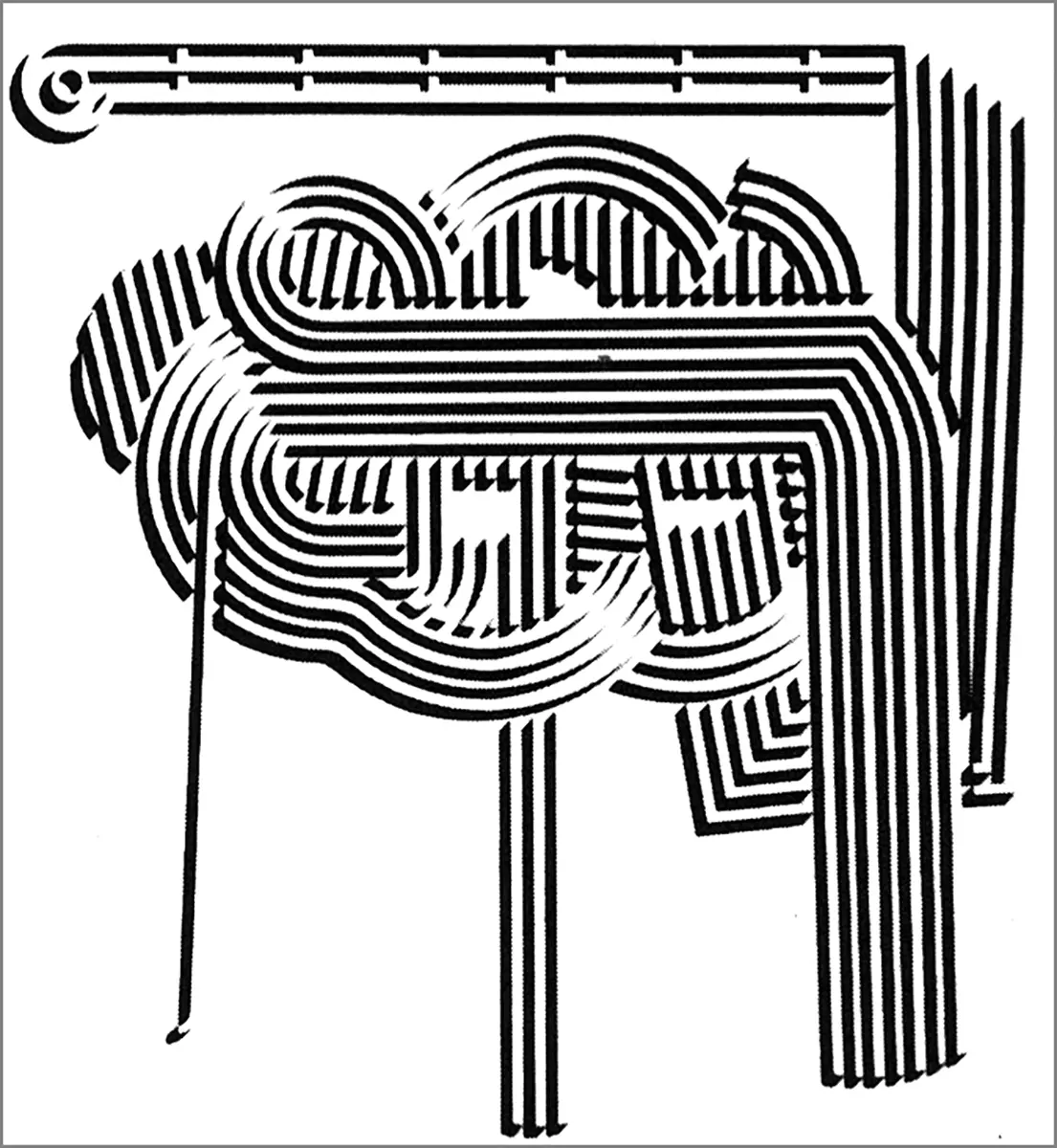
In 1947, Raúl Lozza broke with the AACI and established his own group, which advocated "percepticism," an even more radical tendency that sought to eliminate the figure completely and create a pure interplay of form, color, and surface. There is a similar desire in the works of Fabián Burgos, Nicolás Guagnini, Graciela Hasper, and Pablo Siquier. Fabián Burgos finds his inspiration in the aesthetics of the scientific diagram and creates compositions (Untitled, 1995) with only a few elements: lines (the course of which is inevitably deviated, inverted, or perverted), dots, and sober background colors (he considers the background as the main element in the work). Nicolás Guagnini’s "self-portraits" (Untitled, 1995) create a certain ambiguity between the "figure" (an ideogram which the author presents as an abstract representation of his nose and ear) and the background, which makes them interchangeable, like some optical illusion. The canvases by Graciela Hasper (Untitled, 1994-1995) offered the clearest example of the considerable importance of the handling of color for the inheritors of concrete art: one of her pictures consists of 24 geometric darts (composed of a square and circular fragments in the form of crosspieces), all identical except for the bright but elegant colors in which they are painted. Finally, Pablo Siquier (Untitled, 1995) presented a series of hypnotic compositions made up of black lines on an extensive white background. Using the aesthetic theories of Julia Kristeva, we can interpret these very successful paintings (which also evoke the early "cross" compositions of Mondrian) as visual representations of the frontier limits of the individual in which unconscious elements (pulse, rhythm, music) disrupt the rigorous control of consciousness.
The Rational Twist was a small show marked by the measured elegance of pure forms and the oblique interplay of rebellious geometries. The selection of the participating works was both harmonious and felicitous, very rational and very Argentinian.
RUBÉN GALLO