
The First Moderns
For modern painting in Panamá, the twentieth century did not begin until the 1940s. The path towards the development of a national painting was prepared by such figures as Roberto Lewis (1874-1949), Humberto Ivaldi (1869-1947), and Manuel Amador (1869-1952), the most progressive of the three, who followed an academic stylistic line, with incursions into post-impressionist landscape work and Expressionist brush strokes.1 Roberto Lewis left his mark not only in the great works which adorn both the National Theater and the Presidential Palace, but as founder in 1913 of the National School of Painting, whose second director was precisely his disciple Ivaldi.
During the 1940s, there emerged from the students of these masters the first group of Panamanian painters to show any interest in exploring art beyond the confines of realism. These artists broke out of the restricted local cultural environment and pursued their studies abroad, bringing back new ideas and artistic techniques and acting as catalysts in the growing modernity of Panamanian art—not only because of what they painted but because so many of them also held teaching posts.
During the 1950s and the following years, these artists, and then their students, incorporated into their work features of the Cubist, Expressionist, and Abstract art which they had discovered in their travels and which they admired in the international art journals. Juan B. Jeanine (1922- 1982) created the first modern murals in Panamá, and Isaac Benítez (1927-1968) painted Expressionist ink works and watercolors of great intensity.
Juan Manuel Cedeno (1914) became famous as a teacher of a large number of painters and as the official portrait artist of leading figures of Panamanian society for almost half a century. Although he practiced a realist style in his portraits, his still lifes and landscapes, like the works of his contemporaries Ciro Oduber (1921) and Eudoro Silvera (1917), adopted a Cubist approach, creating geometrical and dynamic compositions, which were nevertheless linked in their themes to Panamanian identity and folklore.
The First Contemporary Artists
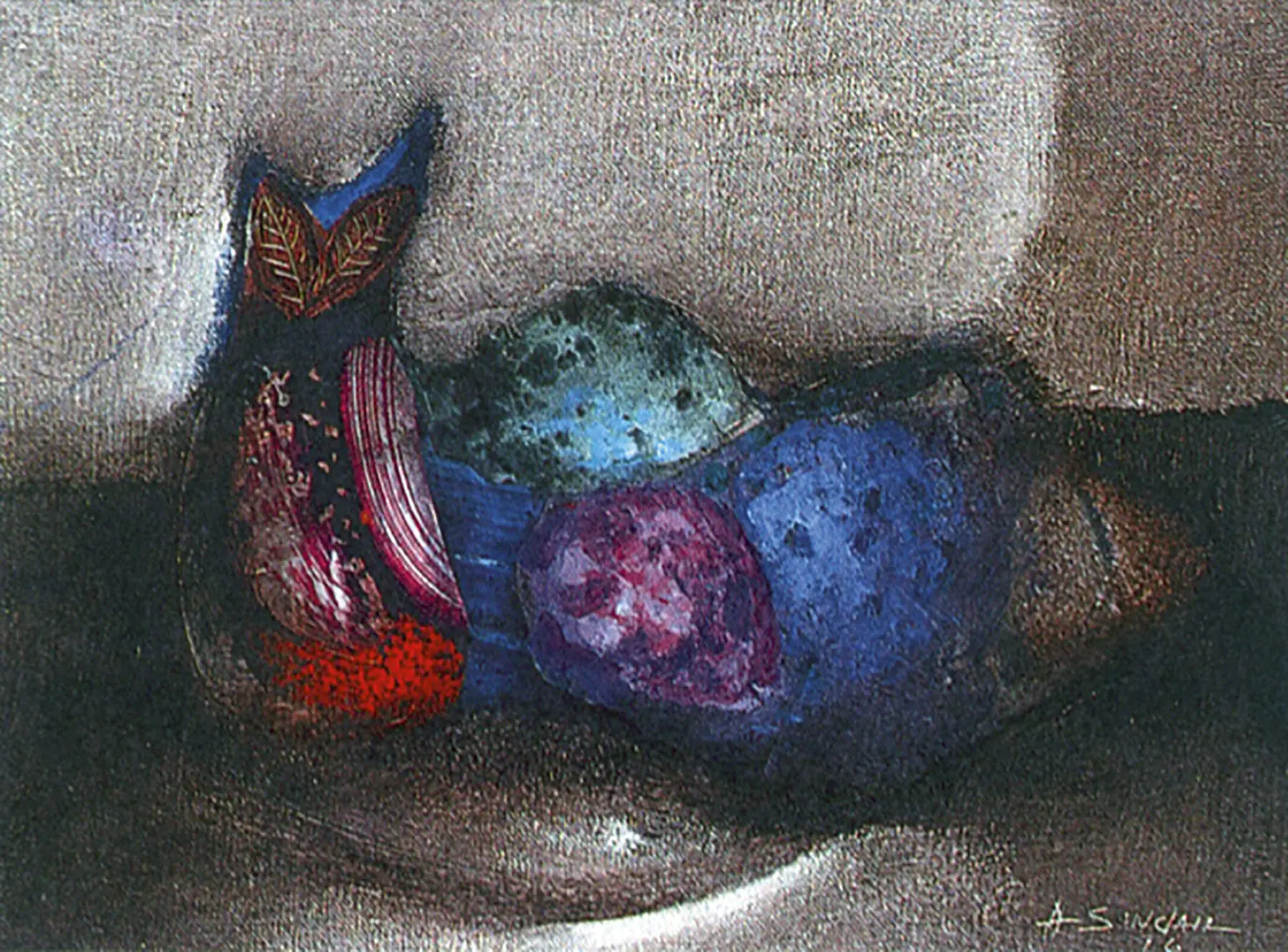
Alfredo Sinclair (1915), the first abstract painter in Panamá, created dripping paintings and collages associated with the Abstract Expressionist movement, before moving on to mature works of fine lyrical abstraction in which color and light are the main elements. From the 1970s, he incorporated human features into his compositions, which still reflected his commitment to color, a constant characteristic of his 50 years of work as a painter.
In a pattern that holds down to the present, the National School of Painting and the Faculty of Architecture at the University of Panamá helped develop the next generation of artists, who were both teachers and students at these institutions. These artists, who began to exhibit their work in the 1950s, all had a tenacious approach to their craft and a surprising degree of pictorial productivity, despite the fact that they lived in an environment that was not very conducive to art. In a typical fashion, they went abroad to develop their academic experience, where they came into contact with the contemporary currents of international art. They included Olga Sánchez (1921), Pablo Runyan (1925), Guillermo Trujillo (1927), Carlos Arboleda (1929), Julio Zachrisson (1930), and Alberto Dutary (1932), who studied in Spain and Italy, Trixie Briceño (1911-1985), who went to Brazil, Adriano Herrerabarria (1928), Desiderio Sánchez (1929), and Manuel Chong Neto (1927), who studied in Mexico.
During those years marked by the internationalization of Latin American art, Panamanian artists made a significant impact outside the country, participating in a number of exhibitions, events, and biennials. During the 1960s, the work of most of these painters reflected considerable technical experimentation and thematic variety as they consolidated their styles and established their respective positions of importance in the Panamanian art of the following decades.
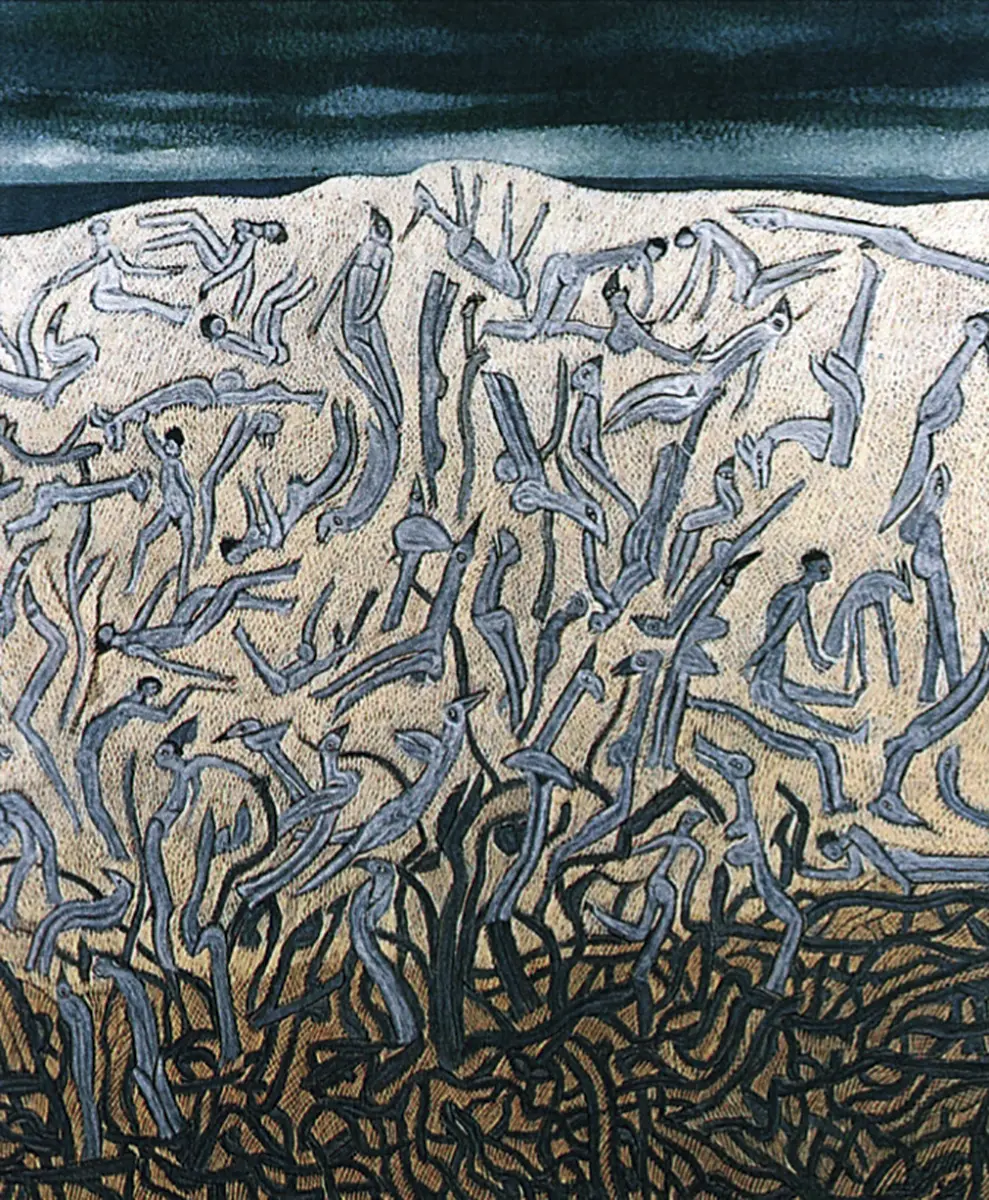
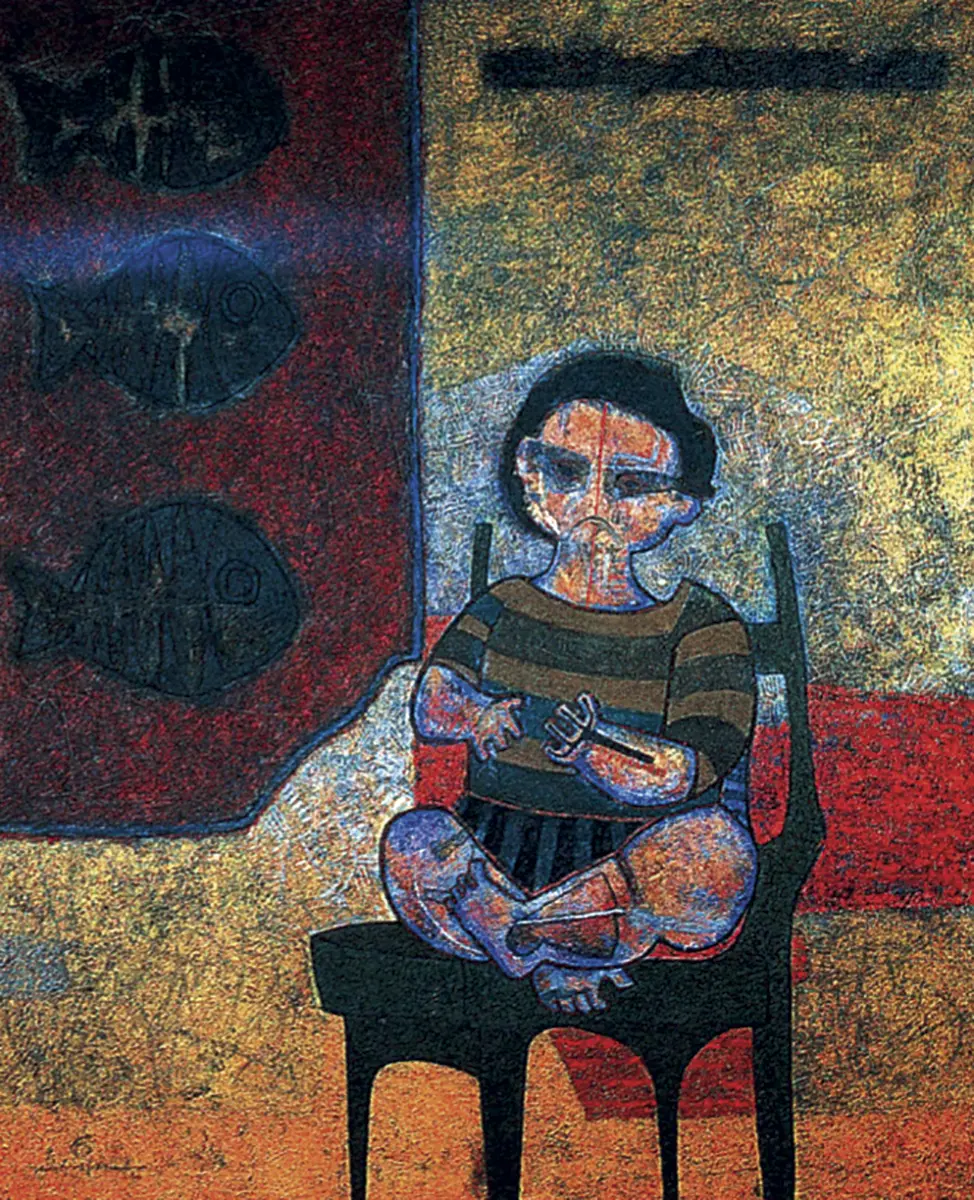
The major figure of this generation was the painter, sculptor, ceramic artist, and print-maker Guillermo Trujillo (1927). From the time of his images of underground figures and work of social commentary in the 1960s down to his recent large compositions on the cohabitation of man, nature, and indigenous mythology, Trujillo developed a very personal style and iconography, rooted in authochthonous cultures and the tropical flora. His handling of technique and color, and his creative versatility, have won him recognition both in and outside the country, and his work as a teacher has had a significant influence on young artists.
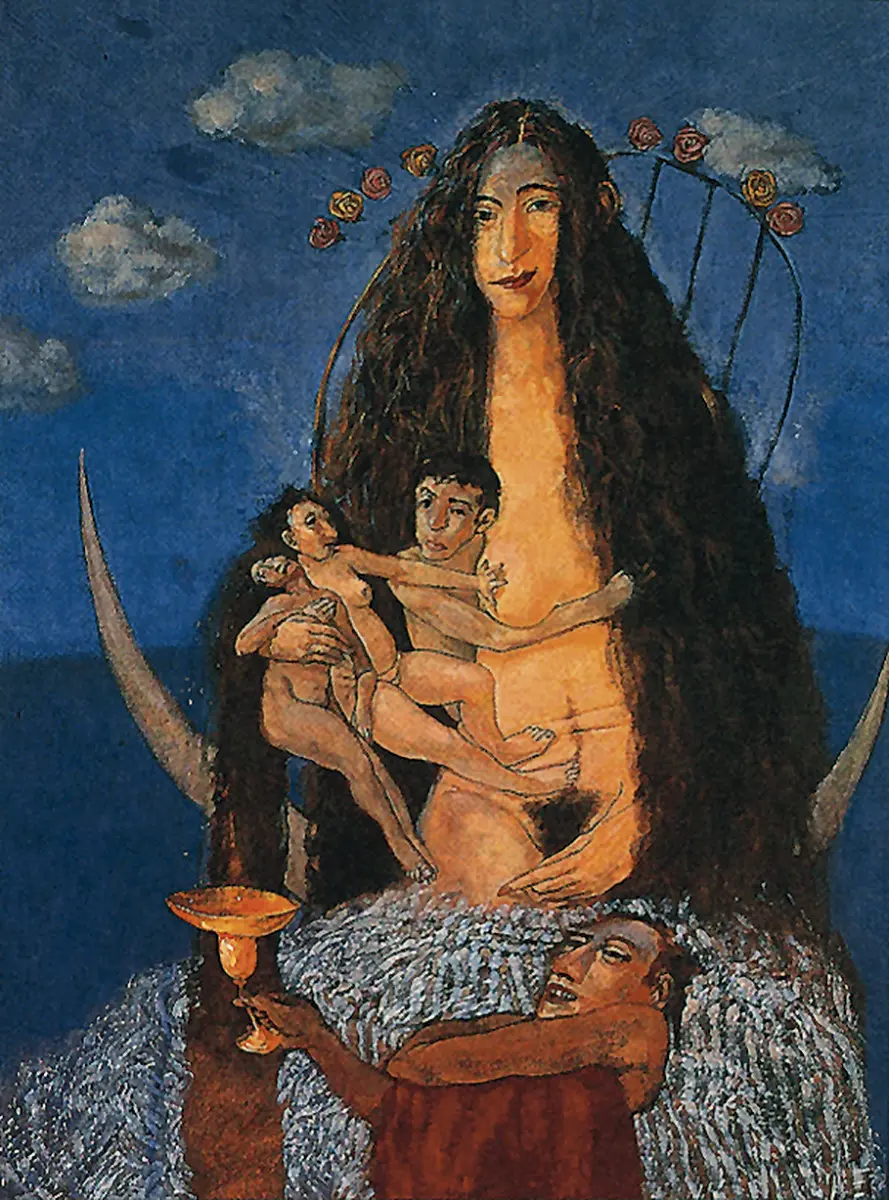
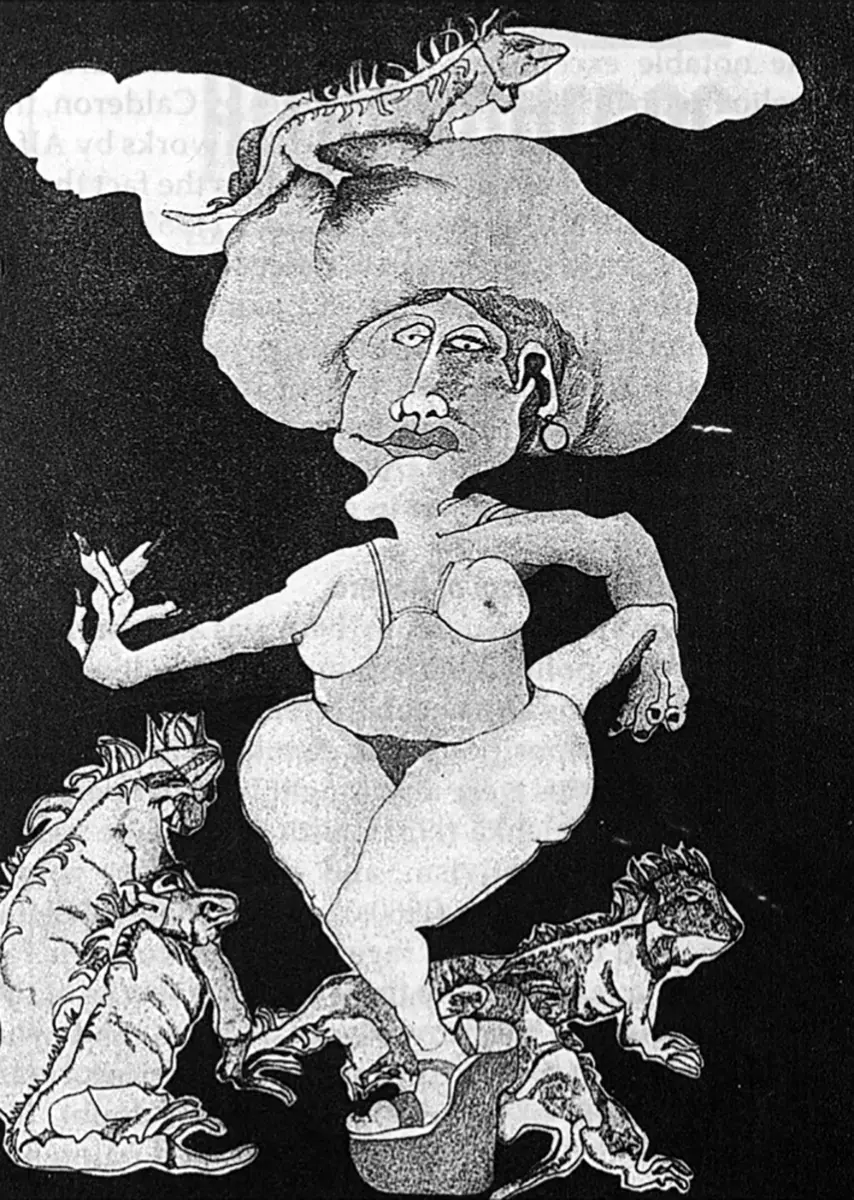
Another artist who dedicated many years to teaching is the painter and print-maker Manuel Chong Neto, whose works are characterized by a voluminous and sensual woman, usually accompanied by mysterious birds and disturbing figures. Although a figurative artist, Chong Neto has developed solid formal features and a dramatic use of chiaroscuro. Another teacher was the polemical painter and muralist Adriano Herrerabarria, whose work reflects a biomorphous surrealism combined with social and racial content. A different kind of surrealism can be seen in the compositions of Trixie Briceño (1911-1986), a Panamanian artist of English origin. Based on geometrical concepts and bright colors, her works appeal through their childlike style and curious sense of humor. Of the Panamanians who stayed in Spain, mention must be made of the surrealist/hyperrealist Pablo Runyan and the well-known Julio Zachrisson, whose excellent prints are impressive for their Goya-like figures, fantasy, and satirical humor. Both in his graphic work and in his paintings with their flat, bright colors, Zachrisson makes use of literature and urban folklore. Eight years in Spain also left their mark on the work of Alberto Dutary, whose paintings after his return to Panamá in the 1960s were full of fluid and phantasmagorical forms. Dutary, who spent many years teaching, was subsequently moved towards realism in his still lifes and the compositions of female figures and manikins which characterize his current work.
Institutions and Events in the 1960s
In response to a pressing cultural need, in 1962, a private group established the Panamanian Institute of Art, the first center for contemporary art in Panamá City. This non-profit organization was responsible in 1983 for the foundation of the Museum of Contemporary Art, which continues to be the only museum of its kind in the country. In addition to exhibitions in Panarte, artists also found new opportunities in various painting competitions, such as the Esso Salon (Central America) in 1964 and 1965 and the Xerox Pictorial Art Competition, which was held annually from 1969 to 1977. Participants included painters from the generation of the 1920s, and these events helped bring attention to new names. Some disappeared from the artistic world, but others, such as the landscape artist Manuel Adán Vásquez (1934), Antonio Alvarado (1938), Coqui Calderón (1937), and Teresa Icaza (1940), developed lasting careers.
Antonio Alvarado, who was initially influenced by Japanese art and North American Abstract Expressionism, has devoted his career to the exploration of pure color and essential forms in his compositions, becoming in the process one of the few abstract painters in Panamá. Coqui Calderón began painting works with strident colors characteristic of pop art and subsequently explored a range of more subtle tones in compositions of a semiabstract kind. During the 1980s, Calderón's works show a rediscovery of the still life and landscapes, moving at the end of the decade towards political themes. Teresa Icaza, for her part, painted spatial environments for many years, with telluric colors and a mysterious sense of light. Her recent oilworks explore imaginary landscapes with vibrant colors, which still reflect the abstract values characteristic of her early work.
These competitions also encouraged the participation of sculptors, a field which has received little public and institutional support in Panamá.2 The country's limited number of sculptors include in particular, Guillermo Mora Noli (1923-1981) in the 1940s and from the 1960s, Carlos Arboleda (1929), who has done several public sculptures. Both Arboleda and Mario Calvit (1933), who have created dynamic expressionist works in welded and hammered iron, have also worked in painting, where they explored more lyrical styles very different from their three-dimensional pieces. Another important artist of original, although sporadic, works in metal sculpture as well as painting, has been the Argentinian Juan Carlos Marcos (1930), who arrived in Panamá in 1965. Other Panamanian sculptors have pursued their careers outside the country: they include Justo Arosemena (1929), who lives in Colombia, and above all Susie Arias (1953), whose sculptures in unusual materials such as ceramics and painted concrete are characterized by their daring proportions and sense of innovation.
The Creative Boom of the 1970s
The 1970s saw an unprecedented development of artistic activity in Panamá. The coup d'etat of 1968 marked the beginning of two decades of military rule, but paradoxically, these were years of greater cultural openness. The National Institute of Culture was established, the first art galleries were opened, and there were increasing numbers of national and international exhibitions.
At the same time, new artists emerged. From the National School of Plastic Arts, under the direction of Herrerabarria at the time, there came painters such as Luis Aguilar Ponce (1943), Emilio Torres (1944), and Raúl Cevilla (1945), followed by Antonio Madrid (1949) and Luis Aguilar Olaciregui (1950), who went on to continue their studies in Mexico, Spain, or Italy. Aguilar Ponce was one of the first artists to use the airbrush in his semiabstract paintings; Torres, for his part, began as a conceptual artist, experimenting with industrial materials; in recent years, he has opted for a neo-informalism with dramatic brush strokes and colors in large format works.
As in previous decades, the Faculty of Architecture at the University of Panamá, whose teachers in the 1970s included both Cedeno and Trujillo, saw the emergence of another artistic group.3 Under these teachers, a watercolor movement was also developed, and the Las Guabas ceramic workshop was established, where utilitarian pieces were created, although sculpture-like pieces were created as well (like those of Chilean Ernesto Ortiz (1943)). On the other hand, thanks to the didactic efforts of the Colombian artist Alicia Viteri (1946), who has lived in Panamá since 1972, a print-making workshop was set up in the University (and then another one in Panarte), which helped develop interest in the graphic arts.
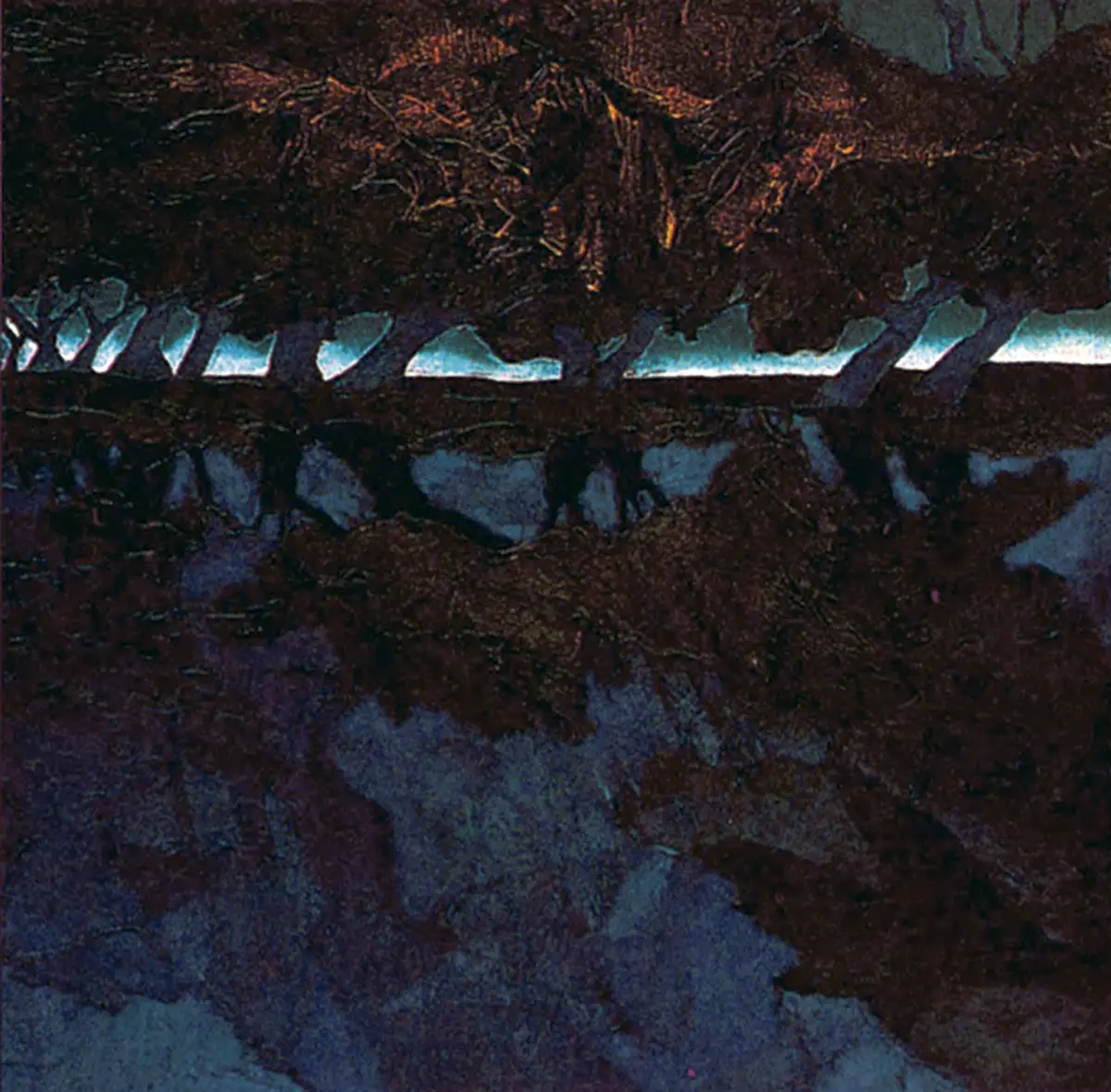
Without doubt the University was both the meeting place and starting point in the 1970s for a large number of Panamanian painters who were to emerge in the following decades and who included Amalia Tapia (1949), Tabo Toral (1959), David Solis (1953), Etanislao Arias (1952), Guillermo Mezza (1953), and Brooke Alfaro (1949). The sui generis still life works by Tapia moved from showing isolated objects to the more recent pieces with everyday elements set in a mood of nostalgia. Mezza paints fantastic worlds with fiery colors and elemental figures, while Toral's abstract compositions, characterized by their lyrical geometric qualities, subsequently gave way to figurative work, with the artist's current production offering an amalgam of the earlier periods in a mature and dynamic style. Solis, who has lived in France since 1975, had his first one-man show in Panamá in the 1990s, when he surprised the public with the sumptuous colors, dark characters, and religious symbolism of his oilworks.
Brooke Alfaro, an outstanding figure of this generation, has enriched the Panamanian art scene with surreal images and an excellent mastery of classical technique in compositions that make constant ironic allusions to Catholicism and society. The canvases, which seem to explore reality by deforming it, are characterized by the baroque extravagance of their imagery, their grotesque but sensual figuration, and the magical realism of their environments. Brooke Alfaro is currently working with clay and wood sculptures.
The 1980s and the Political Crisis
Alfaro was one of the winners of the second round of painting competitions, which in the 1980s awarded prizes to such figures as Manuel Montilla (1950), Spiros Vamvas (1952), Gabriel Chávez Fores (1953), Luitgardo Broca (1953), Eduardo Agustino (1956), and Olga Sinclair (1957). Montilla adopts a conceptual and critical attitude in his works, which include acrylics, serigraphy, and even mail art. Olga Sinclair began working with traditional chiaroscuro, which over time gave way to oilworks with peaceful-looking figures in interior settings evoking a sense of intimacy and romantic reminiscence.
During the years of the military regime in Panamá, particularly the 1980s, the situation in the arts was one of much activity and increasing art collection. Ignacio Espla (1946), a painter of Spanish origin, came to the country with large-format works and proposed a new way of looking at landscape, based on his abstract encounters and experience of the tropics. These were the boom years in building and banking, which led to a large number of exhibitions and the commercial popularity of the painters of folkloric imagery, such as the hooped skirts of Al Sprague (1938) and the large earthen vessels of Sheila Lichacz (1942). Towards the end of the decade, these cultural activities came to a halt with the growing economic crisis and political repression, a situation which culminated in the invasion of Panamá by North American troops at the end of 1989.
Despite the crisis, political themes did not dominate art in Panamá during the 1980s, although there were some notable exceptions: the show of miniatures by Rogelio Pretto in 1984, the funeral series by Calderón, the military monsters of Trujillo, and certain works by Alfaro after the invasion. Also worth noting is the fact that at the end of the 1980s, Isabel de Obaldía (1957) stopped painting landscapes and began to reflect on the problems of the country in her drawings and paintings. This unusual painter has followed the neo-expressionist line in her dramatic and sometimes violent interpretations of the tropical landscape, human beings, and their alienated relationship with the world. At present, she is the country's leading exponent of art in glass.
The 1990s and the School of Azuero
The work of Victoria Suescum (1961) was also markedly affected by the political situation: she abandoned her exuberant gardens and began to create, with a reduced palette, novel compositions with elemental and biomorphic forms. Battles were also fought by other painters, such as Rodney Zelenka (1953), with a language fusing abstraction and primitivism, and among other young artists, Eduardo Navarro (1960s), whose rough skeletal images seemed to be full of rage and social concern.
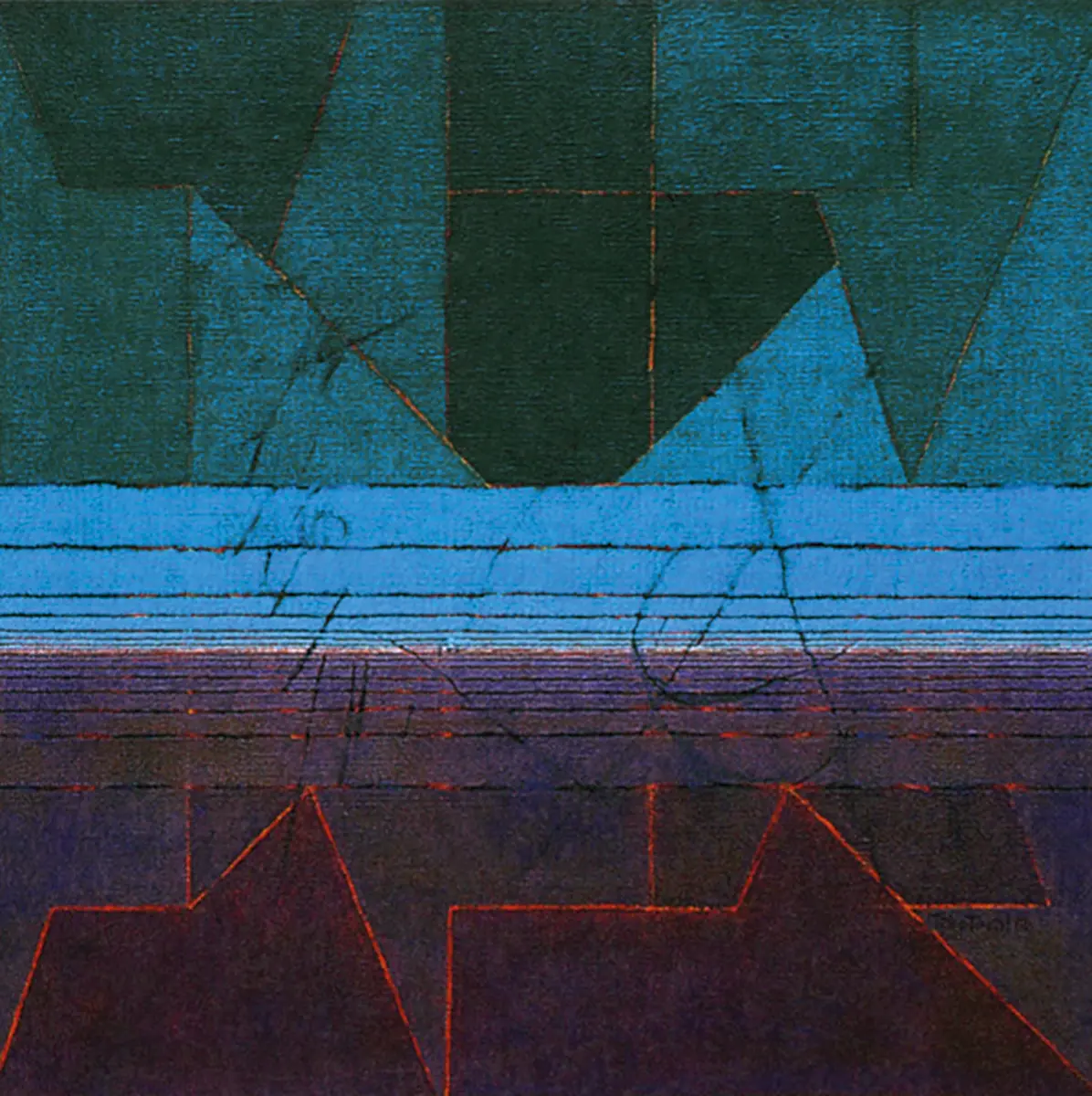
In another creative sphere there were the works of the group of artists in the province of Azuero, and who towards the end of the 1980s began to be known informally as the "Faculty of Azuero."4 Without doubt, the leading figure here is Raúl Vásquez (1954), a painter of poetic images of sandy textures with incisions, ingenu ous figures, and bright colors reminiscent of Tamayo. In his technique, as well as his passionate search for an art related to telluric forces and the ancestral spirit, Vásquez has inspired many painters of the region, including the young and promising Roosevelt Díaz (1963), whose works with fantastic beasts and intense colors show great promise.
The art of Panamá of the 1990s is not limited to the painters we have mentioned: the number of artists continues to increase, as can be seen in the level and quality of participation in the Panamanian Biennial of Pictorial Art at the Museum of Contemporary Art, an event sponsored by the National Beer Company since 1992. Moreover, many artists from previous generations continue to be active, some of them with an extraordinary rhythm of creative renewal.
NOTES
1. For further information, see Rodrigo Miró, "Lewis, Amador, Ivaldi," Revista Lotería, No. 219 (May 1974).
2. Encuentro de escultura, exhibition catalogue (M. Kupfer, curator), Museum of Contemporary Art, Panamá, May-June 1987.
3. For an interpretation of the differences between the ENAP artists and the University of Panamá, see Gustin Del Rosario, "Introducción a la pintura joven en Panamá, 1970-1976," in El Ensayo en Panamá, Biblioteca de la Cultura Panameña, 1981.
4. Mónica Kupfer and Adriana Samoa, "¿Existe la Escuela de Azuero?" in Talingo, No. 109, supplement to La Prensa (Panamá), June 25, 1995
MÓNICA KUPFER
Panamanian art critic. Lives in Panamá.