
Cultural Center of the Municipality of Miraflores
The Cuban theorist Gerardo Mosquera, in a recent article for ArtNexus, said that the three most important centers of artistic production in Latin America are Bogotá, Havana, and São Paulo. What Mosquera is stating is, in fact, a matter of consensus among those of us who are interested in the phenomenon of art in our continent.
Lima, on the other hand, had lost at the beginning of the 1990s the cosmopolitan character which it had enjoyed in previous periods. However, little by little over the past three years, we have once again been privileged at the continental level, with the arrival of distinguished visitors providing us with permanent contacts with international artistic developments.
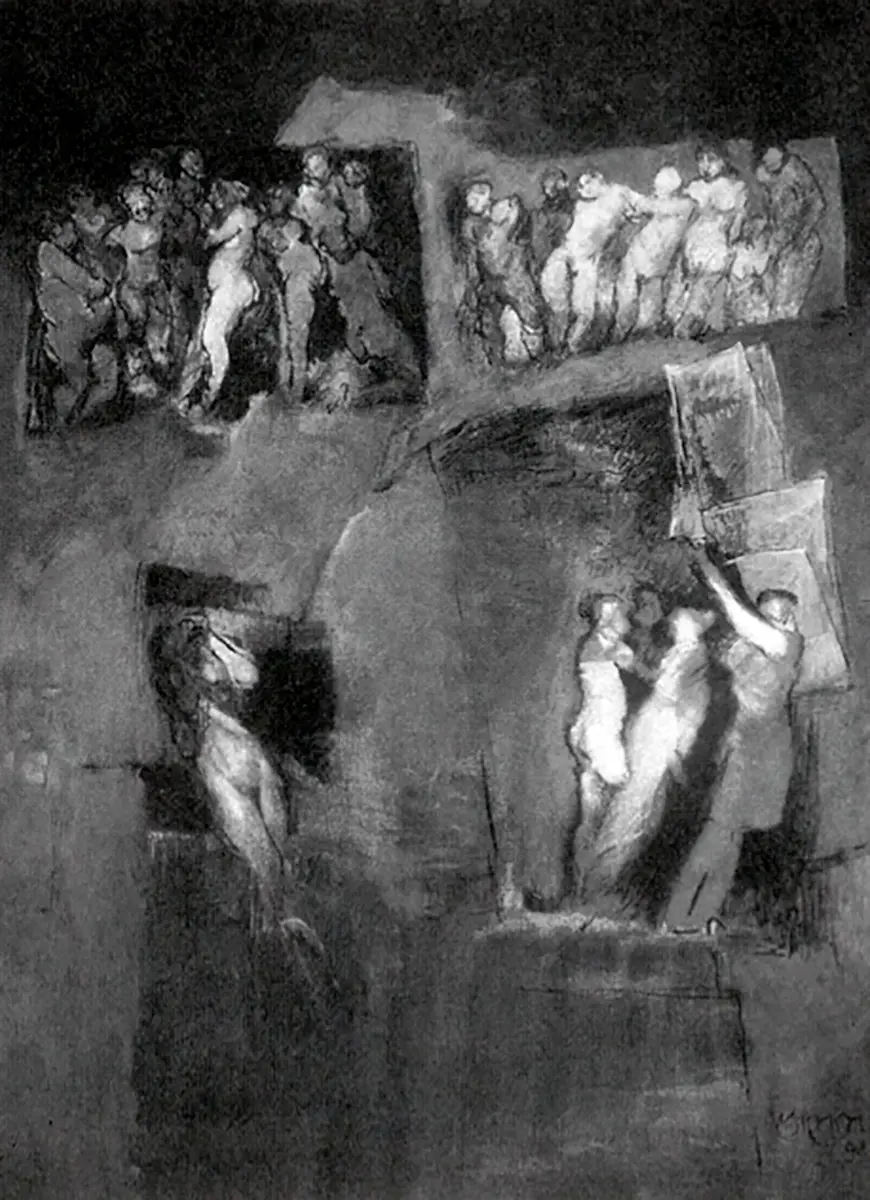
It is in this context that Manuel Estrada, a Colombian master known in Peru for more than a decade, was invited to present a show by the Cultural Center of the Municipality of Miraflores, following an exhibition of his small-format drawings last year. The Cultural Center of Miraflores, which receives the highest number of visitors to an institution of its kind in Peru, has distinguished itself by its presentation of the most innovative proposals in Latin America, as well as by shows of work by past generations, which have enabled us to recognize our contemporary origins. Presented after a major Cuban exhibit which reflected the new intelligence of the island, Estrada’s work revealed a turn of the screw in that it was the work of a man who had distanced himself from any kind of ruptures and who had reaffirmed the tradition of great Latin American art.
In Peru, the word "master" is not often used. If we recognize Manuel Estrada as a master, it is because his drawing offers a real lesson in formal values. It is very difficult to find an artist whose drawing conjures up a universe that is both so real and so magical at the same time. And it is not common to see that the forms of the bodies can be achieved with the freedom of very short strokes or that stains can acquire such a suggestive power, encompassing all the possible anecdotal events in history that people have lived or imagined. Equally instructive is Estrada’s knowledge of the structure of pictures, his use of color, and mastery of chiaroscuro,
which evokes a sense of enigma.
It is so rare in our environment to see a universe that combines Goya and Macondo to create an undeniably Latin American kind of art in which the visual impact does not come from any stridency, but from a sense of mystery to be unravelled, a force related to the myths from where the artist was born.
We live in a century of exhausted avant-garde movements, which have, over time, become part of tradition. With the barriers between the old and new now overcome, over and above the concept of contemporaneity, the work of Estrada, with its popular portraits, bull fighters, and prostitutes, its marginalized figures and street dogs, takes us back to the images of the people in the times of the global village.
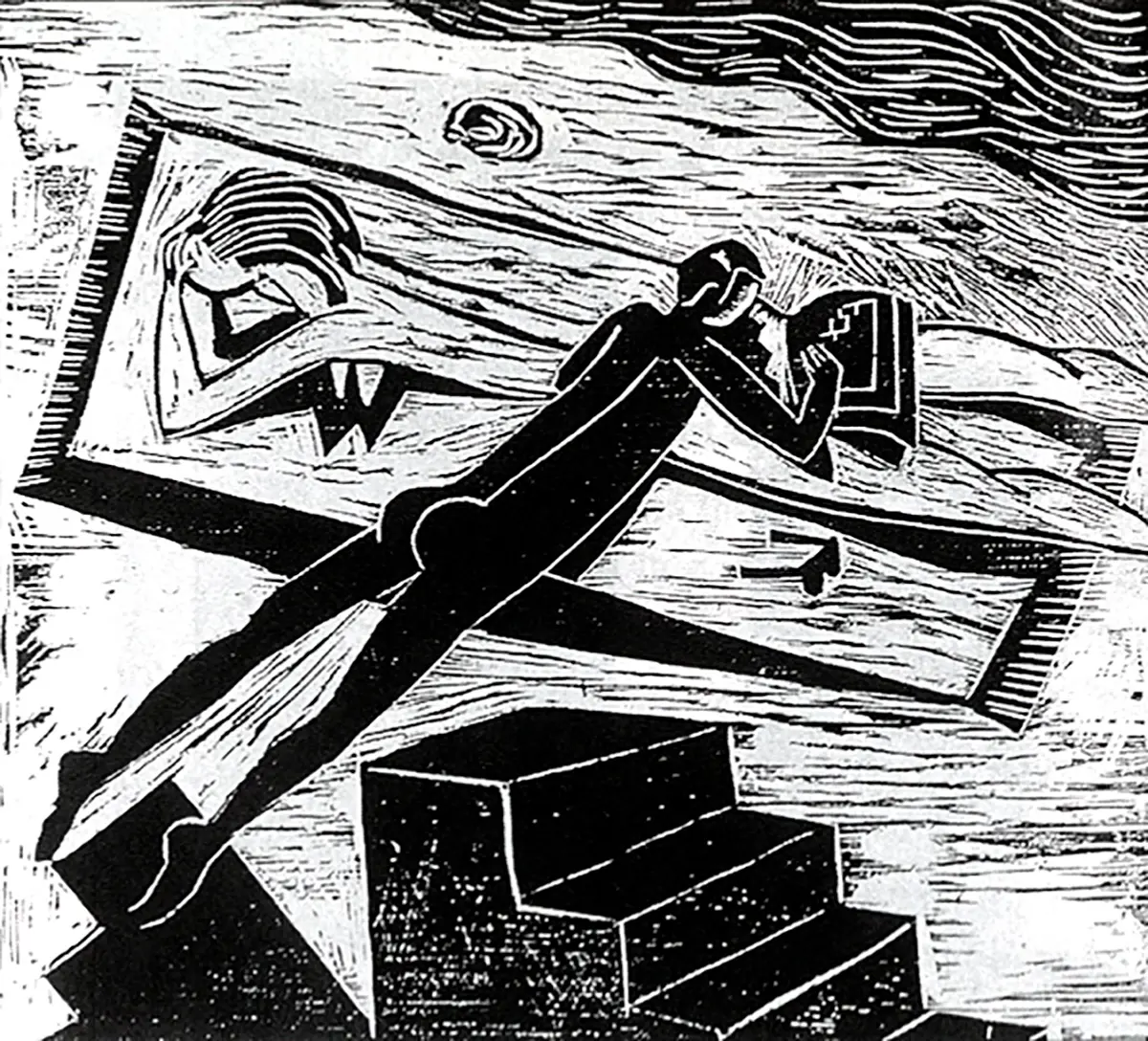
The Estrada exhibition was followed by the work of Panamanian, Uruguayan, and Dominican artists. In the case of the latter two countries, mention must be made of the work of Raul Recio, whose urban imagery alternates with stories about shipwrecks and emigres, xenophobia, and rage. Recio is a man of visual intelligence who has gone deeply into contemporary art, studying the early expressionists, seeking out sources, exploring primitive art and its repercussions from Kirchner down to Basquiat, and above all, studying the history of his own country, with its great, dead painters, like those of Peru, for whom international recognition would be hard to come by. Recio is vigorous in his brushstrokes, and his biting drawings are dominated by the triumph of the spirit over the evils of power and passion. However, it is in his xylographs that his energy appears in its most primitive form, in the passage of the chisel creating some of the simplest kinds of imagery which are at the same time extremely complex in their treatment of Latin American myths and reality.
Recio is far from being a pamphleteer and closer to those who have made the underground comic a cult art. His Saxon Witches Eat Children, The City in Flames, the references to cannibalism, his series on the "resurrection of the merengue," and, in particular, Manual of Hate, reveal the fusion of the erudite with the popular, the local tradition with international elements. His work is fresh yet tormented, spontaneous yet very reflective, full of contradictions which allow him to create a different image of art, on an island in the Caribbean, of a country in the world.
LUIS LAMA