
Luis Lizardo has had at least seven important exhibitions to date. The constant features in all these shows include the sensual use of color, bordering on delirium, the persistence of the garden as a metaphor, the astonishment evoked by the formats, and the strength of imagination in accommodating the planes and the transparency between the latter.
The artist’s recent exhibition at the Euroamericana Gallery (April-May) was mounted with considerable distance separating each canvas. This was an excellent means of resolving the impact generated by each picture. Intense colors filled plants that we do not see, but which seemed to be there. There was no definite plane or form, only surfaces and lines of color set against tranquil backgrounds which suggested not so much trees as mere forms, or rather leaves, something fragile and dense, something simple but which barely lets the light through.
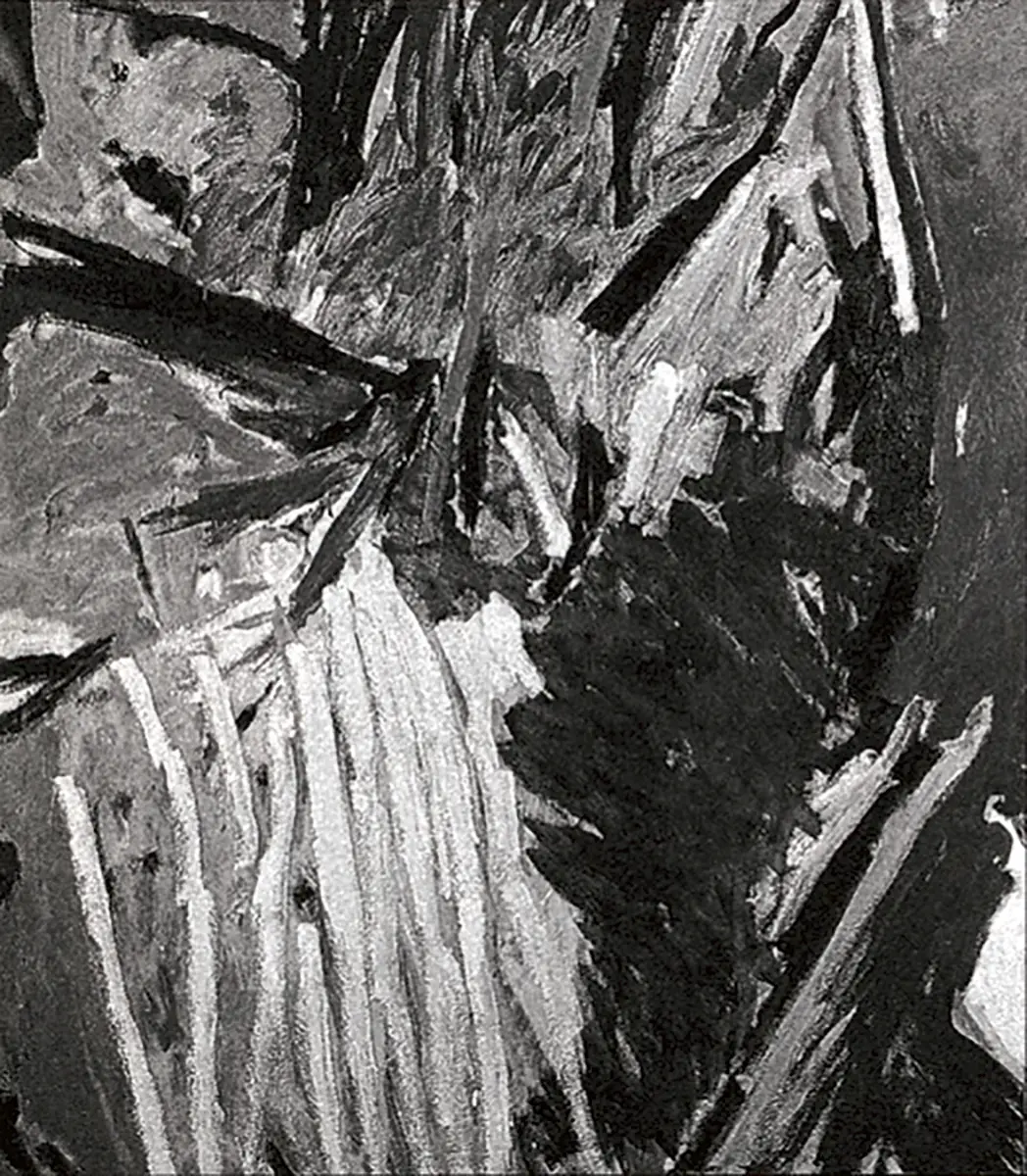
These backgrounds are large stains of bright color which open onto tones in other registers, a distinctive feature of Lizardo’s work, like pores of something living. These orifices take us towards a sense of depth, to the air and, once again, to the light. Luis Enrique Pérez Oramas was quite right when he said that these pictures suggest the density of what is visible. Here, there is no landscape or hackneyed ecology: we are in the presence of painting as an invention of aesthetics, of a concept of the world, of certain senses in painting, such as sensuality or the pleasure of doing, which is as essential as the pleasure of seeing.
The drama of the work comes from the color, those browns which sometimes become almost black and hide everything, even suppressing their incontinent features (Lizardo’s brushstrokes can be spoken of with pleasure and gusto), and the sensorial and voluptuous qualities which make up this work. But this time, the black color acquired another function, and formed part of the violence of the image, its rich texture and the indefinite nature of its possible forms, as if beaten down by a wind which changes everything.
This is a work based on a continuous debate between figuration and abstraction. What can we do with Lizardo? Enjoy the conceptual duality of his work. Here, figuration is a referent that has almost been eliminated. But there always remains something to remind us that we might find a branch in the void. And this, perhaps, might explain the persistent iconography of nature.
Another characteristic feature is the mixing of color with the canvas itself, as Axel Stein noted some years ago. It is as if Lizardo does not believe in the palette and prefers to use the canvas for this purpose. The canvas thus becomes a field of experimentation, a place for the full expression of texture.
The active voids in Lizardo’s works have now become full of violence: textures are both structured and filled with lines, lights (a round light, as Pérez Oramas has said), which appear here and there, a chaos evocative of some vision of the cosmos.
In looking at this work, I am reminded of a powerful observation by Catherine Millet when she spoke of the fascination of the invisible. This is a painting for the space of painting, for an open kind of intimacy, for the continuity of tradition, for the imaginative frenzy of nature.
JUAN CARLOS PALENZUELA