
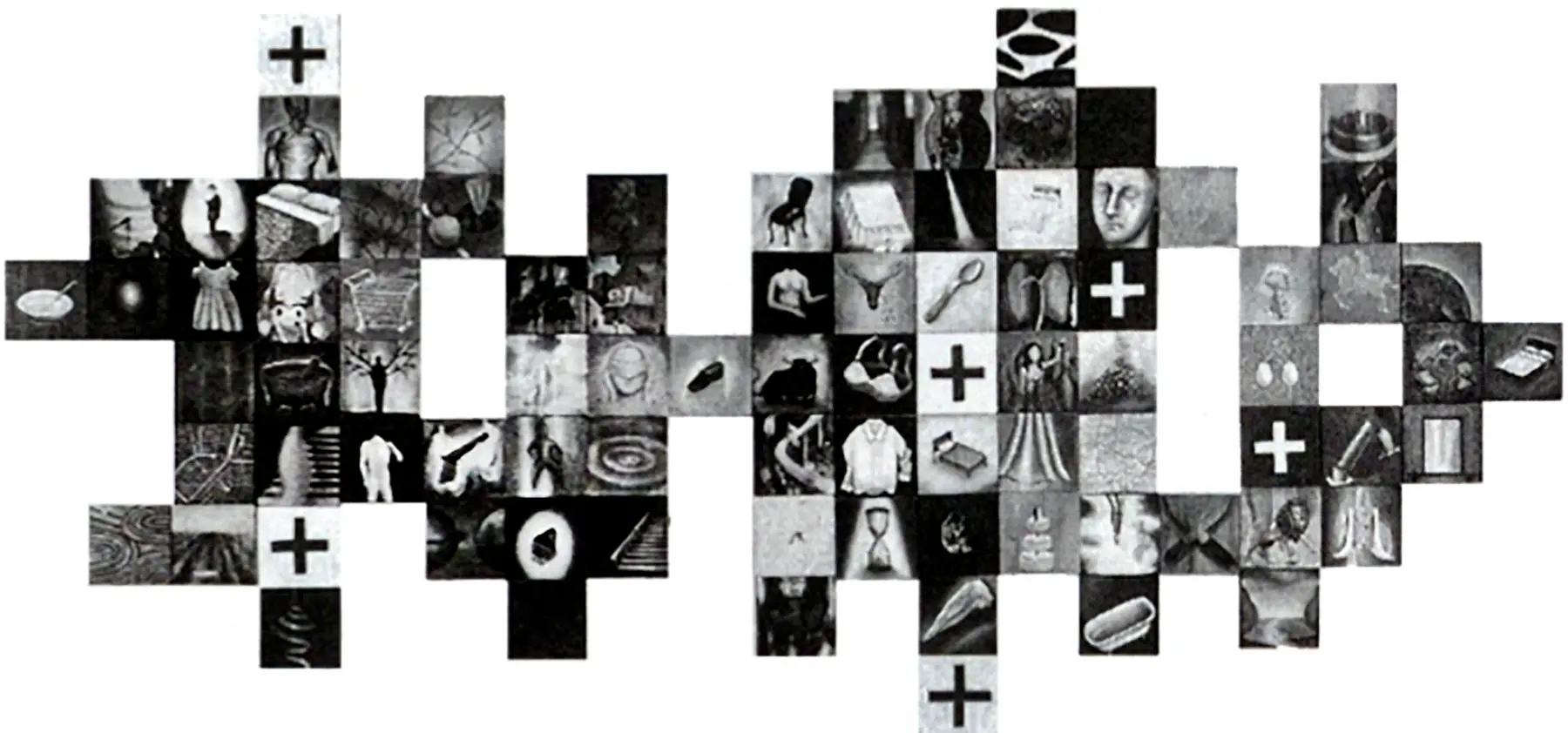
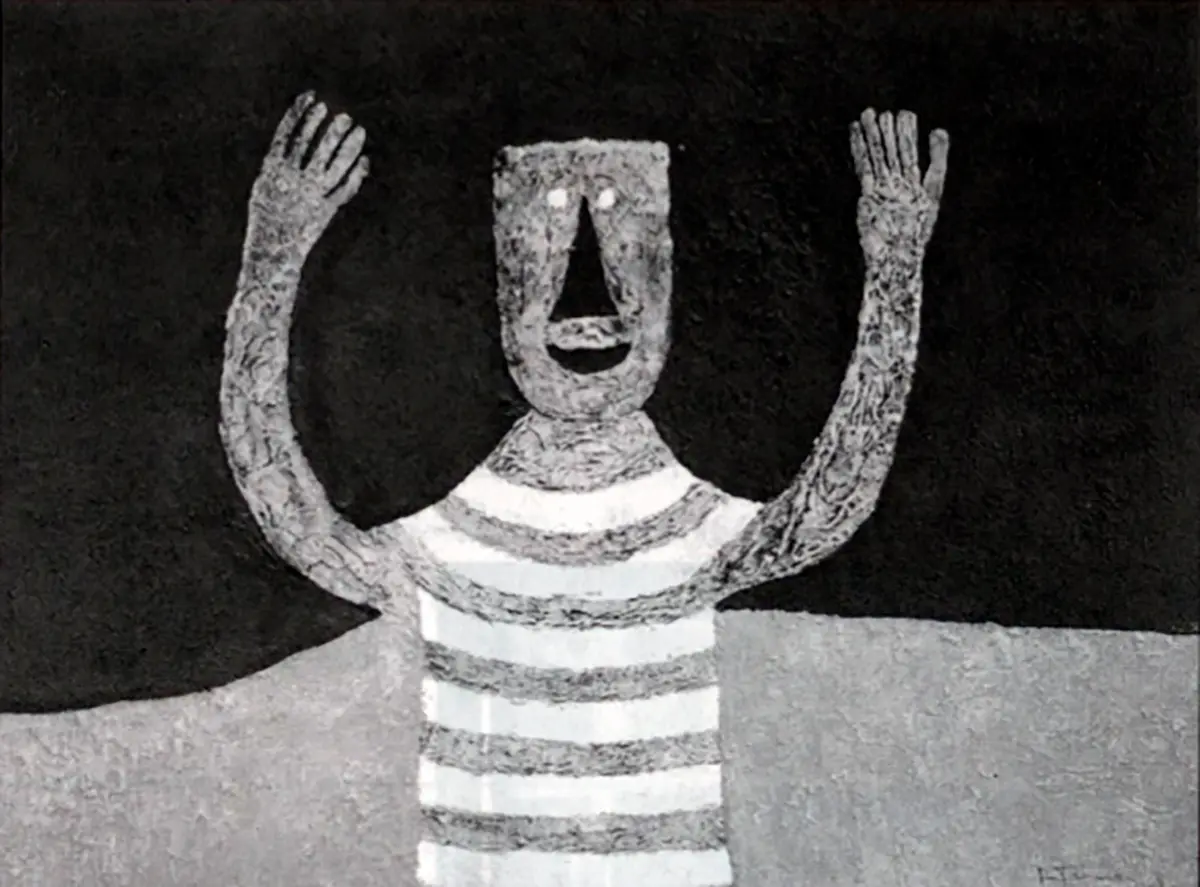
With this futuristic or constructivist title, the El Museo Gallery in Bogotá presented during the months of April, May, and June an ambitious exhibition that attempted to offer a kind of panoramic view, or at least a representative slice of Mexican art from the last three or four decades. It was made up of work by 27 artists, the oldest being Rufino Tamayo, and the youngest Taca—although the show failed to achieve its ambitious objective. The curators Rosalba Garza, Carlos Aranda, and Efrain Bernal wanted, through their selection of works and artists, to establish or justify some indication of identity, a kind of “trademark" associated with a specific kind of difference vis-á-vis other models available on the market. Reviewing all the works presented over the four floors of this splendid Bogotá gallery, I found it difficult, first of all, to establish any unity and then to discover any single identity. If after Mexican muralism there was ever any unity or perhaps identity, only traces could be found in this show in the photographs of Mariana Yampolski or Laura Cabrera, who in their turn followed the decision by Tina Modotti or Manuel Álvarez Bravo to aestheticize, in emphatic black and white works, like the North American group "F/64," the most representative themes of everyday life in Mexico. Perhaps too the etchings and aquatints by Francisco Toledo, depicting men, women, and animals, had something to do with a Mexican identity, their textual and metamorphic composition possibly recalling the amate paintings of the indigenous peoples of Oaxaca. But apart from these pieces, few works in the show seemed to have much to do with Mexican identity. Not even those of Taca, a young artist who was represented in this exhibition with a room full of works, four in number, entitled Flow, Watchword, Guardian, and Condition, with hammocks, calabashes, piles of earth, and imaginary gods sculpted in wood, which an astute interpreter, familiar with the Zapatista sympathies of the artist, might associate with the situation and imagination of the Mexican peasants. For my part, however, I was not convinced by these anthropological details.
Neither did I believe that works characterized by an almost delirious use of fantastic and ornate kitsch—as in the three acrylic pyramids by Vicente Razo, or the two pieces by Sofía Taboas, were, for that reason, typically and characteristically Mexican. Kitsch, as the German sociologist Norbert Elías wrote many years ago, should be described as the general style of capitalism and not only of the snobs or the popular classes of a given country or group of countries.
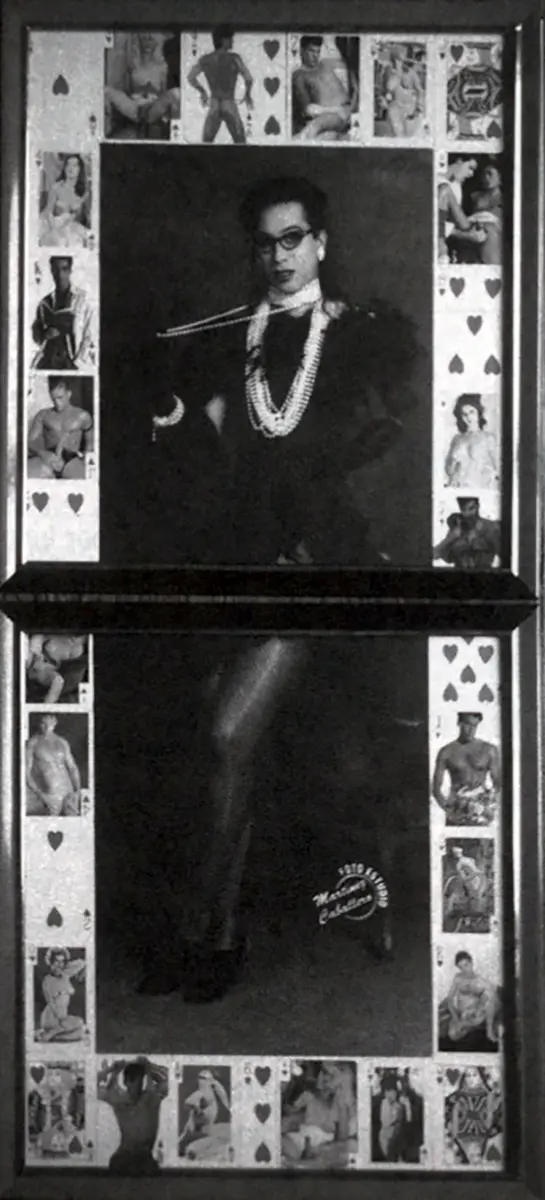
In the same way, the desire for individual originality tout court—which could be perceived behind some of the most intense works in this show, which had genuinely museographical pretensions—is an expression of capitalism and not just of Mexico. I am thinking, for example, of the series of images proposed by Aurora Boreal—queer, super-Max Factor half Zoot suiter, a work of the openly admitted desires of Gustavo Prada. Or the work by Eugenia Vargas, the Chilean artist who recently moved to Mexico City, who presented eleven large-format Ecktacolor pieces, where, against an infinitely red background, there appear fragments of female bodies. Her own body? Evocations of her body as a child? The only thing certain is that she is a female artist, like Frida Kahlo in her time or the Cuban Ana Mendieta, of the kind for whom the exploration of the body is the last stronghold against individual integrity, now threatened from all quarters.
Probably Gerardo Suter was seeking something similar or comparable with his series of photographs, in silver gelatine, of fragments of naked male bodies, the titles (Banishment, Heaven, Earth, Rooting) and afflicted themes of which evoke the painful experience of the body, which only in the ecstasy of suffering ceases to be alien. Finally, I would not like to finish this note without saying that the works presented to Julio Galán and Nahum B. Zenil were not of their usual quality. On the other hand, I can only delight in the inclusion of the great, enigmatic, and intense works on paper by José Luis Cuevas, entitled Bullfighter and Death, Old Bullfighter, Self-Portrait in Malasana, and The Aztec Venus.
CARLOS JIMÉNEZ