
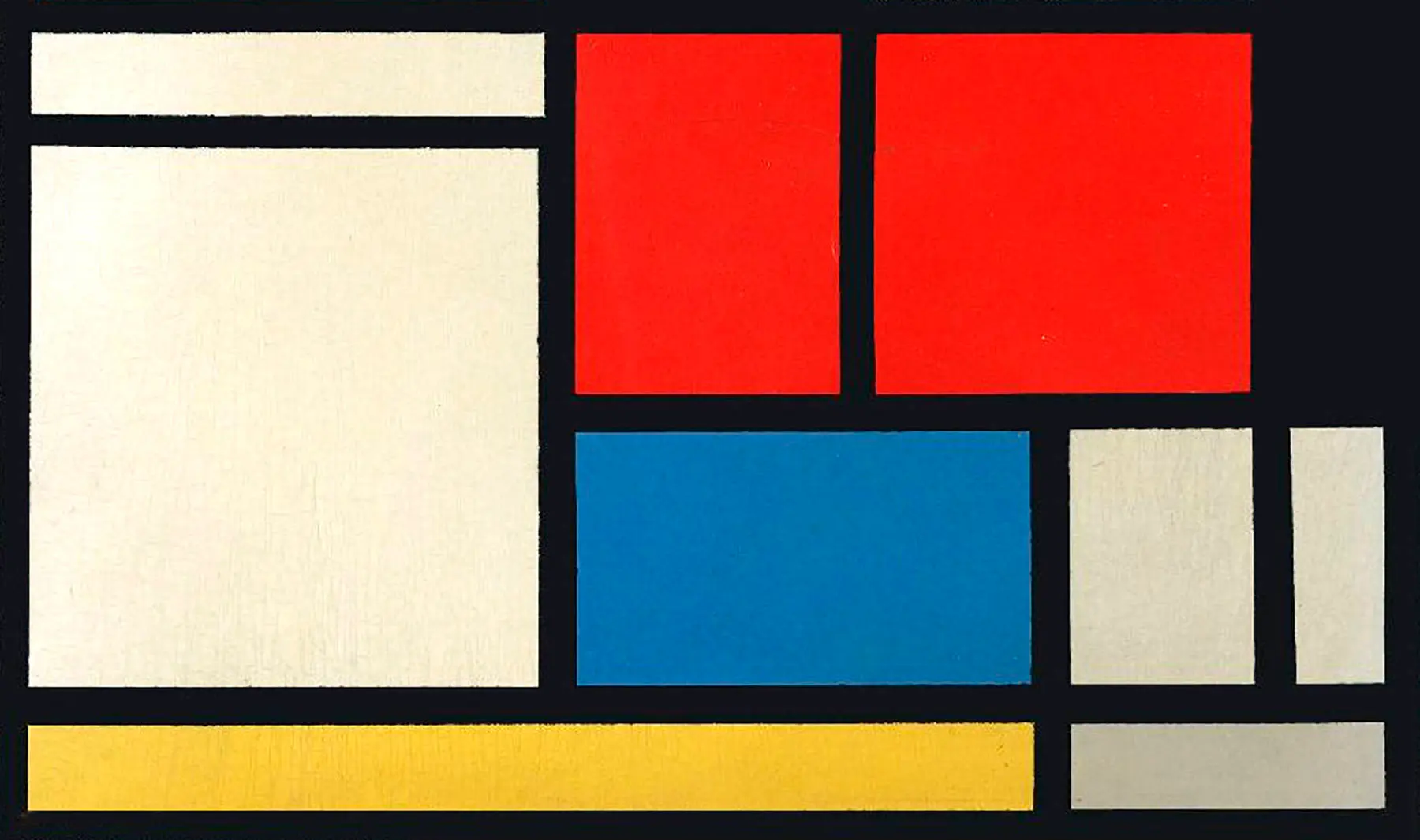
Mondrian, more than the Russian constructivists or the artists linked to the Bauhaus, has always been used as a symbol of a modernist extreme in abstract painting. Considered a cold minimalist in abstract painting, he has traditionally been seen as an industrial visionary. It is not that his pictures depict industrial life (as in the cases of Léger, Ozenfant, and Jeanerette), but that they propose the essence of industrial aesthetics as something alien to the hand and handicraft.
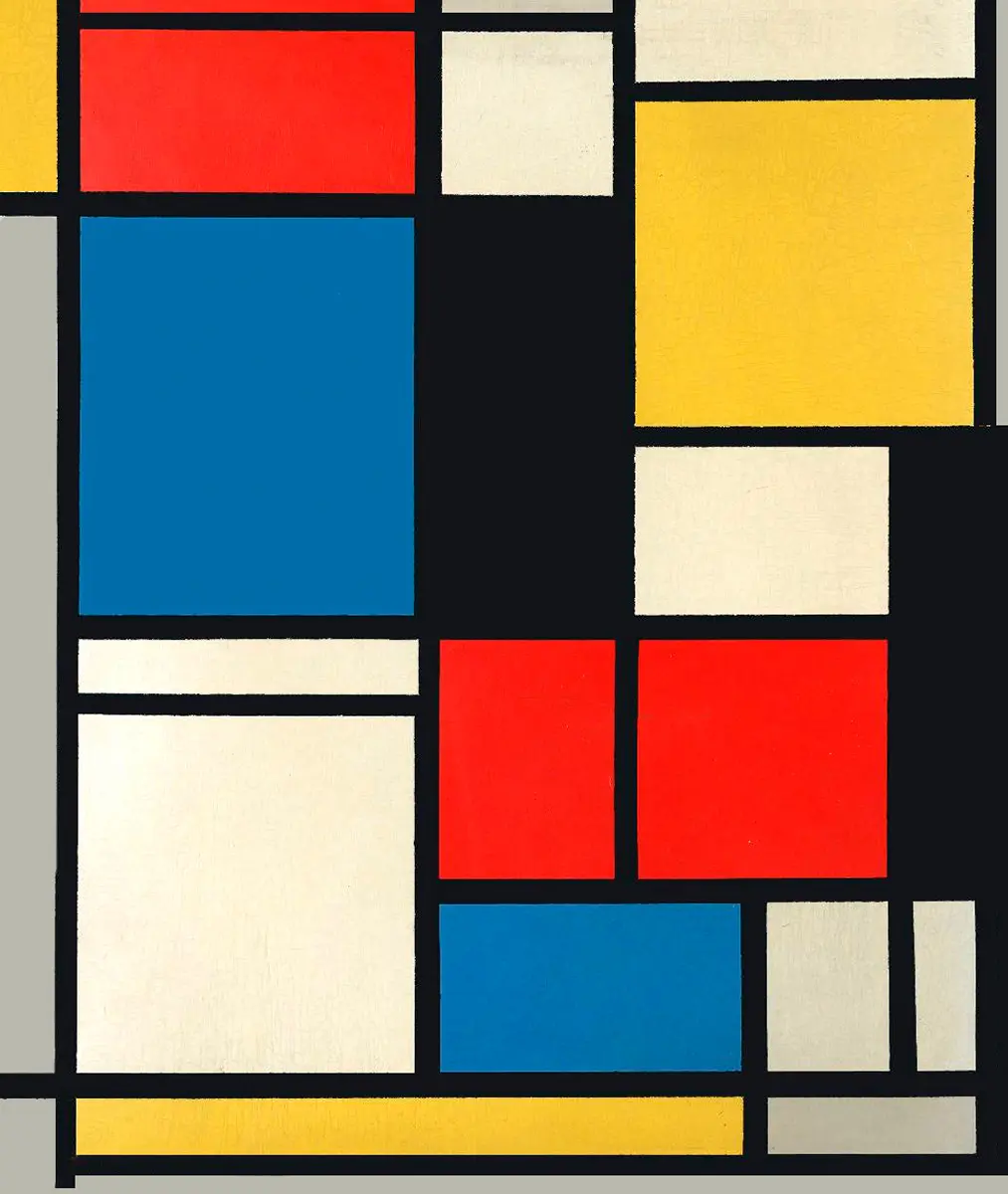
The exhibition at the New York Museum of Modern Art (MoMA) —the most complete presentation to date of Mondrian's work— sets out to overturn this schema, and it achieves its goal. Both in the selection of works and the explanatory panels, it emphasizes the "pictorial" and intuitive aspects of Mondrian's pictures. In this way, it is faithful to some of the spirit of the work since, paradoxically, Mondrian never wanted to project an image of himself as a geometrical and rational painter. He always tried to insist that his use of intuition and his interest in painting as a medium were contrary to any mathematical calculation and industrial finish. But there were several circumstantial reasons for not paying attention to what he said.
Mondrian worked during a period in which rationalist design—as proposed by the Bauhaus and then by the international style in architecture—was imposing itself in perceptual terms and needed an appropriate iconography. Mondrian's work not only served these purposes, but his colleagues in the de Stijl group were ideologically in sympathy with these premises. In this context, there was no apparent reason for separating the work of Mondrian from that of the others. To make matters more complicated, Mondrian (like Borges's Menard recreating Don Quixote), tried to recreate rationalism by basing himself on intuition. Through recourse to relatively hermetic mystical elements, his goal was to achieve spiritual purity. From his point of view, modernist and scientific rationalism was based on a profane and superficial kind of mathematics. Mondrian, for his part, sought a sacred kind of mathematics, in accordance with the theosophical teaching which had influenced him in 1909.1 In one of the footnotes to his study of the neoplastic in painting, he distinguishes the mathematical from the mathematical artistic temperament, something which, he thought, would only be developed in the future and from which the New Style would emerge.2
Theosophy and one of its variants—anthroposophy—deeply affected many of the artists of this century, from Kandinsky to Beuys, as well as Beckman and several of Mondrian's colleagues (although to a lesser extent). Theosophy wasaphilosphical religious movement initiated by Madame Blavatsky in New York in 1875; theosophers believed (and believe) in reincarnation, the possibility of a higher knowledge of God through inner spiritual contemplation, and in the eventual unification with God through a combination of Oriental and Christian beliefs. In 1913, Rudolf Steiner established a subcurrent, which became institutionalized in the General Anthroposophical Society. This faction retained many of the initial beliefs but concentrated on the development of the spiritual capacities of the individual and created a school system for this purpose, characterized by some progressive features in its pedagogy.
The relationship between theosophy and art was sufficiently strong for Mondrian to write in 1913 an essay on the subject for the review Theosophy, which was subsequently rejected because it was deemed to be an excessive defense of abstraction. In the Netherlands, theosophy and anthroposophy had one of their champions in Schoenmakers, a former priest (and neighbor of Mondrian in the little town of Laren, near Amsterdam). Schoenmakers tried to combine theosophy with Catholicism in what he called "Christosophy." Two of his books, The New Image of the World and Plastic Mathematics, which had considerable influence on the members of the de Stijl movement, led to the coining of the term "neo-plasticism," which is generally associated with Mondrian and his colleagues in the movement, and which Mondrian himself used in his famous essay on the neo-plastic in painting in 1917. Reaffirming his theosophical roots (and the mutual comprehension of his colleagues), Mondrian wrote to van Doesburg about the structure of his paintings: "I feel justified in this orthogonal position. I have all of the Secret Doctrine (referring to the doctrine of Madame Blavatsky)."4
The artist is seen as an example of pure and formalist abstraction, and whose most typical design, thanks to its decorative attraction and presumed emptiness of content, was used for clothing by Yves St. Laurent in 1965 and can now be found on cans of mousse by L'Oreal, thus becoming a programmatic painter. Mondrian was a painter who, in his own way, tried to illustrate his beliefs. A reading of his essay on the neo-plastic in painting is crucial to an understanding of his work. According to Mondrian, art is the product of a tension between what is individual and discardable and what is universal and permanent. It is the place in which abstraction tries to eliminate the former to the advantage of the latter. Only when the individual ceases to be an obstacle can universality express itself.
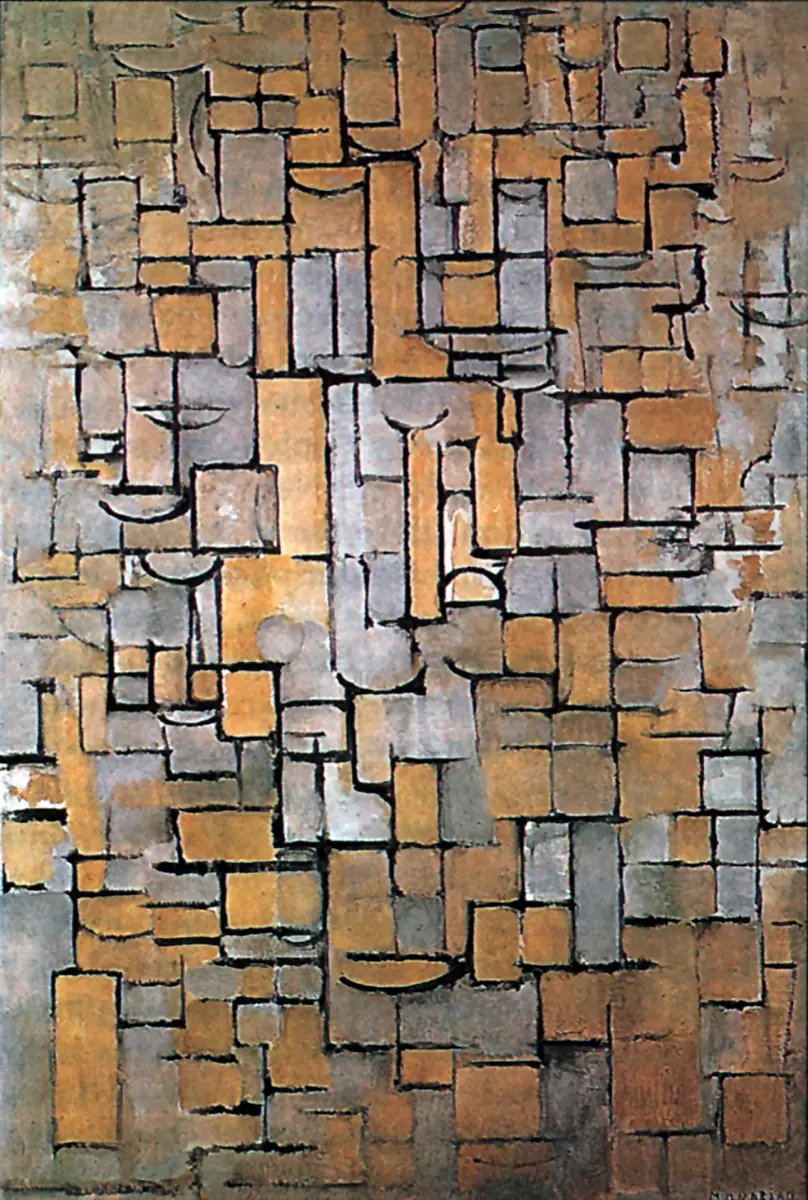
In this sense, Mondrian is a true abstractionist, someone who abstracted from reality in contrast to someone who concretizes something new and separate from reality. His truths come from nature and his own, belief-inspired readings. They are reproductions which "clean" the surface of his pictures and which, along with the retro-information of graphic design, have made us see his pictures as mere design rather than as a product of spiritual legislation.
It is interesting to compare Mondrian with Baudelaire, since taken together they allow us to understand modernism in a way which is not possible if they are separated. In his Praise of Make-up, Baudelaire said that "nature is the creator of parricide and cannibalism and countless other abominations which out of pudor and delicacy we cannot name...All that is beautiful and noble is the result of reason and calculation."5
In a sense, Baudelaire tried to go further than Mondrian in his critique of nature. He used, for example, Louis XV, a retrograde naturalist according to Baudelaire, whom Madame Dubarry could drive out of her apartments merely by putting on her makeup. For Baudelaire, fashion became a reasonably authentic activity (a series of permanent and successive attempts to reform nature). For Mondrian, the function of man was not to improve nature but to uncover an essence and balance which were present in and hidden by the concrete. With lucidity, Mondrian thus proclaimed that decorative painting was limited to the generation of form and natural color. It was the "anecdotal" nature that prevented the natural from being seen. And the natural would in the end express itself through a balance between opposite extremes, where perpendicularity and primary colors would become the ideal formal solution.
Mondrian applied all this not only to his surroundings but to his vision of the world. His New York studio (reconstructed in the exhibition), the order of things in this space, is paradigmatic. But so is his description of modern dance, including tap. The curves of the waltz, according to Mondrian, are replaced by straight lines in which each movement is immediately neutralized by a counter-movement, which means the end of balance. And as regards social life, autocracy, imperialism, with its (natural) priority of the strongest, are collapsing, where they have not yet collapsed, and giving way to the (spiritual) power of the law. In this sense, Mondrian appealed to a vision which was more romantic than the Baudelairian one.
Although the above might make Mondrian appear to be rather schematic, his perceptions were complex, and when he criticizes and places other artists in his own scale of values, we can appreciate him better. Describing Vantongerloo, for example, Mondrian writes: "With his Belgian intellect, he has created an operative system which, in my view, is based on nature. He does not have the slightest idea about the difference between the manner of nature and the manner of art (...). With his ordinary consciousness, he subjected everything to calculation (...) He approached everything like an ordinary theosophist."6
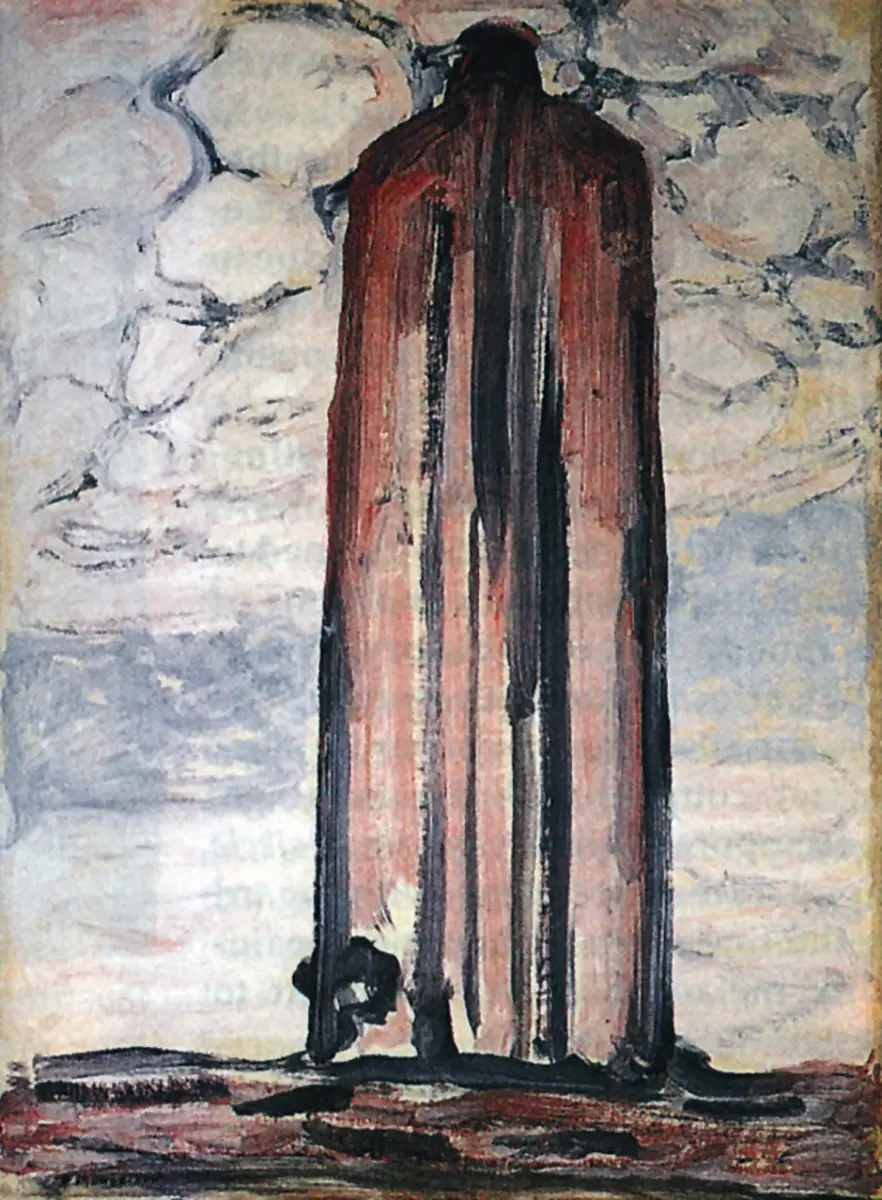
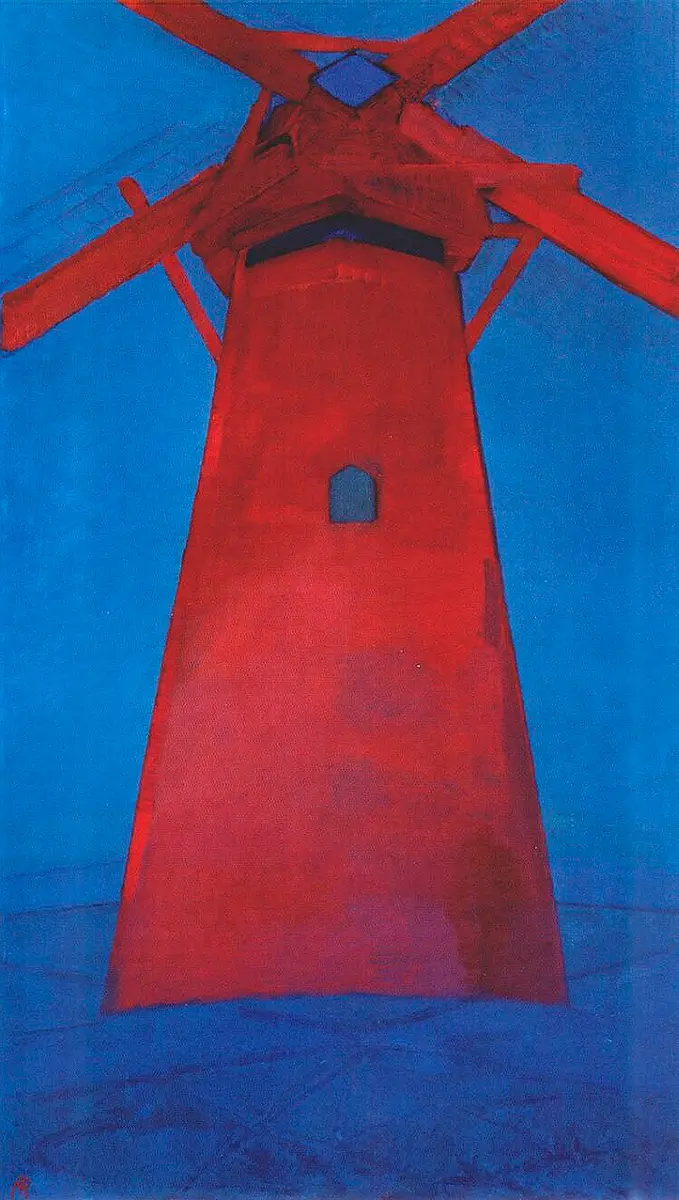
The self-imposed task of the curators of this exhibition at the MoMA was to highlight Mondrian as a painter. This is a position that is to be welcomed, although it does at the same time somewhat distort the artist's work. The endeavor is laudable in that it takes Mondrian out of the rather sterile formalist context in which he was placed for several generations. In this respect, the exhibition substantially enriches the vision that we have of him. As a "painter," the work before 1911 (when his studies of trees acquired cubist characteristics and slowly "grew" towards their orthogonal structure) was given its due importance in this show. Some landscapes from 1907 and 1908 anticipate the atmosphere of Rothko's paintings. The pictures of the Lighthouse of Westkapelle (1908, 1909) are not works of rupture, but they are impressive paintings. Molen, The Red Windmill in Domburg (1911), linked as it is to the symbolist future but still distant from that future in formal terms, does, however, clearly share the spiritual severity of many of the subsequent pieces. But this shift from formalism to the craft of painting as proposed by the exhibition does not exhaust Mondrian's work. It is like replacing one formalism for another, in this case, an artisanal formalism, which would also be revealed in the rhythm of the brush in many of the monochrome planes of his later work.
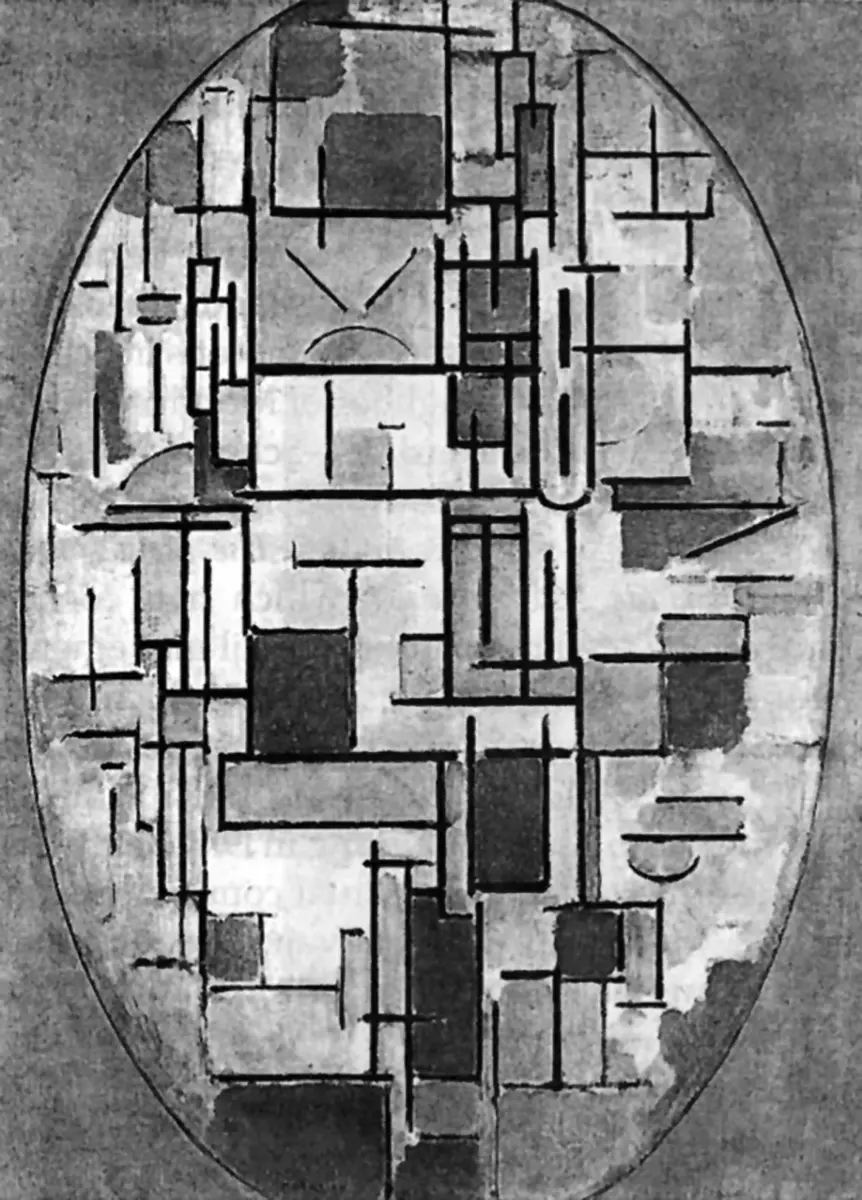
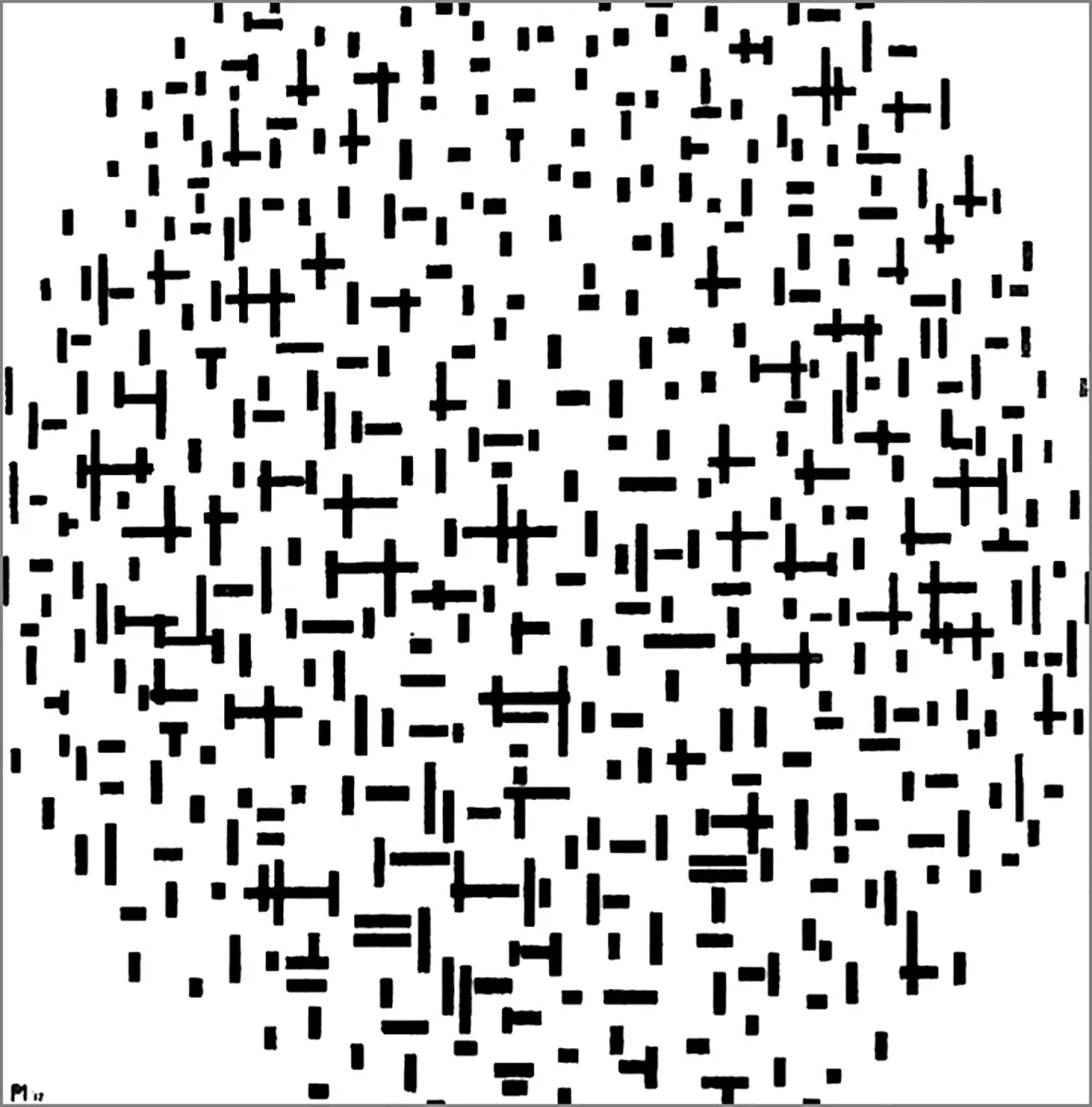
The exhibition correctly emphasized that Mondrian enjoyed the pictorial surface. The brush stroke is not eliminated but carefully and obsessively woven into the surface of the canvas. The black lines that divide the planes often end arbitrarily before reaching the edge of the picture. The whites are not whites; there is an infinite number of variations, with sometimes subjective grays in the more "objective" pictures.
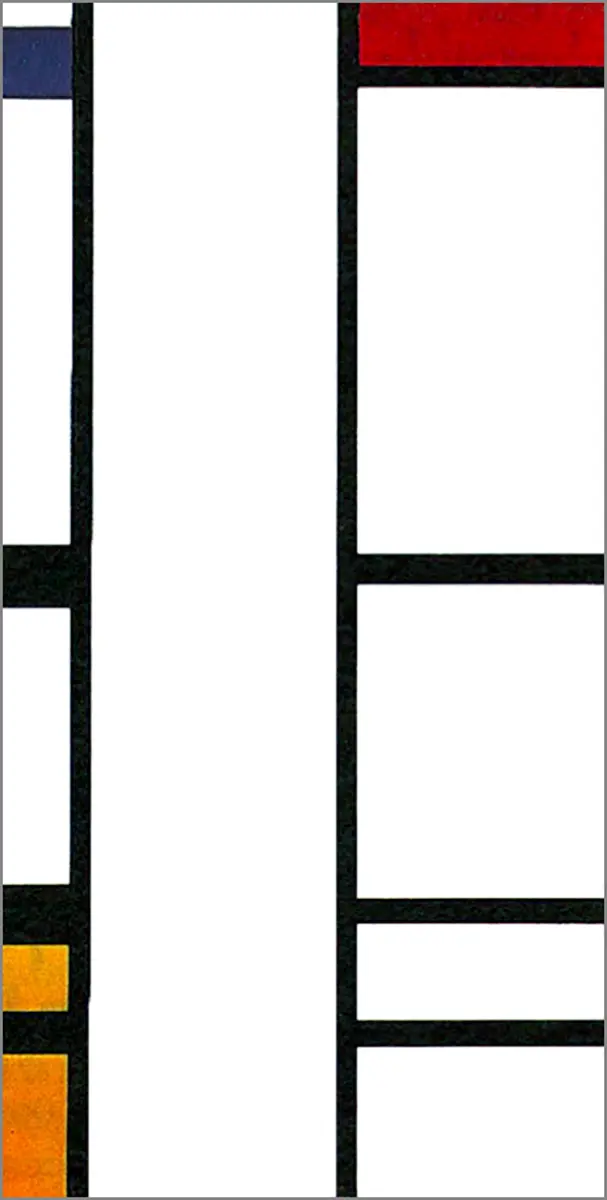
The exhibition also examined processes through unfinished pictures, with pieces of adhesive tape remaining stuck in an experiment with color, with tentative and altered lines in charcoal, with rare drawings sketching out possible solutions, always in an attempt to capture an intuition.
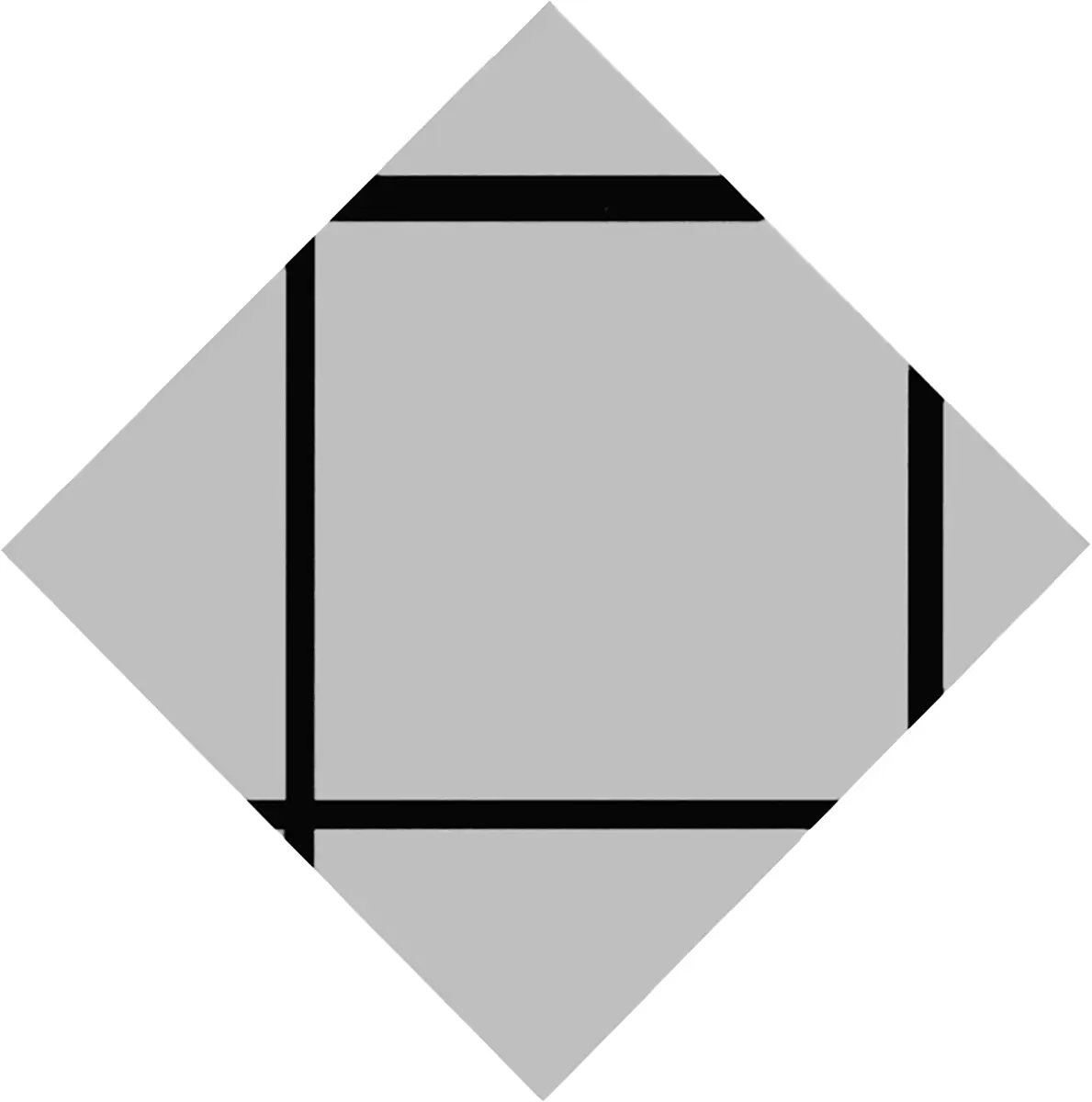
But as a result of this illumination, the show minimized the influence of theosophy on Mondrian and attempted to discard what, in relative terms, constitutes the content and mission of his work. It is probably true that none of the works is a literal illustration of the writings of Blavatsky, which is what Yves-Alain Bois says in his catalogue text, that he needs to be able to accept that Mondrian was a theosophist after the 1920s.7 But the description mentioned above concerning Vantongerloo as an "ordinary theosophist" does not place Mondrian outside theosophy or in a satellite position. Rather, it would seem to be implicit that Mondrian, as compared with Vantongerloo, would define himself as a non-ordinary theosophist, as an authentic possessor of the truth, and as non-dogmatic. As he did with everything else, Mondrian distilled the teachings of theosophy and reached his own conclusions. It may well be that the theosophists did not accept him completely (the rejection of his essay in 1913 might have been a sign, another being the failure of Rudolf Steiner to answer a letter from him in 1921),8 but that does not mean that he did not feel himself to be one of them. His ideology seemed to be relatively consistent throughout his writings, with no contradictions or deviations, and his ideas, like his pictures, seem to spring from the same source. The elimination of the tragic (for Mondrian, the tragic is a form that acquires incomplete balance) seemed to be synonymous with the search for theosophical spiritual equilibrium. His possible distancing from what might be called theosophical bureaucratization was not necessarily a distancing from the essence of the doctrine. His work from 1920, when in Composition A he began to work in rectangles with primary colors, maintained a coherence of investigation around this equilibrium up to the end of his life. It is an equilibrium that had already become so internalized that it defined his famous relation with the diagonal. Mondrian did not fight with van Doesburg because the latter dared to use the diagonal in his work. Mondrian, under the impetus of van Doesburg, even began to research the diagonal as a possibility for his own pictures. But once they were finished, something bothered him enough to turn the canvases so that the lines once again became organized into horizontals and verticals. This was how the first series of "lozenges" came about, the pictures hung as rhomboids. A more serious discrepancy with van Doesburg seems to have been caused by a work in which the latter constructed three canvases (Compositie XVlll, 1920), which had a common center outside the limits of the three works. In a letter, Mondrian reminded him that it was not a question of moving the center, but eliminating it. If the center was kept—even elliptically—then the work was part of a larger work with its own center, a kind of focal point which still referred to perspective.10 But the strongest discrepancies seem to have been the result of differences of temperament rather than aesthetics. Van Doesburg, who was much more eclectic in his aesthetics and interests, ended up losing patience with the coherence ("dogmatism") of Mondrian. A relationship that had functioned well through letters soon deteriorated during the periods of irritable cohabitation in Paris.
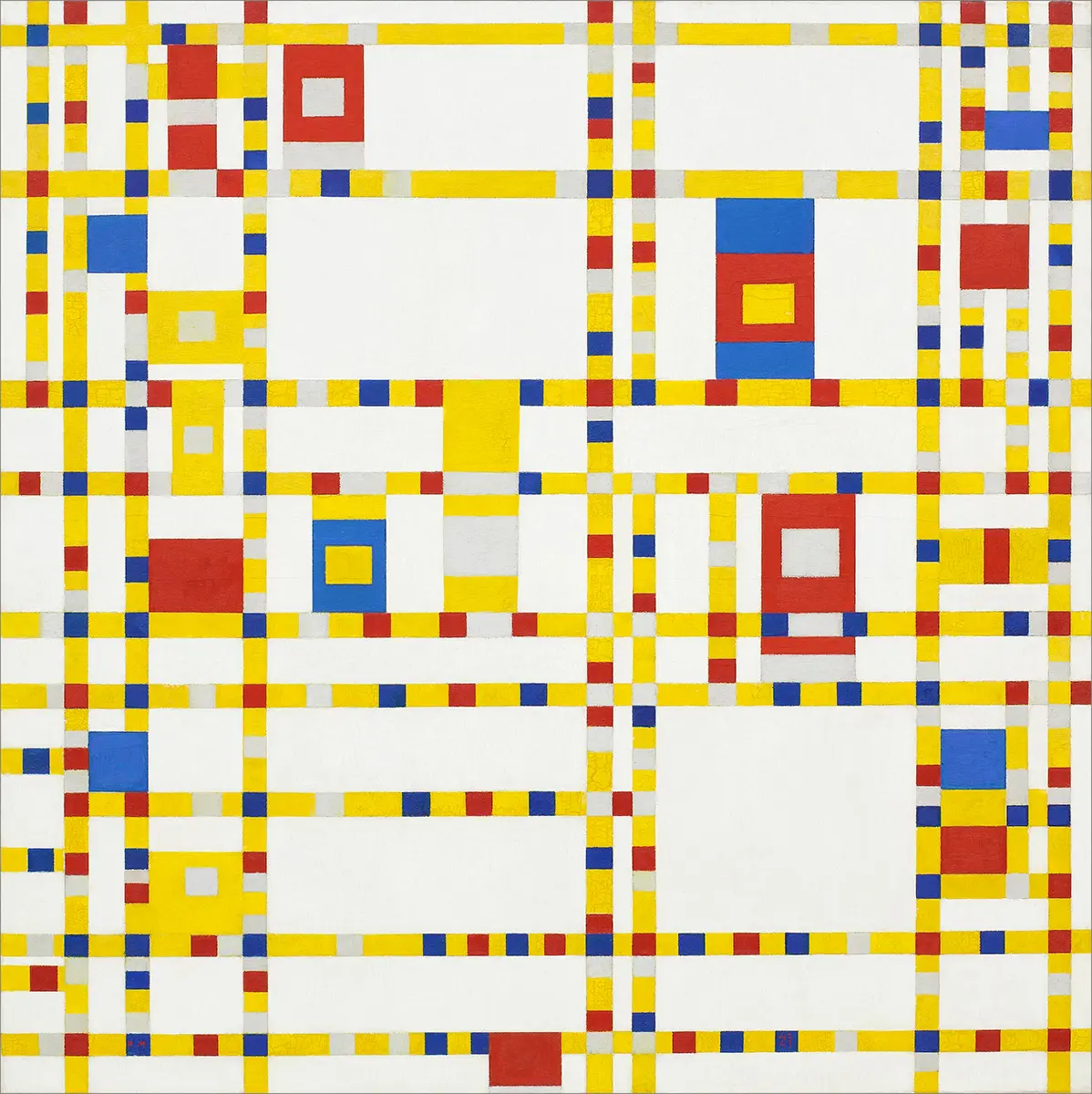
The main question that this MoMA exhibition left unanswered is whether Mondrian was or was not what, from the time of McLuhan's writings in the 1960s, could be described as a "cool" painter. The formalist experience with the hegemonic currents, the history written since minimalism, tempts one to say yes. The exhibition contextualized this within a certain affection for the craft of the painter and the judicious catalogue which accompanied the show—with an enormous amount of details—tries to relativize the mystical content. However, after seeing the show, after reading Mondrian himself, we are left with the suspicion that he was not so "cool" and that he was interested in other things, that his pictures were a mystical act in which form was nothing more than a vehicle and not a formalist investigation process. The variations of his colleagues erred not because of any failure to resolve aesthetic problems but because they could not attain his truth. It was a truth which, theosophist or not, did not aspire to a balanced formalism but to a spiritual equilibrium. And within these parameters, his last picture, Victory Boogie Woogie (1942-1944), which he did not finish, can be seen as an epiphany rather than as a picture on the point of being resolved. As with every mandala, we can enjoy and meditate even if we do not share the mysticism. But just as the Christian cross is more complex than the crossing of a horizontal line and a vertical line, once we know its history, then a better understanding of Mondrian's mystical program will also offer a better administration of the kinds of approximations and distancings of the spectator vis-à-vis his work and its meanings.
NOTES
1. Els Hoeck, in De Stijl: The Formative Years, MIT Press, Cambridge, 1982, p.59.
2. TheNewArt - The New Life. The Collective Writings of Piet Mondrian, Harry Holtzmanand Martin S. James, Da Capo Press, New York, 1993, p.59. Mondrian mentions this in the context of the metropolis, where beauty is expressed more mathematically and is therefore closer to the artist than nature.
3. Harry Holtzman explains that Schoenmakers speaks of the absolute structure which underpins the universe with the terms "beeldend," or generating images, and "nieuwe beelding," or new structure and new plastic. The title of Mondrian’s essay, which gave cohesion to De Stijl, was De Nieuwe Beelding in de schilderkunst, which was translated into English as The New Plastic in Painting (Holtzman, pp.27-28).
4. Letter probably from December 1917. See El Hoeck, De Stijl..., p.49.
5. Charles Baudelaire, The Painter of Modern Life.
6. Holtzman, p.133.
7. Yves-Alain Bois, "The Iconoclast," in Piet Mondrian, exhibition catalogue, Leonardo Arte, Milan, 1994. Blois establishes a radical separation between Steiner and Blavatsky and refers to Mondrian’s siding with the former as almost marking a break with theosophy. He sees Mondrian more as an Hegelian who sometimes uses theosophy and anthroposophy to help him in his investigations.
8. Bois, note 70.
9. Letter to van Doesburg, February 13, 1919, cited in Piet Mondrian, p.184.
10. Letter of June 12, 1920, cited in De Stijl, p.27.
LUIS CAMNITZER
Uruguayan artist. Professor in the Department of Visual Arts of New York State University, College at Old Westbury.