
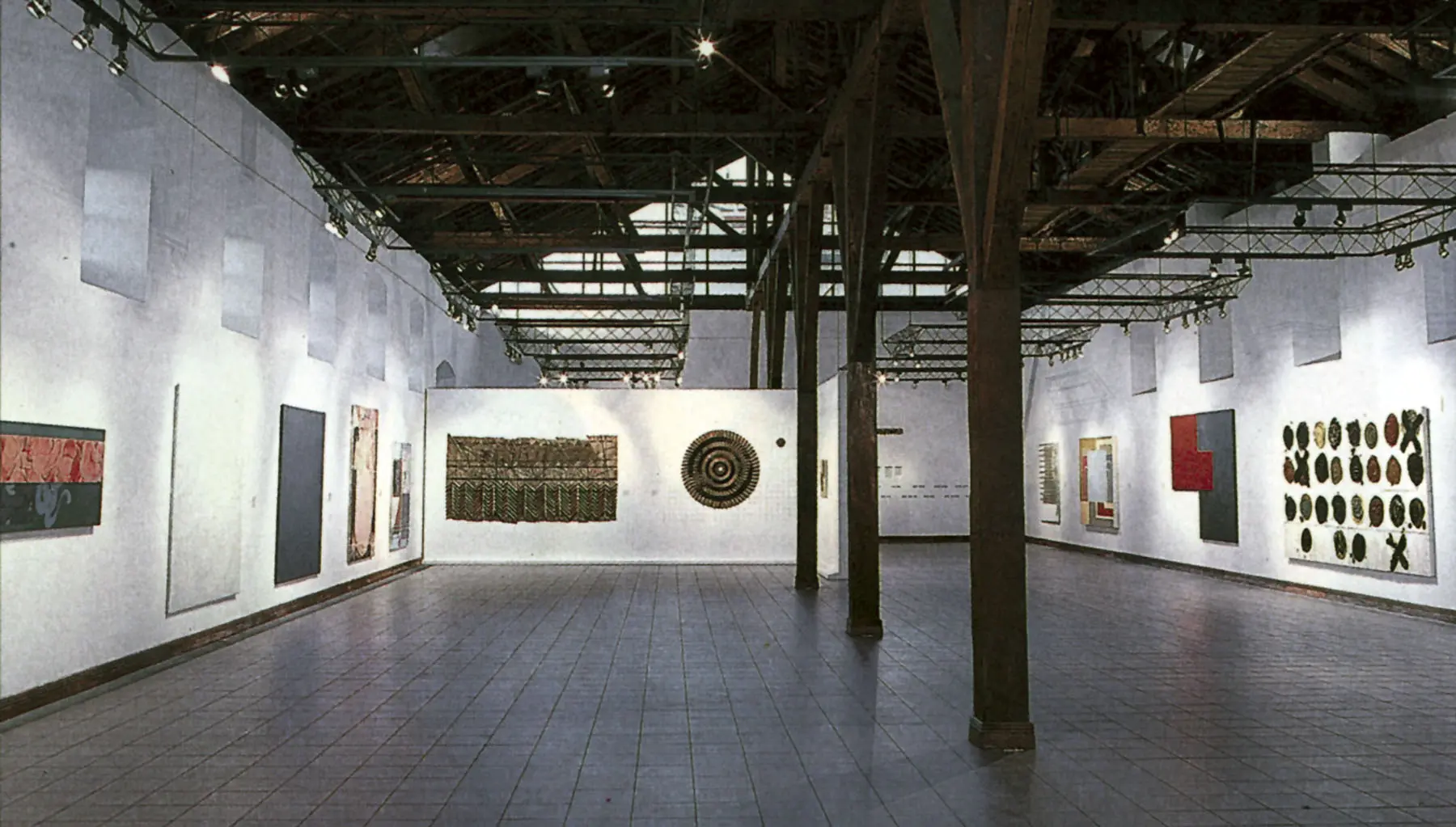
The Museum of Contemporary Art and Design of Costa Rica is part of a major cultural center in the heart of the city of San José. The remodelled buildings of the former National Liquor Factory now group together the headquarters of the national companies of dance and theater, the offices of the Ministry of Culture, and the College of Costa Rica, among other bodies, in a complex of some 14,000 square meters. The Museum in itself did not have any separate identity outside this context, and served rather as a support for the ideological policy resulting from the definitive transformation of the traditional political parties in the move towards neo-liberalism.
This National Center for Culture was planned by several governments but finally brought to fruition by the Social Christian party in 1993. As a cultural epicenter to testify to the triumph and appropriation of modernity by free trade and by a State that lightened up the privatization policy with its rejuvenated deification of the individual and individual initiative. The new balance of power made it essential to go beyond all the cultural accomplishments of the past. In Costa Rica, the monopoly of power by the Social Democrats and their policy of permanent broadening of a faceless middle class had recently ended, and that was the time of such projects as the La Sabana Park or the Museum of Costa Rican Art. The goal was to establish a divergent attitude towards culture, i.e., to challenge the paternity of tradition and its new image. Although the Museum was intended to place Costa Rica on the international art map—a process which would lead to an exchange with the contemporaneity of other countries and provide a showcase for Costa Rica’s own contemporary art—there had been no change at the instrumental level. As in the brief history of all the other Central American museums, this new center was intended to shore up the official discourse and give it legitimacy.
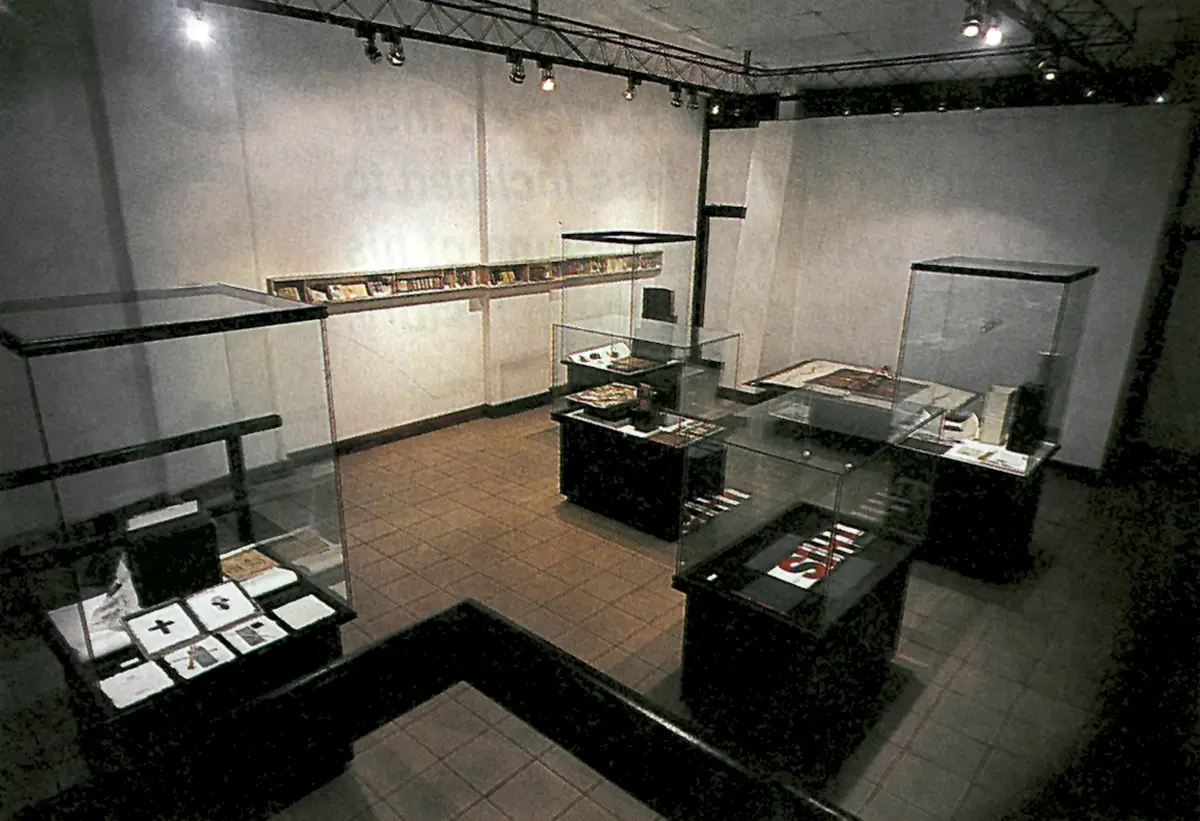
This was the case during the brief period from its hasty inauguration until the change of government, which resulted in the polemical appointment of artist Virginia Pérez Ratton to the post of Director in 1994 and that of a team which included the curator Rolando Castellón, formerly active in San Francisco, and Luis Fernando Quiros, a teacher and editor of the Modulo magazine. It also resulted in the creation of the first National Council of Curators, and this in a country for which, until then, the word "curator" was more synonymous with alternative medicine than art. This was the time thatthe handsome installations of the premises formerly used for storing casks became the first State body which did not proclaim a pre-established definition of culture, but which actually sought to construct such a definition.
It cannot be said that Costa Rica, which is the country in the area with the most intense cultural activity, has had leaders who have fully understood the meaning of any coherent cultural policy, over and above the promotion of culture for populist or electoral purposes. On the contrary, those leaders themselves succumbed to the pre-established ideas about national idiosyncracies and identity which had been bequeathed by the patriarchal ideology of a society that had barely emerged from a hyper-conservative, rural view of the world. Until the MADC's new program managed to forge a new meaning for the State museum, there predominated what can be called a taxonomy of commonplaces, dominated by prejudice, affectation, and manichaeism.
All these remarks can be easily corroborated if we glance at the list of exhibitions and invited artists both before and afterthe change of directors. Before, there was confusion and overlapping between such concepts as the "moderns and contemporary," so that exhibitions by Oswaldo Guayasamín or José Luis Cuevas resulted in celebrations by the credulous provincial bourgeoisie in their attempts to be "up to date."
And after, it is easy to see how the subsequent events caused much commotion and fanaticism—events defended with difficulty by the Council of Curators. Before America, the major exhibition curated by Rachel Weiss, Carolina Ponce, and Gerardo Mosquera, which made its last stop here (although in a reduced version since certain works had to be returned to their owners before the show reached Costa Rica), was visited with a morbid curiosity such as that which might have been reserved to Dr. Caligari’s at the beginning of the century.
Once the excommunication became a fact, directors and curators continued to sin. The Pila de la Melaza building, a metallic square-shaped structure with two-meter walls devoted to site-specific installations, received Otto Apuy and Milton Becerra, and inside the building, work began on the organization of the Museum’s own international exhibitions. For example, the Argentinian curator Carlos Basualdo was invited to illustrate the concept of the new international abstraction on which he has been working, in conjunction with the holding of an unusual forum with logistical support from the Jacobo Karpio Gallery. The event included the participation of artists of such standing as Jonathan Lasker, Peter Halley, Antonio Díaz, and Miguel Ángel Ríos, as well as such critics as Raphael Rubinstein (Art in America) and Jesús Fuenmayor from Venezuela. The exhibition was entitled Meso-America, the Non-representative America, which in a modified and enlarged form was presented at the MAVAO Museum in Caracas under the title of Transatlantic.
Other major exhibitions have followed, and the Museum is beginning to fill a double void, a task which it is perfectly equipped to fulfill. First, it has professionalized and made coherent the national participation in the main biennials by removing responsibility from the mediocre hands of the diplomatic bodies and providing guidance to international curators concerning the country. Second, it is becoming a point of convergence in Central America, with a view to assembling all the relevant information on the region and inspiring the consolidation of new movements.
The Museum of Art and Contemporary Design has combined its architecture and its location—that is, its excellent formal characteristics—with the fortunate situation resulting from its excellent management. The absence of this last-mentioned aspect could lead to its reconversion into a cemetery of initiatives, the archeological or merely decorative dimension with which museums are often conceived in regions in which aesthetics are not conceived as a critical element vis-à-vis society. Let us hope, therefore, that the institution’s projects have really managed to change the erstwhile prevailing views to ensure that Pérez Ratton and her team of curators continue at the helm after the next change of government and develop their well-defined and clear concept of what a Contemporary Museum should be.
KLAUS STEINMETZ
Costa Rican art critic and Assistant Publisher of Arte en Colombia/ArtNexus.