
There is a tendency in contemporary art, and perhaps in art of all periods, to reflect on itself, to adopt a narcissistic view. This narcissism, an act of knowledge and recognition, is, above all, for the artist, an act of identity. This is not—at least at the beginning—an identity seen in spatial, geographical, and cultural terms (in our case Latin America), but an identity of being, of being an a rtist, from which other identities begin to exist and inter-relate: being from this or that place; being at the end of this century and this millenium; concretely, being a Latin American artist at the present time.
Pedro Terán, after the customary hesitations and inevitable influences of a youth spent in the turbulent institutions of the 1960s, has embarked on a personal exploration of art, which has necessarily taken him towards self-reflection on his being an artist.
Art reflects on itself; it seeks its essence in a tautological manner, rather than from other disciplines that have always expressed an interest in it: history, criticism, sociology, aesthetics, etc. Autobiography, meta-discourse, a game of mirrors: art becomes a subject for art. Theme, motif, genre, as in earlier centuries, objects, nature, human history, and religion, although sometimes they were mere pretexts and excuses for reflections on art. We only have to look at Velázquez: on the one hand, there is his painting of light, accents, and textures, overflowing with sensuality; on the other, and through this same pictorial matter, there is his sense of nervous questioning about the essence of painting, which makes him one of the most intellectual, even conceptual artists.
The mirror and the inverted space of Velázquez's Meninas, the picture within the picture. The photo of the photo of the photo... of Pedro Terán. In this mise-en-abime, there is a sensation of vertigo and disorientation, of tunnel, labyrinth, precipice, because there is always another space within the space, towards the infinitely small, or another space containing space, towards the infinitely great, and there will always be another photo within the photo. The yearning to reach the unreachable seems to define, like a stamp of destiny, this search for art through art. There is something ineluctable, a sense of tragedy about this search, and there is something great in its failure. There is no doubt that such a search is an expression of some kind of greatness, like the religious and noble themes of the past, although at times the resources used, as in the case of Pedro Terán, are both humble and discreet. Failure is a condition of survival, the necessary lack of conclusion forcing us to continue the search and keep desire in suspense.
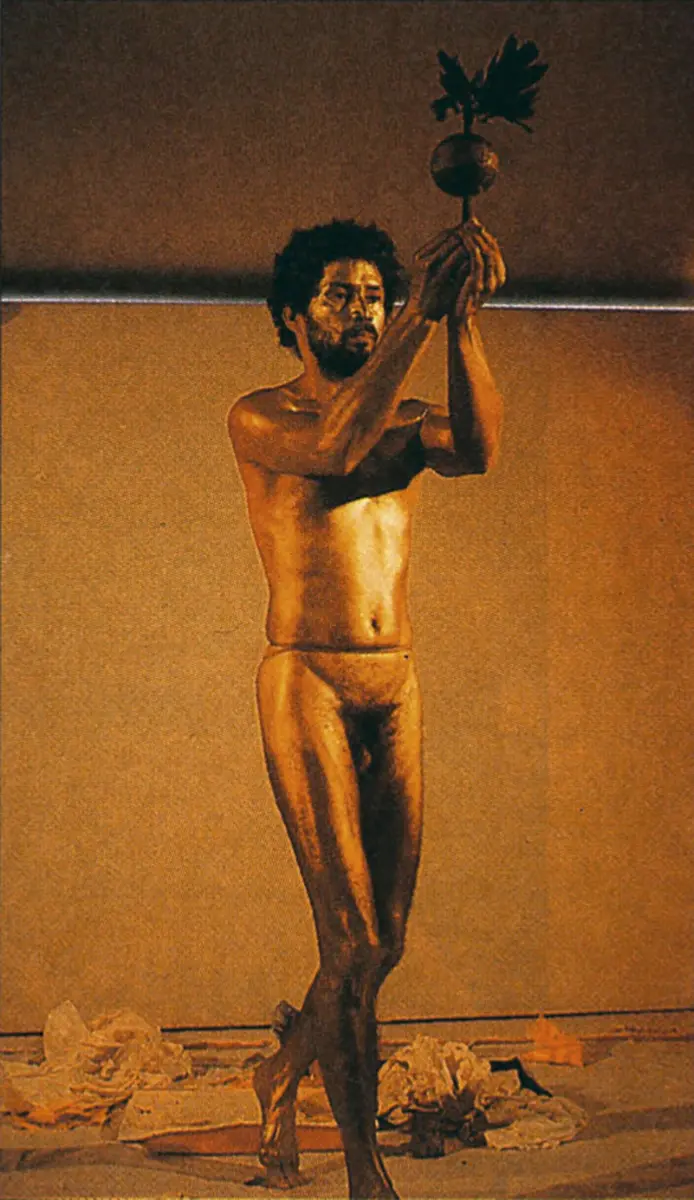
Art speaks about itself in the work of Pedro Terán. But there is a displacement here, for Terán does not speak from painting, or from sculpture, or any of the traditional means of expression of art. He does not speak of the artist as a painter or sculptor. The brush and the burin are not seen as extensions of the artist, but are the artist himself, his own flesh. (We remember Velázquez painting himself painting the picture of the Meninas). The supports of his discourse are not the canvas or stone, and Terán does not speak of art from the standpoint of other media (which emerged at the end of the 1950s in the form of conceptual art).
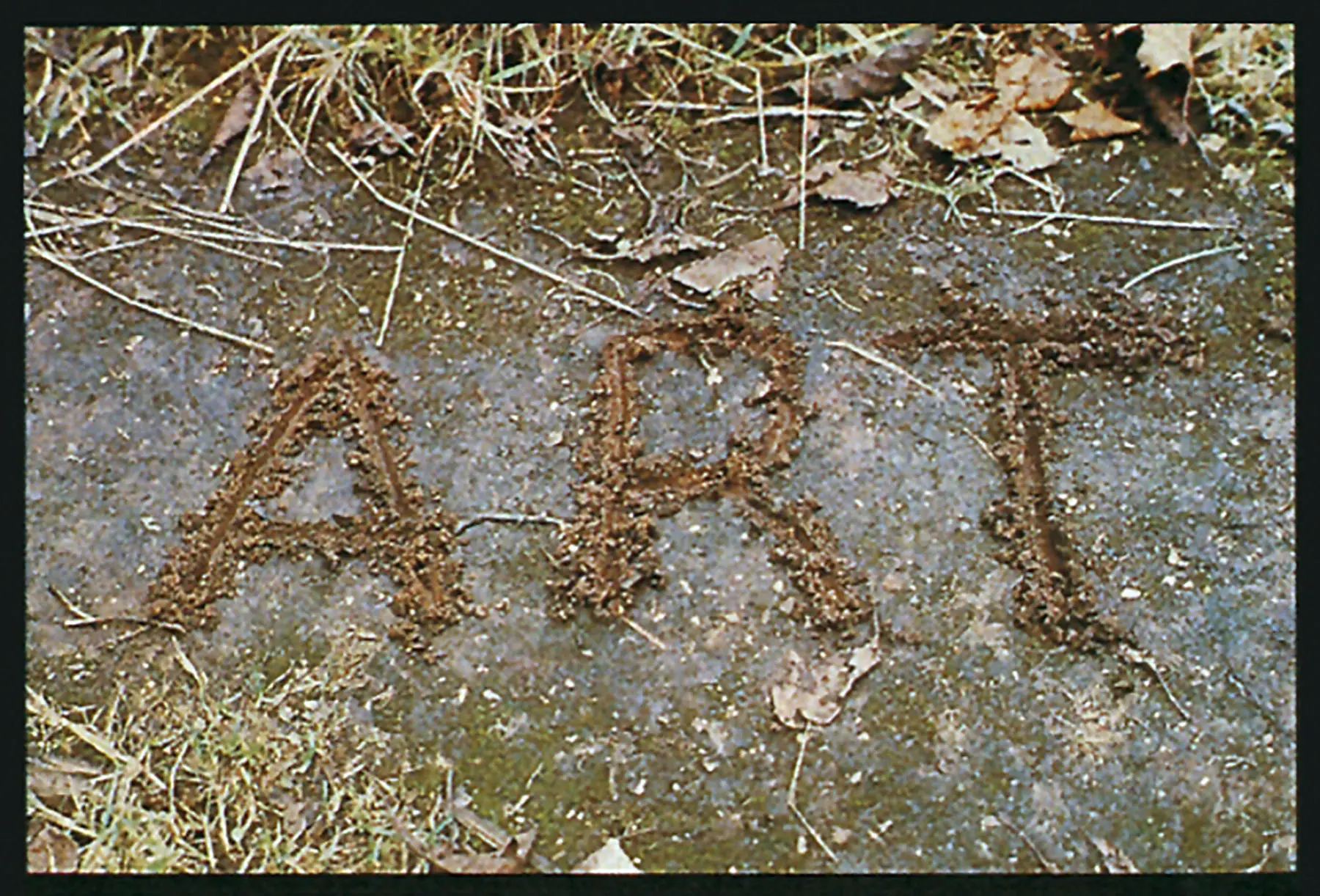
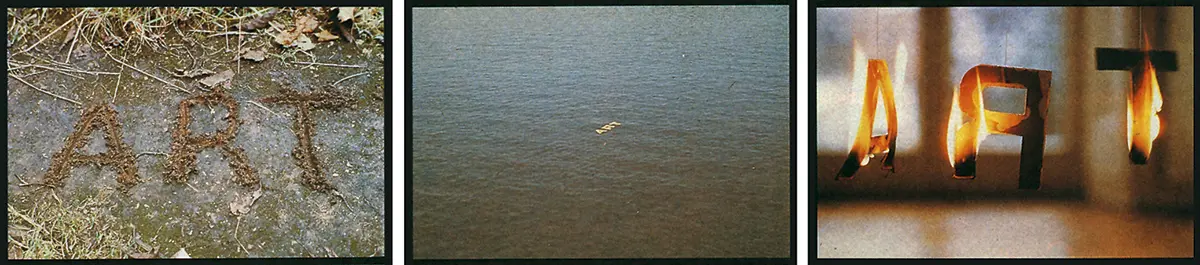
This mise en abime of art by Pedro Terán might be compared to that of Francisco Bugallo. The latter obsessively scrutinizes the pictorial themes and techniques of the great masters as a means of penetrating into the mystery, like Pierre Menard rewriting Don Quixote. Terán, on the other hand, places himself outside the tradition, but not outside the mystery. In his work, the supports of art may be the elements of earth, fire, air, and water. The word ART may be written on the pavement, to which passers-by react, as in Street Art. Or it might be the artist himself, as in the performances which he carried out between the mid-1970s and 1985, involving all the artistic elements encompassedby the artist'sbody and his actions. Another displacement occurs here: the performance no longer belongs only to the "plastic" arts, or to the theater, from which it initially seemed to spring. In a performance, the artist is not acting: he is transmitting his experience at a precise moment. Thus, a performance cannot be repeated. Its fixation in a video has a documentary value, but its uninterrupted projection (as in the case of Clouds for Colombia at the Museum of Fine Arts) ends with a loss of the actual meaning of the action.
Terán expresses in his concept-based art the concept of art. An art which refers not only to art itself, but to time, space, and myth, which are interrelated topics in his work. Capturing the passage of time, as in Identity Card or Walking a Year, and at the same time enclosing space and the form of the artist's face in the process of transformation; the changing nature, impressionist style, of a London park, displacements of the seasons in the same place. Or capturing space, with the traces left by time, as in The Canvas, or recovering the time and space of a myth in works between Manoa and El Dorado.
Time and space, as the unavoidable coordinates of all human action, are the protagonists in Pedro Terán's work. The time and the space are both real and mythical, everyday and artistic, external and internal, bodily and spiritual. They always seem to be disappearing, approaching a vanishing point (a mere illusion, of course). In other words, they are more mythical, artistic, internal, and spiritual than real, everyday, external, and bodily. Dematerialization, as far as is humanly possible, as far as is artistically feasible, seems to be the raison d'etre, the objective, and longing of Pedro Terán the artist.
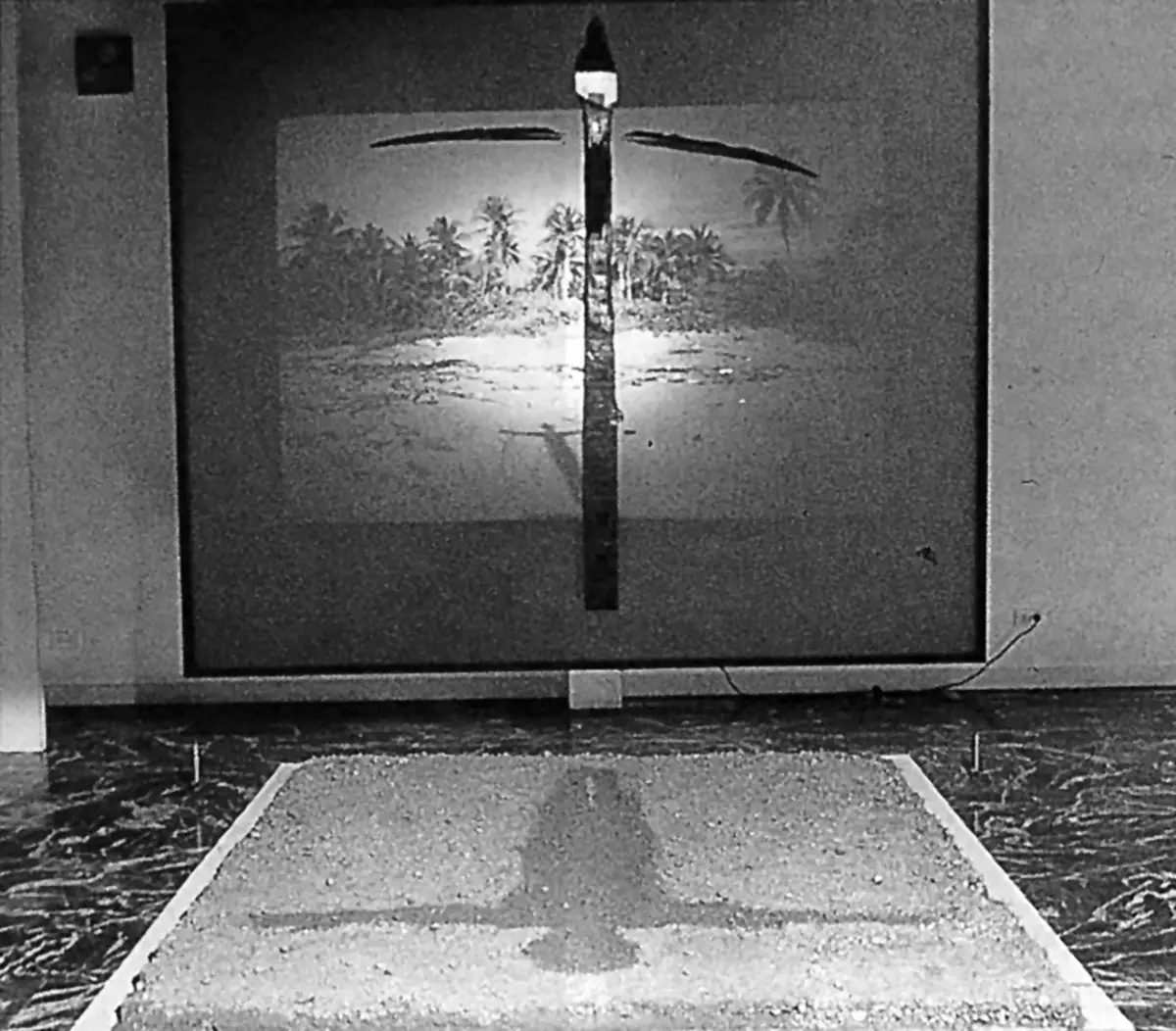
The dematerialization of art itself, which no longer has any presence (verifiable as an object in the world) in a picture or a piece of sculpture, art as a passing performance, an ephemeral installation, like a trace left in nature. (Hence, the testimony through video, even more than through photography, contradicts this concept, since it implies permanence). The open, unfinished, and limitless all have their place in the work of Pedro Terán, where dematerialization results in virtuality, transparence, lightness, fluidity, fugacity, illusion, abstraction, light and shadow, and reflection, rather than presence, echo rather than voice. White and gold are the predominant, almost exclusive colors, rock alongside glass, emphasizing its virtual absence, opposing its solidity, its opacity vis-á-vis fragility and transparence. Everything appears upset, unbalanced, upside down. Sometimes, prosaic, almost profane objects burst onto the space of dream: clothes, shoes, dramatically lengthening the distances between the objectual and the spiritual. These trivial things are a reintegration of matter into the immaterial and produce a certain sense of unease. Tangible reality, the cultural connotations of the "quipus", the Inca knots used as a means of communication, become diluted through the photography—the first level of abstraction, and their repetition ad infinitum—an abstraction of abstraction, also ad infinitum.
The emphasis on dematerialization in his work sets Pedro Terán within one of the great currents underlying contemporary art, a current that lies beyond any kind of taxonomy. And when we say «contemporary art,» we are forgetting that the golden background of Byzantine mosaics was but anaspiration towards dematerializationas a means of achieving the sacred; we are forgetting that the ascetic Cistercian architecture, devoid of any kind of adornment, expressed a similar aspiration. And in our century, still within a traditional concept of art, Brancusi was the first to seek out this avoidance of anything superficial and anecdotal, in an attempt, as he said, to "draw closer to the real meaning of things." To give pictorial life to the immaterial was the heroic goal of Armando Reverón, to whom Terán paid homage in his performance entitled Reverón-Reverón. However, it was so-called conceptual art which was to systematize to some extent this search, by expressing "concepts" through elements which had been the least contaminated by the objectual, solid, and concrete. In a recent interview, Joseph Kosuth reproaches Maria Elena Ramos for confusing a process of dematerialization with conceptual art, and thus confusing conceptual art with minimalism. In fact, it is Kosufh who is confused. In minimalism, the primary elements are premises that serve as a starting point for a constructive process. The dematerialization of conceptual art, the art of Pedro Terán, as well as of Nan González, Víctor Lucena, Antonieta Boca (and Jesús Soto, at another level), is an existential process of stripping things down to the essence: it is a deconstructive process, which retains the traces of human experience over time and space. It is a journey from matter towards the spirit.
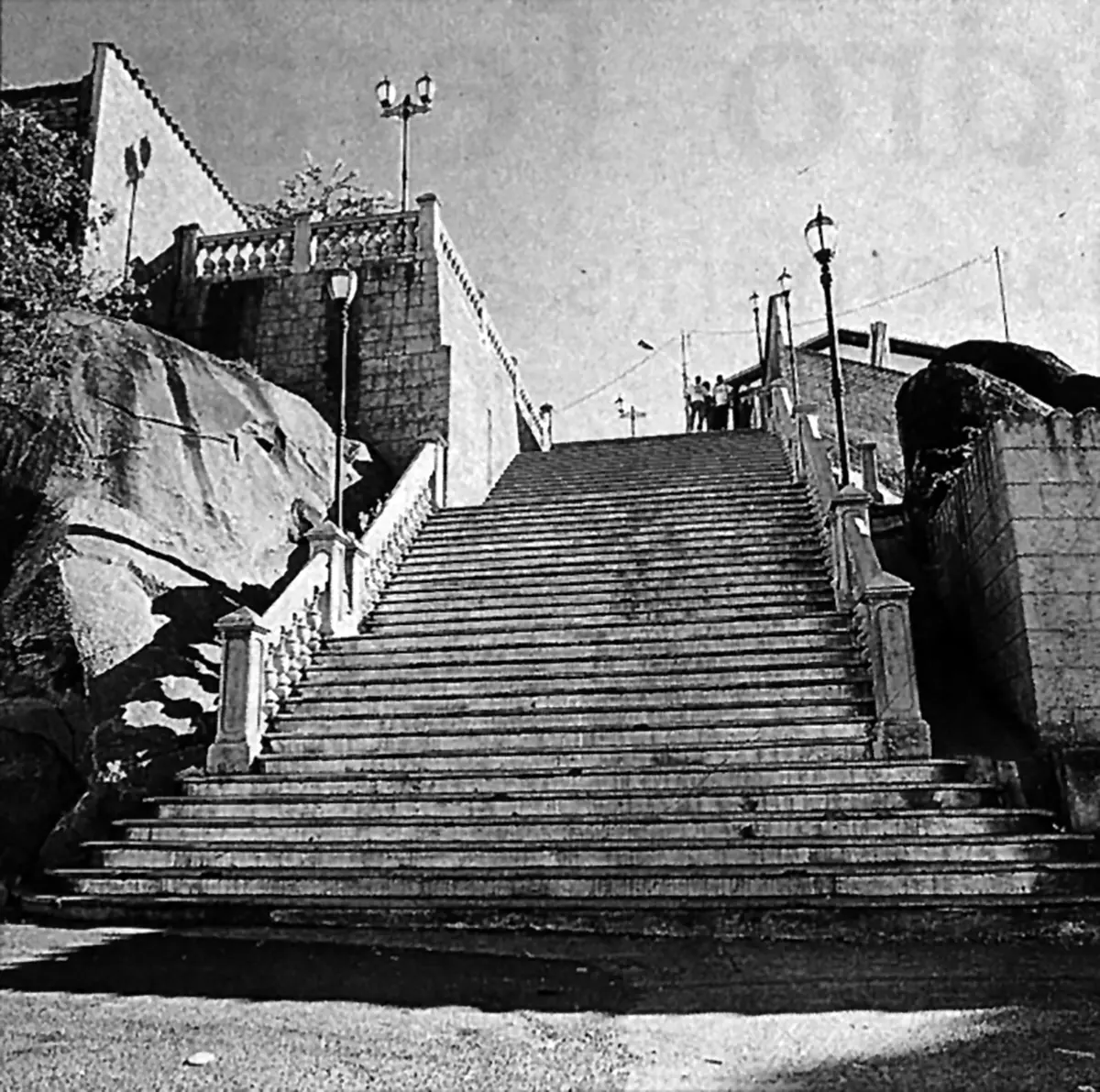
In this process, the artist encounters myth: El Dorado, the Kingdom of Manoa, the city of golden monuments and streets of diamonds, the promise of infinite riches, always ahead and beyond, an ever-escaping mirage. In this way, Terán links his status as an artist with his Latin American identity. Perhaps because he feels that he is one of them, he recalls in his In Memoriam. Homage to those of El Dorado, all those who left inebriated with a heroic and brutal dream, from Alfinger and Walter Raleigh to the protagonist of The Lost Steps, all those anonymous adventurers who became irremediably lost when they failed to grasp the reality behind the illusion. El Dorado has become a major metaphor in Pedro Terán's work, a metaphor of deception which encompasses both myth and art, because art too is deception and illusion, a fiction, an attempt to capture something which is disappearing, like the image of the "quipus" in the photo of the photo of the photo. A metaphor of not knowing—or knowing—how to look and see. The myth of El Dorado revealed our real richness, protecting it from the avidity of foreigners, concealingitforourselves. Itistimeto rediscover the maximum reality, and art, through illusion, has an essentialroleinits revelation. Art can also itself be a maximum reality. And when we climb the Manoa Steps of the Dorado songs, and reach the top, all the dazzling reflections will have disappeared. We can then look back and see, in the nakedness of its original truth, the Orinoco.
FEDERICA PALOMERO
Master's Degree in Art, University of Toulouse, Le Mirail, France. Chief Curator of Latin American Art, Museum of Fine Arts, Caracas, Venezuela.