
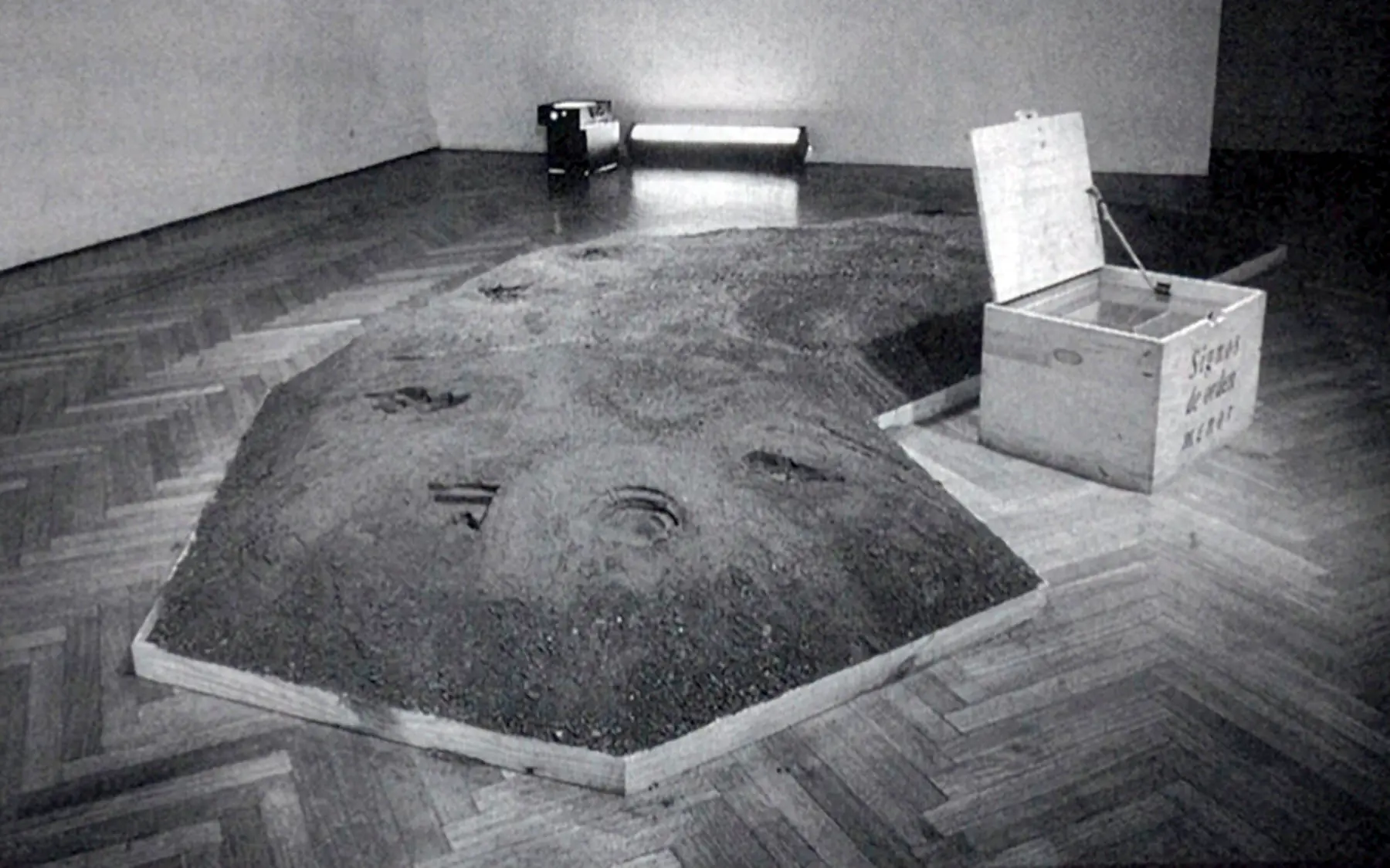
This group exhibition, entitled The Limits of Photography, curated from France by the director of the journal La Recherche Photographique, André Rouillé, gathered together a selection of work by artists who use photography and critically subject it to the internal logic of their works. The participants included five Chileans—Gonzálo Díaz, Alfredo Jaar, Eduardo Vilches, Alicia Villareal, and Enrique Zamudio, six Argentinians—Luis Benedit, Marcela Moujan, Oscar Bony, Marcos López, Dino P. Bruzzone, and Graciela Sacco, and eleven French artists—Eric Rondepierre, Jean-Louis Garnell, Florence Paradais, Alain Fleischer, Dominique Auerbacher, René Sultra, Maria Barthelemy, David Boeno, Georges Rousse, Joachim Mogarra, and Francois Mechain.
To speak of limits in this context means to speak of the transgression, unmarking, and blurring of such limits. The fundamental break, which made possible and gave meaning to this show, concerns the function of photography: from the 1970s, the photographic image has overcome the conditioning factor that has forced it to be a "faithful copy" of its model. Freed from this merely documentary function, in the midst of the generalized crisis in the paradigm of representation, photography has become a full participant in its own right in the world of art.
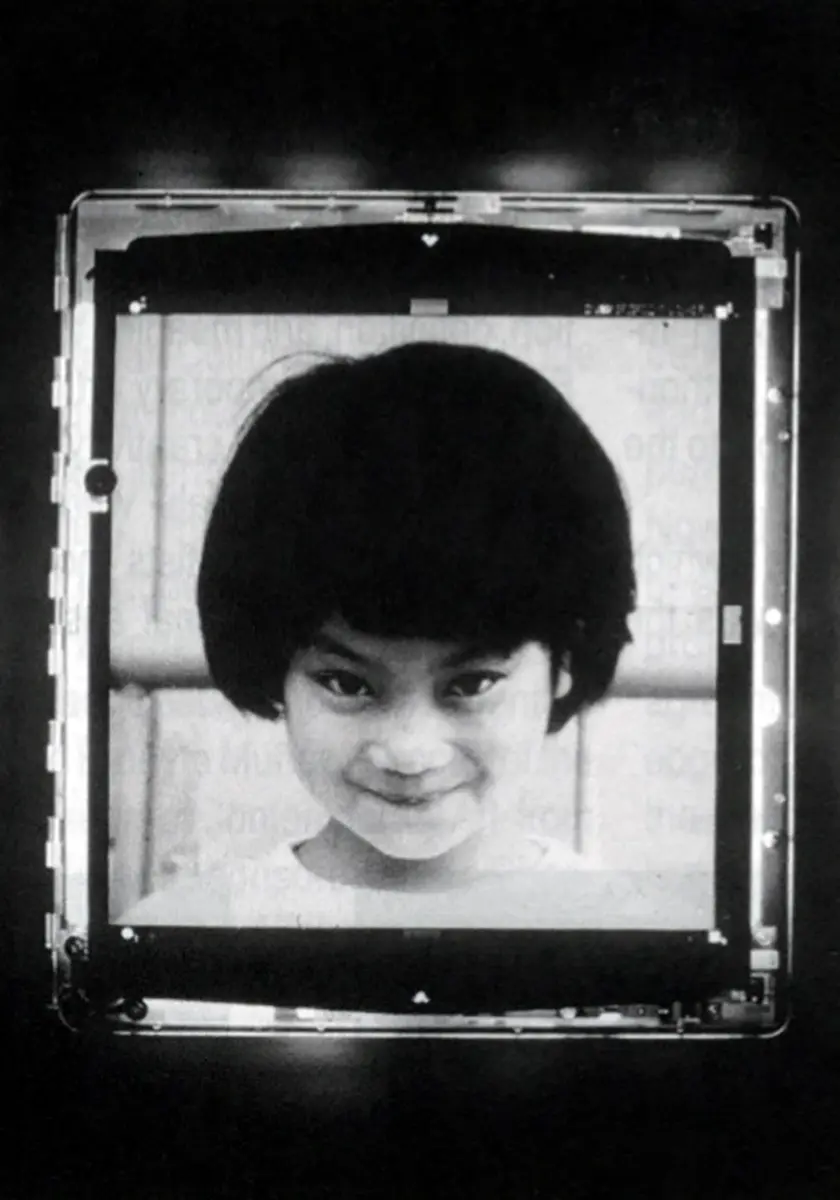
A second variant of the same process, which is in fact a consequence of the former, emerges from the new possibilities in language that photography allows. Unusual points of view, settings, and formats have appeared, along with the use of polyptychs, series, and installations which transgress traditional two dimensions.' A cross-utilization of images and techniques is signalling the demise of' the traditional canons about "purity," and we are beginning to witness the fusion of a wide range of different iconographies, technologies, and modes of operation. Photography is absorbing without any sense of trauma the characteristic features of video, sculpture, painting, or comic strips, and in the process has become yet another medium in the service of the creative act. As in other spheres, the copy also defends its right to be unfaithful to the original and is moving towards new adventures in various kinds of alteration and transformation processes.
In this exhibition, the curator wanted to establish clearly that this was not the work of "artist photographers," i.e., those who use photography to try to construct a "novel" work, but without fully escaping from the specter of documentary logic. On the contrary, the photography in the exhibition was rather "post-photography," which the curator described as follows: "by freeing itself of the demands of documentary transparency and the shackles of its function, post-photography has become a space for the invention of new solutions, unusual ideas, formulas which open up a new range of possibilities, both for art and photography."
Another limit that the exhibition clearly questioned concerned geographical-cultural frontiers. The show illustrated the possibility of a non-hierarchical dialogue between Europe (represented by France) and Latin America (represented by Chile and Argentina, its most southernly borders). The works could not be translated into codes of territoriality (in fact, the montage was not organized according to this criterion), but neither did they renounce contextual signs that pointed to certain common keys to their reading.
From the historical point of view, at least, the Chilean participation clearly highlighted a context that guided the interpretation of the works as a whole. Indeed, as the critic Nelly Richard has pointed out, the problem of photography in the visual arts in Chile arises in connection with a discursive limitation: the discourse of dictatorship. It was in contempt of official representation that, at the end of the 1970s and in the early 1980s, photography became a choice vehicle for artists in the establishment of alternative codes of language.
The Limits of Photography was a serious and well-conceived exhibition, heterogeneous but consistent, which successfully explored a critical process at the heart of the discussion of contemporary art at the global level.
CATALINA MENA