
The enthusiasm was evident even before the Biennial opened. Now in its twentieth edition, the event coincided this time with the twentieth anniversary of the host institution, the Museum of Modern Art. Amidst all the euphoria and expectation, the drastic reduction in the budget, which had been imposed by the government authorities, did, however, deal a blow to the festive atmosphere.
The number of visitors—which reached record levels—was the logical result of the increase in the number of artists. The selection process satisfactorily fulfilled its assigned role, with three judges from the Dominican Republic, one French judge, and a Spanish judge, both cultural representatives, who together gave a sense of orientation, definition, and meaning to this Biennial of contemporary art.
Non-conformism, creativity, and avant-garde proposals were all evident, with most artists moving away from conventional aesthetics. Of course, there was criticism about the lack of established artists and the insufficient representation of realistic currents. But the general opinion among visitors was that there had been a change and that the general level was average. Tastes have changed, too. The expressionism evident in the painting, the gestural language or fantastic surrealism in the drawing, the sense of distancing and aestheticism in the photography, as well as the installations on show, all managed to «communicate» with the public, and this is something which needs to be continued.
Sculpture was faced with a crisis without any foreseeable solution. Painting held its own, print-making seemed to be on the turn, and photography had regained some of its strength. However, it was drawing that emerged with the greatest force. Ceramics continued to progress slowly, whereas the video work appeared mediocre and increasingly far from video art. Architecture, too, offered a very poor and unjust image of what is being done in the country, and perhaps should not be included in the Biennial.
There was a massive participation by artists presenting installations, drawings, and photographs. In addition to the younger artists with ten to 15 years of work behind them, there was also a very varied level of quality, with some artists lacking any proper training and others who had never presented individual exhibitions.
The prizes also generated controversy. While radical observers opposed to the event objected to all the decisions, many have still not understood that plausible and indisputable winners can exist side by side with other, completely contradictory ones, with most of the most interesting pieces remaining undistinguished.
According to the new rules, there were 15 prizes of the same amount (75,000 pesos, i.e., more than US $ 5,000 each), awarded to works in any medium. Such amounts were very generous for a national event. The prize-winning works were "acquisition" prizes and became part of the public collection.
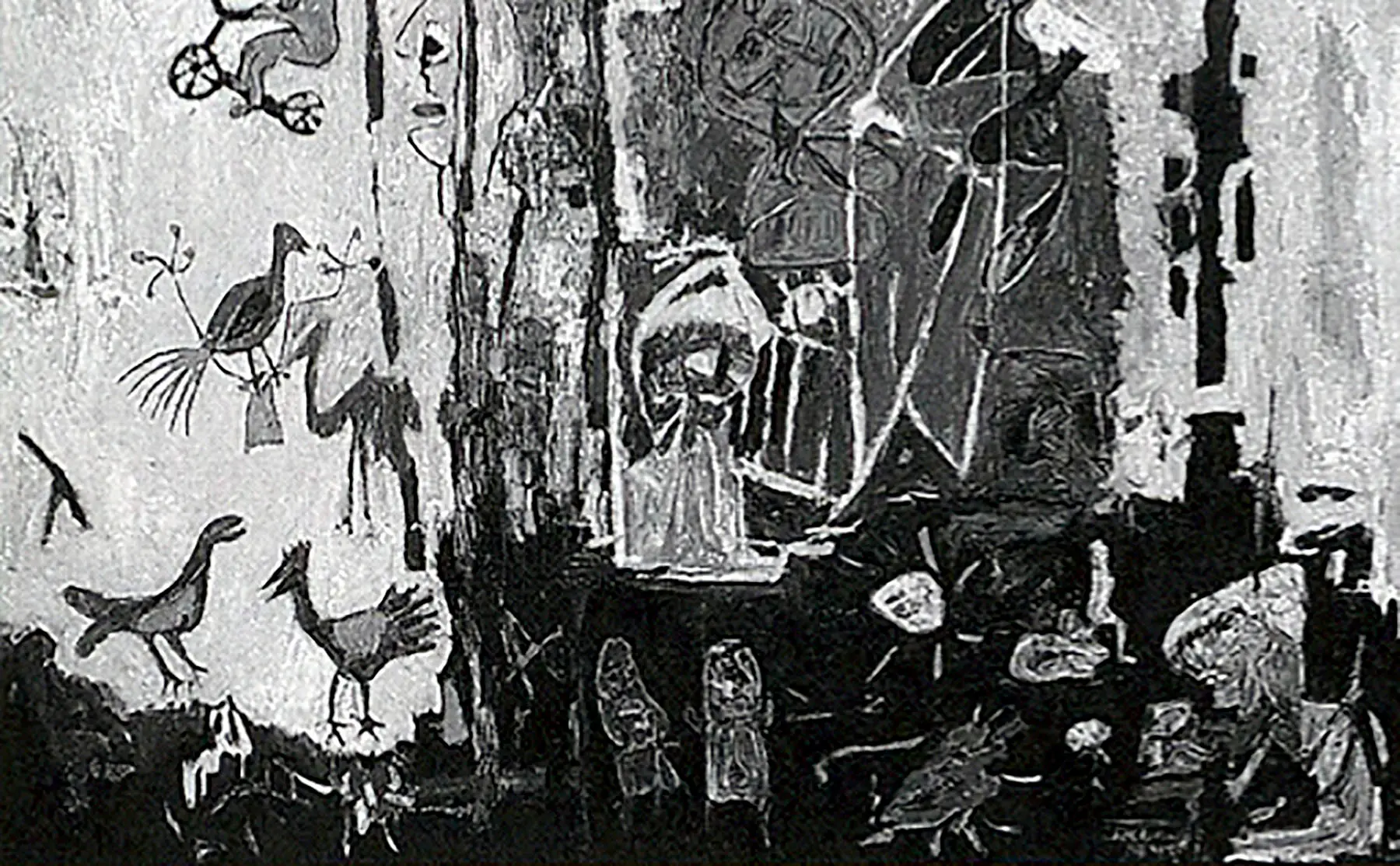
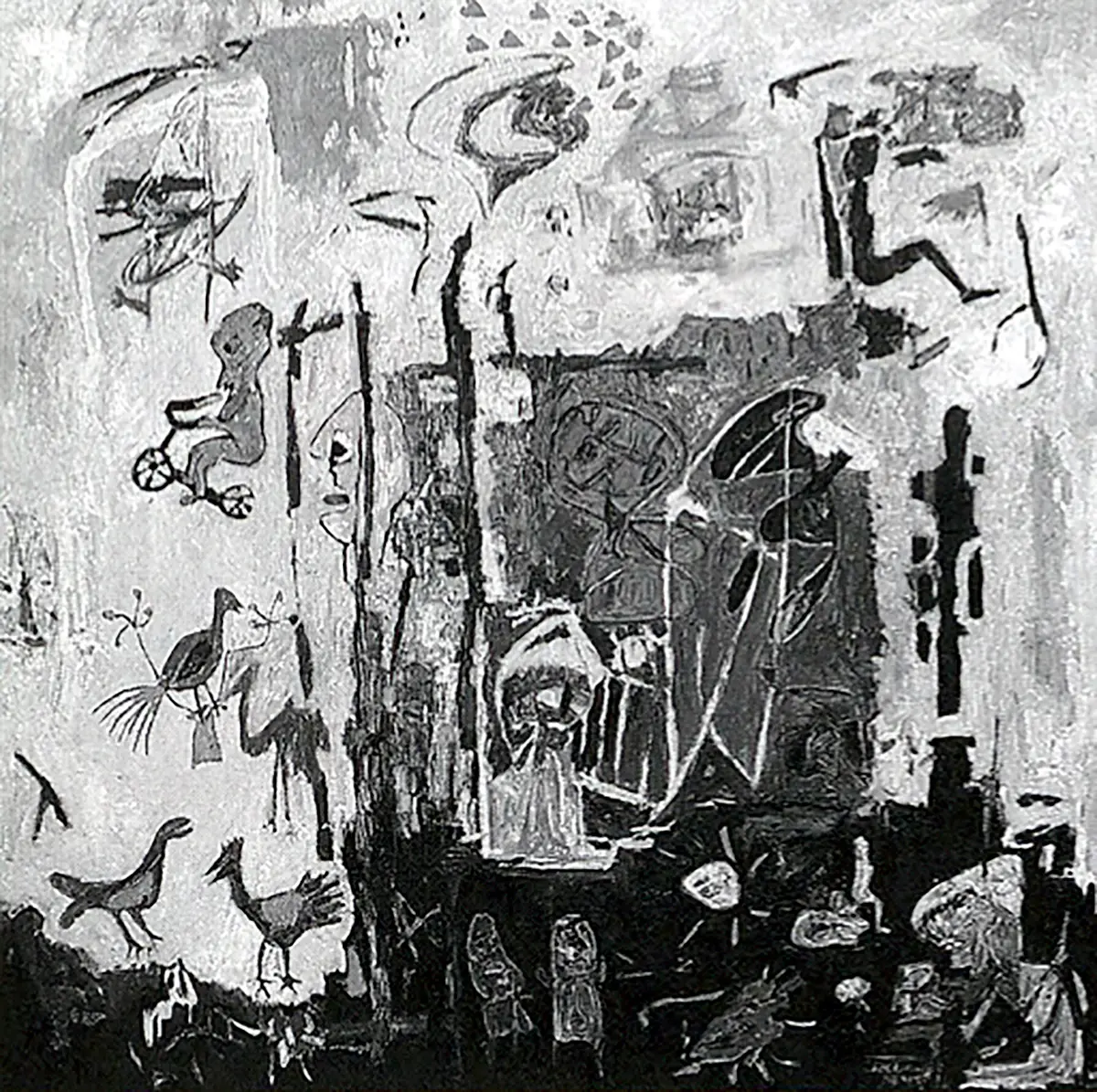
Although this twentieth edition no longer had any Grand Prix, the perennial source of disagreements and blunders, an award granted to a painting by José Perdomo was, in fact, a kind of "main prize." Belonging to the excellent series of the Magic World of Jop, the picture was full of strong, bright, and audacious colors, with a mature and sensual finish and a singular mastery in the cohesion of small signs and chromatic areas. It was pure pictorial magic, full of everyday "myths," which paid tribute to the Caribbean—indigenous, African, and European—and to children’s drawings, as well as to the work of masters, in a kind of collective introspection.
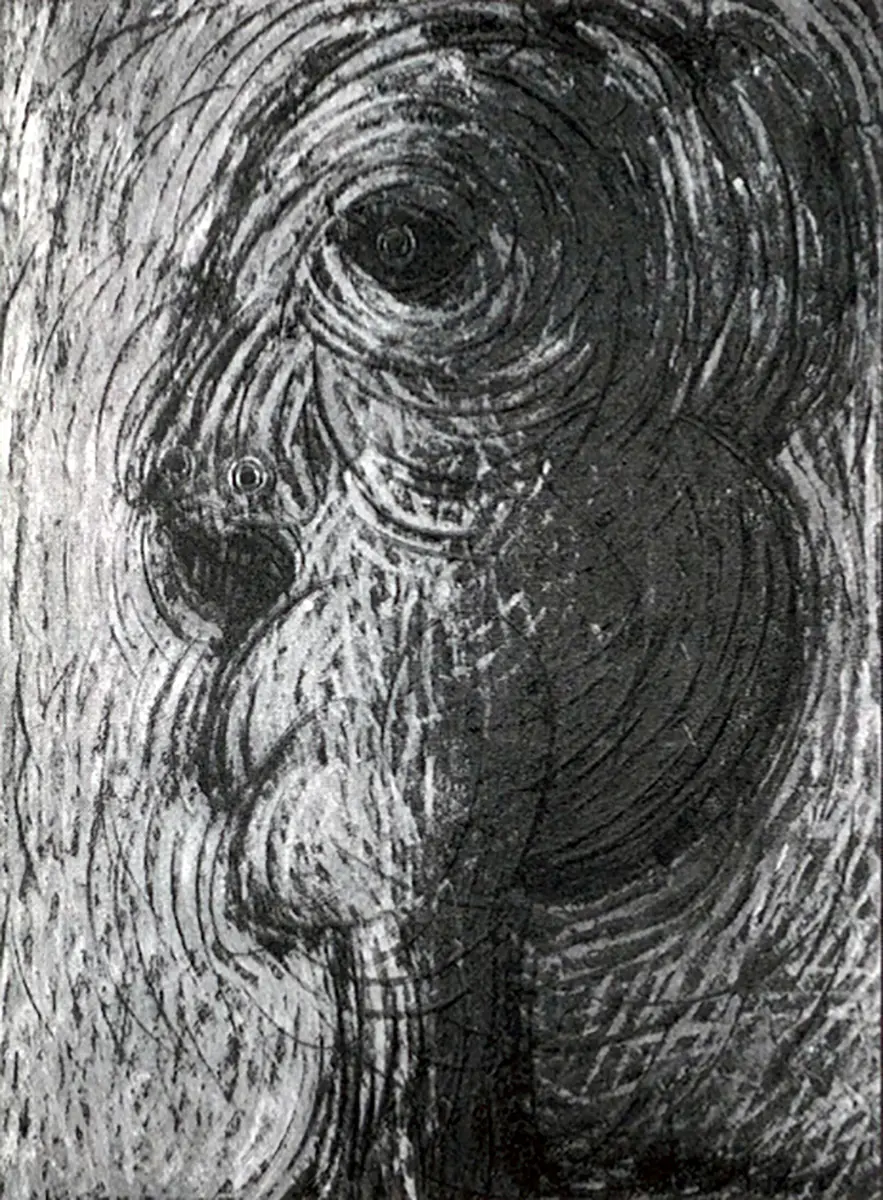
Two other prizes were also beyond dispute, both awarded to drawings. One wentto Elvis Avilés, an artist now in his eighties, who confirmed his rational kind of investigation and visual synthesis of gestural line work, ideograms, and fragment-based surface. The other prize was awarded to Jesús Desangles for one of three graphic meditations on mythical and fantasmagoric creatures, with furling and unfurling lines creating real and imaginary morphologies which were both humorous and disquieting. However, the paintings by the same artist created a greater impact and were among the most powerful at the Biennial.
The printing prize awarded to Leo Nuñez, a recent graduate from the Altos de Chavon School (whose former students obtained several prizes), for a monotype, an impeccable collograph with sepia coloring, on the theme of the earth and ecology, and the prize for Miguel Cruz, another winner in the UNESCO world competition, for a black and white photogragh, a visual ode to the poor, with an excellent handling of composition and light, could both be considered as "plausible" prizes. Two installations were also awarded prizes: one «wall» piece, on the condition of women, by Raquel Payewonsky, consisted of a series of little boxes and a set of transparencies; the second wasan environment, full of “burning obscurity,» by Pascal Meccariello, which explored the body, color, and cries. Both works were interesting in their messages, although they suffered the drawback of being done with fragile materials.
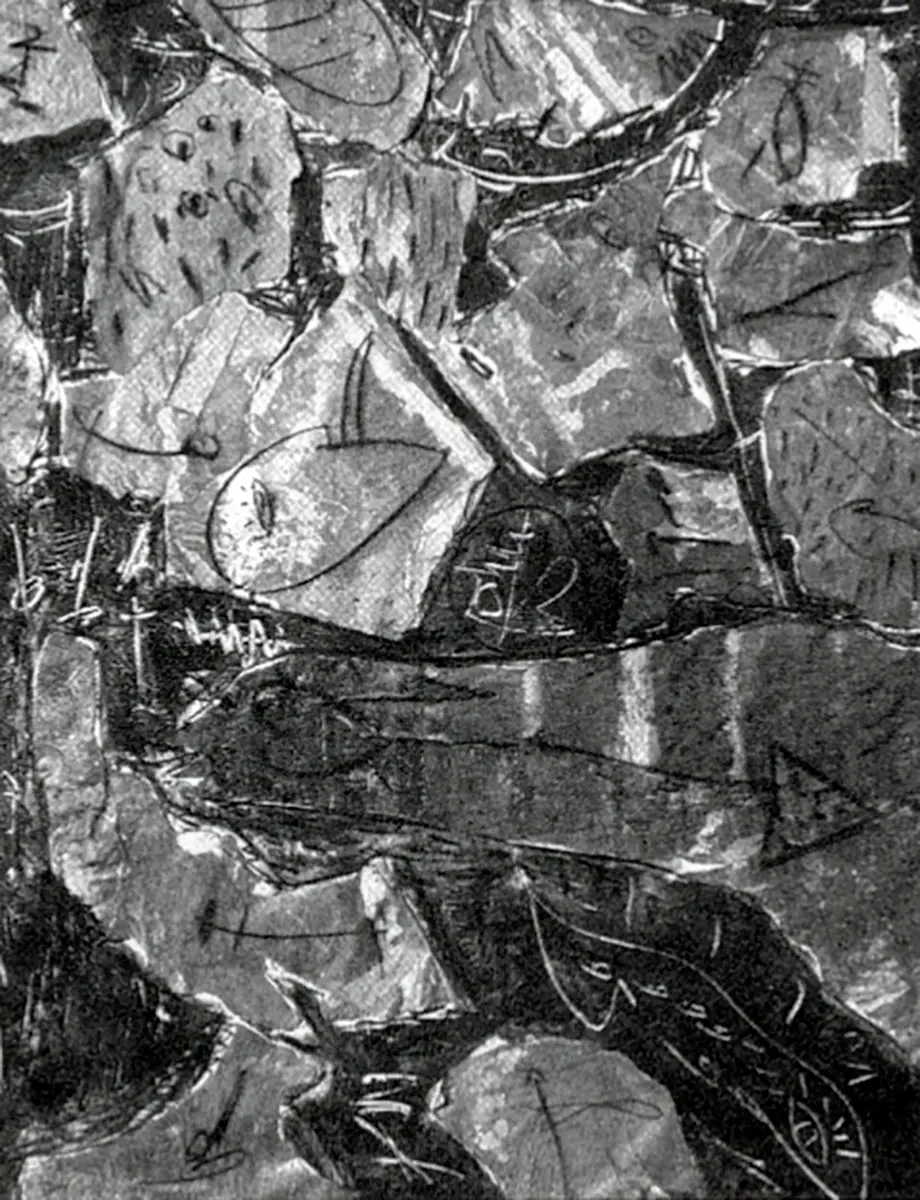
Rather than commenting on the other prizes, I prefer to mention a few artists and works whose fate could have been otherwise in this edition. There is almost always a major loser in biennials, and this time it was Danilo González, who participated in five categories and distinguished himself in particular in his carefully worked prints and drawings, mosaic-like polyptychs full of energy, like all his work. Danilo de los Santos, one of the very few mature artists participating in such events, competed in several categories and gave proof once again of his technical versatility and consistency in his ethno-anthropological investigations. Ernesto Rodríguez presented some exquisite ceramic pieces, with his cages of derisively aggressive fauna. This young artist from Santiago works exclusively in ceramics and merits all our attention.
Installations, as well as related three-dimensional works, were everywhere in the Biennial, and although full of good intentions, were very uneven in their results. An exceptional piece was that of Jorge Pineda, which combined graphic elements and sculpture, using poor materials, which made an ecologically-oriented plea for the rescue of forests and fauna - symbolized by crocodiles. Tony Capellán, who also presented three transvanguard paintings and a drawing, constructed two installations: one denounced the contamination of rivers, and the other, the more impressive in terms of its drama, with its beaches of galoshes, was a tribute to illegal migrants and those who had drowned. There was also an intelligent monument-obelisk by a female participant in honor of the manioc cake. It should also be noted that more women participated and with greater effect in this edition.
With a total of 439 selected works, more than 100 artists, very few established figures (José Perdomo, Jorge Severino, Luichy Martínez Richiez, Aquiles Azar, Danicel), and prizes that were often disconcerting, the twentieth edition of the Biennial offered no great revelation, but rather a group of works that is committed to the exploration of contemporary art.
MARIANNE DE TOLENTINO