
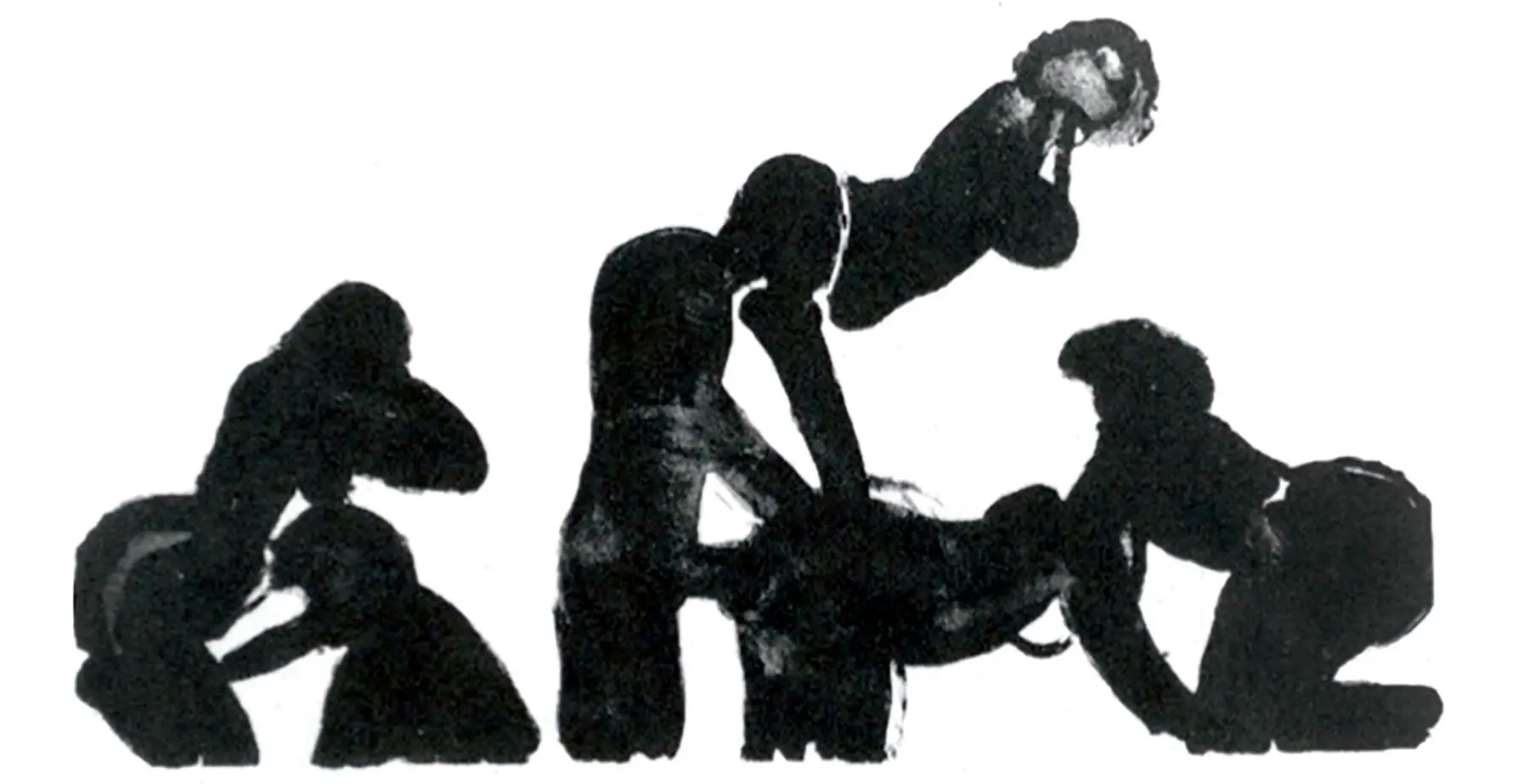
The eleventh edition of the Curitiba Print-Making Biennial (XI Mostra da Gravura Cidade de Curitiba/Mostra America) was the most comprehensive international art event in Brazil during 1995.
With the participation of artists from 13 countries, grouped together by different generations, tendencies, and contemporary problems, the show offered an extended view of print-making on the continent.
Historically, the Biennial began in Curitiba in 1978. There soon emerged a need for the establishment of a National Print Museum. From 1980, when the third edition was held (at that time the event was annual), it was already being presented in the Solar do Barao Casa da Gravura; with the collaboration of Argentina and subsequently Paraguay, it was transformed in 1982 into the Pan American Print-Making Biennial.
In 1995, when the eleventh edition was held, the event took the form of a homage to the artist Oswaldo Goeldi (commemorating the 100th anniversary of his birth), one of the pioneering figures of print-making in Brazil.
The eleventh edition was held during the months of November and December in ten different venues scattered throughout the city of Curitiba, which, in many respects, is a model city, with the event becoming yet another of the many attractions that Curitiba has to offer its visitors.
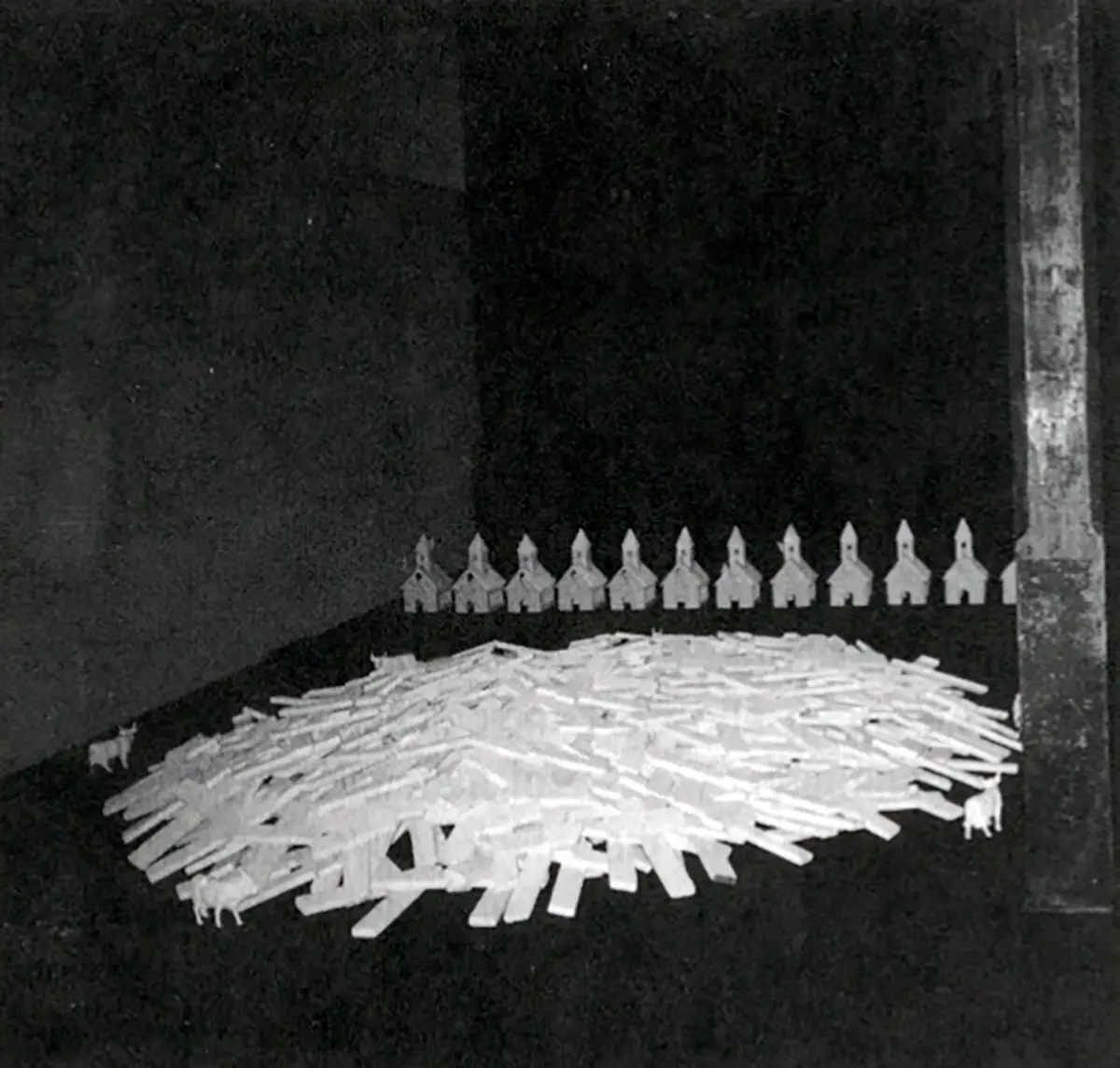
As the curatorofthe event, Paulo Herkenhoff, pointed out: "Print-making is seen in its most traditional aspect of the technique, such as the line engraving of the North East of Brazil, down to the time of expansion and rupture in language. Some artists present work with other media, such as painting, sculpture, installations, which include certain aspects characteristic of print-making: the cut, incision, corrosion, printing, and transfer of the image and texture, the multiplication of the image."
The broad-based criteria on which the event was based could be seen in the homage paid to Henry Matisse as print-maker, in a show at the Casa Romario Martins, which included the pieces making up the book Jazz (1947), published by Teriade, and the intensely poetic phrases of the master artist.
The most numerous part of the Biennial was presented in the Solar do Barao, an archetypal nineteenth-century residence which houses the Print Museum of the City of Curitiba.
Xylographs used as illustrations in Paraguayan newspapers—especially El Centinela y Cabichui during the Paraguay War—highlighted the importance of this little-known popular iconography and aspects of the war, such as the "militant press used as a moralizing instrument, a source of indoctrination," as the Paraguayan critic Ticio Escobar has pointed out. This room also included xylographs, which used the incipient printing technique of nineteenth-century Brazil.
The temporary exhibition rooms included an exhibit by Mexicans which presented some very forceful works by Francisco Toledo and other no less interesting pieces by Nahum Zenil, Rodrigo Aldana, J. M. González Casanova, R. Rebora, Yishai Jusidman, and Magali Lara, grouped around the theme of sexuality in terms of cultural, mythical, and ancestral identity and the subjective and private dimension of desire.
The theme of the body, desire, and pain was also present in the work of Louise Bourgeois and Robert Mapplethorpe, two of the high points in this section.
Special mention should also be made of the Chilean exhibit, with work by Carlos Hermosilla, Mario Navarro, Cristian Silva, and Mónica Bengoa, and the powerful work of the Colombian artists Suárez Londoño, Ana Claudia Múnera, Beatriz González, Germán Martínez Cafias, José Alejandro Restrepo, and Eduardo Pradilla, who explored the themes of violence and death.
There were also, of course, several Brazilian artists represented: from Adriana Tabalipa and Armando Sobral to the Curitiba artists Carlos Tullio, Andrea Las, and Edilson Vidriato, among many others. Particularly noteworthy in terms of intellectual and sensitive refinement were the monotypes by Mira Schendel, entitled Lapidaçao do Indizivel.
The Solar do Barao venue also included exhibits of work by the specially invited artists Matilde Marin and Lucrecia Orloff, from Argentina. The latter presented some interesting pieces on the theme of eroticism, while Marin confirmed once again the subtlety and originality of her renewal of Argentinian print-making. Mitos de Creación, a book of her work published in Colombia, was presented as an example of an "artist’sbook," along with other significant works by the Brazilian artists Ana González, Guita Soifer, as well as Yolanda Gollo Mazzotti, Angelo Agostini, and Guilherme Manzur.
In addition to Marin and Orloff, the Argentinian exhibit at the Casa Vemelha included an interesting installation by Zulema Maza, another by Pablo Suárez, as well as works by Miguel Harte, Marcelo Pombo, and Janet Grant, the thematic focus of which was not easy to identify.
The same venue housed the complex work by Carlos Capelán (Uruguay) and that of two Brazilian artists worth noting, the sculptor Eliane Prolik and Yiftah Peled, who had already participated in the last São Paulo Biennial.
Print-Making and Modernism, another exhibit housed separately, offered a rather uneven set of work from Eliseu Visconti (1866-1944) down to Poty Lazzarotto (born 1924), including Henrique Alvim Correa, Carlos Oswald, Anita Malfatti, Lasar Segali, Oswald Goeldi, Livio Abramo, Tarsila do Amaral, Cándido Portinari, and Iberê Camargo, among others.
The Cuban exhibit was highlighted by the work of Ana Mendieta and José Bedia. The Metropolitan Museum presented some important exhibitions, including Neo-Concretism and Minimalism, and the Art and Money show, with works by Andy Warhol, Waldemar Cordeiro, Cildo Meireles, Waltercio Caldas, and the Argentinian Antonio Berni, among others.
The Curitiba Print-Making Biennial also included a number of round tables, lectures, and seminars with the participation of well-known artists and critics.
NELLY PERAZZO