
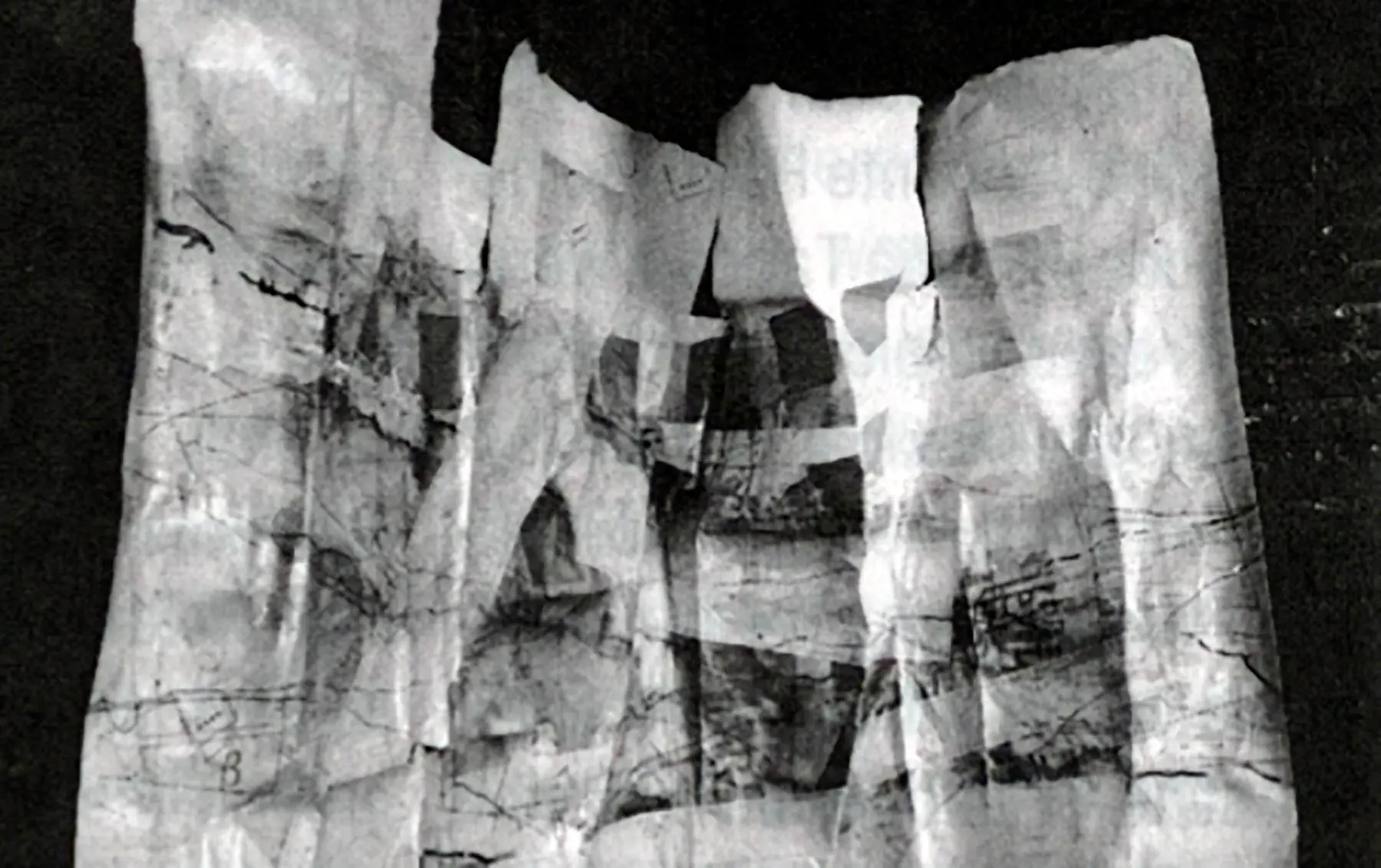
The variety of experiences which can be achieved with paper was the focus of this group exhibition, organized by Linda Blasini and presented at the Leo Blasini Gallery earlier this year.
Thirty-one artists presented works that illustrated the infinitely rich possibilities of this material. From the standpoint of technical expression, the collection reflected the freedom of criteria available to each artist. Personal styles and proposals were fully respected, resulting in a show of interesting variety and quality. The different proposals went beyond a merely formalist proposal, with an eclecticism in both the respective styles of the artists and the actual functions of the paper.
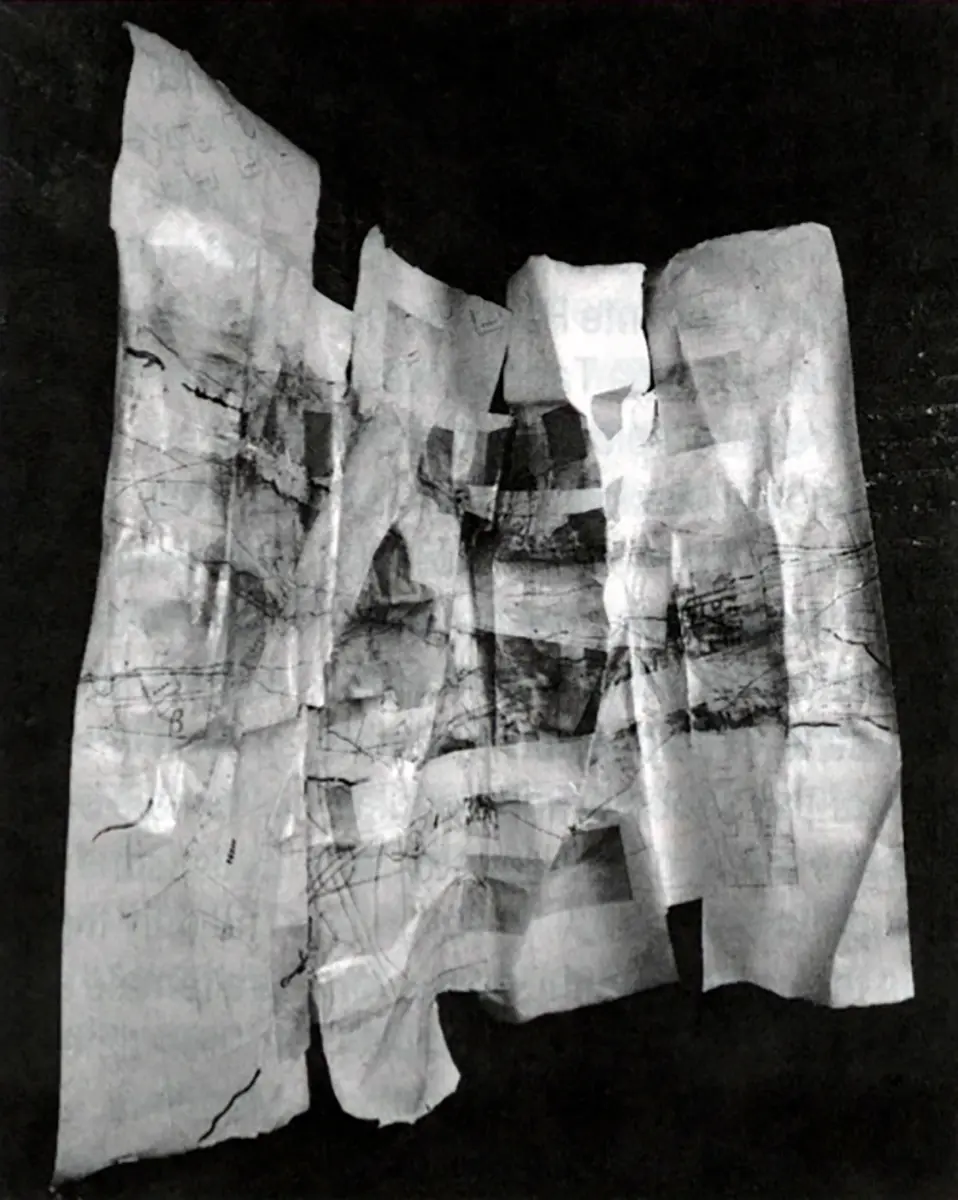
In some cases, the paper functioned traditionally as a support, as in drawings, prints, and other mixed printing techniques (with a great variety of kinds of paper being used); in other cases, the paper actually took shape in space, and occasionally acquired volume, the very essence of sculpture.
Another aspect of this eclecticism was the generational framework of the selected artists. Recognized masters with well-established careers, such as Iván Petrovszky, for example, participated alongside younger artists now emerging on the national art scene. This experience enabled the spectator to see works with different kinds of treatments and intentions, illustrating different facets of contemporary artistic expression. Inthis way, paper acquired a variety of different meanings depending on the artist’s individual intentions. In many cases, the use was experimental when it served as a support for the various processes developed through the materials used. Emilia Azcárate, Ricardo Benaim, and Nelson Garrido are perhaps the most representative in this respect. In other cases, the paper was a support for solutions of a more pictorial nature, as in the fluent strokes of Luisa Richter and José Paez Del Nogal, and in the use of color in the case of María Bernardez. Textures or stains were worked by Elias Zerpa Sucre, Michel Boulanger, and Eduardo Azuaje, while William Stone, still within the sphere of abstraction, presented a collage.
In the pieces by Irene Szabadics, Douglas Monroy, Luis Poleo, and Luis Romero, it was emblematic or semiotic representation that set the tone. Figuration appeared in the work of Petrovszky and Ana María Mazzei, who explored pastel technique in her imagery of clouds. For her part, Gazniela Pagazani created repeated images through printing techniques.
By way of contrast, there was a progressive interplay of lines, making up 41 different images, in the miniatures by Alessandro Balteo, while Lihie Talmor moved out of the two dimensions to explore installation techniques. Roberto Lampo used planes of variable dimensions (even folded papers) in his spatial explorations, whereas Solange Salazar and in particular, Gisela Romero and Beatriz Yabur, created three-dimensional sculptures in paper. On the other hand, Harry Abend and Colette Delozanne, who normally work as sculptors, transposed their habitual practice to the two dimensions of paper. Max Pedemonte, for his part, presented in summary form projects of an installation and sculptural kind.
Life and work co-exist in the case of Corina Briceno, where the Amazonian theme was worked in a characteristically emblematic manner. Ricardo Benaim proposed an exploration of the Genesis theme from the Judaic perspective, whereas Carlos Quintana offered a true testimony of a journey along the Venezuelan coasts. In contrast, Eugenio Espinoza, in a synthetic and analytical manner, conceptualized and ironized interpersonal relations in the context of the artist’s own environmentand persona. Forherpart, Dulce Gómez, perhaps the most visceral of all the participants, seemed to achieve a genuine fusion between her own identity and her work.
Paper, A Group Exhibition was a panoramic exhibition of considerable quality, which not only offered a good opportunity to learn about some of the work now being produced in Venezuela but also highlighted some of the varied expressive possibilities inherent in the use of this material.
SUSANA BENKO