
In recent years, a number of Cuban artists have emerged who have, in one way or another, had the opportunity to promote their work outside the island and who have subsequently left to join the complex network of commercial galleries and major group shows. However, parallel to this growing appreciation of individual artists, there has been a general interest in all things Cuban, as though the slow but inexorable crisis in the regime, the economy, and society of the island was a fertile breeding ground for a renovation of the arts which would result in a pleaide of new stars. This process has involved the synchronization of, on the one hand, the vision we have of the island from outside, with Cuba being seen as a virgin land awaiting discovery, and on the other, the need of young Cuban artists to leave, discover, and experience other kinds of realities.
It is this context of expectation that has characterized a number of group exhibitions in both commercial galleries and institutions whose objective has been to highlight contemporary Cuban art, whether from an official or a more independent perspective. Spain, in particular, has always shown great interest in Cuba and has carefully followed the various vicissitudes affecting Cuban art in recent decades. However, in contrast to certain habits more characteristic of the 1980s which were directed towards general appreciations and panoramic views of a rather superficial kind, the specialized media, including the critics, art galleries, and museums, now seem to be giving closer attention to the development and proposals of individual artists, in a process in which artists are assessed in terms of their individual, rather than collective, qualities and merits.
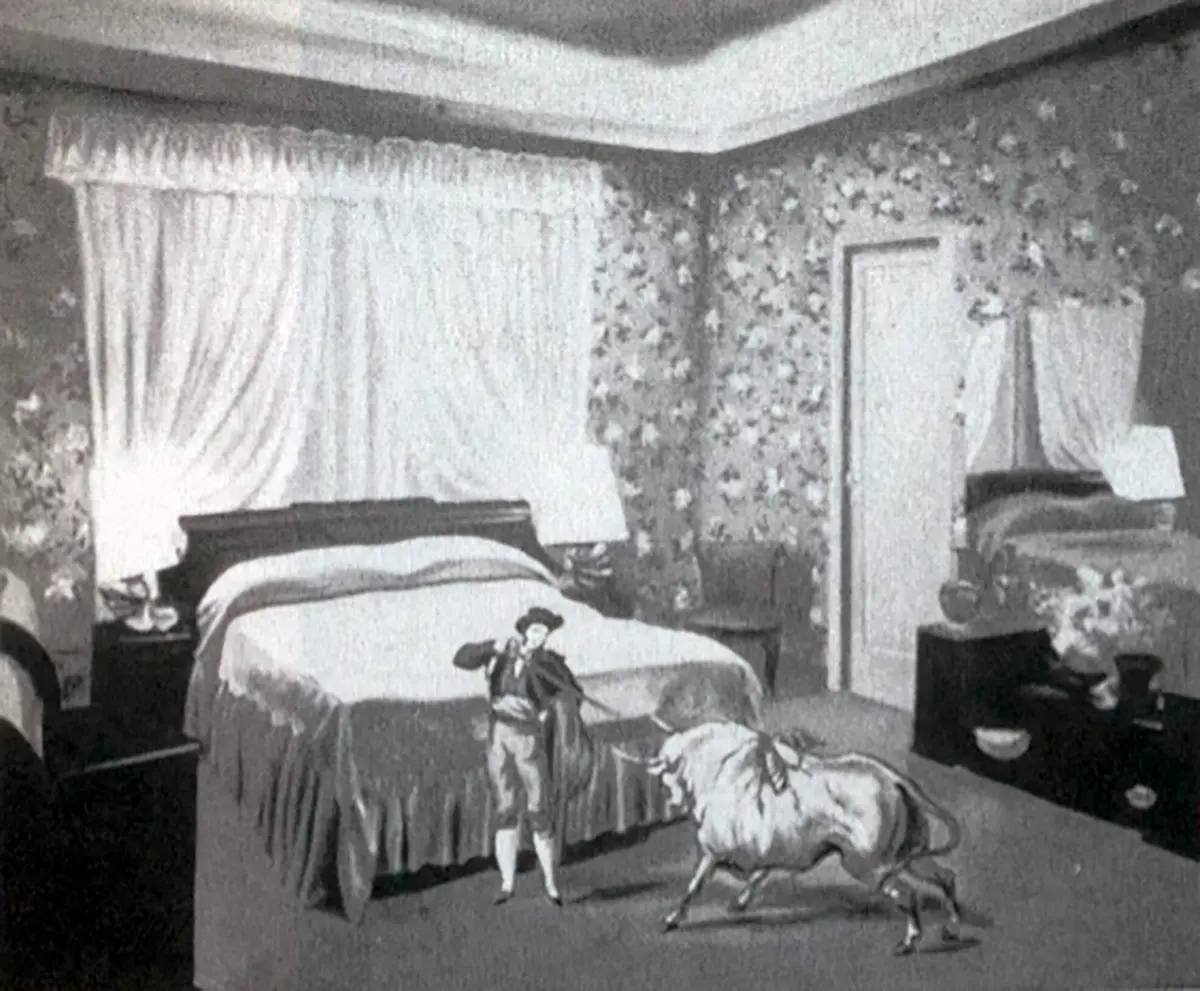
There is no doubt that these changes in attitudes are leading to a more critical and thus more selective approach to this work. By way of example of this follow-up process, mention must be made of the recent exhibition by the Cuban painter Pedro Álvarez (Havana, 1967) at the Marta Cervera/Rojo y Negro Gallery in Madrid.
This was the artist’s first one-man exhibition in Spain. However, his work was already known to the Spanish public following his participation in such group shows as Son Cubano(s), organized in 1994 by the Fucares Gallery in Madrid, and Beyond Appearances, presented the same year at the Berini Gallery in Barcelona. The following year, he also participated in the exhibition entitled Cuba, The Possible Island at the Center of Contemporary Culture in Barcelona, which presented a significant selection of works by contemporary artists.
Mention must also be made of his inclusion in the Berini Gallery stand at ARCO and his simultaneous participation in a group show entitled Dream World, which presented works of Cuban artists from the Ludwig Foundation of Havana at the Casa de America.
During these years, Álvarez has shown a great capacity to capture through painting and figuration a language that raises questions about Cuban identity (one of the most significant and repeated characteristics of recent Cuban work) and proposes a critique of culture and its symbolic imagery, ranging from humor to the occasional use of nonsense.
At his Madrid exhibition, Pedro Álvarez presented works from three of his most recent series from 1995, The Havana Dollarscapes Series, Cecilia Valdés in Wonderland, with black and white reproductions from interior decoration magazines from the 1950s, coupled with characteristic figures from turn-of-the-century Cuban regional prints and advertising imagery from Coca-Cola. All these works were grouped together under the chromatic title of Red and Green. Color here functions as both a vehicle of atmosphere and as an ambiguous referent for a society in permanent transformation. Red is the color of the party flags, but it is also the color of the Coca-Cola publicity logos from the I950s; it remains in the memory as a nostalgic reminder of the past. Green, on the other hand, appears in dense and dark tones, with hints of olive, characteristic of the vegetable exhuberance of the tropical landscape, although it also recalls the color of the campaign uniforms of the regime and of ideological purity; and of course, it is also the color of the dollar bill, which determines the everyday life of the island.
The images tend to group together and fuse the diversity of referents: thus in the first series, the figures and buildings appearing on the North American dollar bill are set within intense tropical landscapes through which occasional emblematic Cuban architectures appear; in the last mentioned series, scenes dominated by fleshy reds taken from the Coca-Cola publicity campaigns unfold within the rural atmosphere of the island, with its comic figures taken from regional illustration and caricature.
Coincidence and contradiction are thus resolved in an attempt to capture the symbols of cultural identity, with the artist constantly winking his eye at the spectator.
In Álvarez's earlier works, the images were developed through a similar structure of symbols, which might include cars imported from the United States in the 1950s or figures from Afro-Cuban folklore. Perhaps in these new pieces, the work has become more complex, although the artist continues to use narrative as a permanent basis for his discourse. Sometimes, the use of citations appears rather excessive, although Álvarez’s pictorial concept is based on a constant allusion to iconographic repertoires. It is precisely this which gives his work a kind of strange timelessness, or at least a permanent sense of suspension, without the artist lapsing into aestheticism. The strength of Álvarez’s painting probably lies in his visual and critical sharpness. And certainly, it takes a lot of courage to tell the stories that Pedro Álvarez narrates through his painting.
SANTIAGO B. OLMO