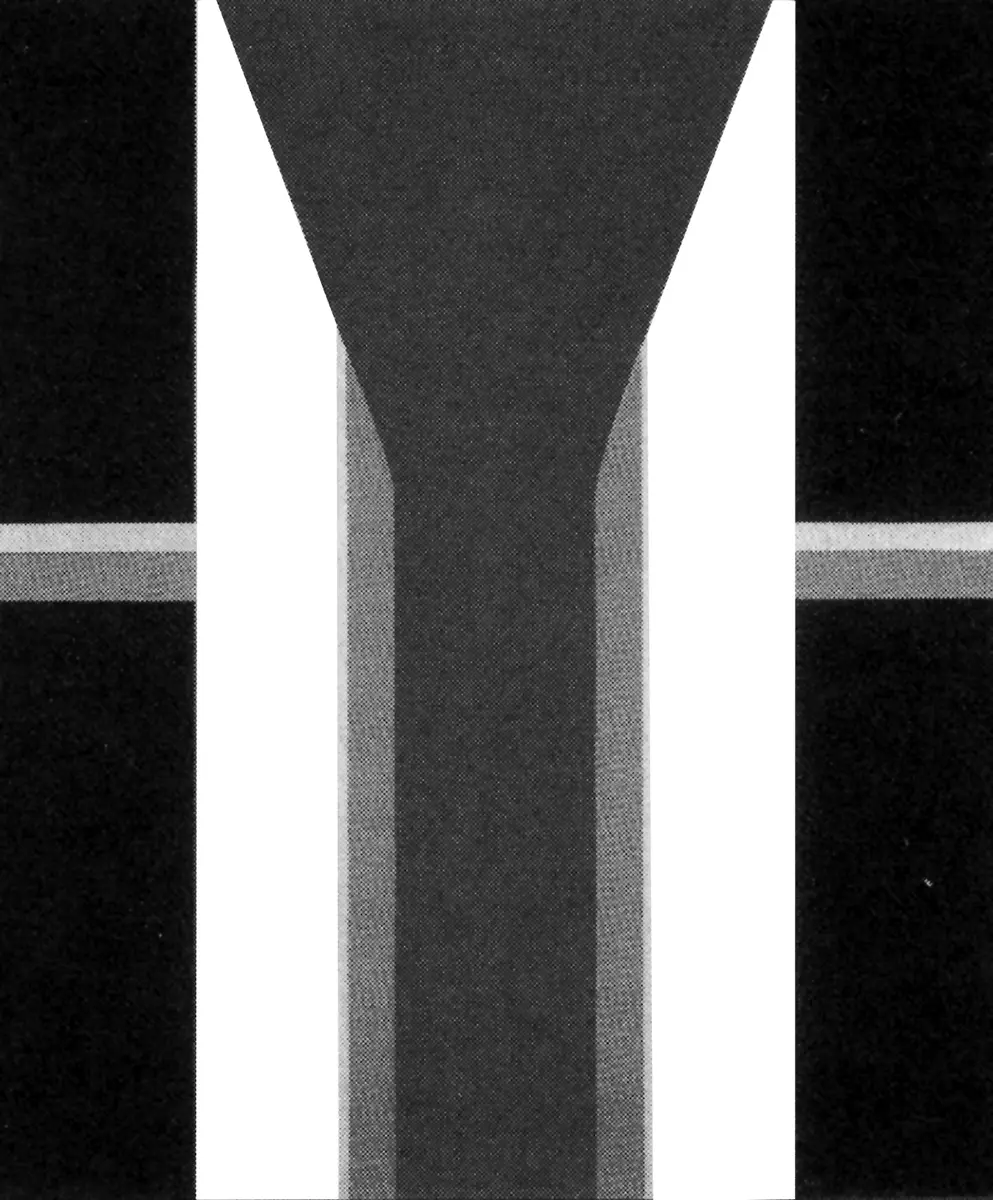
Over the years, that is, by means of a constant and lucid mental rigor, Fanny Sanín has achieved in her geometry a full conceptual self-sufficiency which, although it might be classified with the so-called neo-geo, is to be distinguished from that of Halley, Scully and Buren by being more incisive in its rational intent, without ever sacrificing its sense of lyricism. This intent leads her to the construction of a precise concept of structure as the basis for her work.
Her autonomy with respect to modern geometry distances her work from any suspicion of that functionalism in which Mondrian’s legacy became finally enclosed. Color is used as an imaginary structure, as it is today by architects such as Rem Koolhaas and Ciriani, another structure and therefore another meaning.
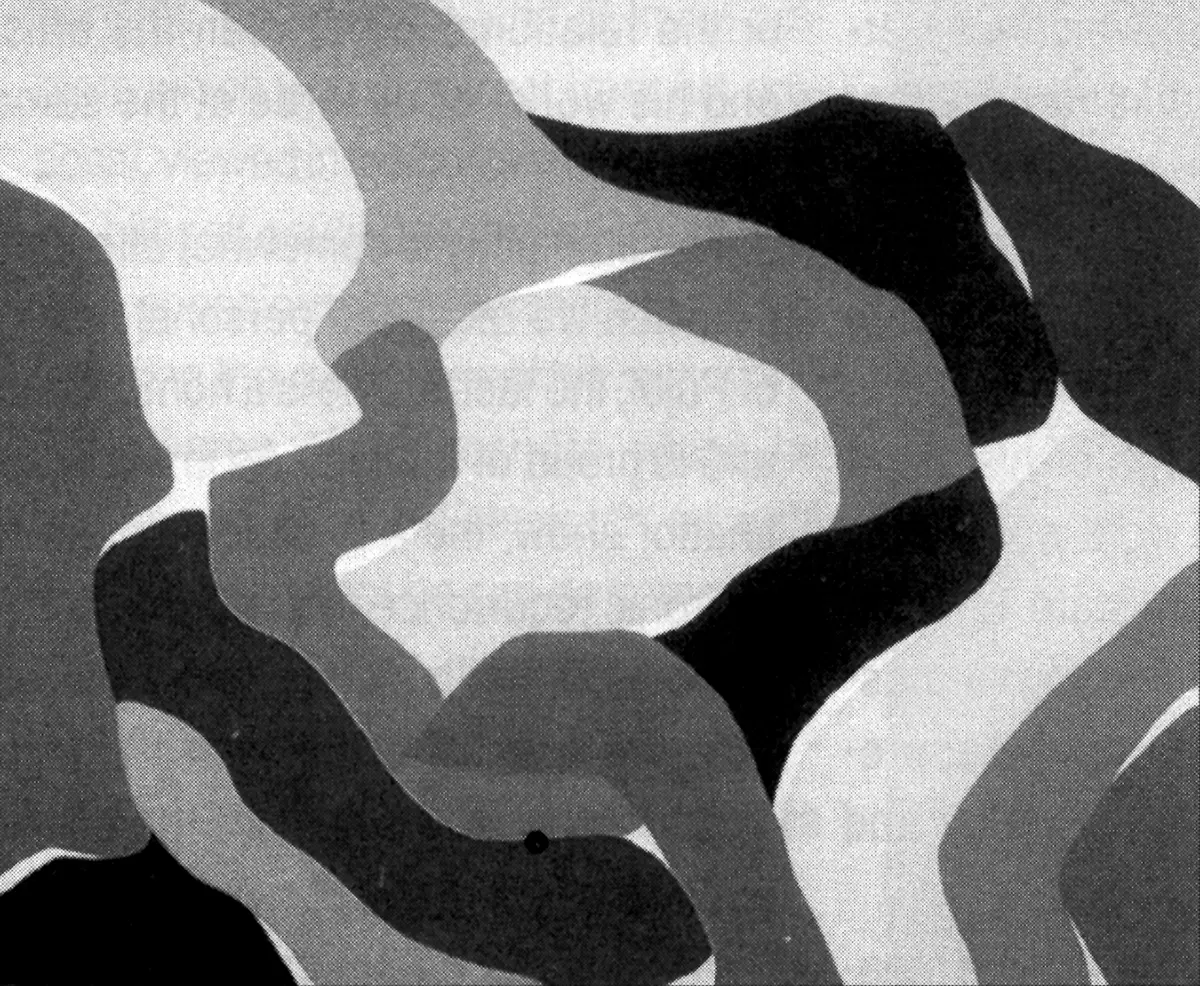
In this respect, the surface is not a limitation, and color is not a surface, since color, when freed from its old connotations, achieves an autonomy which naturally takes it towards the freedom of metaphor. I know that to say this might appear to be trite at a time when the content of metaphor has been abused and vulgarized "poetically," but it is nevertheless within the context of the free imagination that a work such as that of Fanny Sanín operates.
It does so insofar as this mental order is a source of freedom rather than restriction; the rational intent is in search of an architecture which is appropriate and logical, of a new city in which luminosity includes the splendor of clarity.
For her part, Rosa Sanín by choosing the genealogy of the great colorists of our time, from Hoffman to Ellwort Kelly and Morris Louis, has been establishing something very important, the maintenance of the autonomy of color and the constant shunning of the falsely dramatic temptation of the native telluric options and those of facile abstractionists. Her work, too, is characterized by the presence of a vigilant reason.
Any attempt at comparison would be fruitless here, since the color is established in terms of a free relationship from the beginning, before it is applied to an object which gives it both a reference and an obligation, which is precisely what color escapes in the work of the great names of our period.
Does color have a country? The presence of rationality in the work of Fanny and Rosa Sanín is the presence of a vigilant consciousness before the disorder of nationalisms, the false anarchies which wreak such havoc in our country. Proposal, in their case, takes us back to a world of harmony freed of terror, harmony as the continuous demand for the construction of a poetics.
DARÍO RUIZ GÓMEZ