
This recent exhibition of work by Mabel Rubli at the Enrique Larreta Museum of Spanish Art highlighted the maturity of the imagery and the quality of the language used in her prints.
The artistic career of Mabel Rubli (1933) over four decades of intensive work is well known. In her formal investigations, she has never relinquished her commitment to the world which surrounds her, and her awareness of human conflict has never outweighed the sense of poetry which is so evident in her prints.
Just over 25 works make up the series entitled Open Space and Proverbs and Songs, the latter being a tribute to the Spanish poet Antonio Machado.
Of our various print-makers, Mabel Rubli has distinguished herself by her mastery of different techniques, which she has always interpreted with absolute freedom. In this connection, it is worth remembering the different masters who in the 1950s and 1960s helped shape her artistic personality, such as Fernando López Anaya in Buenos Aires or her studies at the print-making ateliers of Friedlander and Hayter in Paris.
This freedom is fully present in the series Open Space, on a smooth monochrome surface which ranges from green, yellow, blue, red to black, with rolls of hand-made paper of different colors which harmonize with the selected surface. These papers may be of different diameters and lengths, and are in turn printed with human or abstract images that are half unfolded. In other cases, printed papers are fully unfolded to form an irregular and fragmented mass. The grouping together of these small rolls is structured into open forms, which generate movements on the surface. From a certain distance, they look like paintings, but as we draw closer, subtleties in color and image appear in each of the rolls or folded papers. The composition has the ambiguity of suggesting, from a distance, certain simplicity which, as we draw nearer, is transformed by the subtleties of color in the printed images.
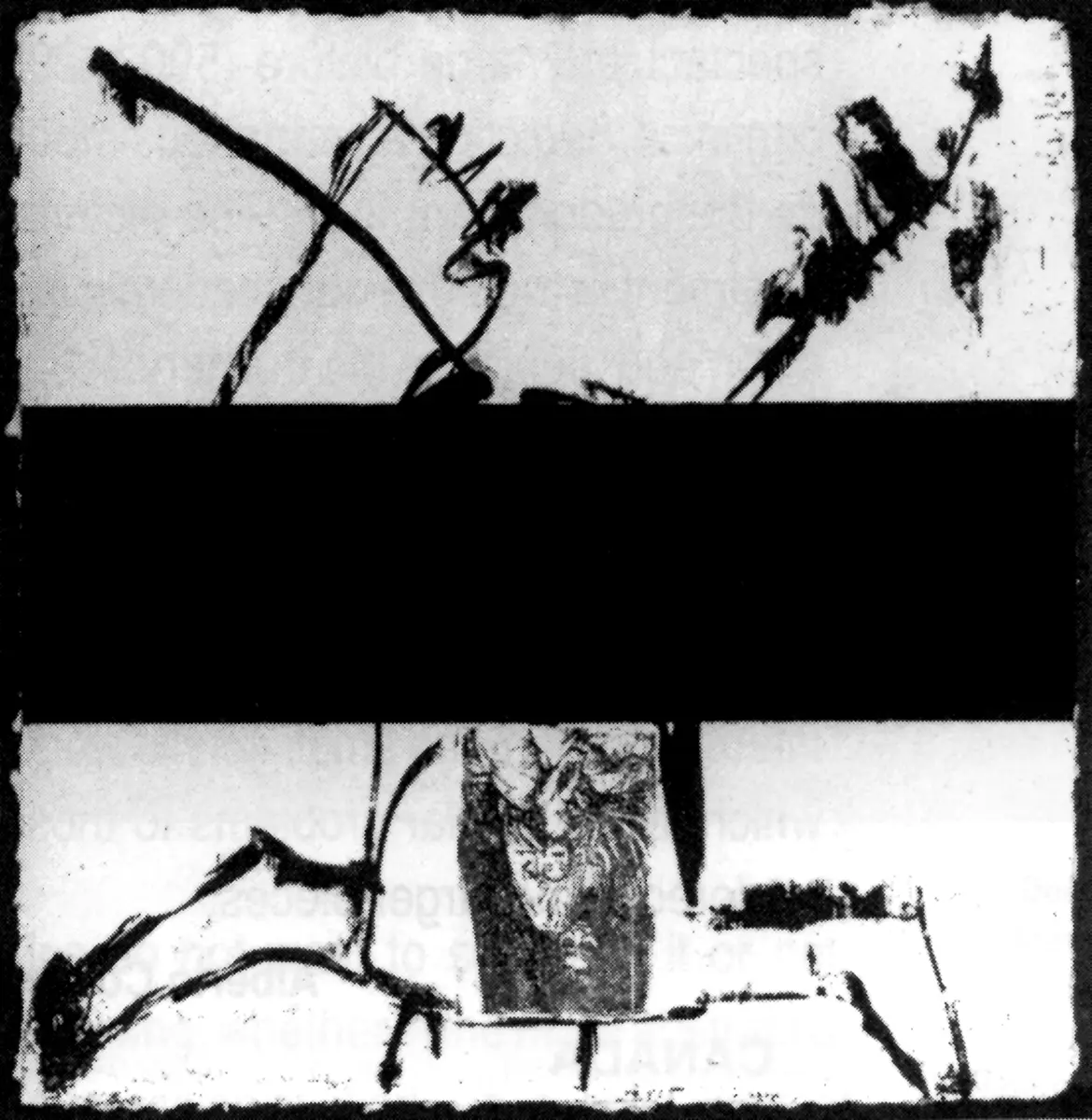
The homage to Antonio Machado in the Proverbs and Songs series consists of fifteen prints (etchings and some mixed media print techniques). This last procedure integrates the Colograf and the transparency. It is interesting to note that these works do not illustrate the poems but are genuine plastic interpretations, since the artist uses them freely and in a suggestive manner. A good example is the print for the text Watch out...a solitary heart is not a heart (etching, 40 cm x 40 cm).
ALBERTO COLLAZO