
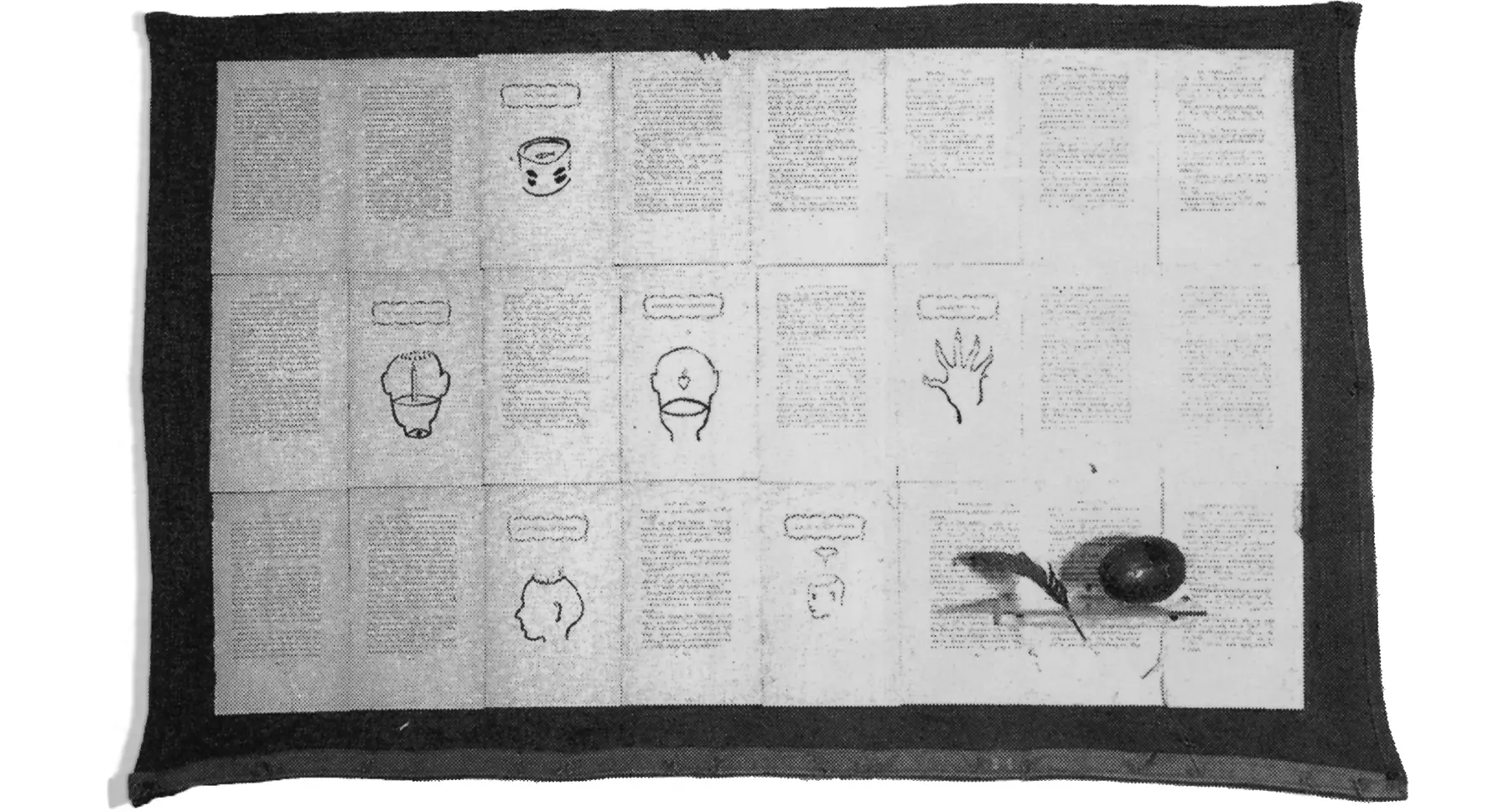
In a joint venture, the Americas Society and the Spanish Institute of New York presented a survey of modern and contemporary art from the Dominican Republic, the first exhibition of its kind to occur in the United States. With a vastly growing Dominican population in New York and Miami and an increased visibility of Dominican artists such as Tony Capellán and Marcos Lora Read on the international scene, this historical show could not have arrived at a better time.
The exhibition dated from the 1920s to the present and focused attention on artists who introduced modernist painting to the Dominican Republic. The show began with the groundbreaking Female nude study of a mulata (1919) by Celeste Wos y Gill, who studied abroad and opened the first art school on the island using living models. But if realism appears to have gotten a late start in the Dominican Republic, the years between 1920 and 1950 offered artists a crash course in modern art. In the first place, the innovative works of Jaime Colson and Dario Suro, both active in the 1930s and 1940s, demonstrate a familiarity with impressionism, post-impressionism, cubism, social realism, and surrealism, lessons which were passed down to the younger generations of artists. Secondly, over 4000 Spaniards emigrated to Santo Domingo between 1939 and 1940 to escape the civil war, a move that furthered Dominican contact with European Modernism.
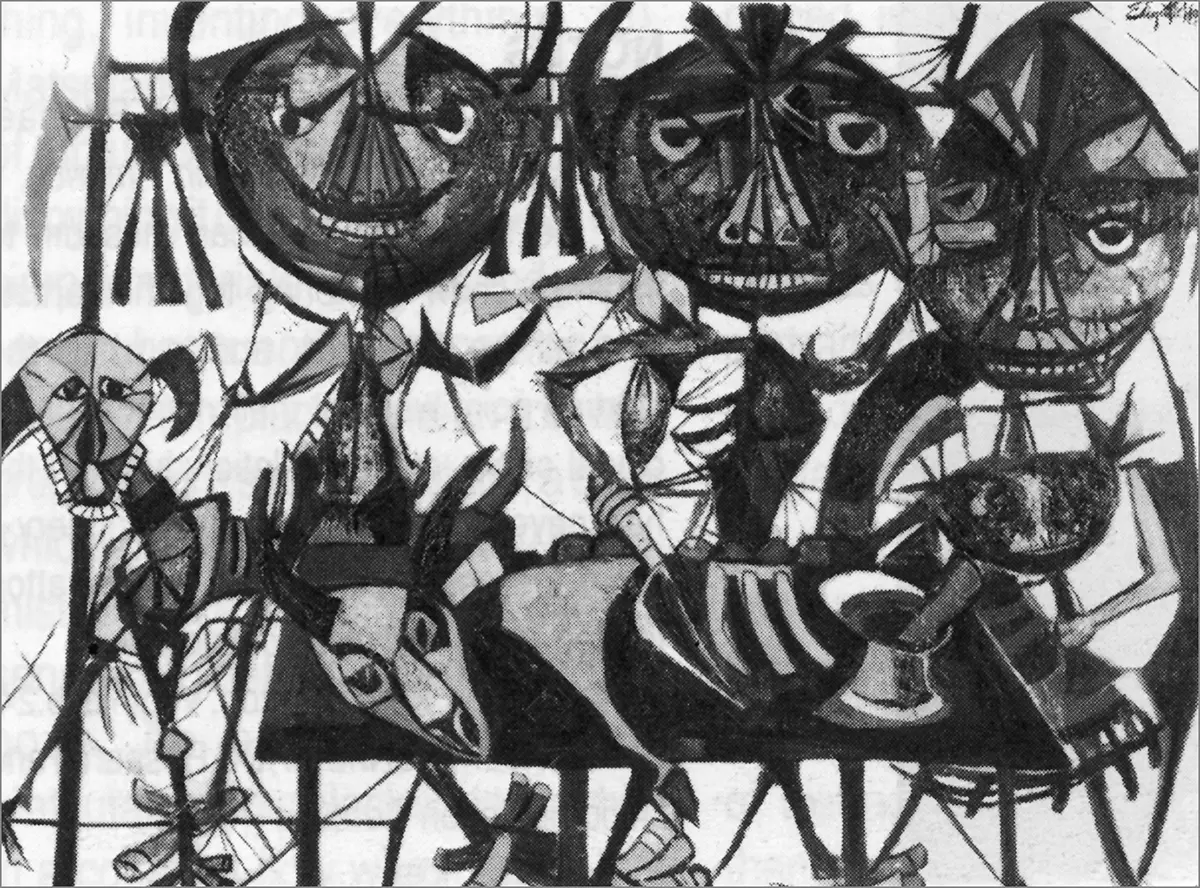
Spanish émigrés José Vela Zanetti, José Gausachs, and Eugenio Fernández Granell affected the course of Dominican painting in rather fortunate ways. All three were instrumental in founding the Escuela Nacional de Bellas Artes in Santo Domingo in 1942, and Granell’s surrealist magazine La posia sorprendida became a forum for experimental poets and painters. Granell’s cartoony biomorphic surrealism does not seem to have found many followers in the Dominican Republic, but the influence of Gausachs and expressionistic brushwork and Zanetti’s bold outlining could be seen in the generation of abstract artists who came of age in the 1950s and 1960s.
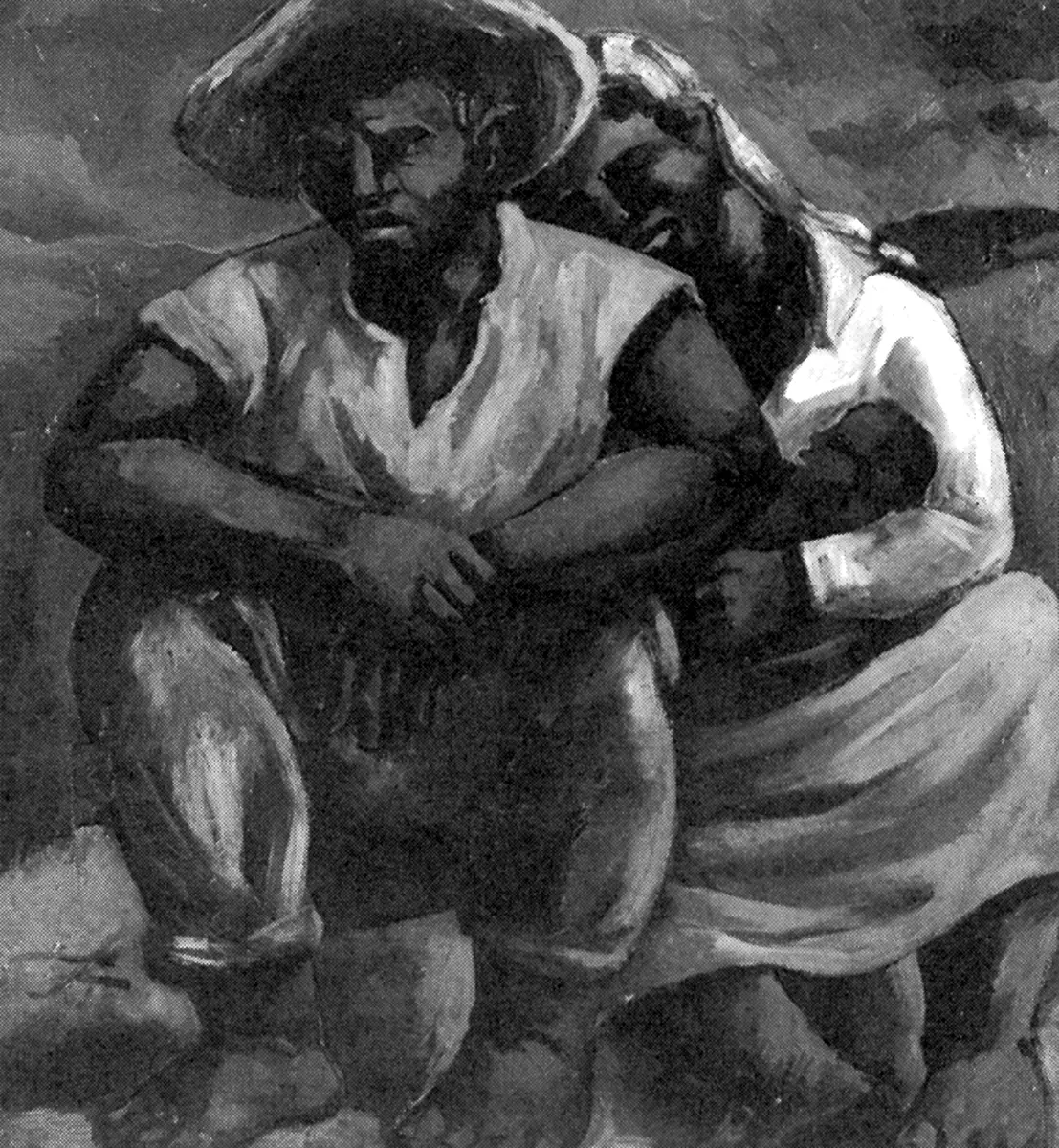
Eligio Pichardo, Iván Tovar, and Paul Guidicelli are considered the masters of the 1950s generation of abstract artists in the Dominican Republic, and their work certainly merits greater study. Pichardo El Sacrificio del Chivo (1958) was one of the highlights of this show. A work of political satire that foreshadowed Trujillo’s assassination by less than a year, the painting draws on the Dominican Republic’s popular Hispano-African visual traditions. The faces of the assassins resemble carnival masks, and the thick brush strokes give the painting a sculptural look.
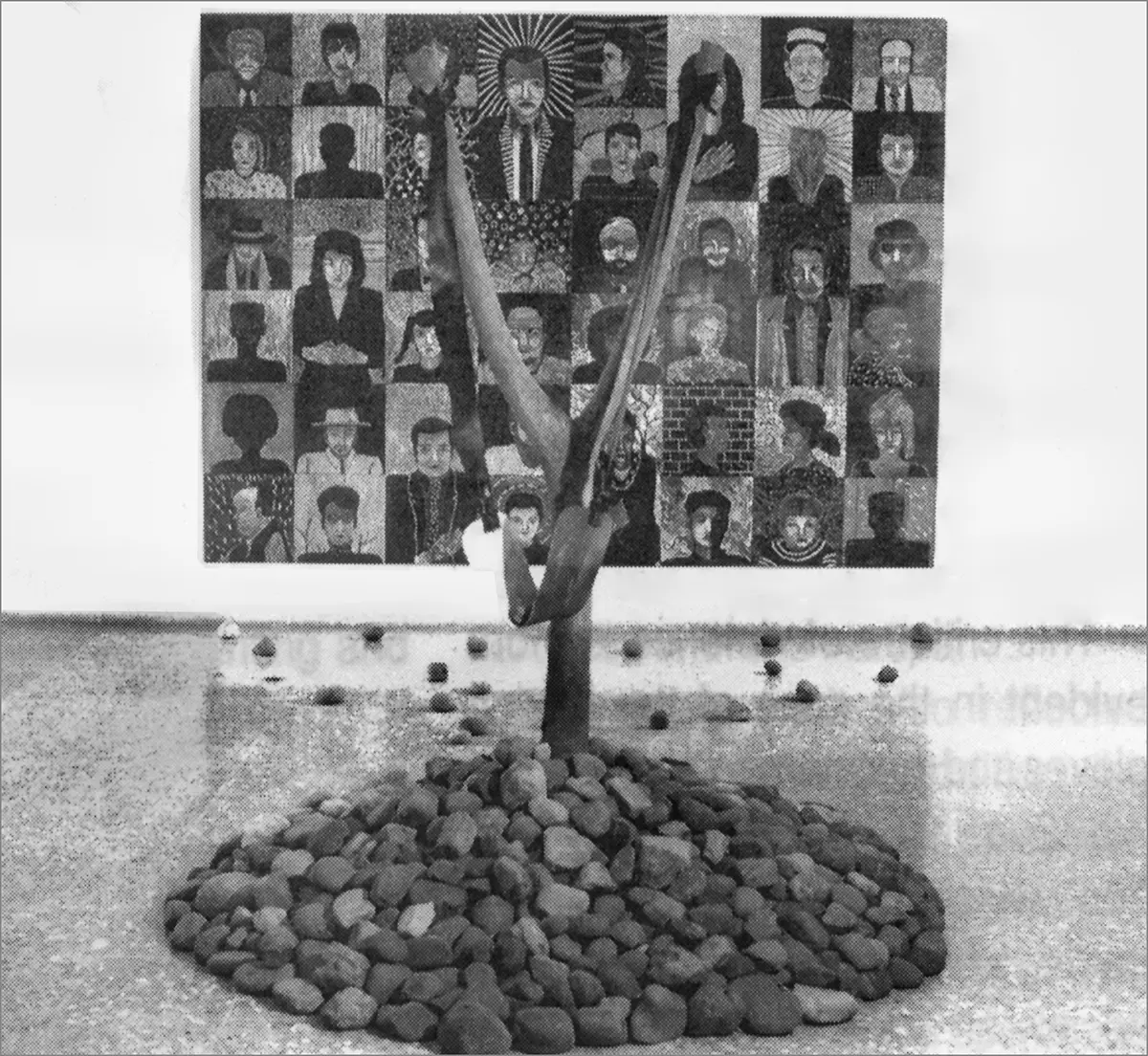
The contemporary portion of the exhibit focused on artists who continue to blur distinctions between media and who drew on popular culture. Installations were, of course, the centerpieces of the section. Tony Pequeña esperanza (1996) was a roomful of boys' shirts with pieces of bread and pencils stuck in the shirt pockets. This work, which drew attention to the needs for education and food for Dominican children, seemed a little out of place in a show that was generally concerned with formal issues, but at least it looked sincere and had integrity. Marcos Lora Read was represented by three early pieces that will remind those familiar with his monumental work today of his small but nevertheless powerful beginning. Raúl Recio and Jorge Pineda were represented by marvelous woodblock prints, a medium that Puerto Rican and Dominican artists have been putting to innovative uses. Belkis Ramírez, for example, used large-scale woodblocks in De la misma madera (1994), a provocative installation that invited the audience to throw stones at the artwork.
Like any introductory survey, Modern and Contemporary Art of the Dominican Republic only gave a sample of the kind of art that has been produced in Santo Domingo. The exhibition left room for one to imagine that several other shows could come out of this initial effort, and the equality of the works on display made one want to see more critical attention being paid to the arts of the Dominican Republic.
YASMÍN RAMÍREZ