During the months of June and July, at the Luis Ángel Arango Library in Bogotá, a new edition of its New Names program was presented under the suggestive title of Contaminated. As Natalia Gutiérrez, the curator, pointed out, this young generation aged between 23 and 26 is very far from embracing any "grand discourses,"1 and this show tries to be an interesting alternative to get in contact with, or as its title suggests, to become contaminated by the proposals of very young artists who have a new and unusual way of looking at the world which, is among other things, what the show intends to point out.
This alternative proposed by the show arises from three sources: the personal vision of the artists as expressed in their works and their words, and the position adopted by Natalia Gutiérrez who, as a teacher and curator, skilfully introduces us into the motivations and the activity of this new generation, the children of rock and television.
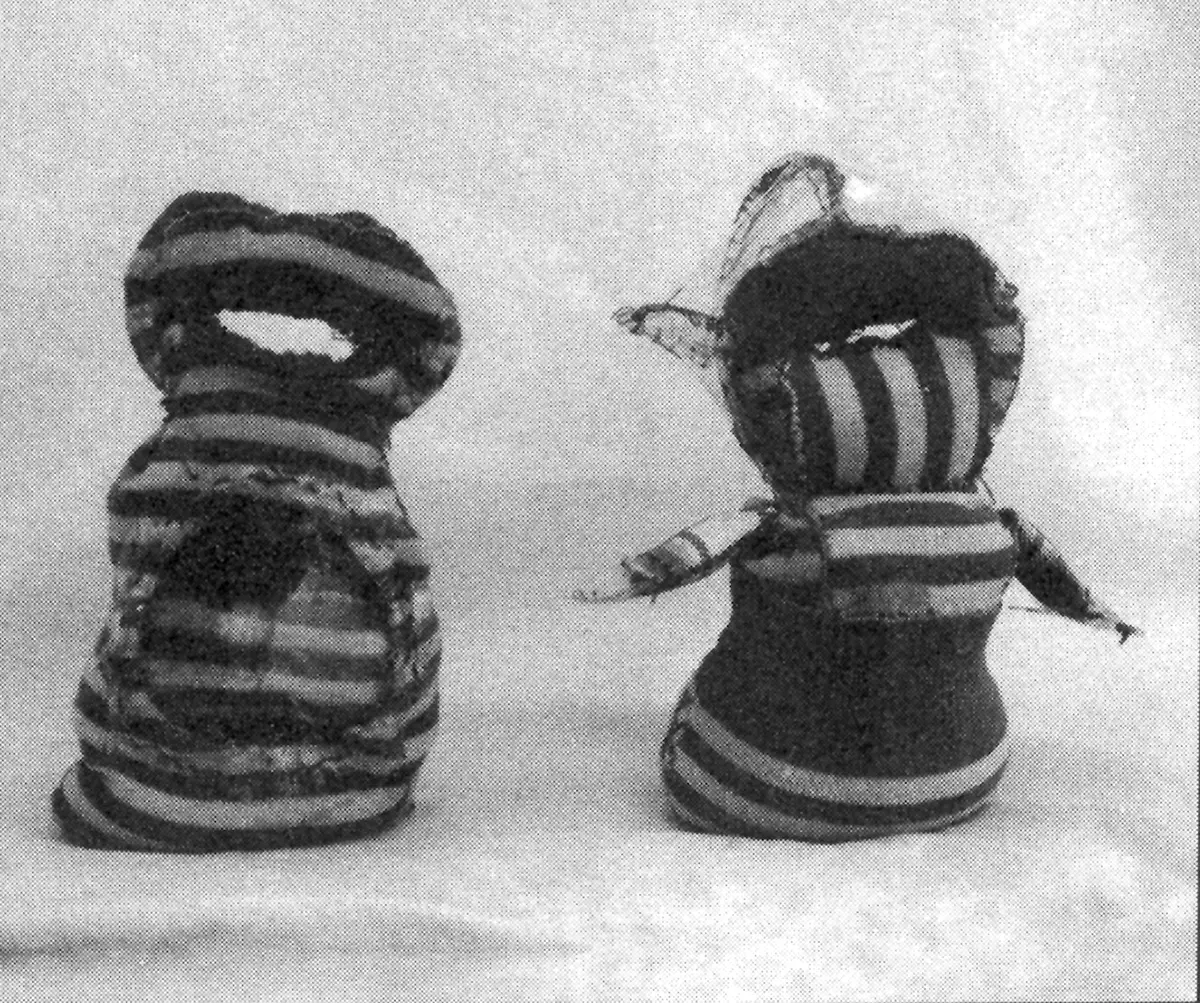
One of the most important aims of this exhibition is the need to take into consideration the motivations generated by the activity of this group. These may be stirred up out of the experience of intimate and everyday events of an apparently puerile nature. At first sight, they seem to have to do with problems which might have nothing to do with us, but in fact they do concern us all and go beyond what is really important and relevant. Very often, these events bear a direct relationship with the body, its functions and vicissitudes, as illustrated in the work of Maria Margarita Jiménez and Lissette Urquijo, both of whom refer to the hidden world of women. Maria Margarita Jiménez is motivated by experiences of a very personal kind, for example, the falling out of hair,2 and appeals to sewing as an activity which allows her to establish a relationship between her own body and the objects constructed: small rag dolls which in their form, size and texture, invite us to play with them, asking to be touched and handled. According to the artist, these dolls are "an extension of my body. Representations of pieces." In this way, the materials used in her productions—fabrics, lace, veils, and other accessories from old clothing—are combined to create sexed forms which comically allude to male and female genitals; other times they seem to be dolls bereft of eyes and face, strongly charged with affective elements. This series was accompanied by video images presented on a small television screen, showing how to play with the dolls, how to keep them in small plastic bags, evoking cosmetics or pencils in a case, ordinary little, trivial things, which are indispensable to our daily life, but which we use without thinking. Both the video and the dolls emphasize a relationship of tactile and affective links, in which small references contain an enormous amount of information that each spectator assimilates in a very particular way, depending on his or her own personal experience, ranging from comic humor to gentleness.
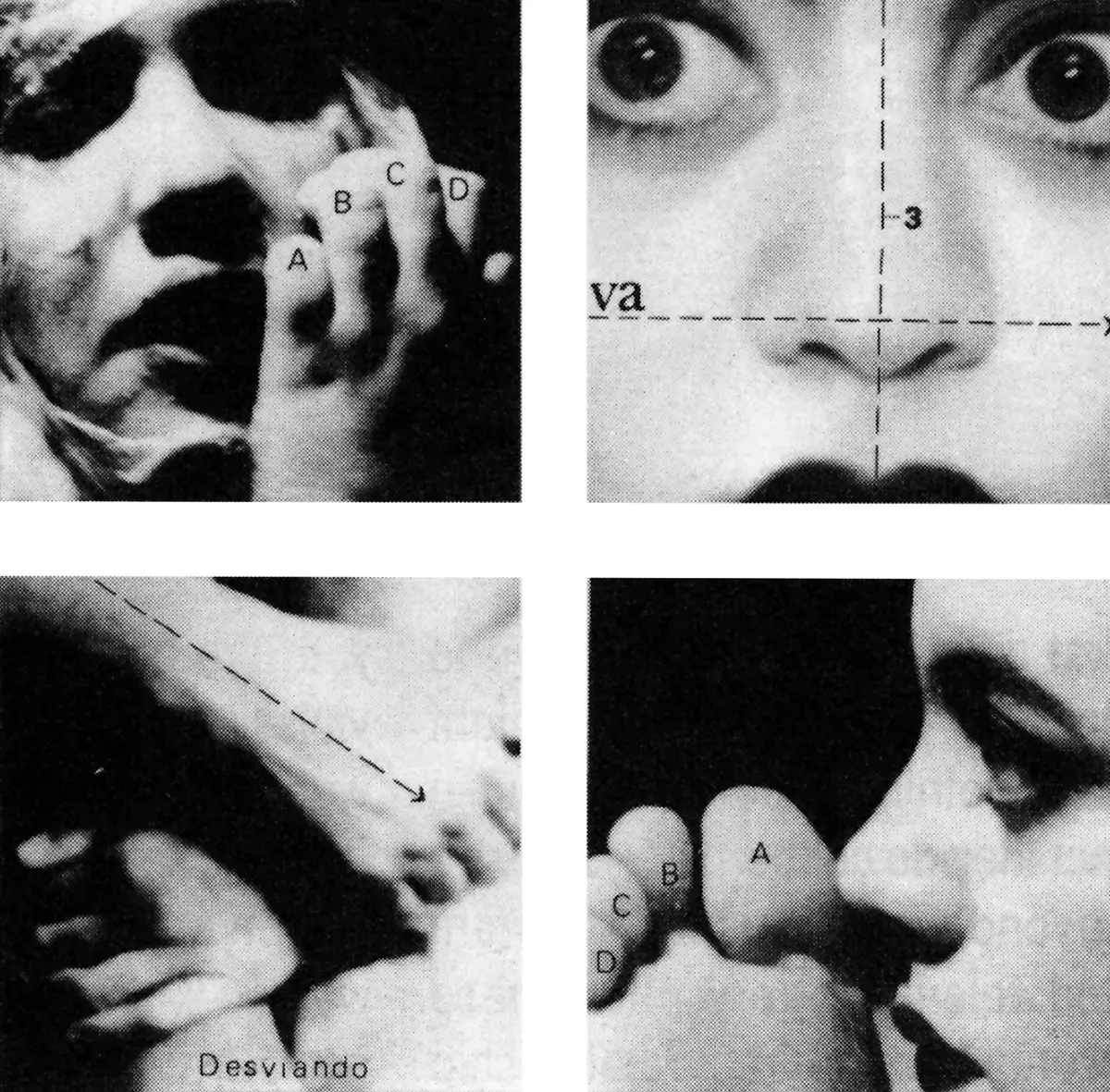
The motivations of Lissette Urquijo are also based on the relationship that she establishes with her own body. She questions herself in G Point through a series of small, impeccable black and white photographs, intervened with letters and measurements. In these images carefully aligned, different angles of the face and body of a woman are captured, making up a series varying between expressive faces evoking the world of silent films: women with enormous eyes, deeply ringed ears and dark lips, alternating with framgents of the body, hands, figures and parts which we cannot identify. These intriguing and very seductive images take us through a series of moods and reflections on the peculiarity of the female body, states of mind experienced by any woman in front of her mirror or the many images of women which fill our daily life.
Another interesting aspect of this group is the common enjoyment shown in sewing, which is used by María Margarita Jiménez (as noted above), as well as by Jaidy Astrid Díaz and Ana María Peláez. Díaz has been presenting in university salons her maps worked with plastic of the city of Bogotá, combining the urban framework, the names of streets and avenues with the sewing pattern outlines to create broad soft surfaces with seams and zips, in which she redefines the concept of the city. For her part, Ana María Peláez confections absurd garments and explores the different associative possibilities of clothes hanging up, which, separated from the body for which they are intended, evoke its different postures.
Rosario López who calls her sculptures Bundles "began her work by reflecting on the concept of the body, fragmenting it and making impressions in latex...recovering stories which can be told with the nose, breasts or mouth..."3 With great clarity, she points out that her current work deals with amorphous bodies, which are the result of a process of investigation on human bodies. Sculptures in which the softness, texture, and malleable nature of the material becomes the protagonist of a constructive activity, and gives birth to “irregular, illogical and absurd forms which go beyond any intellectual kind of reasoning, becoming acts which appeal more to spontaneity and freedom of thought, expression and behavior…."4
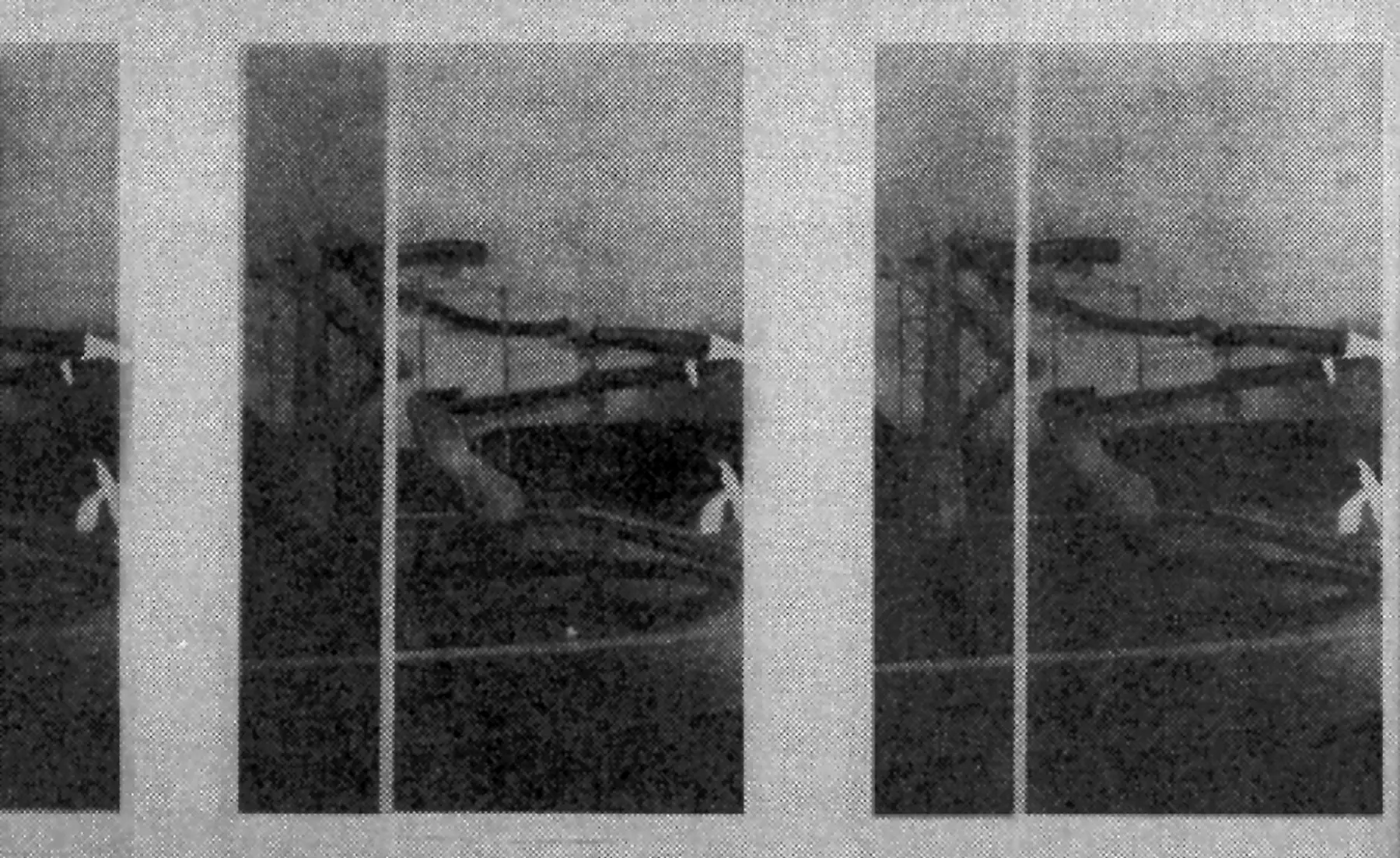
Miguel Böhmer’s concerns focus on the world of the image. In particular, he works with large format images which envelop us like enormous drop curtains, as in the work which he presented at the Matisse Prize Salon in 1994, or like large murals, as in the series presented on this occasion, consisting of a set of heliographs in blue tones repeating the same image, entitled Rigid Aesthetic Progressive Character.
Contaminated provides an opportunity for reflecting on the motives and attitudes in the art that has come out of the universities, through an intimate approach to new ways of perceiving the world. As we have seen, it deals with expressions which are increasingly more particularized and subjective and created through recourse to the “magazines, films, comic strips and fragmented readings"5 which make up the cultural baggage of an extremely active generation with a significant presence in the development of contemporary art in the country. For these reasons, it is extremely important that a reflexion, like the one proposed by Contaminated, arises so as to permit obtainable parameters both for the public in general and for all those of us who, in one way or another are close to this new generation, ways of establishing contact with them, being “contaminated" by them, or at least “connecting" with these new ways of perceiving and living life, which are the ones that originate new forms of artistic activity
NOTES
1. Natalia Gutiérrez, presentation text of the exhibition catalog Contaminados, Bank of the Republic, Bogotá, 1996.
2. María Margarita Jiménez, personal presentation, op.cit.
3. Natalia Gutiérrez, ibid.
4. Rosario López, idem.
5. Natalia Gutiérrez, ibidem.
MARTA RODRÍGUEZ