The persistent disregard of Bolivian artistic production might become the last reserve of the mythical exoticism which still characterizes the view of Latin American art from outside the continent. Bolivia appears as an enigma that is still vulnerable to the conservative reductionism that insists on identifying culture with country, in an attempt to avoid altering the class structures. The announcement of a "Bolivian" exhibition thus generates expectations about confirming the "representation" of a supposed national imagination.
What is interesting is that each of the participants in this show effectively manages to frustrate this desire. The first symptom of disrespect could be seen in the distance that each work maintains towards the other: the artists defend their differences. Thus, heterogeneity acts as a sign, announcing the inevitable frustration of such conservative expectations, and obliges a look which, from the perplexity, may establish an unprejudicial connection with the actual works.
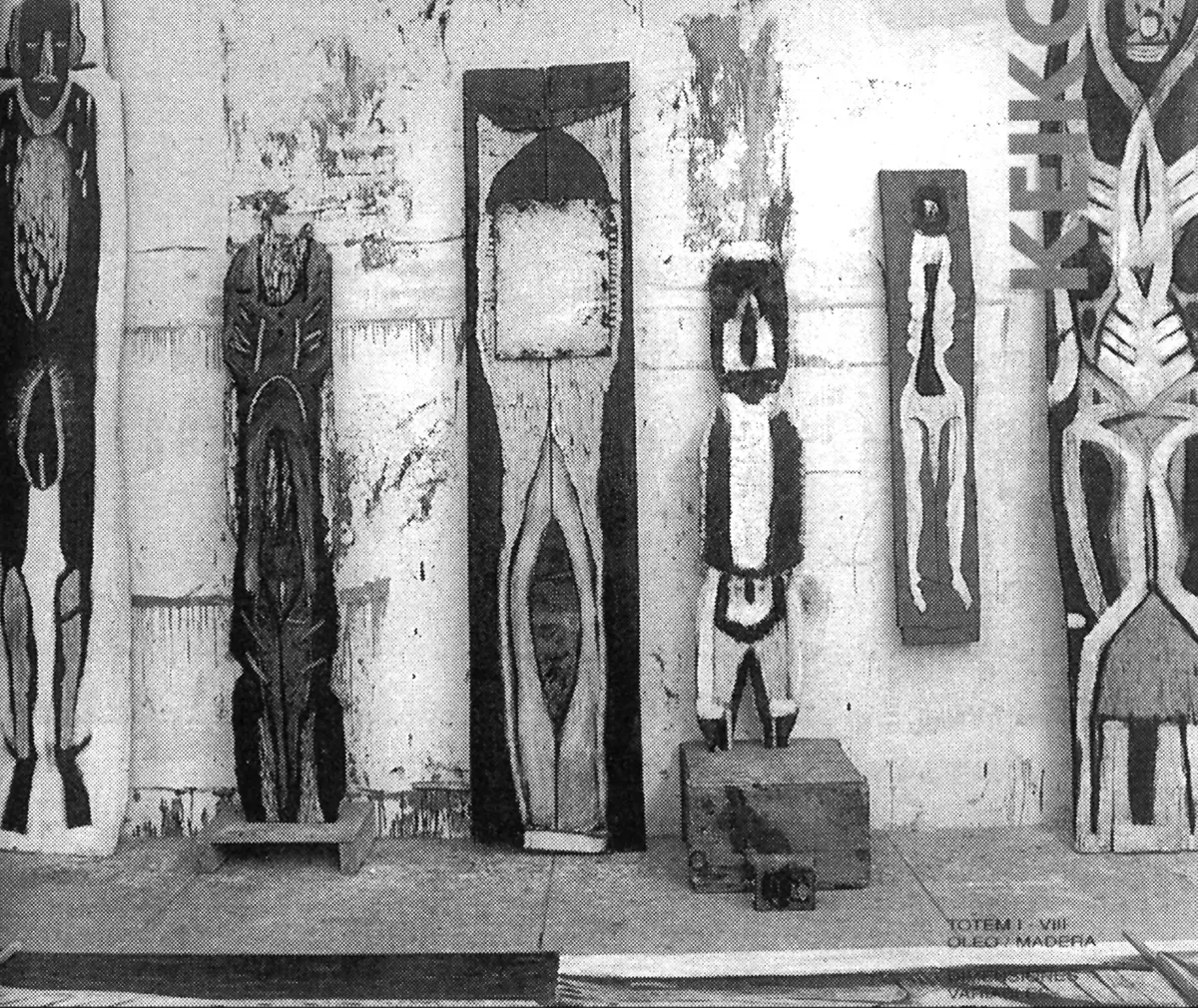
Fernando Casas, Keiko González, Guiomar Mesa, Ejti Stih, Sol Mateo, Gaston Ugalde, and Roberto Valcarcel each develop their own proposals, so that instead of a group show, the exhibition can be viewed in fact as seven individual exhibits. The works include all kinds of registers and techniques, showing a multiplicity of trends that have characterized contemporary art. There is painting (Casas, Mesas, Stih), mixed media applied to objectual works (Mateo, González), as well as installations (Ugalde, Valcarcel). There is also the legacy of hyperrealism, early German expressionism, neo-figuration, and conceptualism in all their variants. Particularly significant is the attention given by all the artists to montage, which reflects their awareness of the role played by the exhibition space, even in the case of works hung on the wall.
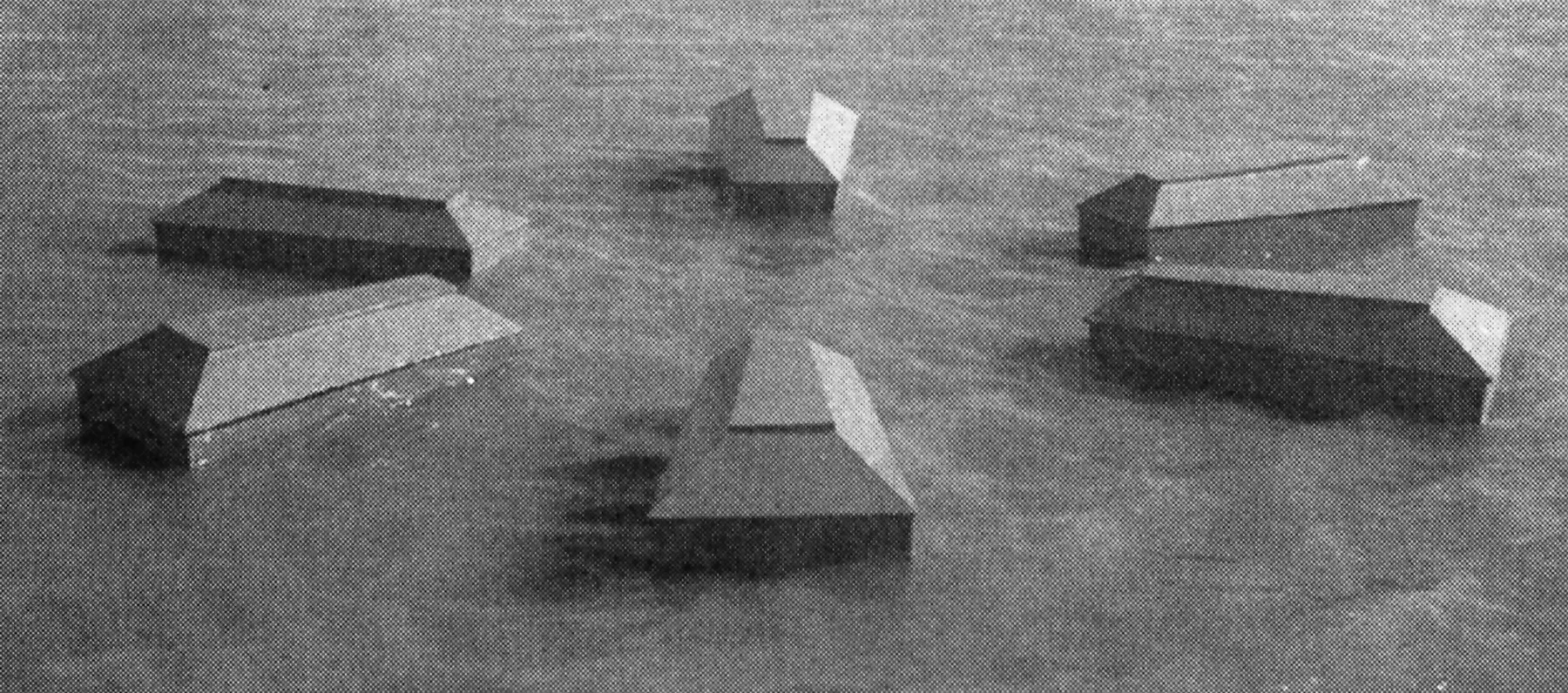
Over and above the differences in choice and procedure, it must be said that not all the works are equally successful in terms of resolution and consistency. This perhaps may be the most conflicting aspect when it comes to legitimating the curating of the show. Any categorization of the works might appear to be arbitrary and open to discussion, but it is clear that the work of Roberto Valcarcel merits special attention. The career of this artist has placed him in a fundamental position as regards the development of a critical and experimental kind of art in Bolivia. Valcarcel’s montage — which consists of seven coffins, each with a color of the rainbow, and arranged in circular form in the middle of the room— is clearly the most resolute and coherent piece in the show.
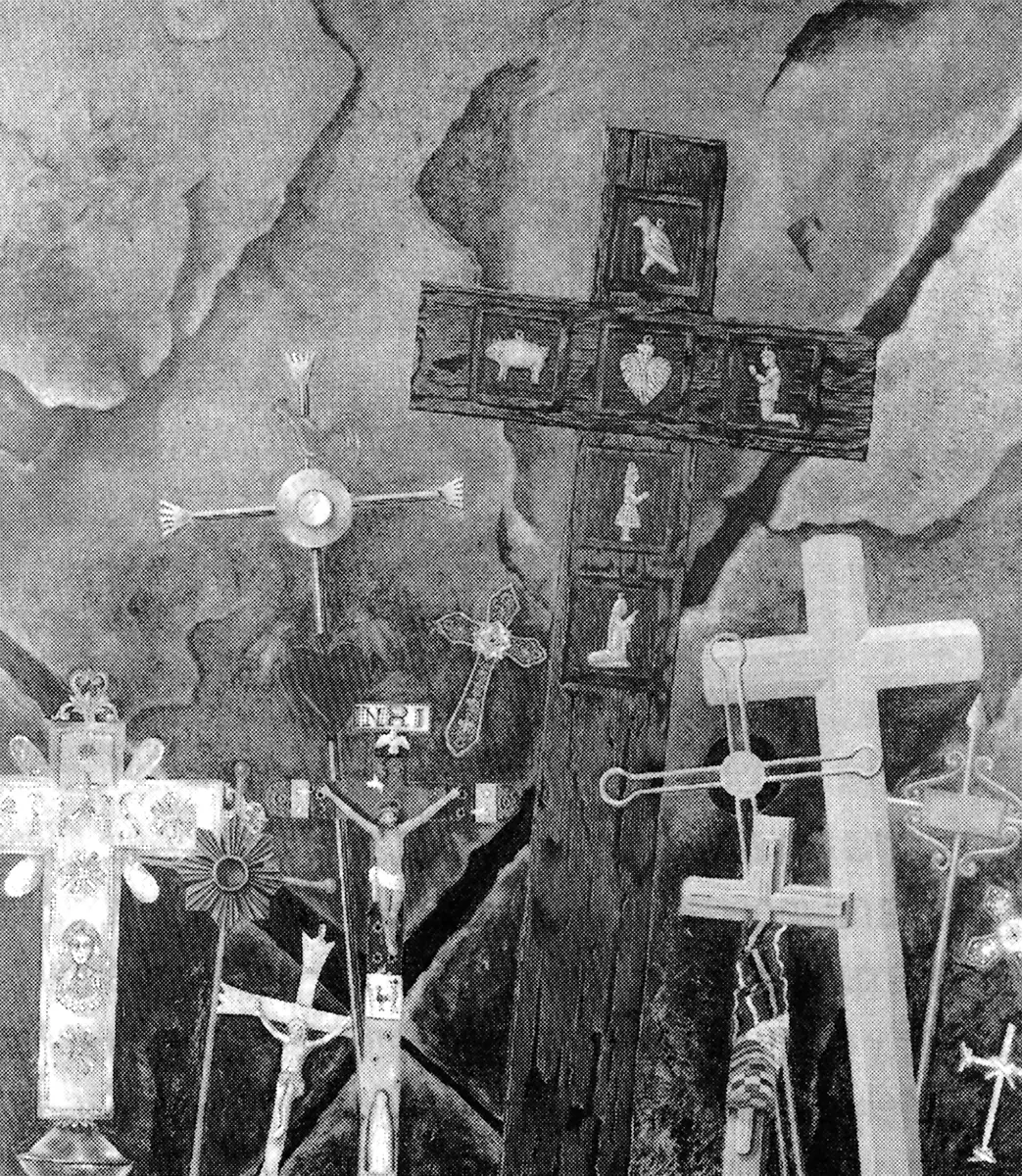
The diversity reflected in the exhibition, each time, runs the risk of resulting in a lack of persuasion, which, being unable to offer an option, leaves no other choice than the official one. However, it is in this negative nationalist expectation where the cross-point is produced to achieve a kind of "delicate balance.” It is this "no" uttered with enough force as to keep the show afloat. However, the desire to break with the traditional folkloric stereotype — whether in terms of Andean landscape, socialist realism or the ethnic problem— cannot help but quote what it denies. Such references appear like remnants, ruins, which document a catastrophe. They include the indigenous element, popular religiosity, social drama, the features of a landscape laden with emotional connotations, and military dictatorships. This entire arsenal of “Bolivian characteristics” has been subjected in the show to a critical onslaught and then recuperated as a fragment functioning in the individual contexts created by the internal logic of each work.
The discourse that the exhibition puts into circulation concerns precisely the senseless verification of establishing identity in terms of a previously categorized territorial concept. Indeed, these seven Bolivian artists move with an international circuit and have assimilated intelligently the crossing and overlapping of codes within their creative work.
The exhibition was presented a few months ago at the Museum of Contemporary Art in Santiago. The works have now returned to Bolivia, and plans are underway for their presentation in Argentina, Brazil, Germany, and the Netherlands.
CATALINA MENA