With this third edition, the National Brewery Pictorial Art Biennial consolidates its position as Panama’s most important national painting competition. It is openly the only exhibition that offers an overview, every two years, of what many of the best, and mostly young, artists are creating, often in the form of very innovative works. The other event of its kind, the annual show sponsored by the State, does not have the drawing power to achieve such solid results, for a variety of reasons, including the uneven nature of the jury and the poor organization of the event. The only other show of comparable stature would seem to be the Xerox competition of the 1970s, which unfortunately did not last out the decade.
Sponsored by the National Brewery, the Biennial invites Panamanian artists and foreign residents to participate with one or two works, in freestyle and supports, which must not exceed 2 x 2 meters in size. The event is supported by the Museum of Contemporary Art, where the selected works will be exhibited for a month following the prize-awarding ceremony, the third edition of which was held on 27 June last.
The organization of the Biennial is the responsibility of two Panamanians, Mónica Kupfer and Irene Escoffery, who have already begun to prepare the next edition even before finishing the previous one. Indeed, the success of the event is certainly due to the intelligent execution of such basic tasks as maintaining constant contacts with the artists to keep them informed and to encourage their participation, the timely distribution of information in the mass media, the proper montage of the show, the preparation of a catalog which is sent out to major international museums and libraries and above all, the invitation of prestigious jury members from the world of the plastic arts.
This year, as usual, the international jury was made up of three leading personalities from the visual arts - Neal Benezra, chief curator of the Hirshhorn Museum and Sculpture Garden, Washington; Cristina Gálvez Guzzy, director of the Rufino Tamayo Museum of Contemporary Art in Mexico City, who is also responsible for organizing the prestigious Rufino Tamayo Biennial, and the Argentinian painter Antonio Seguí.
The amount of the acquisition prizes was increased this year, and the winner of the First Prize was offered an all-expenses-paid week-long trip to Mexico City. But the most significant change in this edition was the number of works selected. The jury adopted a much more rigorous selection criterion than in the past, and of the 315 participating works, 44 were selected (compared to 104 selected from a total of 200 presented four years ago, and 84 selected out of a total of 301 participants in 1994). This not only resulted in a better exhibition in terms of the quality of the works and the space allocated to each piece, but allowed for greater coherence in the montage and facilitated the appreciation of the show as a whole, which offered the visitor a relatively accurate view of the current state of painting in the country.
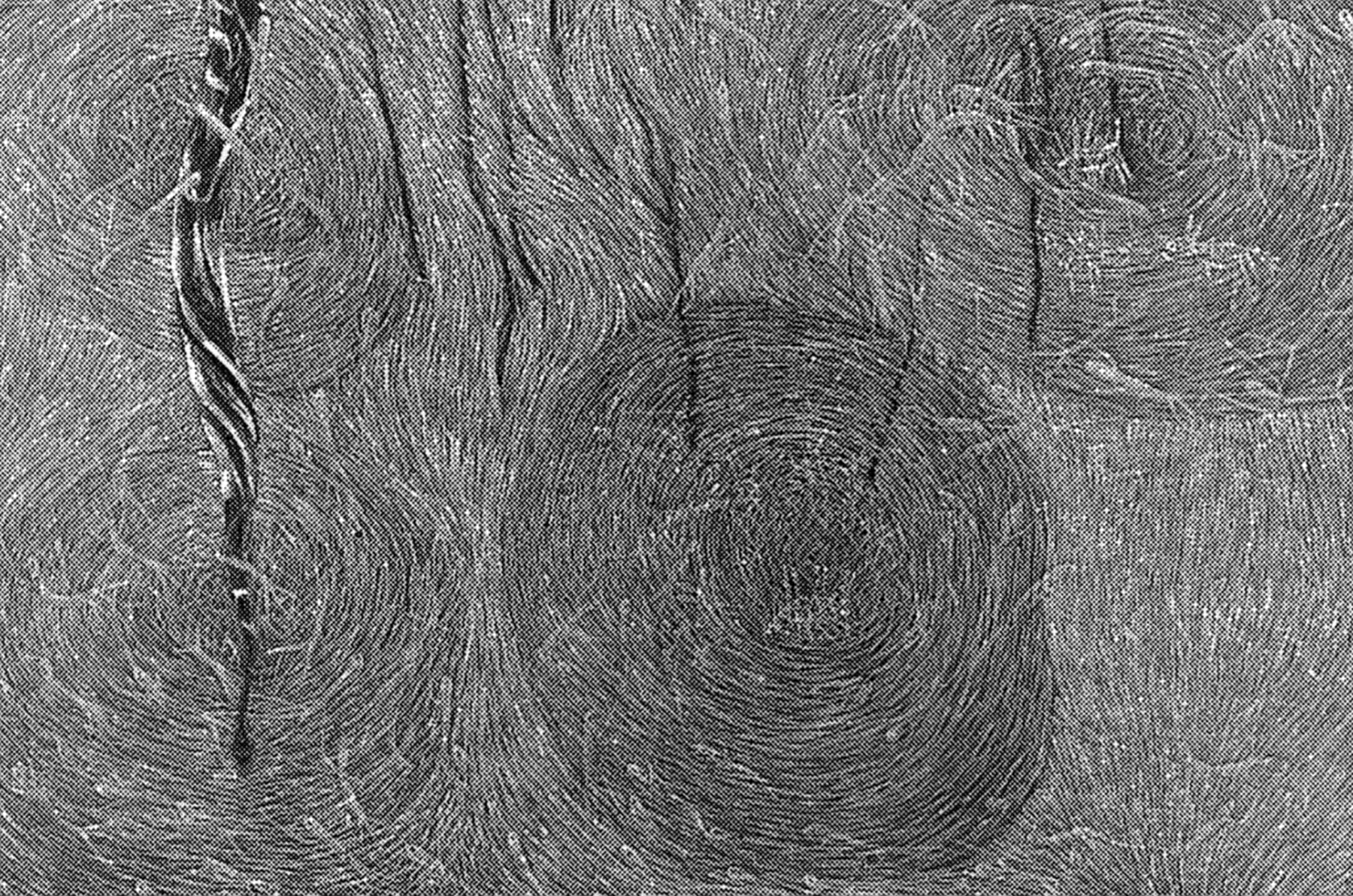
The Panamanian artist Roosevelt Díaz (1963), who won an honorary mention at the second edition of the Biennial, who this year won the First Prize with his Nest of Creatures, a large format oil work of sober greys and ochers, the meticulous dense composition of which is made up of swarms of insistent brush strokes with hundreds of little lizards whirling around in a hypnotic, endless dance. The prize was a well-deserved acknowledgement of the artist’s serious and tenacious dedication to his art.
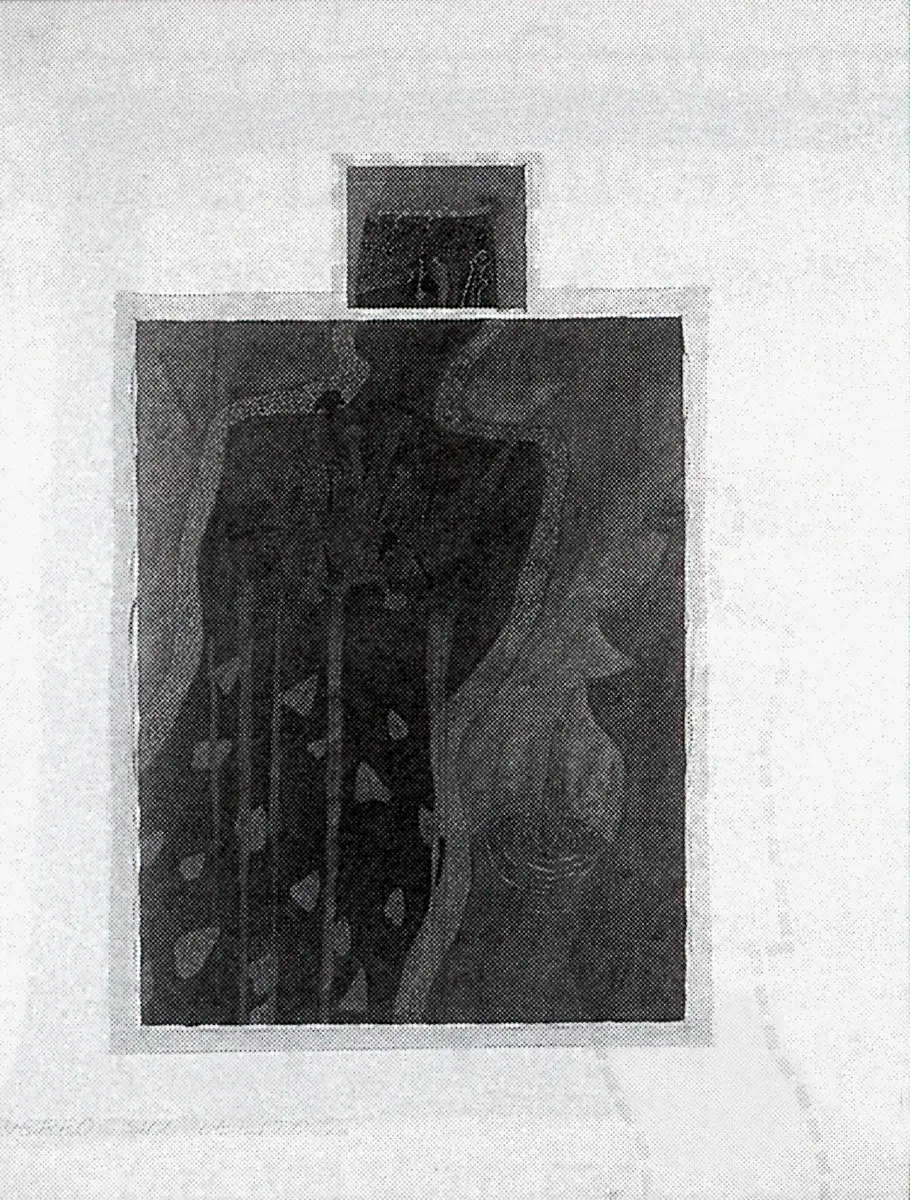
Another painter who has shown consistent development is the Ecuadorian Fernando Toledo (1962), winner of the Second Prize (and winner of the First Prize two years ago), with a work entitled Body without Offence?, a diptych of somber colors and fluid forms, the strength of which lies in the virtuoso interplay of elements from the artist’s personal iconography. The innovative support immediately catches our eye: a small canvas mounted at the top of a larger one, both without frames or stretchers and held together with pieces of adhesive tape, which the artist also uses to outline a figure on the wall, who seems to have sprung out of the picture.
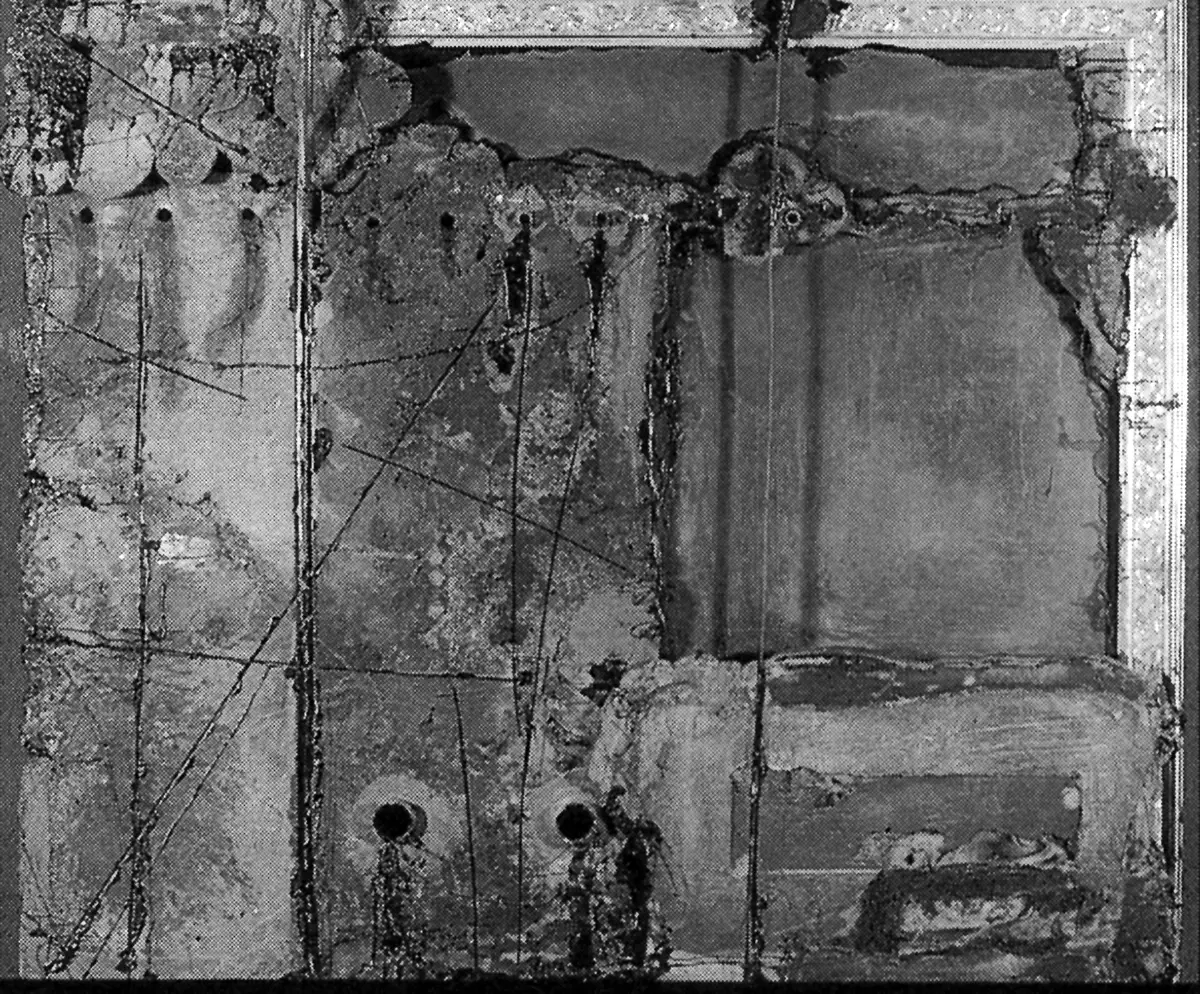
Emilio Torres (1944) won the Third Prize with his Impossible Architecture of a Landscape, a picture which was impressive in its technique and arrangement, and with a marked contrast in the use of its elements. A large gilt frame appears almost buried by enormous plates with tubes and wires that look like pieces of walls eaten away by time and use. In this work, which clearly refers to the contemporary city, the Panamanian artist—a set-designer with a television channel—is clearly pursuing the course he has set over almost two decades of experimentation, including works of a conceptual, abstract, and textual kind.
This was the first time that the jury decided to award a Special Mention, which went to a work entitled Conversation between Hypocrites by the United States artist Lezlie Milson (1958): it consists of a polyptych composed of eleven slender vertical pieces in wood which the artist cut, sculpted and fixed with nails and rope to create a variety of protuberances and dimensions, subsequently covered with canvases painted bright red.
The jury observed to the press that the decisive criterion in awarding the prizes was the excellence of the works, although it had also given special attention to non-conventional proposals, as in the cases of Toledo, Torres, and Milson. The honorary mentions, awarded to works by five Panamanian artists, seemed to suggest that the judges also wanted to single out the best representatives of certain classical genres. Landscape was thus represented by The Light and Smell of the Dogrose, by José Inocente Duarte (1961), a dense tropical scene presented in close up; the still life genre appeared in Summer Tea by David Solís (1953), in which the artist managed to express the same delicate and mysterious lyricism characteristic of his oilworks, with unusual figures (one of his pictures won the Second Prize two years ago), with less recourse to fantasy and a greater mastery of the work’s complex interplay of form. Two abstract pictures with hints of figuration also received mentions this year: Crossword: Memory of an Incident, by Guillermo Mezza (1953), an oilwork of vibrant and explosive dynamism, and Absence by Luis Aguilar Olarciregui (1950), an acrylic with austere but contrasting forms that gave the picture considerable depth and enigmatic resonance, and yet which marked an admirable break with his earlier work. Finally, Silfrido Ibarra (1959) also produced a radical change in his painting in a work entitled Vulgar Nocturne, a cryptic circus scene plunged in a vast, undefined space.
Six of the prize-winners this year had already won awards at previous editions. It is also worth mentioning two artists whose works—selected this time and prize-winners at the last edition—are characterized by considerable strength, originality, and promise: Victoria Suescum (1961) and Ana Elena Garuz (1971). Their participation confirms that the Biennial does indeed reflect the most novel facets of the creative development of magnificent young painters. Another case worth mentioning is that of Carlos Martínez-Uliten (1956), a doctor by profession who lives in the provinces and whose work, selected at the three previous editions, shows a clear development in the mastery of his ludic, geometrical language.
The exhibition of the third edition of the National Brewery Pictorial Art Biennial confirmed more clearly than ever that there are few good painters and even fewer very good ones. The magnificent montage of the show in each room was of a high aesthetic level, although the public would not have missed much if at least fifteen of the works had been eliminated. Panama is a small country, but it could achieve higher levels of quality if more opportunities were available for showing and appreciating good art. The Biennial is performing an excellent task in this respect, and is a good thermometer of the current state of painting in the country. A satisfactory temperature will be achieved only if significant events are held during the two years separating each edition of this Biennial.
ADRIENNE SAMOS