
Some months have passed since Art 1996 Chicago: The Navy Pier Show, and yet the striking impression still remains. This year marked the fourth for Thomas Blackman and associates, and their second supremacy in Chicago. The dedicated Blackman team has converted Chicago into the site of the most important international airfare in the United States, and among the most celebrated worldwide. One only needs to perceive the energy throughout the fair —all types of commercial, intellectual, and social exchange could be witnessed in the aisles of the Festival Hall. This art fair allowed curators to be seduced by artists, artists to meet dealers, collectors to fall in love with works, and most of all, the audience to be exposed to the tremendous plurality of contemporary art. Approximately 30.000 people traveled to the fair, which for the majority meant an encounter with new visual experiences.
Although the romantic atmosphere of the tent is no longer possible, exhibitors welcomed a better sense of security for their valuable displays. Navy Pier has its own aura, it fuses elements of Chicago's history with the new, contemporary renovations, which created a more optimistic look toward the future, without disregarding tradition. In this case, beginning with the World’s Columbian Exposition of 1893 and followed by the 17 years of art fair tradition in Chicago, the city continues to build its history of artistic exchange.
The completed renovations at Navy Pier provided one-third more space for exhibitors, which meant 178 galleries, from 21 countries, in a space of 165,000 ft. 2, allowing wider aisles than the previous year, allowing easier mobility as well as visibility of the works of art. According to organizer Liana Vardy, the Blackman team feels confident about their space distribution, which will allow them to be more efficient and organized for the following fairs. There appears to be a renewed confidence in the fair and the market. Dealers are beginning to understand and recognize the impact of the fair on their gallery and the careers of their artists. Gallerists applauded the exceptional organization of the fair as well as the benefits of a $ 400,000 advertising budget. Consequently, the heightened reputation of the art fair attracted the strongest group of dealers in the past decade. The committee, consisting of 16 gallerists, tried to keep a balance between more established galleries and younger ones, without overlooking the quality of the proposed exhibitions.
The market displayed a healthy pulse. Although the fair means more than sales, at the end of it all, the commercial transactions are what permit the fair to propagate. There were buyers from all over the country, primarily from the Midwest. Established North American and British artists seemed to have sold the most, which is not surprising in the Chicago market. For instance, Waddington sold out their Barry Flanagan sculptures. However, there was an increasing interest in lesser-known artists from Chicago, some younger and some from abroad.
The magnitude of the art fair was evident in the museum quality that was displayed, from the modernist masters to the more rebellious avant-garde contemporary artists. Gallery Marwan Hoss of Paris truly gave the Chicago audience the privilege to see an entire wall exhibit of works by Joaquín Torres-García, ranging from his canonical works to the quite rare deviations of his style. Such an exhibit is rare outside of a museum setting. Theo Waddington displayed the virtuosos of modernism such as André Derain, Henri Matisse, Jean Dubuffet, Pablo Picasso, Raoul Dufy, among many other familiar names.
Art History was well represented by the fragment of Joseph Beuys’s Pack of 1969, the most important installation-sculpture of Beuys's career, which consisted of twenty sleds issuing out of the back of a Volkswagen bus. The Galleria Blu of Milan exhibited one sled from the pack, with Beuys' trademark material, felt and fat, which became part of his personal iconography. For Beuys, these materials evoked his rescue in 1943, during World War II, from an airplane crash, and became emblems of urgency, survival, and healing. The Connaught Brown Gallery from London exhibited a most remarkable Lucian Freud female portrait, which reflects the artist’s psychological exploration of the human form. In this case, the spectator is placed in the uncomfortable position of intruding on the intimate emotional mood of the subject. Daniel Burén (b. 1938) is an artist rarely exhibited at commercial art fairs due to his anti-commerce stance. However, the Pietro Sparta Gallery of Chagny, France, graced the fair with a Burén installation. Covering an entire wall with Burén’s infamous stripes, the Gallery reminded the viewers that art is not about a commodity but rather what lies within the concept. Burén’s politically charged work aims at appropriation. By placing his own language into familiar and recognizable sites, the artist rechannels its meaning, taking control of its message. In this case, Burén’s installation appropriated the gallery wall, and thus, a fraction of the fair into his own collection of works, the fair itself becomes a "Burén."
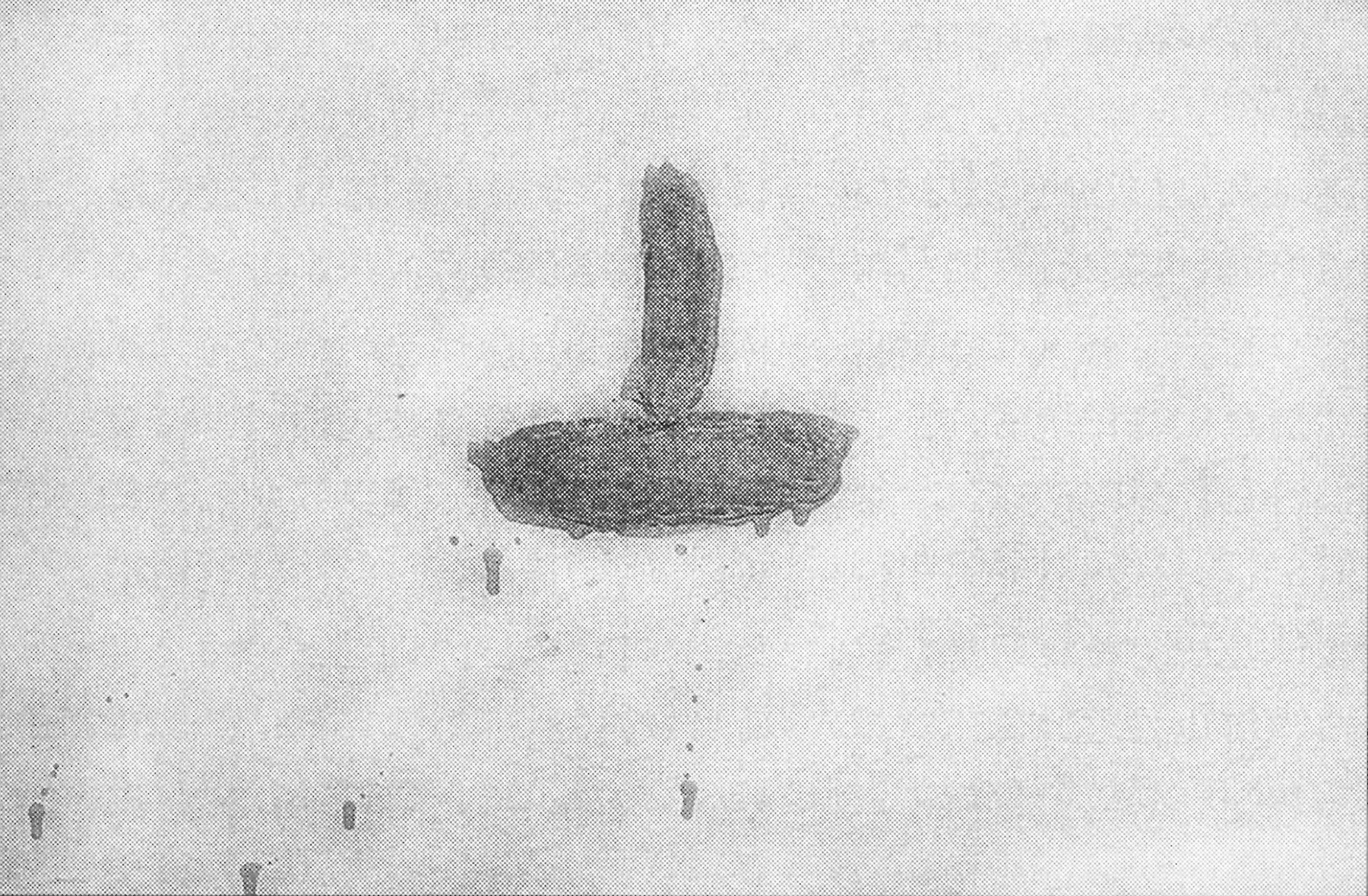
Another conceptual artist that could not be ignored is Rebecca Horn. The Galerie de Paris exhibited Le Chant du Grillon, 1995, a beautiful mechanical sculpture where two combs are scratched to emulate the sound of a cricket. Although impeccably assembled and charmingly accurate, one cannot help but feel a little disturbed at the replacement of nature by the machine. The fact that the small Horn sculpture seemed hidden in the corner of the gallery gave the spectator an enchanting sense of discovery. An equally pleasant surprise came from a small Antoni Tápies at the Anderson Gallery of Buffalo, New York. The mixed media painting by Tàpies, Tot Blanc, of 1961, in its own elegance and simplicity, embraces the spirituality of Zen Buddhism, which so profoundly inspired the artist. Both the Horn sculpture and the Tàpies painting were examples of the treasures to be "discovered” throughout the fair.
The market for Latin American artists in Chicago appears to solidify every year. This year, galleries such as OMR, Ramis Barquet, Jacob Karpio, Barbara Farber, and Gallery Der Brücke had significant sales. The Felix Gallery practically sold out its show. This is significant since this was the only Latin American gallery to have a one-man show of Miguel Sanoja. This reflects the Chicago market’s interest in newer possibilities and may encourage other Latin American galleries to follow in the same approach. The romantic photo-montages of photographer Luis González Palma this year, shown at the Schneider Gallery, also seem to be attracting a vast audience of collectors in the American Midwest.
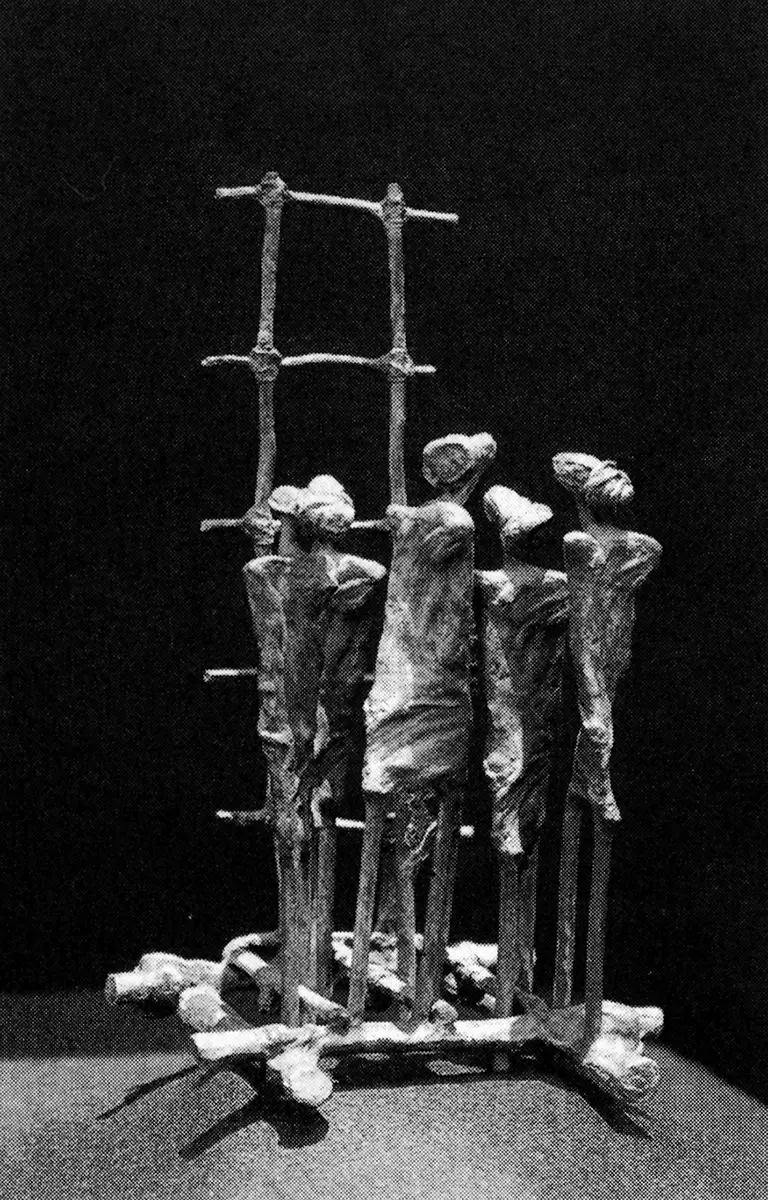
The strength of the market for Latin American works is indicative of the excellence of the works themselves. Art Chicago is becoming an important place for the serious Latin American art collector. There was an exposure to some of the strongest and most influential artists in Latin America today. For instance, an excellent assembled sculpture by Beatriz Salcedo could be seen at Rhona Hoffman’s gallery in Chicago. The stacked shirts pierced by a skewer articulate the absence of the bodies, which simultaneously evoke the violence inflicted upon them. Beatriz Salcedo’s work has served to transmit to an international audience the anguish of Colombian society due to the ongoing historical violence. Jose Bedia’s Recuerdo del viaje (1996), exhibited by the Ramis Barquet Gallery, intensifies his personal mythologies, which characterized his search for the spiritual and magical in the peripheral cultures of the Americas. The monumental scale is only symptomatic of his ambitious aim of articulating a coherent language that is both identifiable and illuminating. On the other hand, Guillermo Kuitca in El mar dulce (1992), at the Barbara Farber Gallery, seems to be a comment on the lack of spirituality. The stacked beds, combined with the irony of the title, create a disturbing setting where the body, although absent, seems to be estranged from its environment. This is not a utopian vision of the human condition, and it acts as a wake-up call for a society that alienates its members from life. It is clear that the artists have their own strong agendas present in their work, with the diversity in styles mirroring the plurality of the Americas in their complex utopic, social, and political quests.
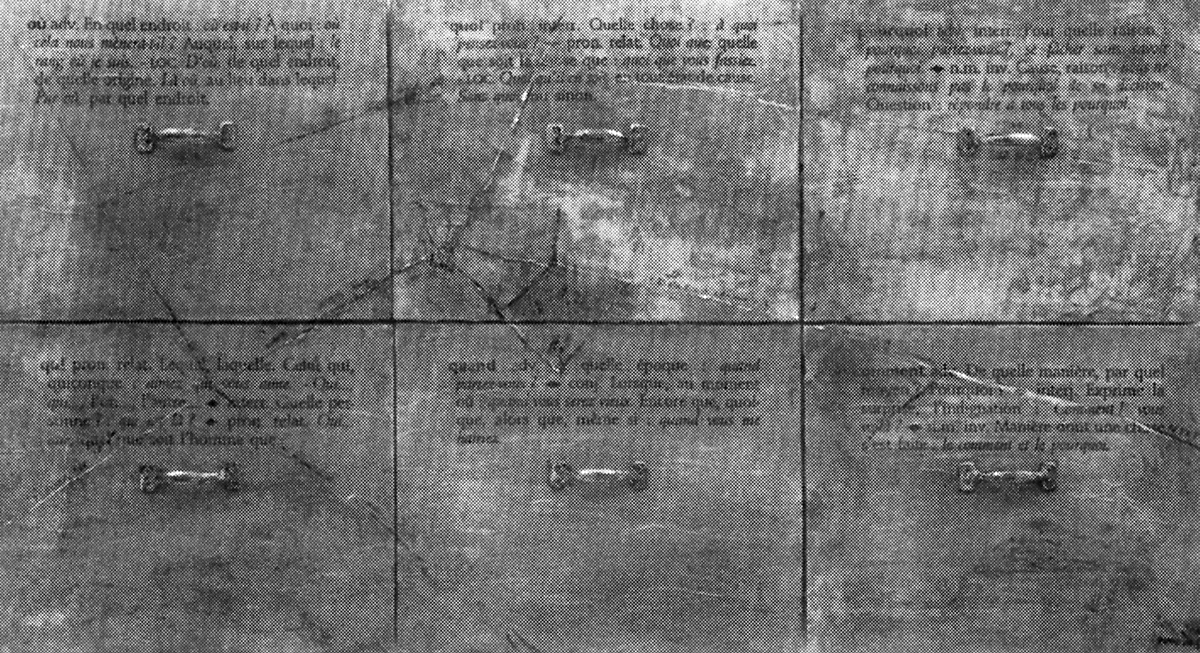
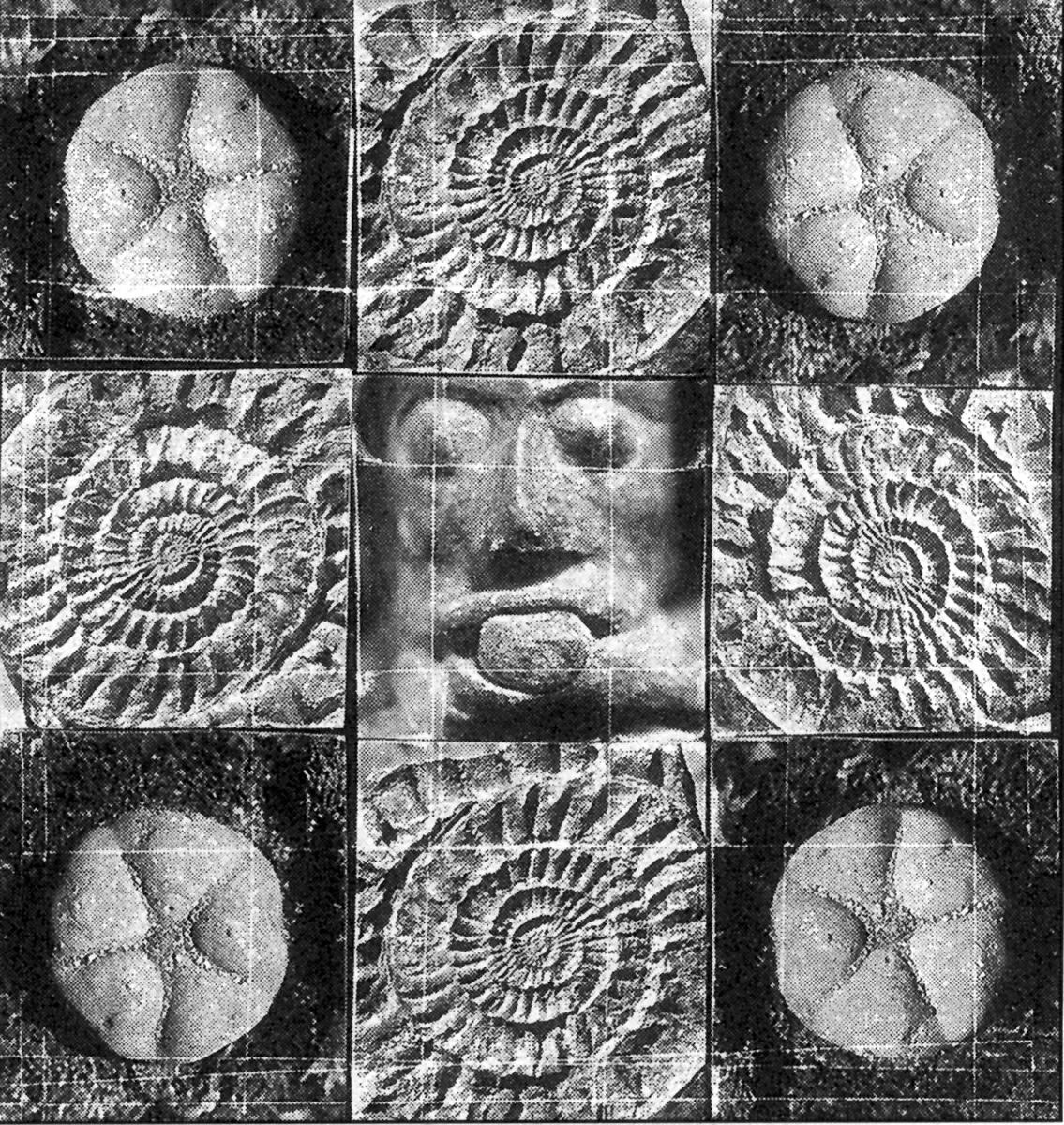
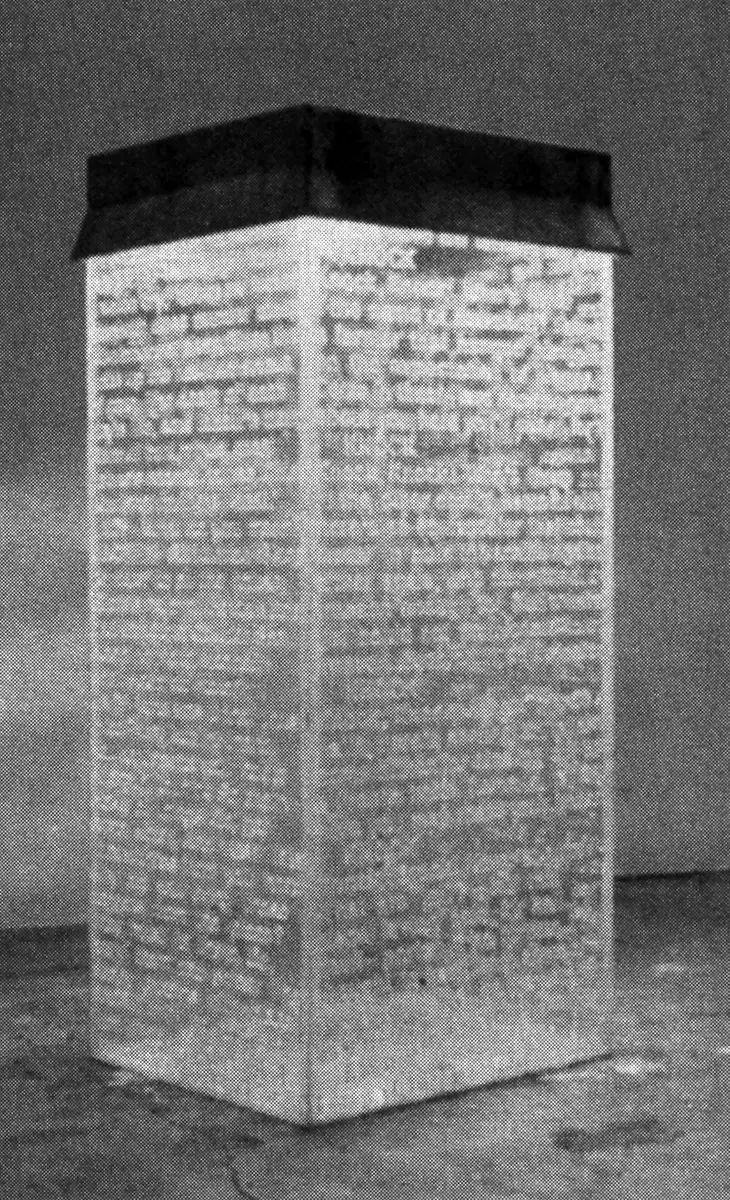
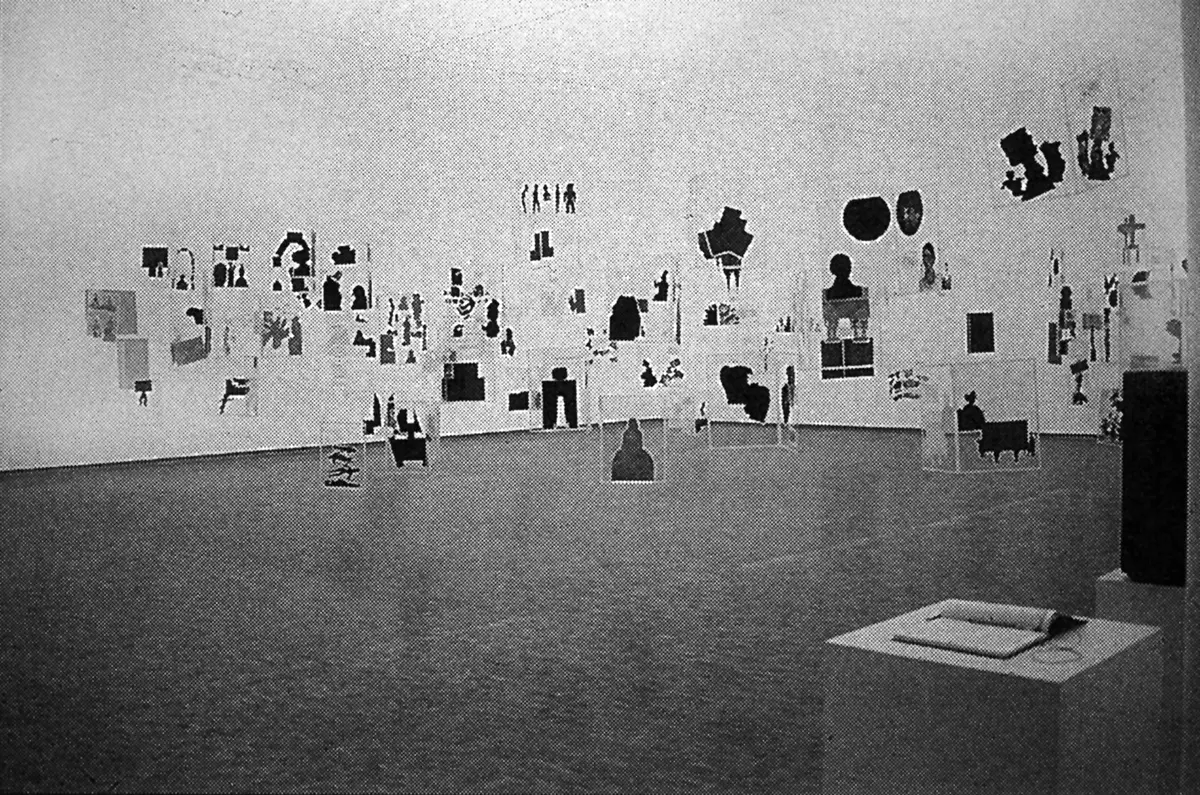
The themes of memory and history seemed to be quite strong in the works of many artists exhibited. Among such artists is photographer Pablo Ortiz Monasterio of Mexico City, represented by the OMR Gallery. His manipulated silver and gelatin print Cinco puntos cardinales centers an ancient Aztec sculpture surrounded by fossils, commenting on the passage of time through nature and civilization. The work speaks of a petrified past, but its contemporary media reminds the viewer of its existence in the present. At the Der Brücke Gallery, the Argentinian artist Carlos Gallardo successfully asserted his preoccupation with memory in L' Oubli (1995), where he asks the questions Where, What, Why, Who, When, How? Each question is divided into a panel that contains a handle. The work suggests that the compartments can be opened for answers, and yet this option is not a possibility. The work seems hazy and worn, like our memory, and yet it encourages the viewer to remember, perhaps evoking a historical memory that may painfully unite his compatriots, perhaps the memory of Argentina herself from the perspective of an artist in exile. An impressive installation entitled +200/ -200 Even at the Marc Pottier Gallery, by the Argentinian artist Osvaldo Romberg, in a radically different manner, also treats the subject of historical memory. In this case, the artist uses materials such as acetate and Scotch tape to narrate a personalized "history of the world." Romberg stresses both the fragility of history and the subjectivity of its narration. By means of color transparencies through which the viewer can have an entirely different view of the work, the artist allows the work of art to act as a transformer depending on the position of the viewer, as does the narrative of history. A homage to Duchamp in its title and transportable box, this traveling installation, which will simultaneously be exhibited in sixteen different galleries and museums worldwide, was one of the most challenging and compelling exhibitions this year.
I have merely sampled a few of the thousands of works that make this fair one of the most pluralistic and valuable conglomerations of artistic production today. The health of the fair is reliant not only on the strong economy as on the devotion of the organizers, dealers, and audience.
I only hope to encourage viewers to participate in these immense exhibitions that provide a forum of exchange unparalleled elsewhere.
ANA MARÍA REYES