Of all the elements that made up Distemper: Dissonant Themes in the Art of the 1990s, the Hirshhorn’s review of the state of contemporary art, perhaps the most emblematic was the omnipresent admonitions made against touching the works on display. Such constant reminders in the already hyper-protective museum environment underlined the fragility of the relationships between contemporary artists and their audience —a situation that may have as much to do with the pervasive distemper the exhibit documents as with any other social phenomenon. Fortunately, the show’s best work demonstrates a much healthier engagement between artist and audience.
Mounting an exhibit that seeks to define the dominant spirit of contemporary art is always a daunting task. Nevertheless, the Hirshhorn’s curators, Neal Benezra and Olga Viso, organized a show that, despite its depressing name, was both cogent and encouraging. The ten mid-career artists selected for the exhibit included artists from outside Europe and Anglo-America. It demonstrates that the intentionally exclusive definition of what might constitute “important” art is beginning to grow. That the work on display is, for the most part, rather traditional painting and sculpture shows, and that an expanded definition of art does not necessarily involve embracing a rush into experimentation.
Unlike the artists whom the Hirshhorn selected for Culture and Commentary, its review of art from the 1980s, these artists do not seem much interested in sneering at their audience. Three of the show’s artists —Argentine Guillermo Kuitca, Colombian Doris Salcedo, and German Thomas Schutte— have taken the even more radical step of turning their backs on the supposed imperatives of postmodernism and dared to address an audience directly through their creations instead of through explanatory labels. Not surprisingly, their work overshadowed that of Miroslaw Batka, Marlene Dumas, Robert Gober, Mona Hatoum, Mike Kelly, Charles Ray, and Rachel Whiteread, the show’s other participants.
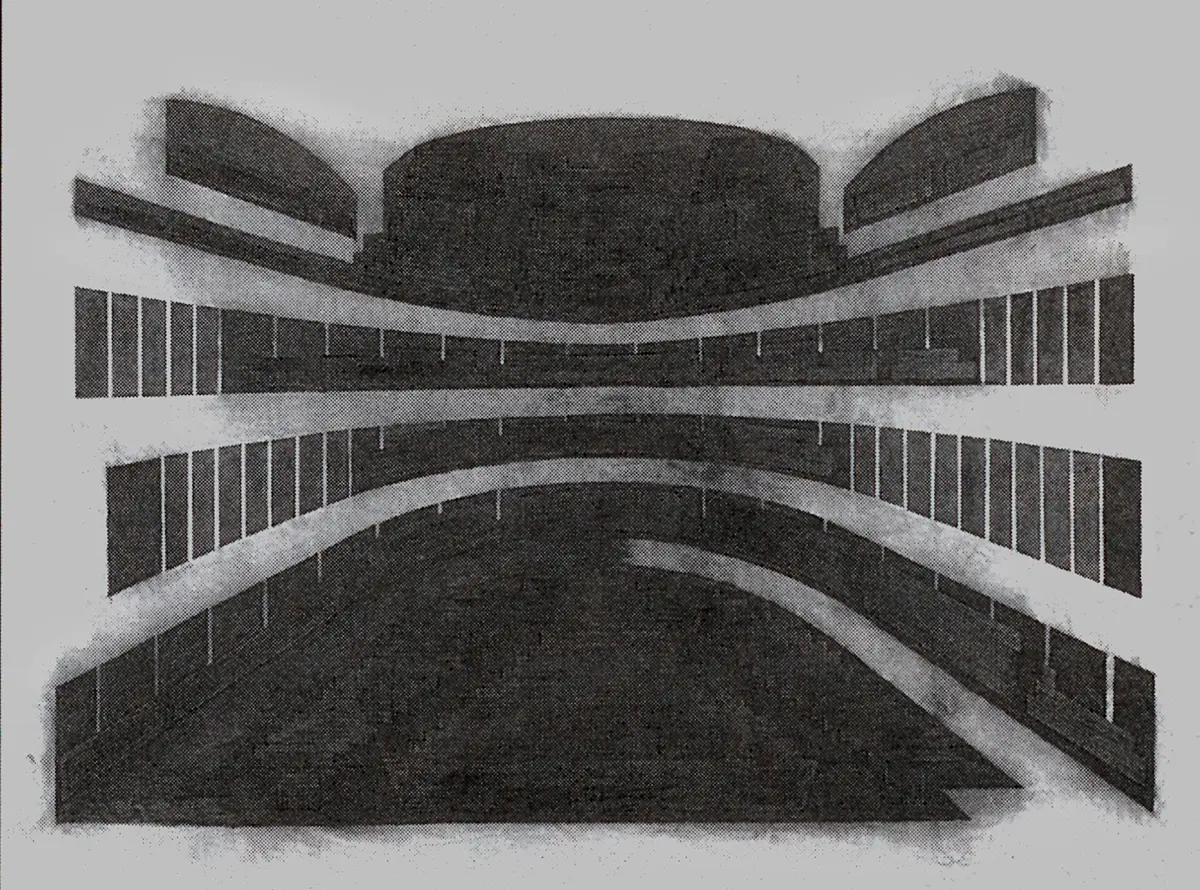
Kuitca was, without question, the best painter in the exhibit. On a formal level, his handling of paint, particularly in the smoky atmospheres of the eerily unpopulated rooms of two untitled works from 1994 and 1995, is practiced and secure. The chalk drawing of a theater interior in another untitled work from 1995 demonstrates a carefully trained hand. His compositions are similarly accomplished. By bending a complex genealogical chart into a circle in People on Fire (1993), he transformed an otherwise ordinary graph into an entire cosmos, but a cosmos with an empty center.
As satisfying as his works are formally, their conceptual strength makes them truly memorable. In paintings like Mozart de Ponte I (1995), Kuitca places the viewer firmly within the ambit of the composition. He sets the viewer center stage in a generic theater, looking out into an elegant space populated with nothing more than numbered seats. The relationship between composer and libretist that inspired the work's title emphasizes the spectator’s role. The painting’s message is necessarily incomplete without a viewer’s collaboration. Kuitca’s rooms filled with nothing more than furniture produce a similar sense of dislocation, turning the viewer into a solitary observer in a setting that provides the certainty of an unknowable past while suggesting an ambiguous future.
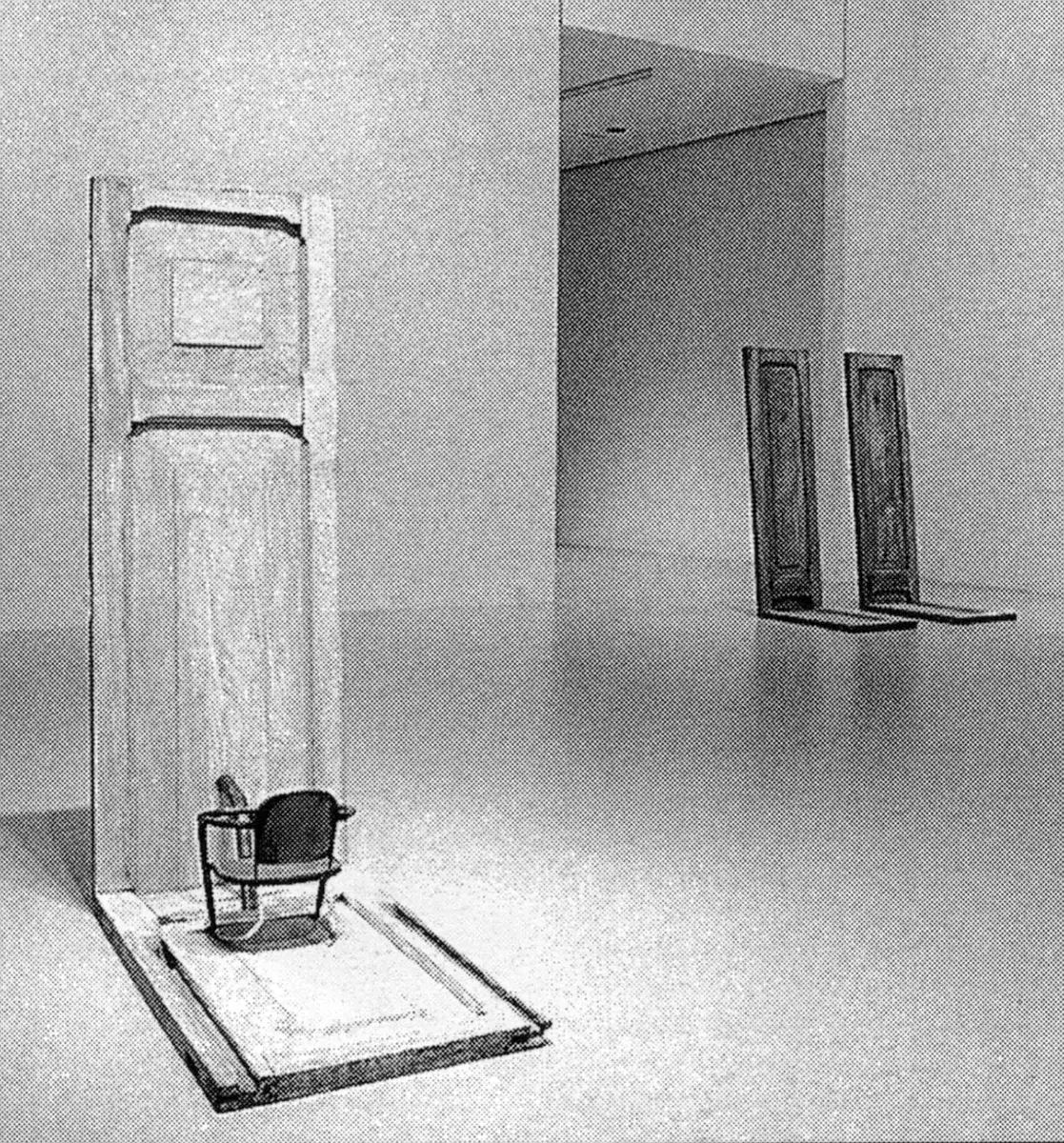
Salcedo’s work is more poetic, but no more reassuring. Severed by a physically imposing door, the remnants of a chair still guarding the lacy remnants of a wedding dress invoke the complex emotions associated with the loss of a loved one in La Casa Viuda I (The Widowed House I). The metal seat of a child’s cart set into an ominously angled door of La Casa Viuda VI provides the show’s most chilling moment. The sudden realization that the tiny chair is supported by a pair of ribs turns the saddening loss of childhood into terror of tragic proportions. Like Kuitca's paintings, Salcedo’s sculptural installations are intellectually stimulating, but they are also emotionally evocative. They engage the viewer’s heart and mind, resulting in works that communicate truths that transcend the specifics of time and place.
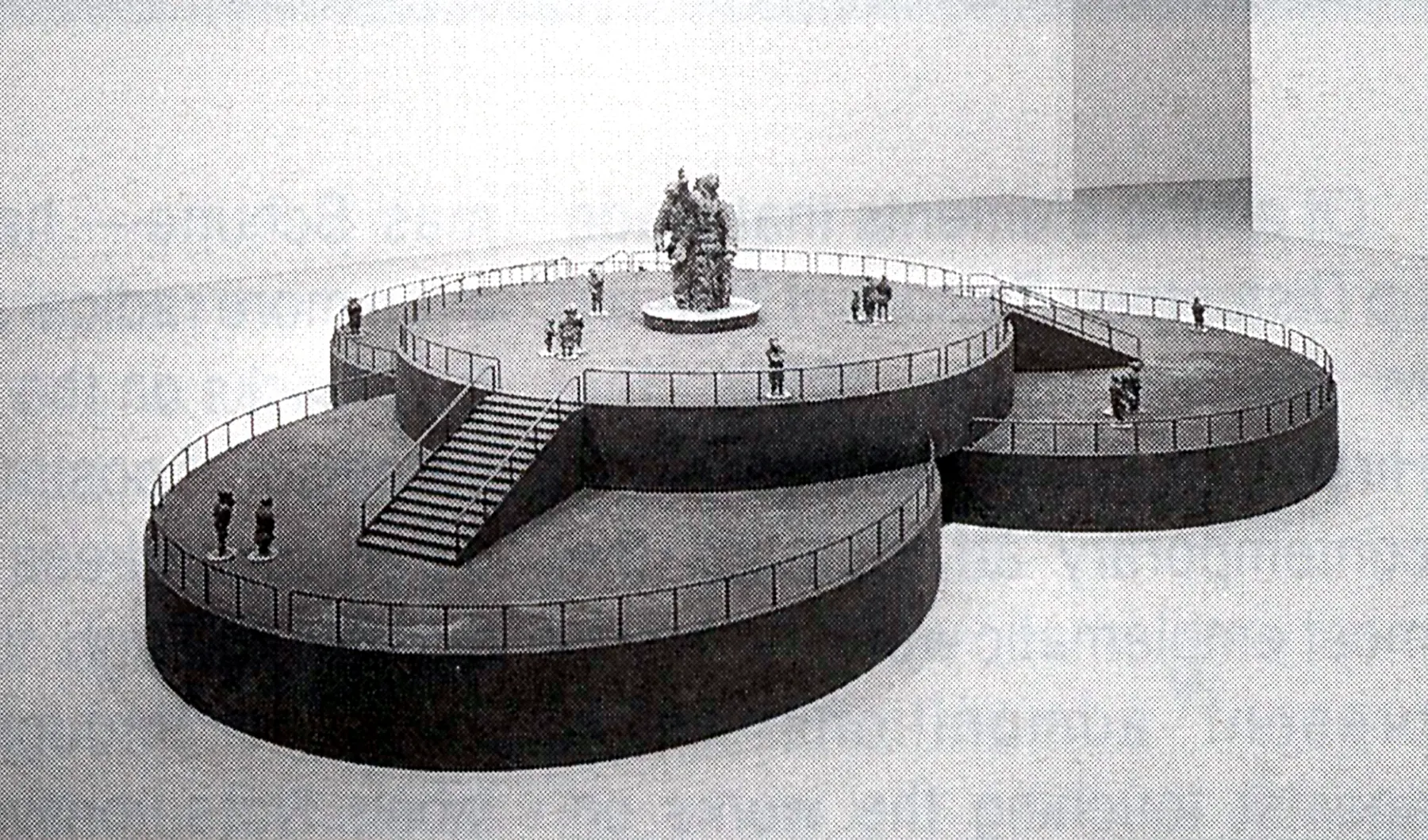
Grosser Respeckt (Large Respect) by Schutte expands the artist-spectator interrelationship in a pup-filled exploration of the interactions between public art and an entire society. The room-sized sculpture of a massive public monument incorporates both the central monument and members of the community that presumably created it, arrayed around its base. The sculpture's central element depicts a trio of tightly bound figures that immediately recalls any number of post World War II official moments.
Their grimacing menace and utter powerlessness are both repulsive and comical. Even more telling is the fact that perhaps only one of the monument’s supposed public actually looks at it. Schutte’s sculpture is not only a warning to artists and curators. It can also be interpreted as a demand for public consciousness. If the public monuments erected by the artistic hierarchy of the modern world are not worth looking at, both society and the artists within it are impoverished. It is a message worth contemplating and reason enough to provoke distemper.
Although each of these artists portrays a darkening world, they also convey a reason for optimism. By clearly engaging the viewing public with intellectually and aesthetically rigorous works, Kuitca, Salcedo, and Schutte point the way toward a more temperate tomorrow.
K. MITCHELL SNOW