
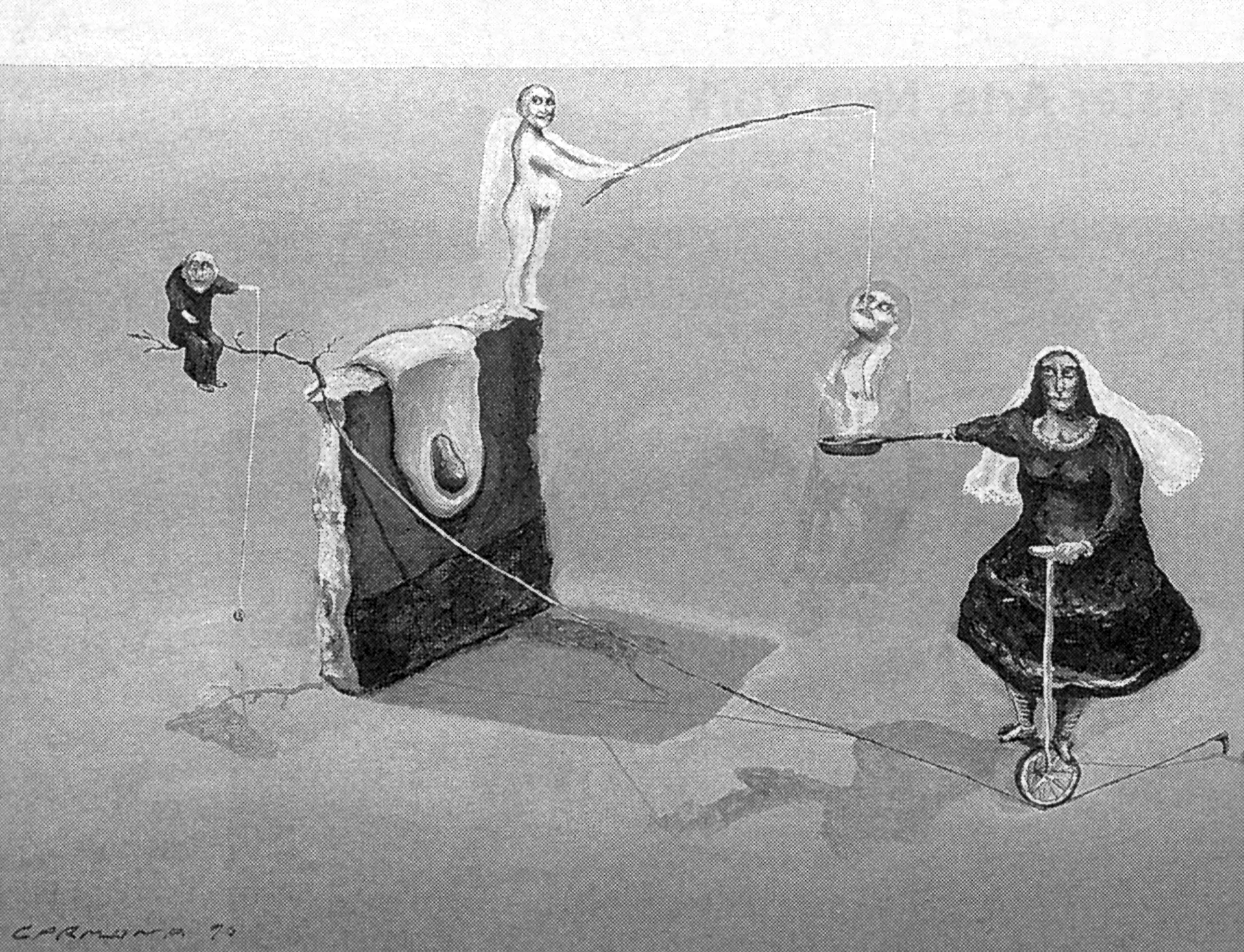
The artists participating in the Modern Miniatures: The Redefining of the Small exhibit at Brewster Arts were requested to produce a work not larger than eight by ten inches. Admittedly, this assignment did not arise principally out of a thematic direction but from a desire to attract fresh, young collectors. The smaller size was intended to make the work accessible, consequently more appealing to a larger range of audience. Nonetheless, these parameters, although based on commercial or practical stipulations, do make interesting demands upon the artists. The size of the paintings in this show affected both the content and composition of the paintings. Above all, it directed the nature of the interaction between viewer and painting, or viewer and amplified artist. The miniature size of these paintings defines these elements in a vocabulary of intimacy.
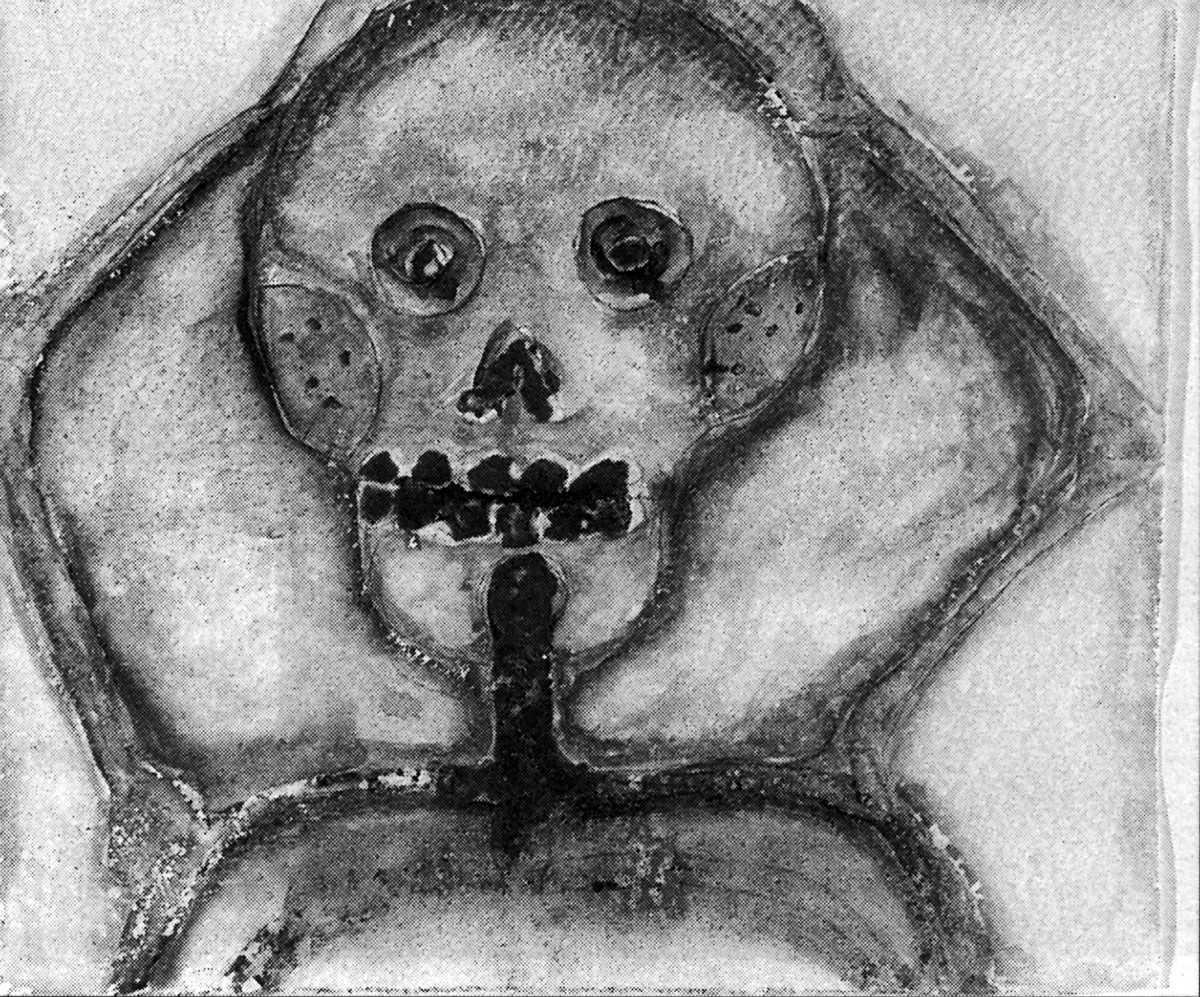
Consider, for example, the work entitled Day of the Dead by Sergio Hernández. This work consists of three paintings, each about 3 by 3 inches, painted on both sides. These small paintings are framed together into a larger composition. Each painting is of a single figure or object, such as a skeleton’s head and shoulders. In form, this painting demands an intimate relationship with the viewer in that the skeleton takes up most of the surface area of the canvas, enough so that its outlines skim and press against the borders of the canvas. The magnification and focus on the figure suggests a visual and physical proximity of the viewer to the skeleton. Both the curving lines and the fluid watercolors are extremely organic, as is the parchment surface on which the figure has been painted. In terms of content, a skeleton as the personification of death forces another empathetic reaction from the viewer. The title echoes and confirms this theme. Again, because there is only one figure per painting, the viewer must focus on the one figure, and the resulting process of perception is more focused. In order to perceive the canvas in its entirety, the viewer does not need to scan the surface and collect different objects on the canvas, but rather, the viewer focuses on the one dominant figure, resulting in an intensification of the relationship between the viewer and the object.
This physically intimate interaction, determined by the art-object viewer and object, is also demanded by The Reptiles, a sculpture by the artist Martin Vinaver. In order to fully comprehend the object, the viewer must undertake a series of explorations. The smooth black external surface of the box relinquishes no clue as to what may lie inside. The viewer must open the small doors in the front in order to reveal a silver lizard inside. Once again, the viewer must open the small doors in the front in order to see the lizard, and in doing so, must approach the object very closely, in both physical terms, by opening it, and in visual terms, by seeing the object close-up. The accompanying text "Nature is at it again, very private in these intimate moments," echoes the sentiment of organity and intimacy expressed in the work by Sergio Hernández.
José Bedia’s work Disi approaches intimacy in that its aesthetic vocabulary consists of private and hidden meanings. Its aesthetic vocabulary recalls myth, an evocation of man’s origins. In this work, a horned figure with a cross-shaped symbol on its chest leans over an urn. These mythic figures imply a secret ritual. The mystery and secret message of the canvas implore the viewer to decipher its meaning, thereby actively interacting with the art object.
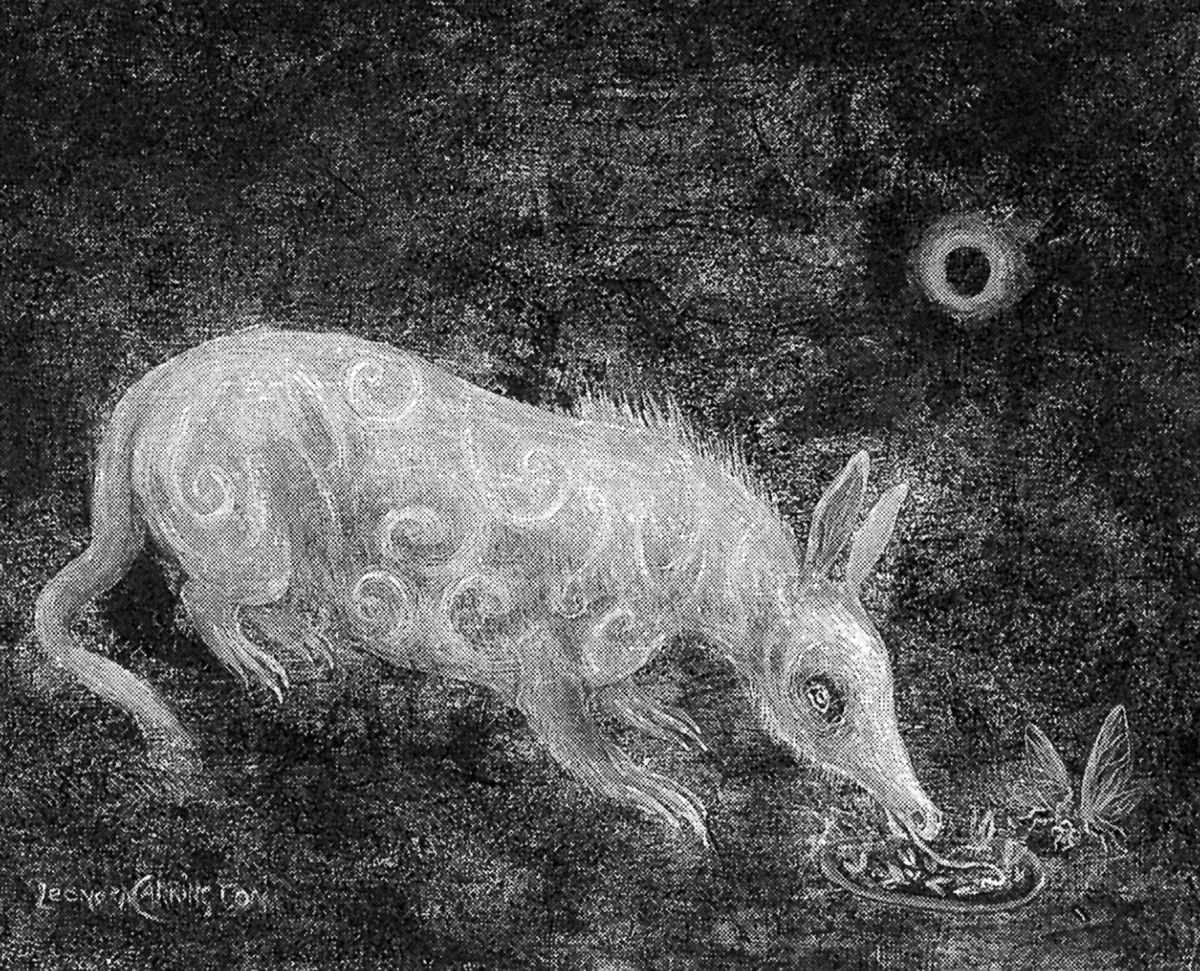
Leonora Carrington contributed several works to this show, which, like those of José Bedia convey a secret narrative, one with seemingly mythic origins. The viewer is invited to read and reconstruct the narrative and to decipher its meaning. These works are unlike the others mentioned above in that Carrington’s paintings have many figures and details. In this case, though, the viewer also has to approach the painting in order to detect and uncover the fine details. Some of the figures gaze at the viewer, while others are completely absorbed in the ongoing ritual taking place in the narrative. Yet this ritual, because it is alluring in its mystery, emphasizes the narrative goings-on taking place in the canvas, affirming the painting and pulling the focal point of the viewer inwards toward the canvas. The dark and opaque coloring is also an obstacle to an easy and obvious perception and comprehension of the canvas, requiring a more active participation from the viewer.
KARLA AZEN