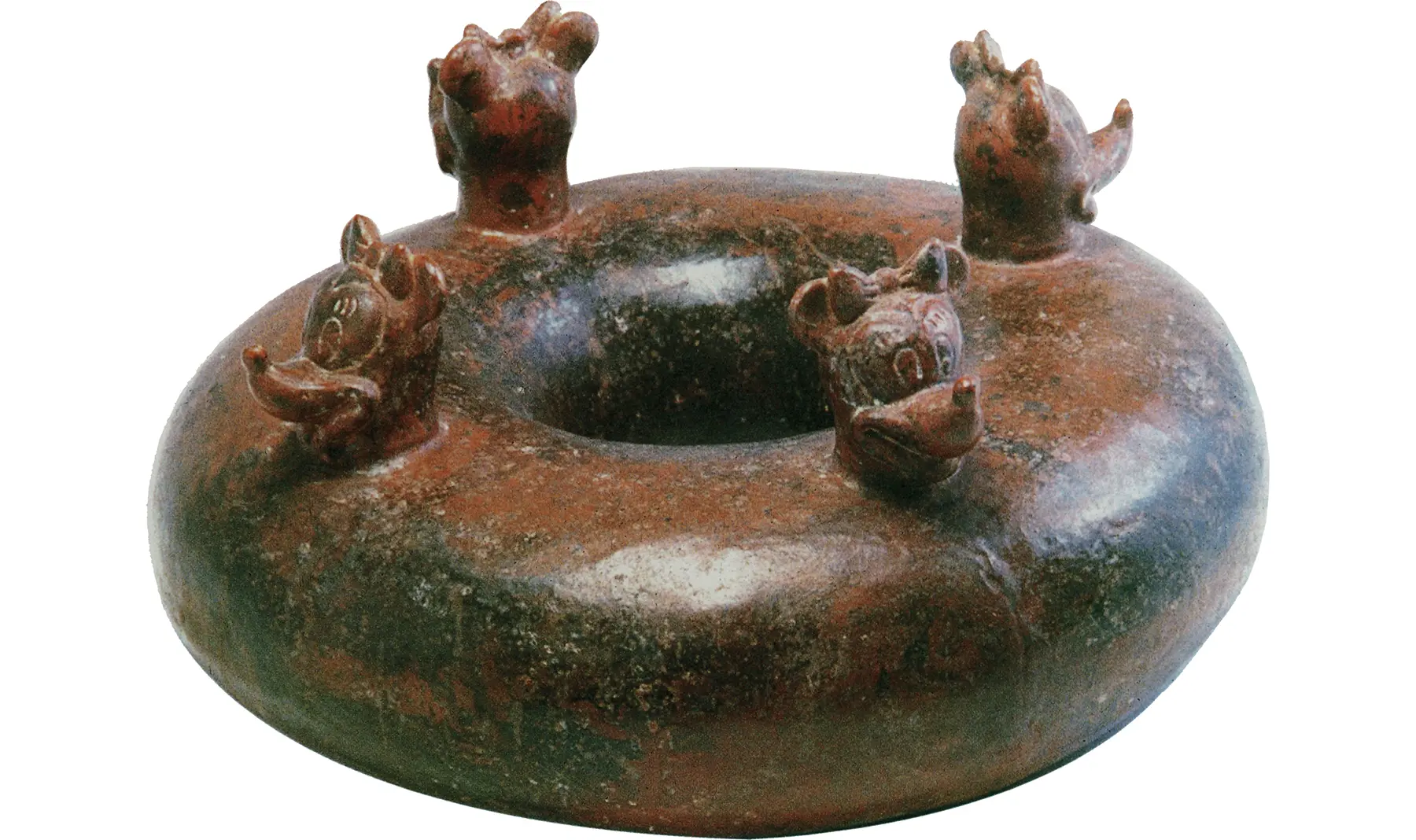
The recent work of Nadín Ospina, with its Disneyland figures incorporated into pre-Columbian forms and receptacles, necessarily makes us think about Colombian identity (Urn, from The Great American Dream series, 1995). Concerning this identity, mention may also be made of the plurality and confusion of symbols which are handled at every level (social and commercial) in Colombian culture. This plurality and confusion need to be analyzed in terms of the over-imposition of foreign cultures on the local culture, in particular that of the city, seen as one of the many and complex aspects of Colombian culture. Such an analysis will permit shed light on the effect of foreign influences and help determine whether they have helped develop, or rather impoverish, the social structure as a result of the consumer culture. In formal and conceptual terms, these are all points that Ospina touches on in his artistic production. From the beginning, he has used his art to examine the effects which on the social reality of Colombia has had the presence of objects, images and symbols which have entered daily life through the intermediary of the mass media.
Today in Colombia, the North American culture may be considered as the most predominant in recent decades, and its presence has not been a passive one. On the contrary, it has created a complex variety of situations that have complicated the problems of Colombian identity. It was since the introduction of television at the end of the 1950s and early 1960s that the public in general (i.e., not only the governing classes, but most of the urban population) began to become aware of or exposed to a foreign culture. This culture was mainly introduced through television programs commonly called "canned programs” produced in the United States but dubbed into Spanish in Mexico. Comic strips and cartoons also played a major role in this process. Their message is simple and direct, and the audience included a very receptive number of children. Little by little, the communications system in our countries became invaded by North American programs. The other markets, seeking to emulate television and being conscious of the demand for North American products, began to import all kinds of articles. Thus began a rapid exchange of pop culture, which still continues today. The Yankee culture, even though it has never been completely assimilated into the local context, suffered a substantial dislocation, from which I dare to say it has not yet recovered. The local culture had to resign itself to this super impositioning, and before it was able to understand the morals or work ethics of Protestantism and its implications in the Catholic context, the people were using blue jeans and listening to rock and roll.
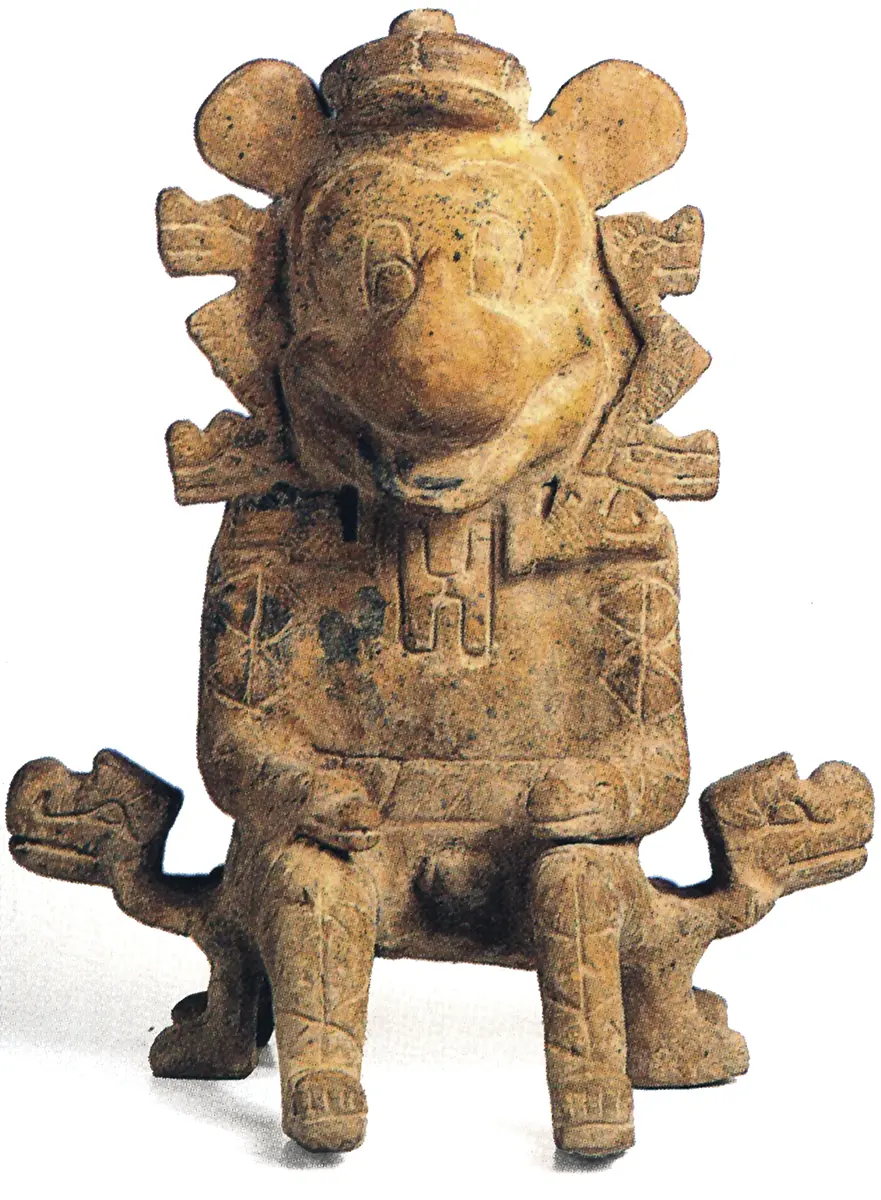
This phenomenon was due to the active and deliberate intervention of the classes or groups that controlled capital (and the production means or those who wielded the mass media) to control not only the economic use of capital and productive investment, but society as a whole. Thanks to this process, society began to respond more to the use value of things rather than the exchange value. The imaginary began to acquire a position of strength, and since we still do not fully understand the matters of ethics and morality of the increasingly conservative Protestant culture of the United States, what we have learned to accept as elements of North American culture are its symbols—Bart Simpson, Mickey Mouse, Coca Cola and Pepsi. To drink Coca-Cola or go to Disneyland has become a priority for calming our thirst or discovering our roots.
Objects have acquired an absolute importance. Their value lies within themselves, and the culture that they may represent passes to a secondary level. They encompass the idea of what they should offer or provide. With or without ideology, the object acquires an exchange value, which in its turn implies an order of culture and happiness. A framework thus begins to be established within which you have to act so as to achieve this idea of culture and happiness, in which leisure and fashion predominate over traditional customs.
Within this context, society has begun to respond to some of the stimuli provoked by a fetishism of the object. The relationship between significant-signified has come to accept passively the ideology of consumption, where signs play an increasingly greater role. Fetichism allows the consumption of images to be the most sought-after objective, something which, furthermore, tends to be reflected in art, literature, and poetry, and which, in some cases, even supplants the arts, using them as rhetoric for its own purposes. In this way, the object as a sign becomes the ideology itself of society: signs of happiness, satisfaction, the power of wealth, science and technology, etc.
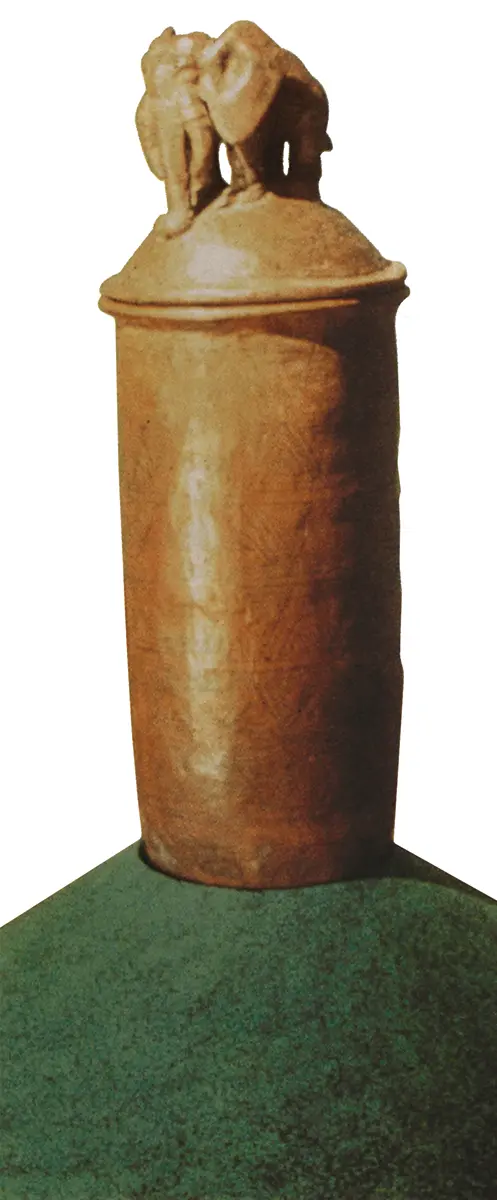
Ospina is conscious of the problems that beset these signs within the Colombian context. In a social environment where local traditions have been slowly replaced by the emblems of a specific system, the meanings and readings constructed around a work of art become a critical commentary on the cultural reality of the present. Society has been contaminated with objects that have no meaning beyond their physical presence. What they represent is not known or misunderstood, and the thirst for foreign things is easily satisfied with objects per se. Curiously, pre-Hispanic culture has suffered a similar fate. Today, pre-Columbian objects are valued, while the cultural activities linked to these objects are almost completely unknown.
Furthermore, mention should also be made of the systematic looting of the cultural heritage by international collectors. The avid desire to acquire pre-Columbian pieces has led to the development of the counterfeit industry. Counterfeit pre-Columbian works deepen this absence of meaning: the meaning of the original piece copied is unknown, and the new object itself is an illusion. This activity has affected the study and understanding of the cultural past at the national level, and has been decisive in the valuing of the object at the aesthetic, but not cultural level; and finally, it has in turn encouraged the production of falseness. Identity is being replaced by materiality, as Ospina's ironic objects constantly remind us.
Another decisive factor in the assimilation of new orders and the consumption of images has been the role of youth. Young people have the capacity to appropriate rapidly both things and cultural representations that have reached the city through the communication media and their aims. This assimilation creates an upheaval in the existing urban cultural nucleus, which becomes corroded by the invading culture. The old customs and the institutions which had legitimized them (institutional headquarters, etc.) are being forced to accommodate, within a pre-existing framework, a new aspect of social reality and try to create cohesion between the immediate relations between individuals and their context.
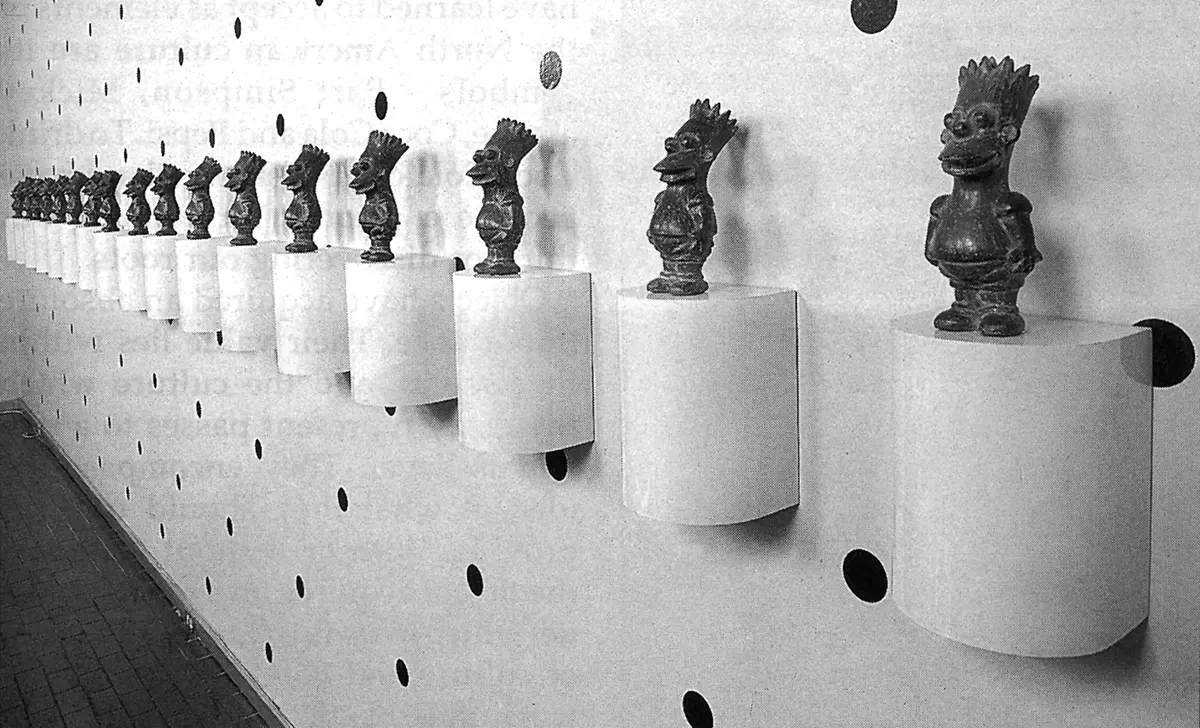
Ospina takes advantage of these immediate relationships by using the signs and superimposing them on pre-Columbian receptacles. In the process, the icons of North American culture are glorified. They are also given the character of a ritualistic and mythical object, which can be appreciated and venerated as something supernatural. As a fetish, it goes beyond human comprehension, although it is present and of decisive importance for society (Ecstatic Critic, 1992). This second act of dislocation of North American culture at the artistic level and the act of veneration of the object within the pre-Columbian context ironically serves as an instrument to form or influence the identity of the public and its affiliation with various cultures.
The juxtaposition and superimposing of the signs of two cultures, the foreign and the local, becomes a critique of everyday life. Ospina is concerned about the lack of understanding and memory with regard to the traditions that have made up Colombian society. The icons and symbols representative of Colombian identity are not recognized; instead, there is a tendency to adapt to the environment, and social behavior is propagated through the mass communication media. By incorporating elements which are foreign to traditional culture in works of art, Ospina consciously imitates the behavior of society, which itself appropriates signs without really understanding the reason for such behavior (Bizarros Gourmet, 1993).
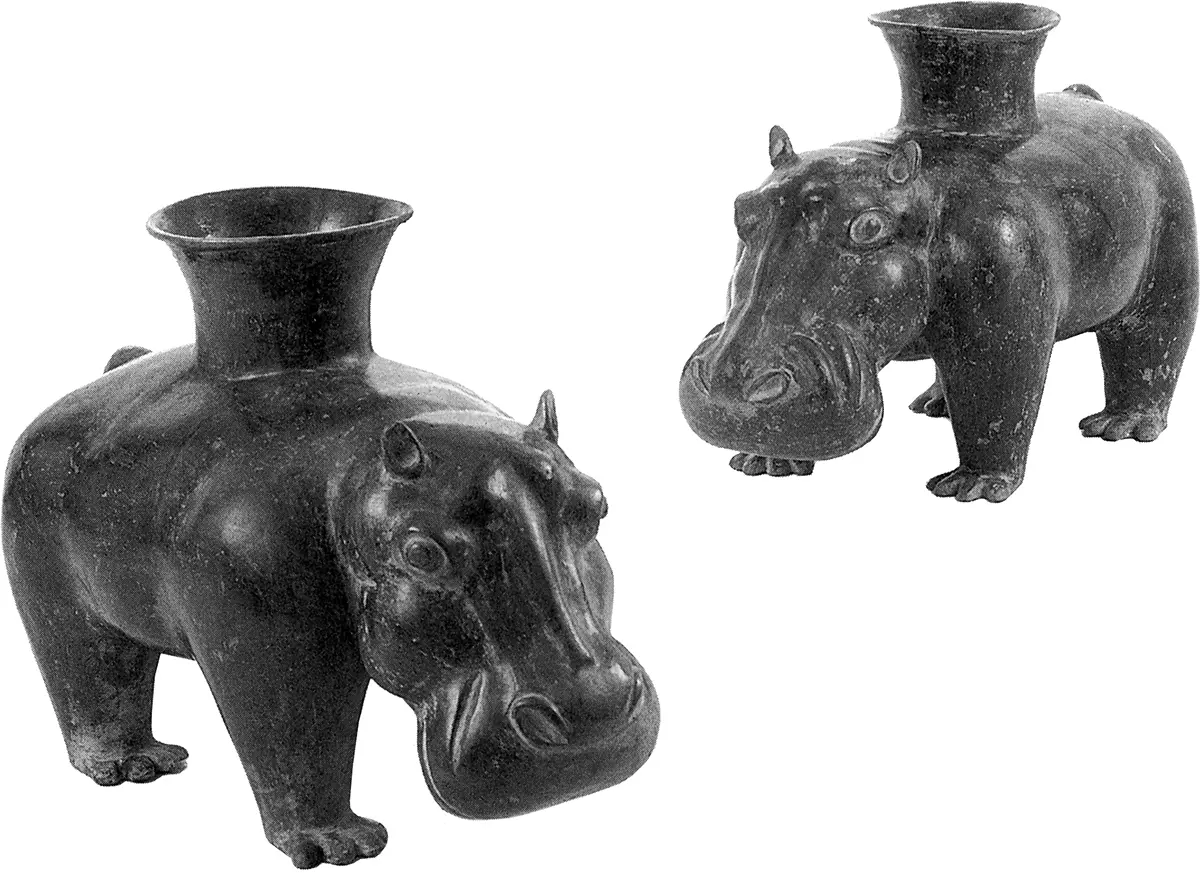
"In the place of our ancient deities full of strength and spiritual value, full of meanings associated with a cult of nature, they have sent us a duck and a plastic mouse jumping around the screen, skating on ice, or even worse, entering our own homes. Everyone wants to wear them as an emblem on their clothes, to have them among their daily objects, in their food." Nadín Ospina
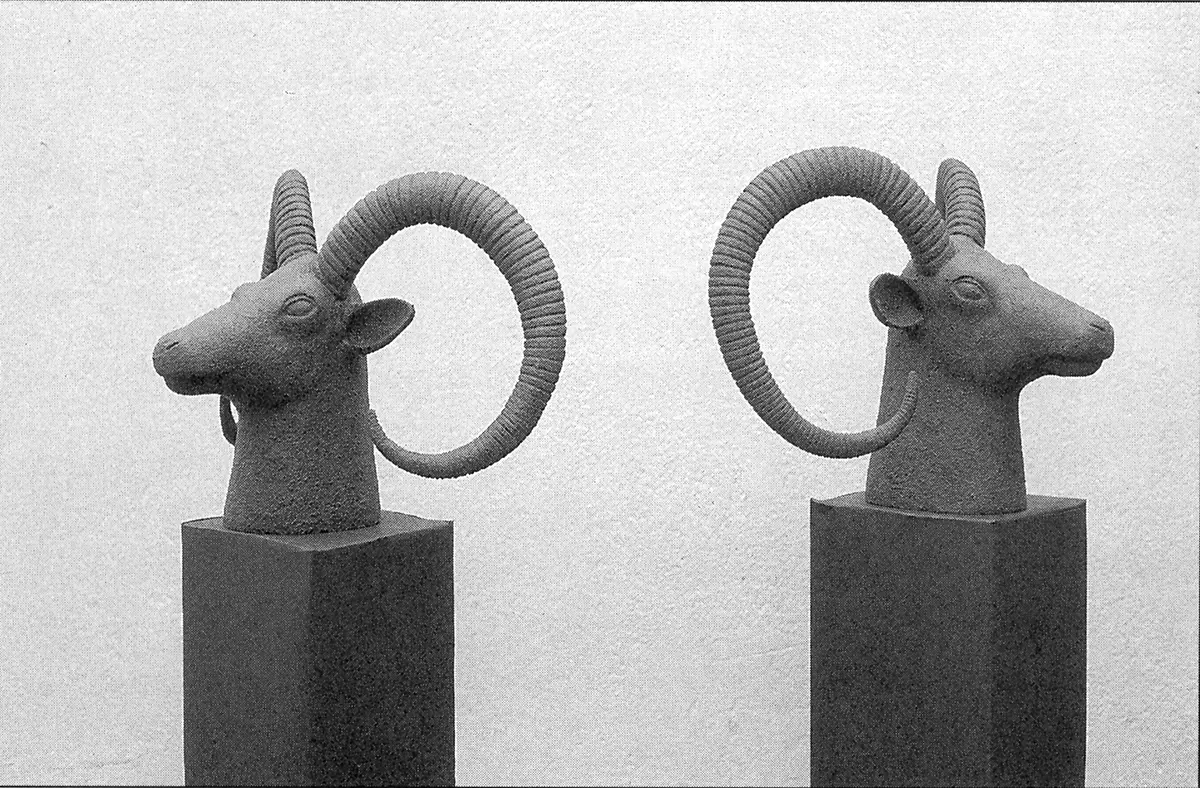
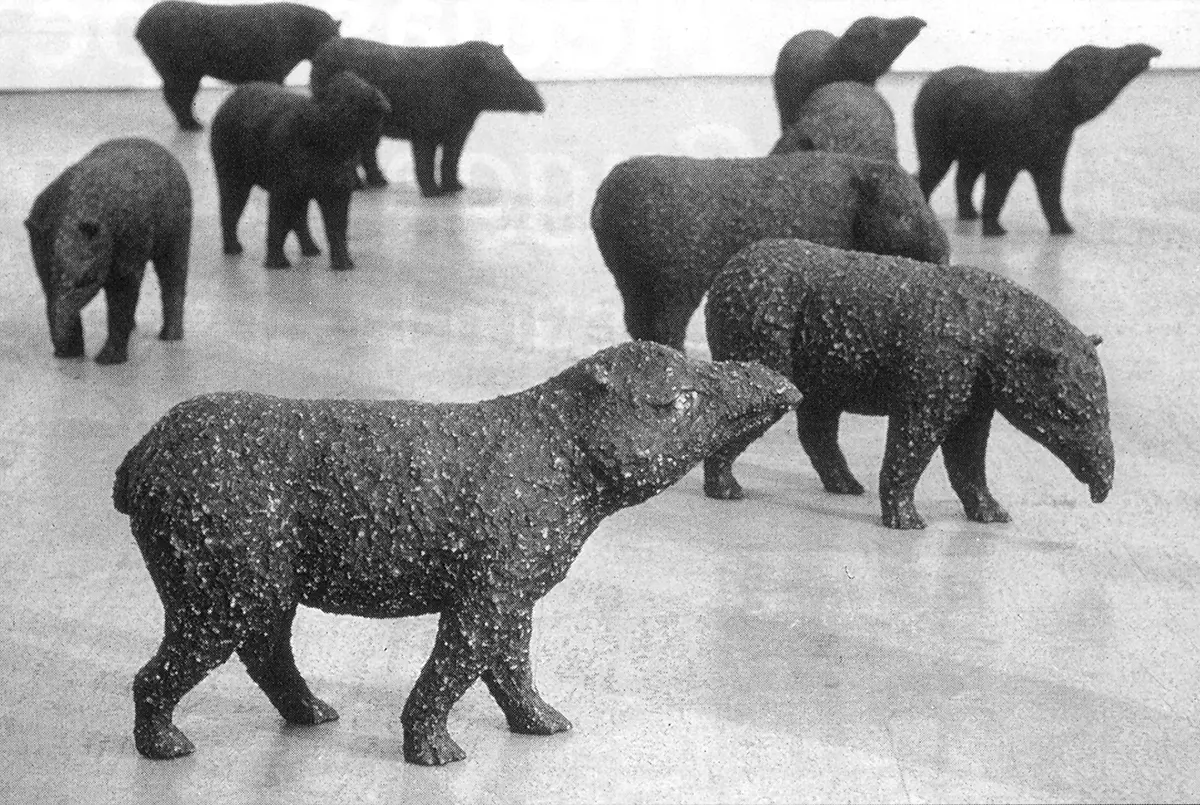
Appropriation has been a feature of Ospina's work since the beginning, when he created compositions parting from various kinds of elements. Both conceptually, through the use of elements from foreign cultures, and formally, with animal images, in most cases natives species threatened with extinction, this appropriation serves as a commentary on the local cultural traditions and, of course, on the damage being done to the environment (The Age of Fire, 1990). Ospina's work is three-dimensional, and the images he uses therefore recover their value as objects, as well as a work of art and a sign.
The support plays an important role in the work of the artist and is an integral part of his compositions. It may be any kind of other object, such as bells, urns, tables, or tripods of various materials such as plastic resins, pigments, mineral earth, and bronze. These elements further modify the meaning of the work, placing it within a new—and generally ironic— context.
On the other hand, the materiality, which for Ospina becomes a source of social criticism, is the same he uses in the execution of his works. The plastic used for the images of Bart and Pocahontas also appears in the creation of funeral urns with little figures of Mickey Mouse (Urn, from the series The Great American Dream, 1995). At the same time, the ceramic objects are produced in an artisanal manner, imitating the methods used by our ancestors, and often employed in the trafficking of counterfeit objects (Critics of High Tech, 1993, and other works). In this way, Ospina makes through this process a commentary on the production methods characteristic of consumer societies. At both the artisanal and industrial levels, production has become an efficient and mass activity for commercial purposes. The spectator looking at Ospina's objects is forced into a feeling of nostalgia when he realizes that this object of devotion, like the culture itself, has lost its use value to become an object which can be produced on a mass scale, in plastic, and whose value is now imaginary. The irony is that the objects as objects are more lasting and practical than culture, which is always moving, fragile, and ethereal.
The social conscience has concentrated on the everyday nature of consumption, leaving to one side the values deriving from the social and economic structure of the country. There is a discontinuity between the capitalist organization of the city and its historical conditions. This rootlessness and disorganization have led to the absence of any moral judgements, with the social being relegated to the status of an object which can be acquired. Everything that comes from history and conscience has been transformed into a question of value. The cultural utopia which we are experiencing is related to many realities, which are more or less distant, more or less well-known, but not related to our real and everyday life. We Colombians need to revalue our own culture, and Ospina's art is the step in this process.
ANA SOKOLOFF GUTIÉRREZ
Master’s degree in art history from the University of Columbia in New York. Currently coordinator of cultural activities at the Permanent Mission of Colombia to the United Nations in New York.