
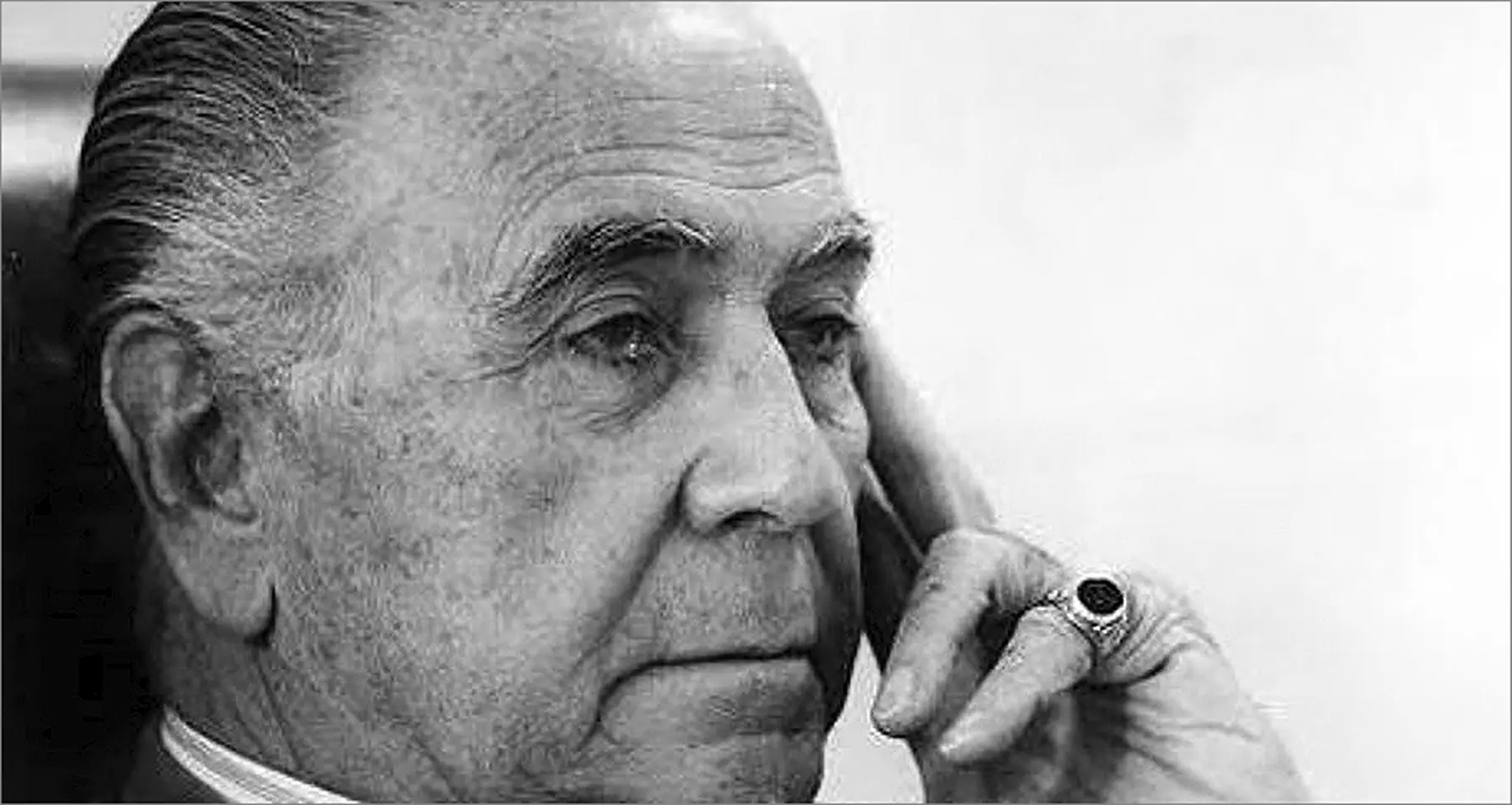
If I had to summarize the profound meaning of Boulton's legacy in a few lines, I would say that Don Alfredo introduced into the collective imagination of Venezuelans —an imagination without much culture— the idea of a country which was not only made up of heroic and military memories, but also, and in particular, with artistic labours and visions, faces and artists. Unlike our great humanist of the nineteenth century, Boulton was fortunate to have considerable means and he had the intelligence not to waste them, but to place them in the service of his own work. Boulton was the first Venezuelan intellectual who assumed, along with the production of his work, the management of its materialization, circulation and dissemination. Boulton was the first Venezuelan intellectual who was a modern editor and he was the first to introduce the discourse of the image into the discourse of the argument.
In this way Boulton's work is photographic in the sense that it went well beyond —and fortunately so— his activity as a photographer. His work is the first work of an intellectual in Venezuela, to my knowledge, which becomes a visual exploration of Venezuelan nationality. This resulted in two magnificent achievements: as an artist of photography, Boulton was the heraldic landscape artist of the country. In three volumes of photographs, he created the visions which are the emblems of our territoriality: the Occidente, with its frozen mountains and its ancestral highlands, Margarita in the east with its handsome human figures and its infinite coasts and the plains, which Boulton called "of Páez" in a reminder that they were the historical crucible of our heroic mythologies. As an intellectual convinced of the integrity of an intelligence which is not only discursive but above all perceptive, Boulton —an iconologist and curator— always knew how to argue with images and define with exactitude the precise iconography of Bolivar's face.
It was an enterprise emblematic of alibis work: Boulton, who wanted to capture something of the Venezuelan essence, was determined to reveal the true face of the Liberator. In discussing what Boulton was really like, we must always remember this, which was complemented with his iconographical research into the faces of Páez and Manuela Sáenz, the shadows (or the real other side) of the Bolivarian dream. Here I can see something which is symptomatic of his relationship with Venezuela: by projecting onto the country a humanist illusion, he managed to reaveal a face, sometimes strange, in which this illusion could not be recognized. But Boulton's work has the enormity and the limitations of any pioneering work. I like to see him as a cartographer beginning his investigation of a territory in which he has emphasized features which, over and above polemics and dissent, constitute the fundamental characteristics of any radiography of the country. These features are the following: Venezuelan pre-Hispanic art (Boulton was the author of one of the most complete photographic records of this art), Venezuelan colonial art (especially his very important research on Juan Pedro Lopez), the Bolivarian legacy and iconography (faces of Bolivar, Sucre, Manuela Sáenz), republican art (the painter Juan Lovera), foreign approaches to Venezuelan territoriality (his investigations on Picasso in Venezuela), the heraldic record of the Venezuelan landscape (his photographic work), the art of modernity (his research on Reveron, his works on the authors of the so-called Circle of Fine Arts, his book on the sculptor Francisco Narvaez), contemporary art (his books on Soto, Cruz Diez, Otero). The magnificent summary of this work was, in addition to the three volumes entitled La Historia de la Pintura en Venezuela, his own personal collection, unfortunately dispersed after his death.
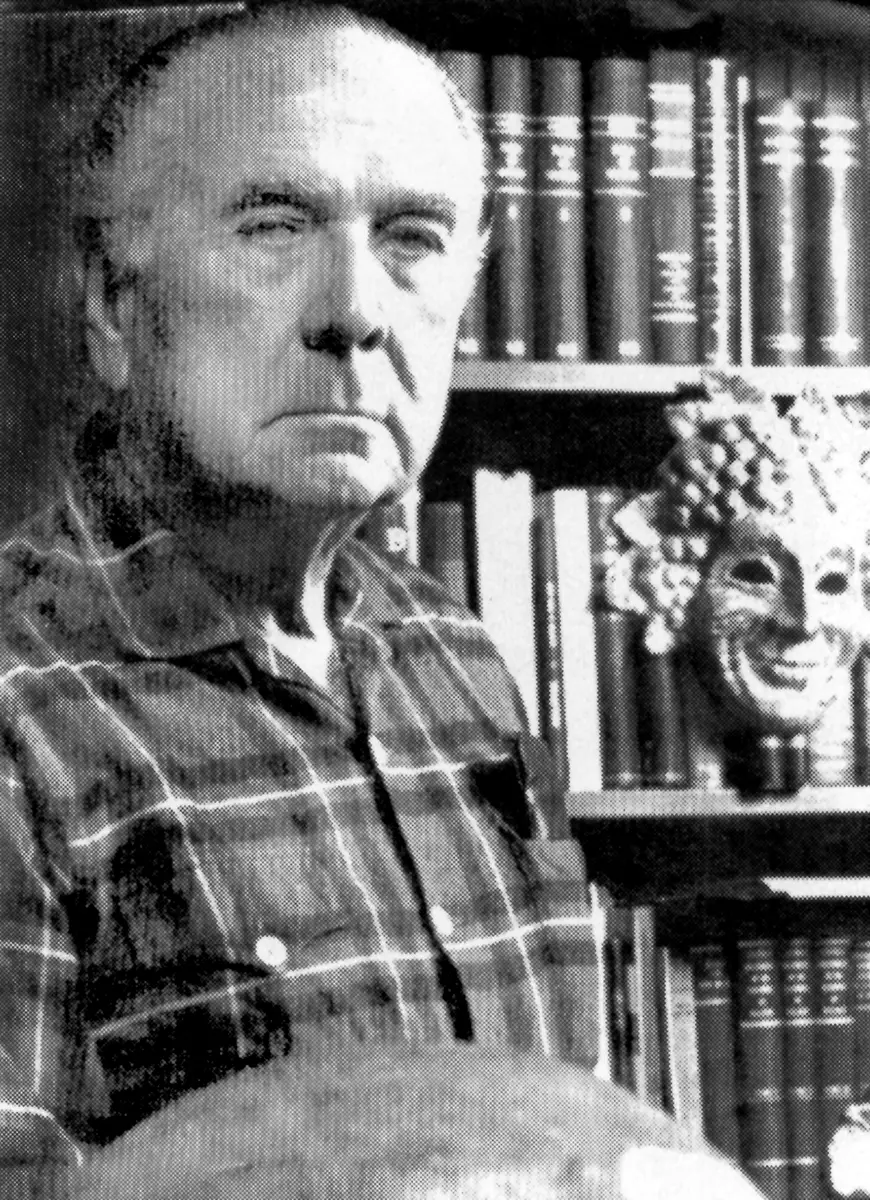
All Boulton's endeavors reflect a humanist hypothesis on the past and destiny of Venzuela. From his vision of the landscape, characterized as it was with an identification with the primeval landscape, the virgin landscape, we can perhaps see something of the platonic topos according to which, nothing will replace among us the closeness with the ancestral times of creation and which, more modestly and nearer to the present, resulted in the construction of the national landscape which excluded defacto from the territorial blemished by man. This humanist hypothesis is fully articulated through an idea of the history of art which is fully achieved in the models of immaculate and abstract transparency of the Venzuelan kinetic artists. In this way Boulton constructed a formalist fable of what it means to be Venezuelan, a version of the country as an innocent country —which was shared perhaps by many of his contemporaries, including Arturo Uslar Pietri and Guillermo Meneses— which was valid as an aesthetic project for the desire of a country, but perhaps also unjust or not in keeping with the real country: a fable of what it means to be Venezuelan which Boulton was the only one to translate —or elaborate— through the language of his images and which, as was to be expected, somewhat pessimistically, in a local version of a nostalgic despair. Because this fable of innocence could not, in its humanistic vertigo, but lament its own loss. The immaculate version of the country which Boulton constructed in his images could not but provide an abrupt and desperate contrast with the labyrintine discontinuity of the real country, which Boulton, like many of his contemporaries, has ended up living like a duel.
And so, although the allegorical enterprise of Boulton was to unveil the real face of Bolivar, so different from the napoleonic ghost imposed by official history, his emblematic work was the construction of a reading of the work of Reveron: a genius-like and innocent artist, who reflects Boulton's desire for a country in its twofold aspect of unexplained intuition and an undeniable modern "achievement". Boulton, who saw Reveron in terms of "Picasso periods" —blue, white and sepia— did much to consecrate the work of the artist from Macuto as that of the first modern painter of Venezuela, and through the diffusion of his work, helped create a kind of formal contemplation which relinquishes, under the pretext of some intuitive enigma, the necessary search for explanations. I have always wanted to believe that the privilege granted by Boulton to what he called the white period of Reveron, reflects his platonic hypotheses about Venezuelan art and nationality: the privilege of light over body and the informal, the privilege of "natural innocence". Thus, although Venezuela could not be identified with the modest face of Bolivar which Boulton revealed, preferring the anonymous greatness of equestrian statues, it would seem that in the depths of Boulton's imagination Venezuela could identify itself with the face and person of Armando Reveron: genius-like in its "innocence", and innocently alone, unexplained.
LUIS PÉREZ ORAMAS
Venezuelan critic and curator. Lives and work in Caracas, Venezuela