It cannot be said enough times: an exhibition is not only the gathering together of works of art, but also their selection, their placing in rooms, the preparation of supporting texts and catalogues and other related activities. In this context, Armando Reveron: Light and Warm Shadows of the Caribbean was a very important exhibition and a model of what an exhibition should be. Although the Venezuelan artist was not unknown in Colombia, the public who visited the show - and fortunately, there were many visitors was able to learn and understand much about this master from the first part of the century, without doubt one of the most original of all Latin America. The National Museum of Bogota was the first venue of the exhibition, organized by the National Council of Culture of Venezuela and the Armando Reveron Museum Foundation, amongst other bodies, and which will be presented in a number of museum institutions related to the Caribbean, between July I996 and August 1997.
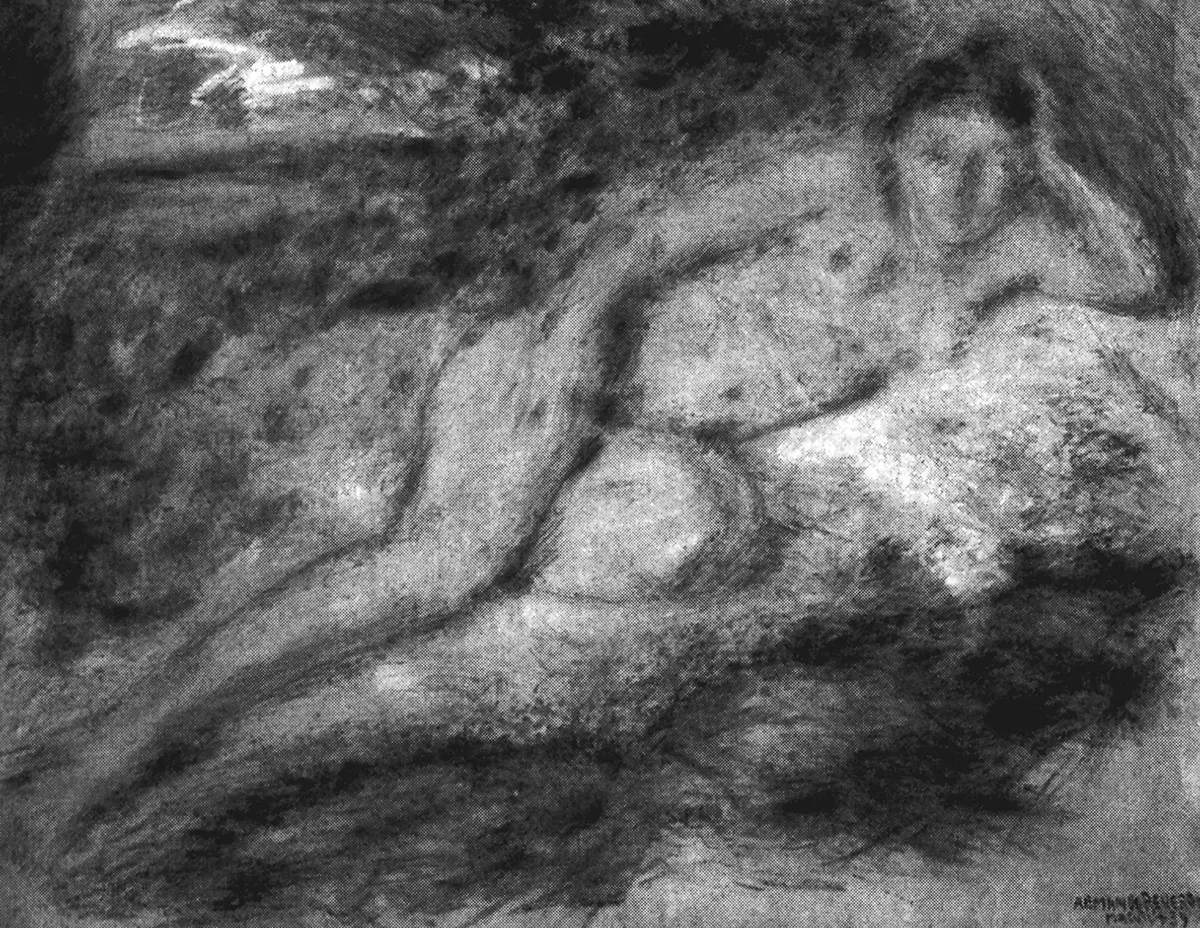
The Bogota show was made up of 27 works, including thirteen objects, as well as two pictures belonging to the city, one owned by the National Museum and the other, recently acquired, by the Luis Angel Arango Library. The paintings were from the three periods into which Reveron’s work has been classified, and offered a relatively accurate overview of his work, from the portrait of Enrique Planchart of I9I2 down to Nice (1952), including the handome oilwork Calvary Landscape (1915), a formidable mixed media (oil, distemper and charcoal), Nude (1939), an impeccable oilwork with distemper, entitled Port of La Guaira (1941), to mention just a few examples. Indeed, there were no minor works and all confirmed in various ways the prodigious vision of this painter who, isolated in Macuto, reinvented the art of making pictures and depicting reality with very few resources: a bit of color, a bit of texture, a few brush-strokes, but with a lot of light.
Alongside the pictures, there were several objects made by Reveron, including a stretcher with canvas and an easel with a parasol, as well as one of his large dolls (Serafina), a mask, considered to be a self-portrait, a mandolin, etc. This musical instrument, which is carefully worked, reveals the enormous distance between his three-dimensional works and the assemblages, resulting from synthetic cubism, which Picasso will carry out from the Guitar of 1912. While the Venezuelan master made an object for his personal use, even if he could not play it, the Spaniard insisted in his formal and intellectual proposals on the two and three dimensional aspects of representation. Perhaps there is no need to say therefore that Reveron’s objects are at the opposite extreme of Duchamp’s ready-mades, which obviously belong to a very different world from the profoundly human and artistic reality of the hallucinatory Caribbean.
Special mention must be made of the excellent exhibition catalogue, with very useful texts, among which the four critical glances on Reveron — with intelligent introductory comments by Katherine Chacon— deserve special attention: those of Boulton, Calzadilla, Arroyo and Perez Oramas. Previous to these texts, there are other important ones, above all those entitled: Armando Reveron: «Light and nothingness* by Rafael Arraiz, and Armando Reveron: «The Caribbean or the Recovery of Beauty*, by Katherine Chacon, present director of the Reveron Museum Foundation. The work of Chacon, Arraiz and Perez Oramas, all still very young, is a good example of the professional preparation and theoretical rigor of many art critics and historians of Venezuela.
GERMAN RUBIANO CABALLERO