In the capital of the Dominican Republic, the Hispanic Cultural Center has distinguished itself with its dynanmism and high quality manifestations among which its exhibitions decerve special mention. It recently presented a collective show of an anthological kind, entitled Dominican Art, Spanish Artists and Modernity, 1920-1961 which has been highly praised for the importance and careful selection of its works. This is the second time that a show has been held highlighting the link between the artistic expression of both countries; the earlier show examined the “Spanish influence on Dominican painting».
Such a comparative investigation can be explain not only by the organizing institution, the colonial period and the secular maintained links betweeen the two countries, but by the fact that in I940, European artists and intellectuals, fleeing from the Franco and the Nazi terror, came to the island, where they made a significant contribution. The hospitality which the dictator Trujillo extended to an elite group of democrats might appear to be contradictory, but this unexpected initiative helped promote his international image... although he had not measured the ideological consequences of his action.
Thus dozens of Spaniards came to seek refuge in Santo Domingo. It was not a unique phenomenon in Latin America, but they did leave a strong imprint on the island, particularly in the artistic sphere. Some of them left relatively quickly, feeling pressure from the regime, but others, the fewer, stayed longer or even remained.
Dominican Art, Spanish Artists and Modernity covering the period from the third decade of the century down to the end of the dictatorship refers to us a crucial period in the development of the visual arts. The curator of the show, the writer Jeannette Miller, has become a veritable specialist in the history of Dominican art up to the I970s and in this retrospective, she includes the participation of foreign artists whom she had not taken into account, except in passing, in her book published in I978.
The theoretical basis of the exhibition contained
three phases and aspects: Dominican art, in its incipient modernity, before
I940; pictorial, sculptural and graphic works by Catalan immigrants; Dominican
artists emerging at the time, and now confirmed masters, with works done before
I962.
The overall level of the selection conforms a high level sample whose pieces come from private collections, including those belonging to some participating artists. The visitor can also enjoy the discovery and revelation of works - something which would not have happened if the show had included just the well- known paintings and sculptures from the collection of the Museum of Modern Art. Furthermore, the collectors who loaned pieces have all been very rigorous in their acquisitions.
The exhibition immediately suggests two other observations. Dominican art, during these four decades which preceded the contemporary period, was already distinguishing itself by its creativity, its national stamp and its awareness of current trends. As regards the Spanish artists, so important examples in the updating process and teaching, it was in Santo Domingo where they became original and powerful creators under the impact of their new environment and the resulting cultural shock.
It must also be noted that the exhibition concentrated more on showing the stimulus exercised by the foreign artists than their direct influence on Dominican artists. Of course, like all selections, it was subjective, and some outstanding figures from those years were not included, even though they were disciples of the Spanish masters, such as for example, the sculptor Luichy Martinez Richiez, winner of the Paris Biennial in I959, the painters Marianela Jimenez and Antonio Toribio, young artists then doing some of their best work.
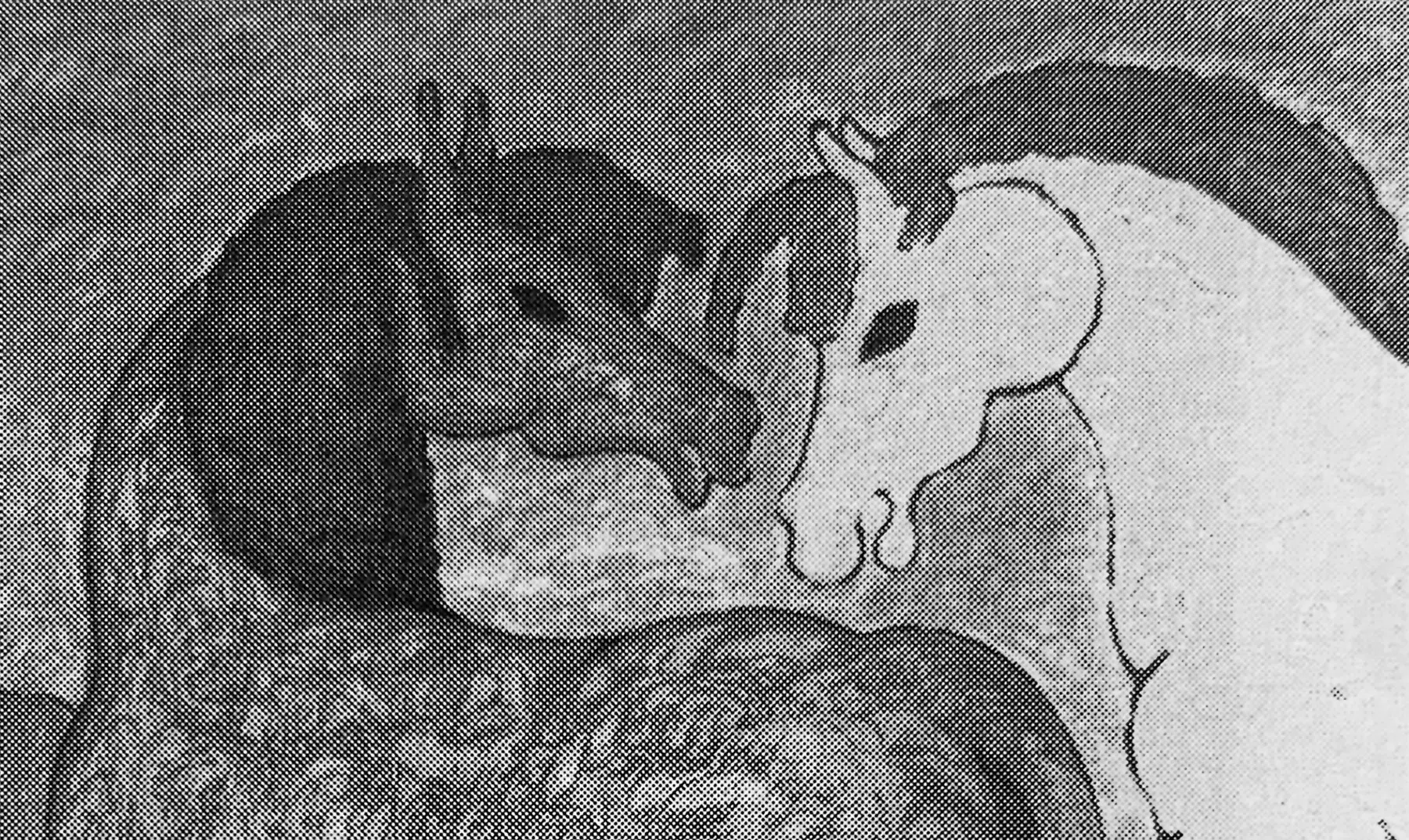
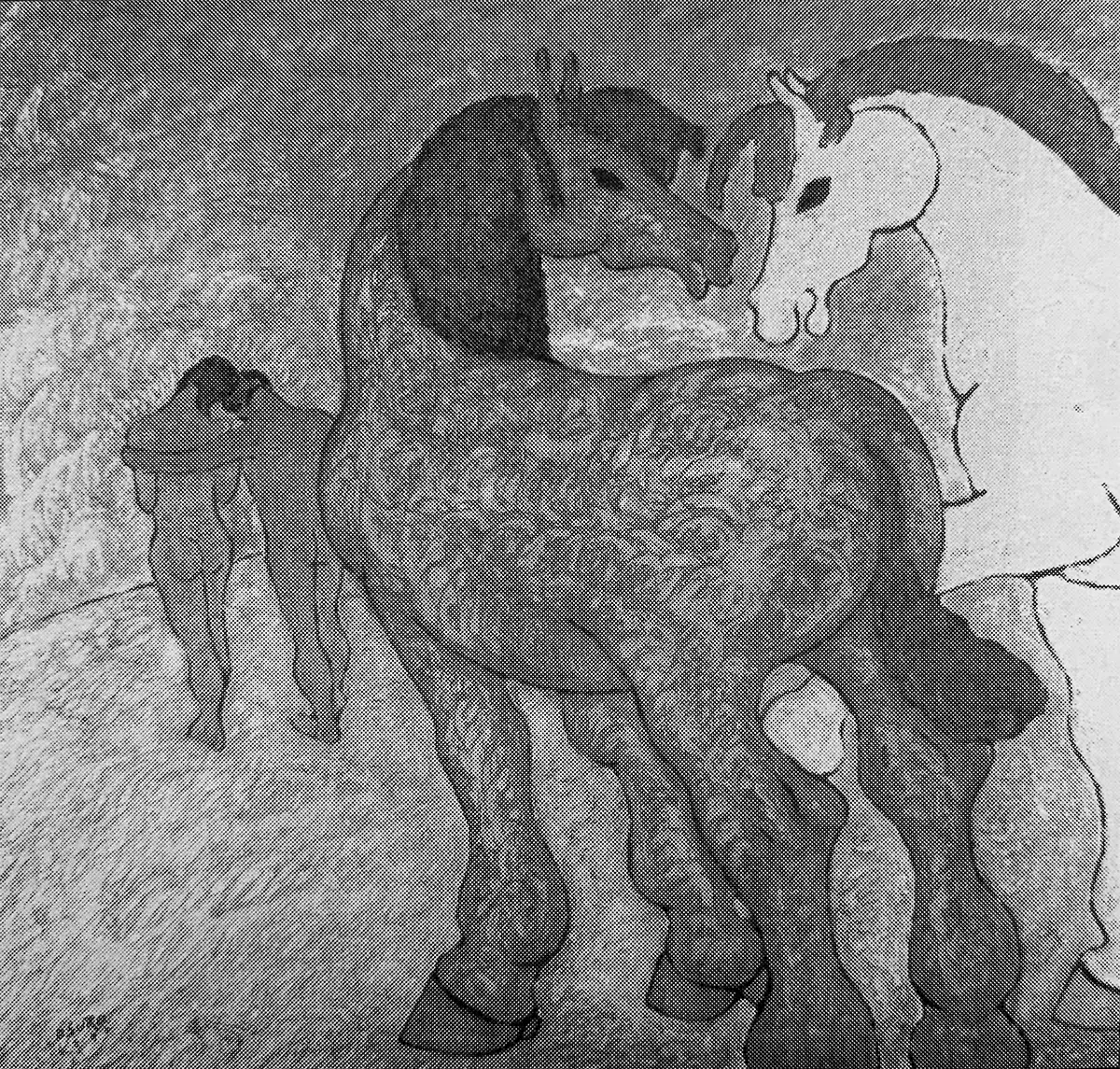
As regards Dominican art before I940, the selection acted more as a kind of «thesis» compromise. The outstanding character of the work of Yoryi Morel (the vernacular current), Jaime Colson (international), Celeste Woss y Gil (the first great women artist) - endows all their pieces with quality, but those selected did not really highlight their respective contributions. Perhaps the intention was to illustrate their role as individual precursors. It would have been preferable too' if there had been more examples of the new and impressive work of Dario Sura from the I930s. Fortunately, the last of our modern «pioneers» - and who continues to renew his work, was present with a magnificent example of his Horses.
As regards the more extensive representation of
Spanish artists, most of the works seemed dominated by passion, to a large
extent determined by the enchantment of the Caribbean, and which in its turn
was to lead to a “cultural explosion- in Santo Domingo, as Maria Ugarte, an
immigrant historian who has become a pillar of Dominican culture, noted in a
fine text in the catalogue.
The show included not only the admirable Josep Gausachs, who is still practically unknown in his native Catalonia, and who like no other artist has been able to communicate the sensuality of the mulatta woman in linework of admirable expressiveness. But Manolo Pascual, is also an example of radical contemporaneity in his times and a master of a powerful kind of neo-classicism. As regards this reciprocity process in terms of the strengthening and consolidation of European artists, mention can be made of Eugenio Fernandez Granell, who was a musician when he first arrived, then
became a painter in Santo Domingo and went on to become an exceptional surrealist whose work is now highly valued, two examples of which were included in the exhibition. The same can be said of the “peasant realism- of Vela Zanetti, represented here in well finished drawings and painting.
Although the show could have examined the undeniable role of foreign teachers - not only in their actual teaching, but in terms of aesthetics and style, the show quite legitimately decided to showcase the independent creativity of the Dominicans who came to the forefront between 1940 and 1950. How delightful it is to re-encounter the magical-real interpretation of creolity in the work of Gilberto Hernandez Ortega and Clara Ledesma, brilliant students of Gausachs, as well as impressive
pieces of figurative sculpture by Antonio Prats-Ventos, in particular his Mulatto Dream.
In a second, smaller room presented the work of
artists who were young at the time, and who are masters still producing a
considerable amount of work. However, the two who left the greatest mark are no
longer with us: Paul Giudicelli, who was represented, for historical reasons,
by neo-cubist pieces, and Eligio Pichardo, emblematically represented by his
ferociously humorous expressionism and difficult palette. Mention should also
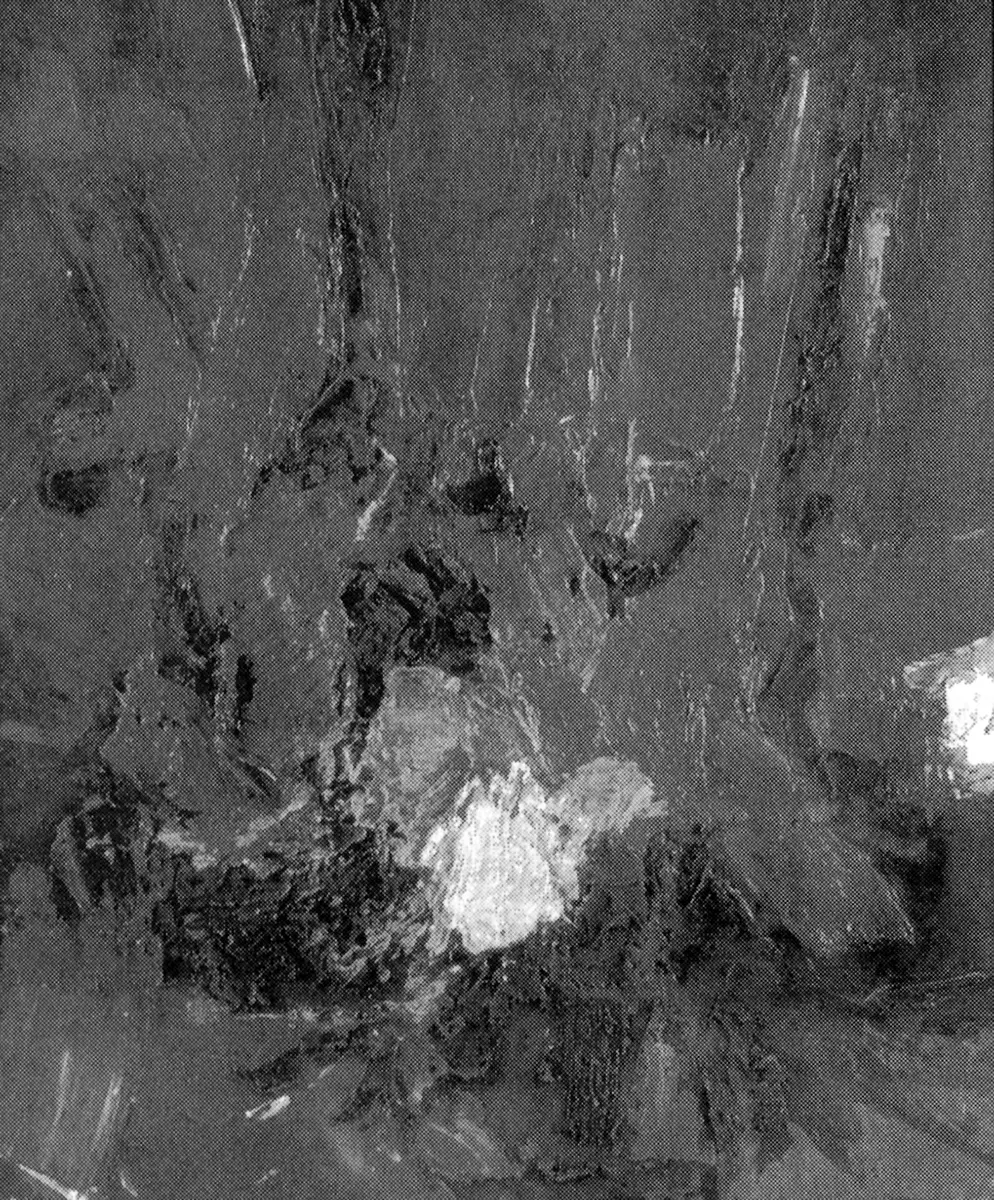
be made of Fernando Pena Defillo, a precocious master of abstract and textu ral
expressionism, Silvano Lora, already a “Committed painter-, and Ada Balcacer,
an artist of forms that are both organic and constructed.
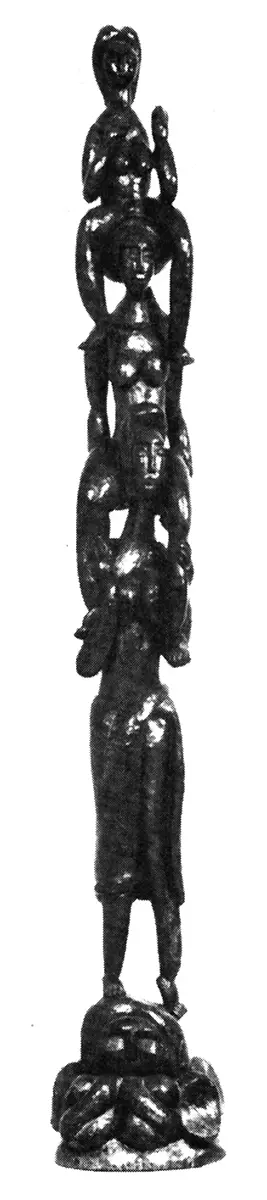
The impressive mahogany vertical carvings by Mario Gaspar Cruz, full of mythical, mystical and absolutely personal figuration, place him amongst the best of Latin American sculptors, even though he is not well-known at the continental level. Domingo Liz, whose life made him more a painter than a sculptor, was represented by a Torso and a very small-scale maquette of his Monument to the Heroes of Constanza, Maimon and Estero Hondo.
Dominican Art, Spanish Artists and Modernity,a complete manifestation which was accompanied by a series of round tables, conferences and publications, has been one of the major artistic events of 1996. The fact that it was held at the same time as the Caribbean Biennial meant that many visitors from outside the country had the opportunity to gain an exceptional insight into the best of modern Dominican art.
MARIANNE DE TOLENTINO