From 27 to 30 September 1996, the Fifth International Contemporary Art Fair (EXPOARTE) was held in Guadalajara, Mexico. The event, which was organized by Fomento ArteContemporaneoa.c. (FARCO) and directed by Pablo del Val, included the participation of galleries from Argentina, Austria, Brazil, Canada, Colombia, Costa Rica, France, Germany, Mexico, Netherlands, Spain, United Kingdom and the United States. Parallel to the fair, the Vth International Forum on Contemporary Art Theory (FITAC) was held under the title of «Dis- perse Practices”, directed by Osvaldo Sanchez. A series of exhibitions organized by FARCO provided an excellent complement to the fair and forum, making Guadalajara 1996 a complete success.
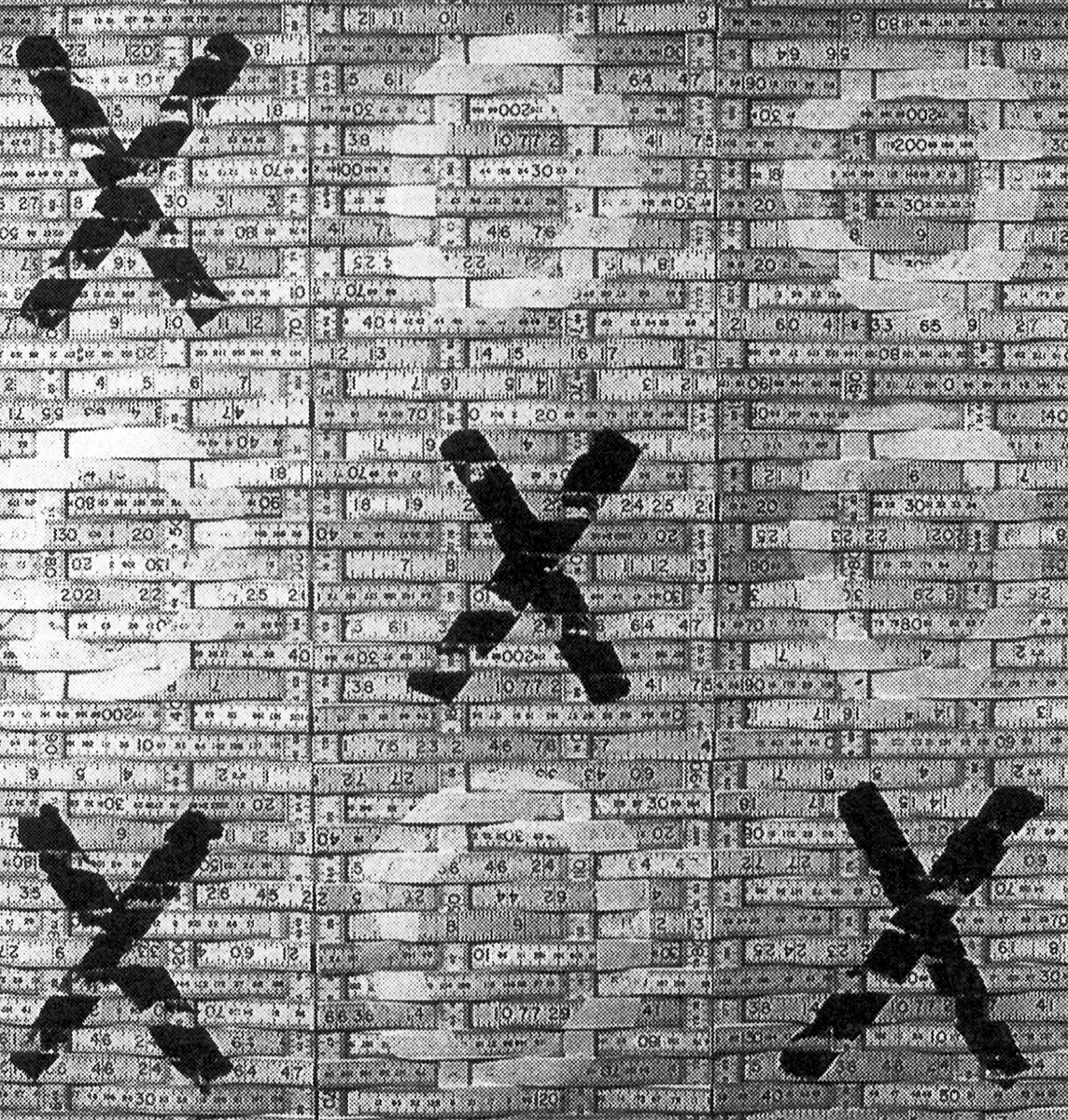
The fifth edition of EXPOARTE was characterized by a careful selection of participating galleries and artists, many of whom reflected the last trends and tendencies in international art. Some galleries presented works exhibited in major international, non-commercial events. The Espace d’Art Yvonamor Palix Gallery (Paris) presented a segment of Yolanda Gutierrez’s installation included in the last Havana Biennial, the Lelong Galleries (New York) and Joel Edelstein Arte Contemporaneo (Brazil) showed the «metros» of Waltercio Caldas presented at the Documenta, while the Camargo Vilaca Gallery (Sao Paulo) proposed a work by Adriana Varejao, similar to that shown at the Sao Paulo Biennial.
Special mention must be made of the works by Lia Menna
Bareto, Courtney Smith, Valezca Soarez, Yolanda Gutierrez and Monica Castillo.
The first presented, at the Thomas Cohn Gallery (Sao Paulo), a work entitled Blue
Curtain (1995), made of organza, melted plastic angels and flowers. Camargo
Vilaca (Sao Paulo) presented several works by Courtney Smith, including Toads
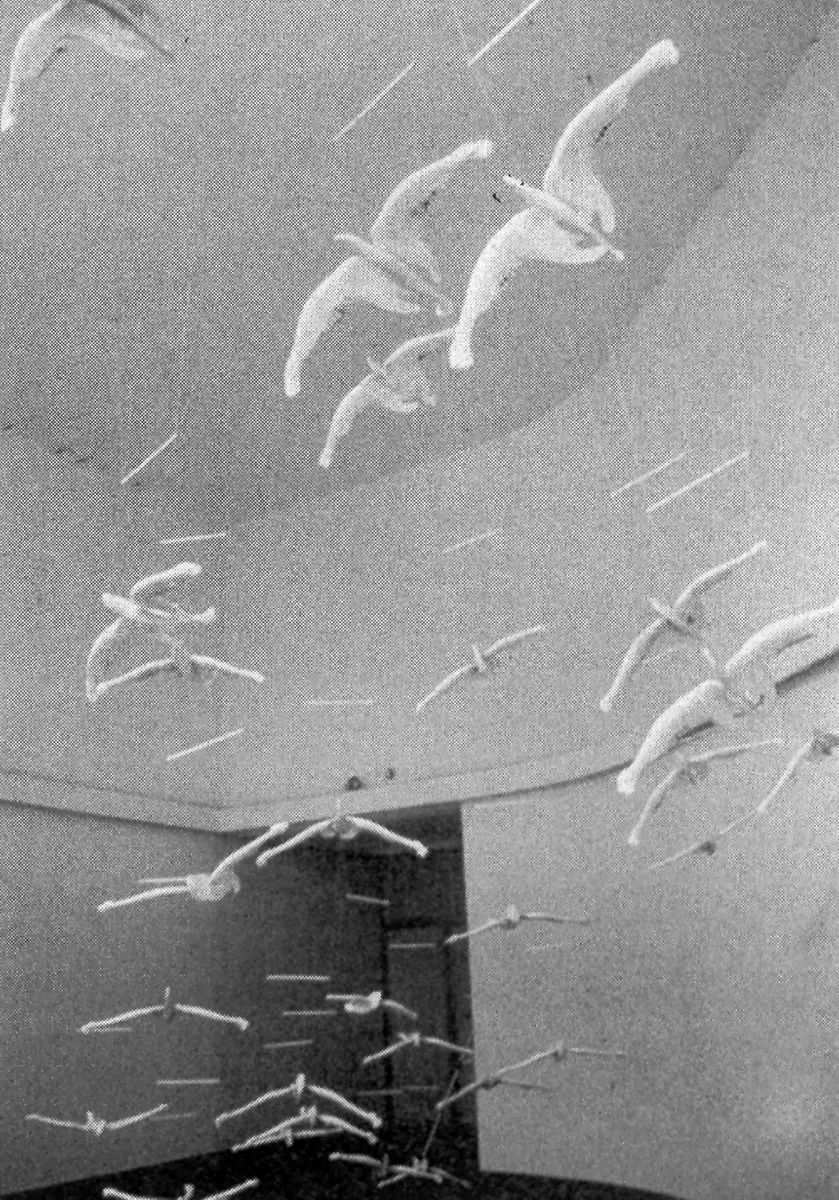
and Diamonds (1995), a curtain decorated with birds and lace handkerchiefs, and
Natural and Good Gift, another floor piece from the Cold Feet series (1996),
made up of a rope of red velvet with aluminum supports at each end, and at
Christopher Grimes (Santa Monica) a selection of drawings on paper with
paraffin. In addition to the work from the Havana Biennial, Yolanda Gutierrez
presented at the OMR Gallery (Mexico City) a series of works done with
non-conventional materials, such as Deeply (I996), a flower made with cow
intestine and maguey. Monica Castillo, also represented by OMR, exhibited her
Self-portrait with denominations (I996), a drawing on kraft paper in which, on
the basis of a series of codes, the spectator could interpret the portrait
according to the language invented by the artist. Finally, mention must also be
made of the work of Francis Alys, an artist currently making a name for himself
in Mexico, who was represented by drawings on paper at Jack Tilton (New York)
and by a rug at Arena Mexico (Guadalajara).
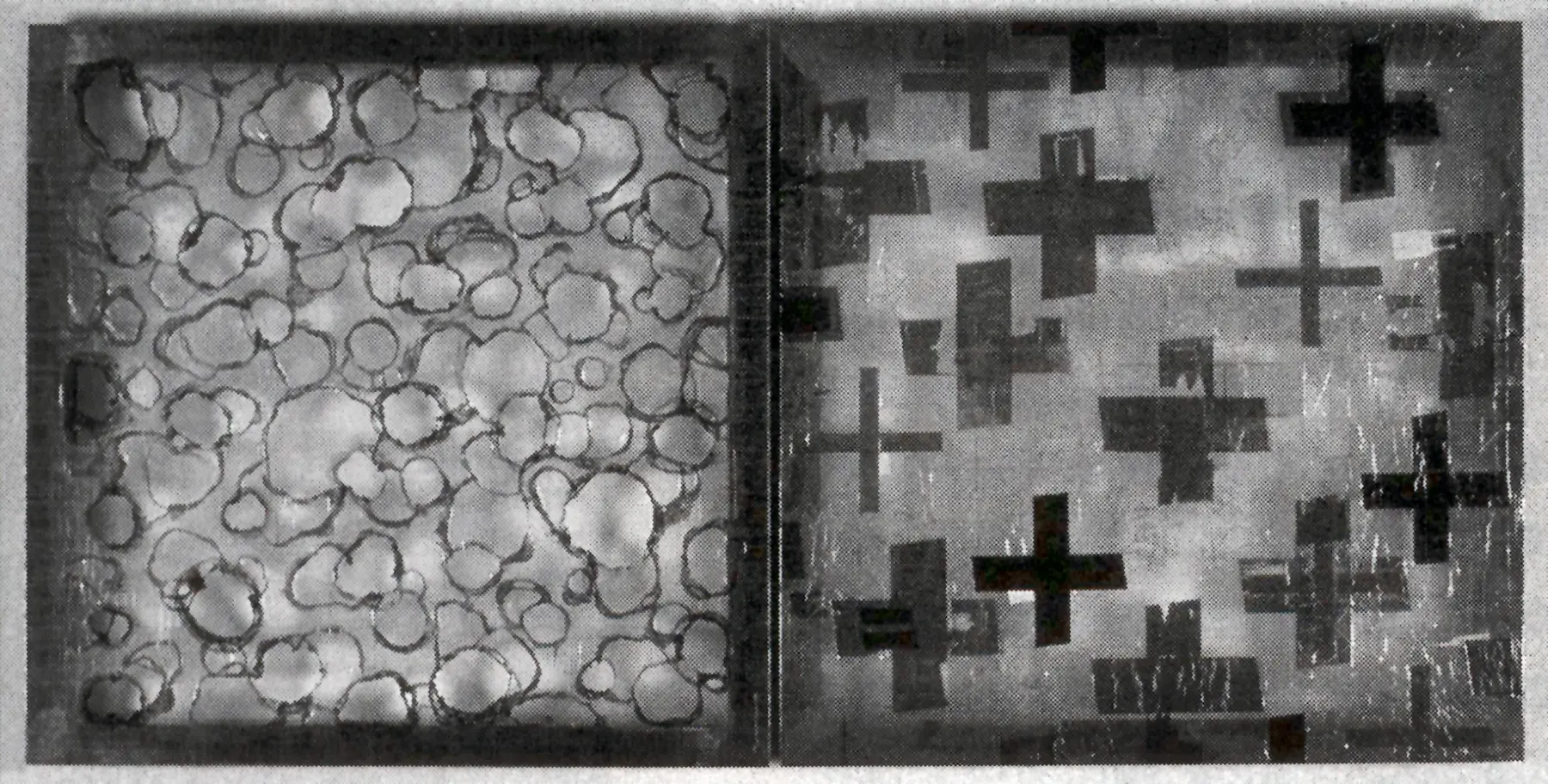
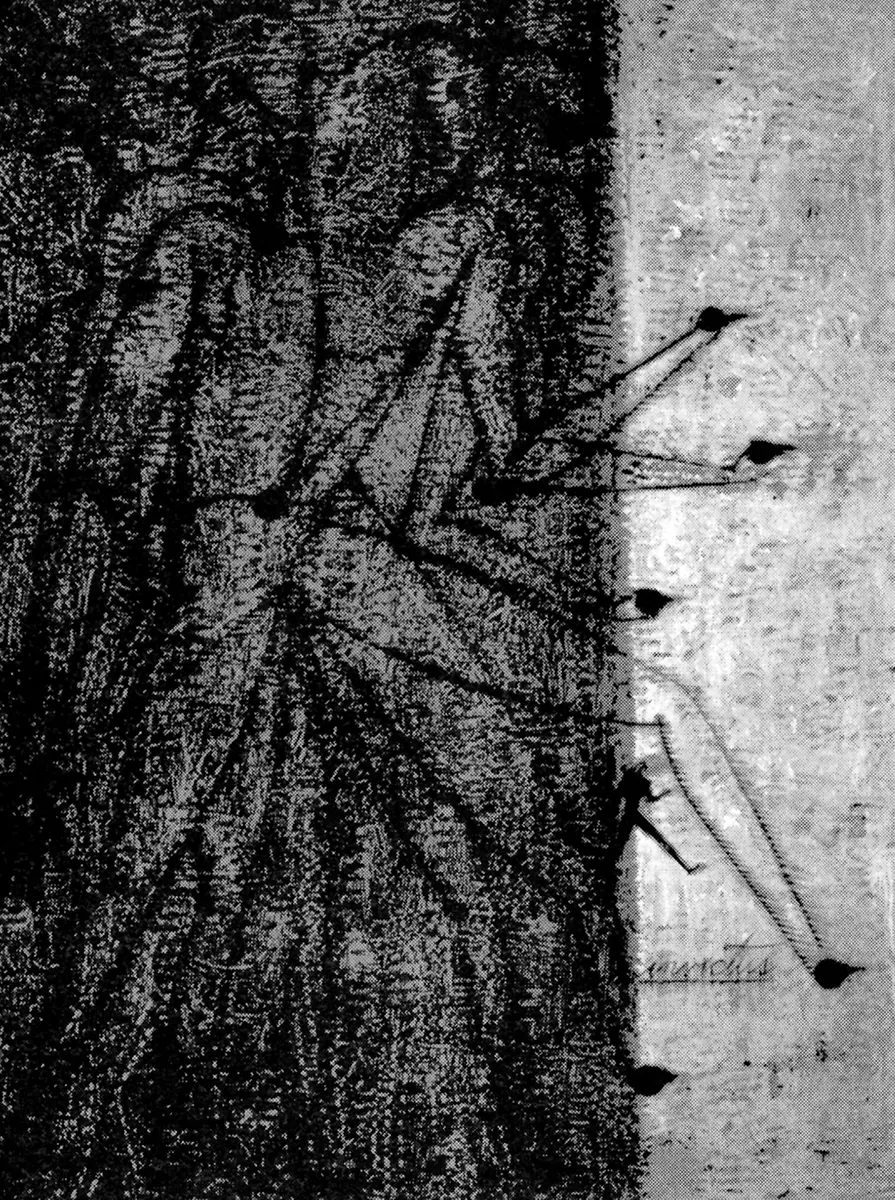
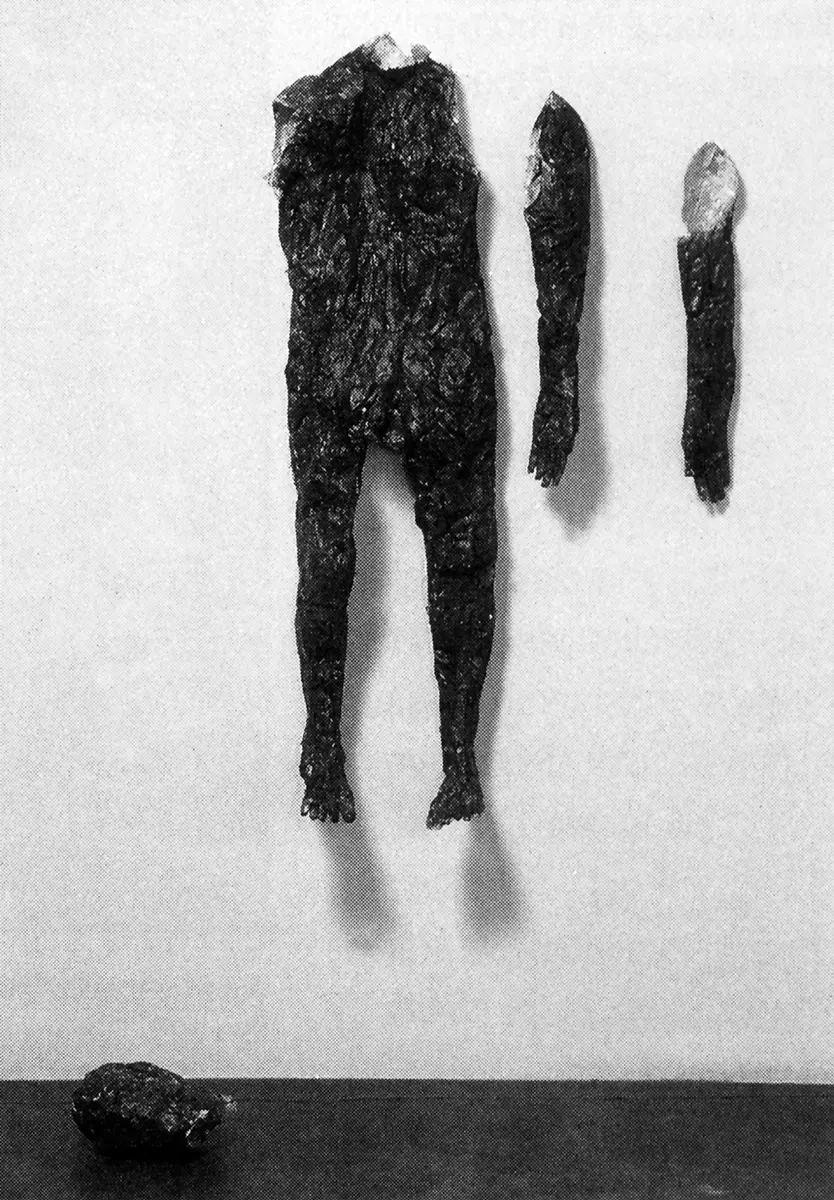
The fair also included two individual exhibitions. Jose Bedia, represented-by George Adams (New York), Ramis Barquet (Nuevo Leon, Mexico) and Fred Snitzer (Miami), showed a selection of his most recent works, including Invictus (I996), a large format picture in which the figure of a man appears in a spiritual «separation» into three anthropo- zoomorphous beings outlined against a brick-colored background. Charles Spurrier, at the Christopher Grimes Gallery (Santa Monica), presented a series of abstract works done with small square patterns in different kinds of materials, including burnt cellophane paper.
A constant feature of this fair was the opportunity it offered to see works by the same artist in different galleries. Julio Galan, whose pictures have reached exorbitant prices, was present at the Anina Nosei Gallery (New York) and the Barbara Farber Gallery (Amsterdam). This last mentioned gallery, as well as Thomas Kohn (Sao Paulo) showed works by Guillermo Kuitca. Anette Messager was represented at Shoshana Wayne (Santa Monica), Luis Adelantado (Valencia) and Chantal Crousel' (Paris). Ray Smith, who presented his new sculptures in wood, could . be seen at the Barbara Farber Gallery (Amsterdam) and the Ramis Barquet Gallery (Nuevo Leon, Mexico). Teresa Serrano was also on show at the latter gallery, as well at the Anina Nosei stand (New York). One ot the most represented Mexican artists was Nahum Zenil, who was included in the exhibits at Mary Anne Martin (New York) and the Galena de Arte Mexicano (Mexico).
Another feature of the fair was the large amount of
photography on show. Throckmorton (New York) had an excellent selection, which
included pieces by Luis Gonzalez Palma (also on show at Nina Menocal, Mexico
City) and Marta Maria Pelaez (also included in the exhibit at Ramis Barquet,
Nuevo Leon). Juan Martin (Mexico City) caused a sensation with the recent
«phallic» photographs by Francisco Toledo, and also presented work by Graciela
Iturbide and Lola and Manuel Alvarez Bravo. Lelong (New York) exhibited work by
Alfredo Jaar and Ana Mendieta, Dorsky (New York) by Lorna Simpson and Yvonamon
Palix (Paris) proposed works by Aziz and Cucher. At the individual level,
special mention must be made of the works by Sophie Calle, large black and
white photographs of tablets immersed in gravel stone, on show at Luis
Adelantado (Valencia) and Chantal Crousel (Paris), and the Marcaccio series at
Bravin Post Lee (New York).
The installations, of which there were not many, included pieces by Inigo Manglano Ovalle at Feigen (Chicago), Julia Sher at Andrea Rosen (New York) and Nadin Ospina (El Museo, Bogota). The first, titled Woofer (from Flora and Fauna) (I996), consisted of three screens which showed flowers opening and closing rapidly to the rhythm of the beating of a heart. Shen’s work reproduced a workshop in which a closed circuit camera involved the spectator in the creative process. Finally, Ospina’s piece consisted of three enormous monoliths with the figures of Mickey and Minnie Mouse in a room painted in mint color, with silhouettes of Mickey in a simulation of wallpaper.
Finally, a small number of galleries presented
traditional works, mainly by Mexican masters, including Mary Anne Martin (New
York), Galena Arte Mexicano (Mexico City) and Enrique Guerrero (Mexico City).
The last mentioned gallery proposed a selection of works which might well be
considered museum pieces, in particular the picture by Rivera entitled Lupita
Cruz at the age of three (I954), The Guitarist (I986) by Tamayo, and The
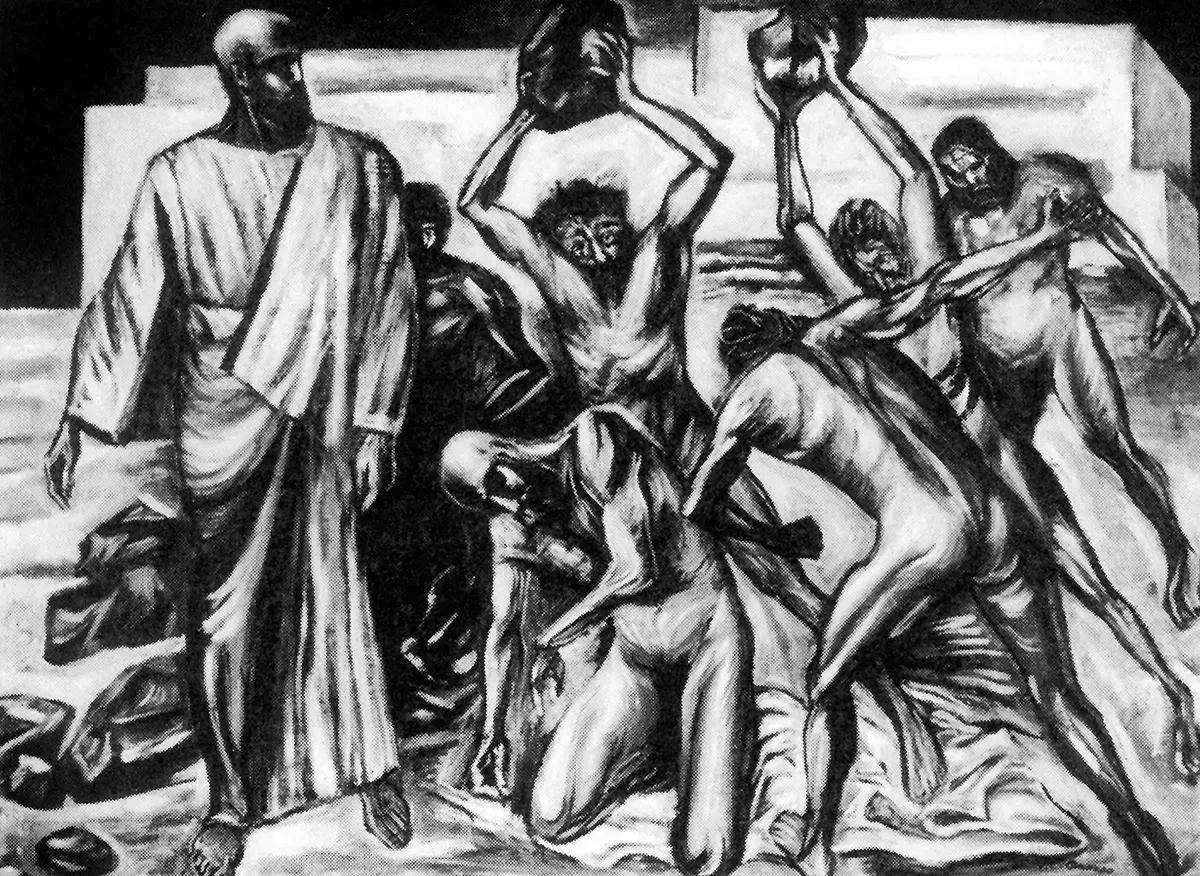
Martyrdom of San Sebastian (I943) by Orozco.
The Fifth International Forum on Contemporary Art Theory (FITAC), under the title of «Disperse Practices", fully achieved its main objective of offering the public a discussion on the «art institution". Each of the days were devoted to specific problems examined on the basis of reports presented by a group of outstanding experts.
«The displaced institution" was the title of the
discussions on the first day, with Carlos Aranda, curator of the El Chopo
Museum (Mexico) acting as moderator. In the morning session, the papers by Lois
Keldan, director of the Live Arts Program of the Institute of Contemporary Art
(London) .Norton Batkin, director of post-graduate studies at Bard College for
Curatorial Studies (New York), and Paolo Colombo, director of the Center of
Contemporary Art (Ginebra) stimulated the public’s interest in alternative institutions,
in particular the Kunsthalle. In the afternoon, there were lectures by Maria
del Corral, director of the contemporary art collection of La Caixa
(Barcelona), Jorge Glusberg, director of the Museum of Fine Arts of Buenos
Aires, Ivan de la Nuez, a Cuban-Spanish critic and the delightful speech by Ery
Camara, curator and critic from Senegal-Mexico - all of whom established the
bases for a critique of the museum institution, with special reference to the
differences between the United States and Europe in particular as regards the
role of the director.
The second day, entitled «Beyond the work", was moderated by the critic and curator Olivier Debroise (France-Mexico), and focused on the new artistic practices. The morning papers were presented by Kyong Park, director of Storefront Art and Architecture (New York), Rene Coelho, director of the Netherlands Media Art Institute (Amsterdam), Bill Arning, critic and curator (United States) and Ruben Ortiz, an artist from Mexico. Their proposals generated a lively debate on the development of the arts as regards architecture and the new technologies. The afternoon lectures by Sarit Shapira, a critic from Israel, Adriano Pedrosa, an artist and critic from Brazil, along with Pedro G. Romero, an artist from Seville were somewhat eclipsed by the impact caused by the presentation of Orlan, a French artist known throughout the world for her body art, who showed a video of the seventh surgical operation which she underwent in I993, as part of the process of «transformation» or «defiguration» of her body conceived of as a work of art.
The final session, “Alternative money», included
presentations by Ivo Mesquita, a curator from Brazil, Olivier Debroise
(France-Mexico), Sabine Breitwieser, director of the EA-Generali Foundation
(Vienna), Claudia Madrazo, director of La Vaca Independiente (Mexico), Marjorie
Jacobson, a consultant from the United States, Thomas F. Reose, sub-director of
the Getty Research Institute (Santa Monica), Manuel Gonzalez, director of the
art program of the Chase Manhattan Bank (New York) and Aline Pujo, curator of the
Museum of Modern Art of Paris. Moderated by Patricia Sloane, a gallery owner
from Mexico, the session discussed aspects related to the financing of the
plastic arts, with special reference to the need to find alternatives given the
cuts in government and corporate budgets.
Several exhibitions were held within the framework of EXPOARTE and FITAC, many of which included works by the artists represented at the fair. The Cabanas Cultural Institute presented two shows: the first, To live is to leave marks, curated by Pablo del Val, included a light installation by Consuelo Castaneda and Quisqueya Henriquez, photographs by Marta Maria
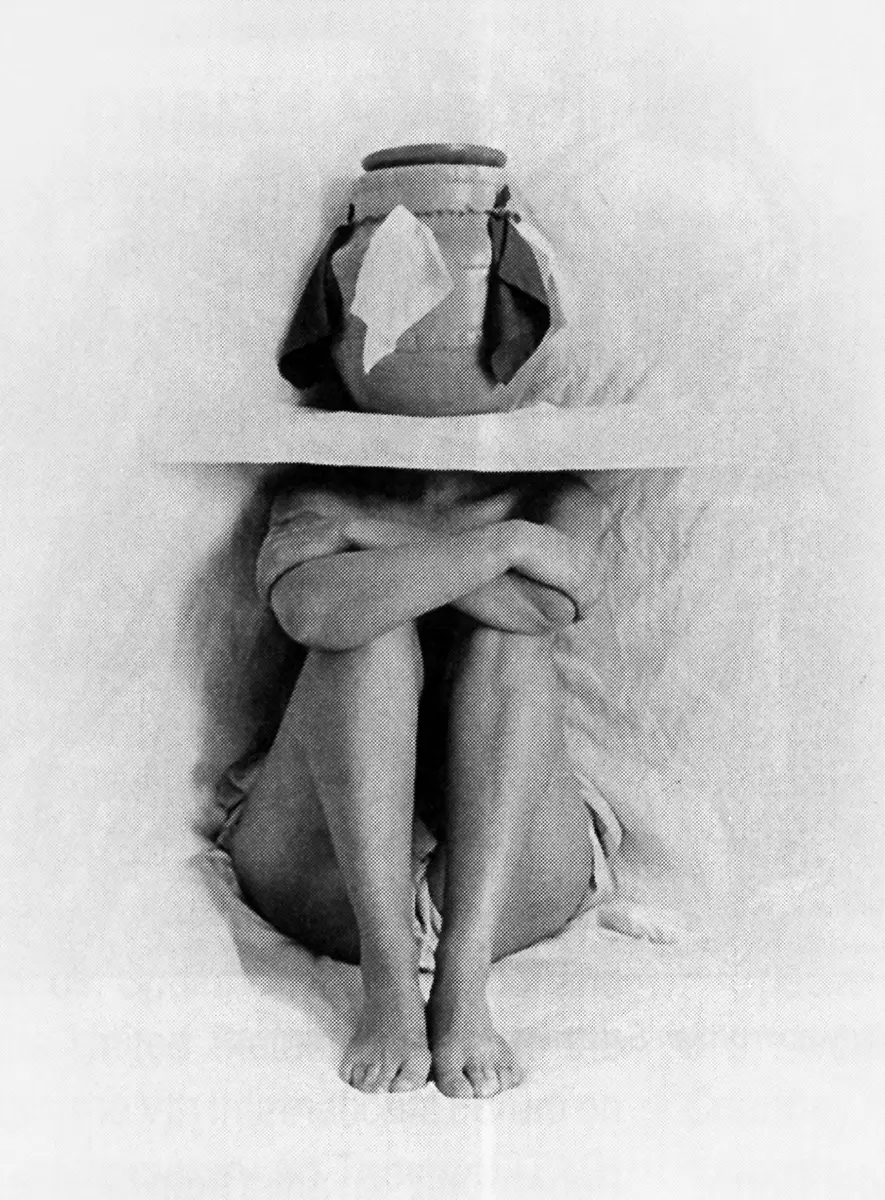
Perez and Lorna Simpson, and the hanging hand of Valezca Soares - as well as works by Silva Gruner and Elena del Rivero. The second show, curated by Girta Insam and titled Frozen Frame, was devoted to the theme of the cinema, and included works by Uli Aigner, Silvie and Cherif Defraoui, Werner Kaligofsky, Sigrid Kurz, Becky Mayer, Constance Rhum, Peter Sandbichler, Ruth Schell and Peter Weibel.
The Regional Museum presented three group shows: The
Architecture of Dream, curated by Carlos Basualdo, which included works by
Rodney Graham, Pablo Siquier and Sophio Tottie; Picture by Picture, curated by
Carlos Ashida and Ruben Mendez, with works by Francis Alys, Eduardo Cervantes,
Daniel Guzman, Ruben Ortiz, Alejandro Ramirez, Ray Smith, Marco Arce, Ruben
Mendez, Marta Pacheco, Daniela Rosell, Melanie Smith and Pablo Vargas Lugo; and
Video Face, a video exhibition on the theme of the face, curated by Ruben Gallo
and Terence Gower, with works by Knut Asdam, Robert Beck, Cheryl Donegan,
Rainer Ganahl, Aunrico Gatson, Thomas Glassford, Silvia Gruner, Lucy Gunning,
Takahiko limura and Javier Tellez.
The final exhibition, curated by Guillermo Santamaria, was entitled Another place, very far from here. Unfortunately, the show was the victim of a torrential downpour which indundated the space allotted to the works of Gustavo Artigas, Hector Bialostozky, Kenneth Bostock, Eduardo Cervantes, Humberto del Olma, Juan Jose Diaz Infante, Thomas Glassford, Philippe Hernandez, Anette Kuhn, Daniel Navarro, Damian Ortega, Marta Pacheco, Manuel Rocha, Mauricio Rocha, Alejandro Sanchez, Santiago Sierra, Roberto Turnbull and Hector Velazquez.
Guadalajara I996 was a complete success at every
level. With a full social agenda and an intense program of exhibitions and
conferences, the event has become one of the most important on the contemporary
international art calendar.
FRANCINE BIRBRAGHER