
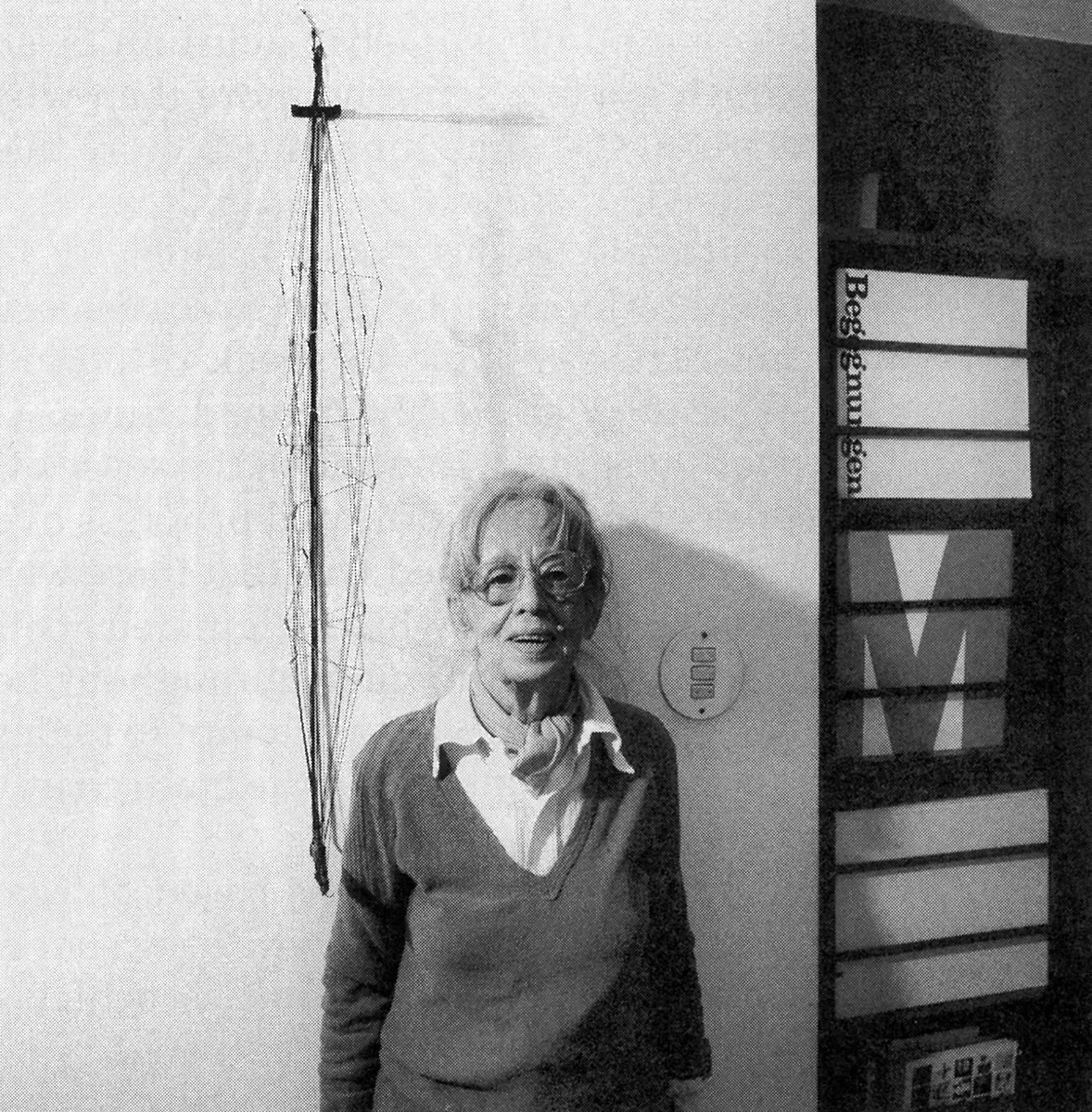
Gego (Gertrudis Goldmichdt) was born in Hamburg, Germany, and died in 1994 in Caracas, Venezuela. She studied architecture and graduated in the city of Stutt gart, although her training and development as an artist took place entirely in Venezuela. Her initial development was nurtured by the impulse of neo-plasticism, which acquired considerable influence in the 1950s. In addition to her artistic work, she was an indefatigable teacher, working at the School of Architecture of the Central University of Venezuela and at the Design Institute of the Neumann Foundation. It was precisely architecture and design that shaped her aesthetic attitude and guided her technical resolutions. On various occasions, she admitted that the Russian constructivists, in particular Gabo and Peusner, had been her most explicit influences. Her work was characterized by an uninterrupted process of investigation which allowed her to achieve a supreme synthesis of austerity and subtlety. Although her artistic work was carried out in a very personal and solitary fashion, today we can place her, along with Jesús Soto, Carlos Cruz-Díez, and Alejandro Otero, amongst the most representative “quartet” of kinetic artists in Venezuela.
“The presence of will means the death of art”, Michaux once said, whereas Seuphor adopted the opposite view: “The absence of will certainly results in the death of art”. Either position may be possible, depending on one's perspective. The presence of will alone is not sufficient to achieve the highest levels of creation, but in the same way, its absolute absence will prevent the maximum degree of achievement. Its presence must always be set within proposals that allow the belligerent incorporation of feelings and intuitions. It was within this territory of harmony and balance that Gego's aesthetic potential came to be defined.
From a strictly plastic point of view, the fundamental aspects of her work are to be found in the efficiency of her alphabet, the schematization of her vocabulary, and the impact of her discourse. From the outset, it must be said that the efficiency of this alphabet was reflected in the establishment of three codes, namely the point, the line, and the void. This might appear to be a platitude, but I refer to it here because Gego's work has generally been defined in terms of the projection of lines in space. I believe that such a view is neither complete nor satisfactory, firstly because it omits the point (as an expressive element) and secondly, because it conceives of space as an adjectival support for the work. Given these limitations, there is a need to rehabilitate the presence of the point as a configurative element in the artist's alphabet and at the same time, the expression “projection of lines onto a void (or space)” should be replaced by the “projection of points, lines and voids (or spaces) which encom pass and reactivate an atmosphere.”
But let us, for the moment, forget justifications and extremes in the most direct aspects of the matter. In plastic terms, the point is the minimum type of visual unity, the basic element and origin of all visual communication. The essential aspect of a point is related to a concept of “place”, i.e. it is identified with a place of meeting or relation. In Gego's case, this “place” of meeting takes the form of rings, twists, or links that are essential elements of her constructive grammar.
Therefore, if the point is the place of encounter of the lines, the latter represent a kind of journey. The line is the active force that emerges from a point in movement; it is the displacement of a point or the sequence between two points. In Gego's case, the lines may have a straight, curved, broken, or mixed structure. They may be the result of a trajectory that is segmented, cut, continuous, or discontinuous. They may acquire a slight, light, or subtle kind of intensity, or give dynamism to a parallel, transverse, woven, or interwoven interaction. They may also suggest a temperament that is calm, anxious, tense, or balanced. As a result of these many different options, the line assumes the main responsibility for the resolution of Gego's proposals.
This brings us to the third of Gego's codes: the void. As noted above, although it is worth repeating to under score our argument, the void is not merely adjectival support, but, on the contrary, it is an essential component of the expressive possibility of the artist's proposal. The void is not something that surrounds or gives context to the object, but rather is a material and structural component. It is an ingredient of a curious kind of protagonism, since its participation reflects a particular kind of silence and a particular kind of repose. It is silent because, instead of speaking or shouting, it expresses itself in silence and is equivalent to a kind of grimace or an expression of the eyes. And it is restful in an equally unusual way, a repose which has nothing to do with apathy, exhaustion, or the lack of enthusiasm. Here, repose exists only when the work is placed in isolation; on the other hand, the presence of a spectator reactivates it with an impetus which is analogous to that of the line and the point.
From the above, we can establish the following description: the works of Gego are compositions of sensitive lines that act like a chain articulated through sclerosed points and that is affirmed through the presence of activated voids. Just as Kandinsky spoke of a “point and line on the surface”, so in the case of Gego, we can speak of “point, line, and void in the context”.
But, in addition to the efficiency of her alphabet, the schematization of her vocabulary provides the basis for the establishment of her aesthetic proposition. The alphabet is related to elementary codes (letters), while the vocabulary is related to the lexicon (words) that are used to resolve the visualization of her work. In this sense, her vocabulary has three complementary dimensions: volatile volumes, open forms, and measurable spaces. These expressions in themselves reflect the most important attributes of Gego's work. The concept of volume has always been related to the existence of a heavy mass or with a forceful body; however, in Gego's case, the volume is vaporous, light, and weightless. Some thing similar occurs with the term “form”, which is usually related to a tangible and full-bodied materiality; but, in Gego's case, it acquires certain characteristics that are immaterial, fragile, and very delicate. In this way, the meaning of space is also re-examined, and instead of being something incorporeal, ethereal, and gaseous, it takes on certain expressive and expanded connotations. All of which reminds us of Paul Valery's axiom that “the deepest glance is that which is directed towards the void”.
We have spoken of Gego's alphabet (point, line, and void), as well as her lexicon (volatile volume, open form, and measurable space). Now we must examine the impact of her discourse, which means the entire circuit of her aesthetic foundation: we shall begin with the letters, then examine the words, and end with the particular range of her dissertation. It is proposed that Gego's plastic discourse is directed towards three complementary horizons: fullness, fugacity, and excitability. Fullness is represented by the energy and vitality emanating from each of her works. Fugacity is associated with the spontaneous fluidity of her resolutions. And finally, excitability is part of the persuasive plurality of her rhythms. The combination of all these different kinds of behavior becomes a kind of geometric delirium or abstract fantasy, which is, in a sense, no more than what can be seen and is, at the same time, much more than what can be perceived.
These remarks provide the necessary framework for understanding the development of Gego's proposals. In her case, it is not really possible to speak of periods that began and ended at clearly defined times. Of course, neither was there any evolution in the sense of a chain in which each of the links indicated progress over the preceding link. What happened was that there were developmental axes in her work that originated at one time or another and that continued throughout her artistic career. That being said, we can attempt to review those developments that constituted the main characteristics of her proposals.
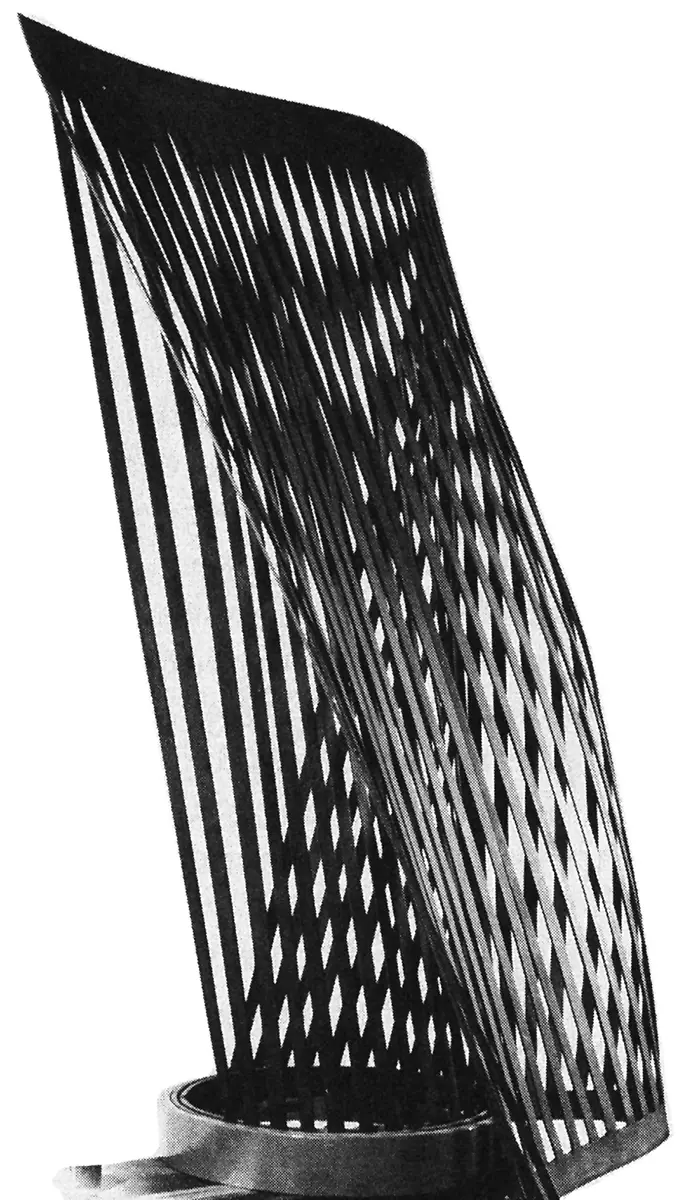
Fabrics (1957). These are constructions based on remnants made up of parallel metallic lines that are shaped into capricious curved folds. The result is achieved through airy volumes that create accentuated vibrations and effects of formal dematerialization. Strips (1958). These are small formal pieces with aluminum or copper strips coiled (in a spiral or concentrically) to create clearly circular effects. Each circuit has a differ ent diameter that generates the dynamics of a virtual volume. Rectangles and Squares (1960). These are planimetries made up of relatively precise parallels that form orthogonal modules. These modules overlap one another or are arranged in rising, vertical sequences.
Bands (1961). These are made-up parallels, the precision of which is interrupted by the turns and breaks of the different lines. They generate high degrees of sensibility due to the rare instances of convergence and the various associated insinuations. Suggested Forms (1964). These are geometrical definitions (ovals, disks, triangles, and globes) that result from the superimposition and convergence of surfaces made up of parallels. Such proposals are always char acterized by rigorous precision. Twisted Bands (1967). These are parallel bands that, at some point in the sequence, become twisted to reveal luminous enhancements that are finally transformed into geometrical and emblematic forms.
Classic examples can be seen in the artist's experimentation with architecture, as in the case of the Cediaz Mural and the east face of the INCE building in Caracas.
Agglomerated Lines (1968). These are structures based on lines of various sizes and directions. The appearance of areas of concentration and the irregular distribution of the lines create very dynamic and sensitive effects.
Superimposed Screens (1968). These are medular forms of various sizes and silhouettes adjusted by parallel and broken lines. The superimposition generates undulations in perception that depend on the angle of vision. The Five Screens at the IVIC belong to this work.
Cords (1972). These reflect a conception adapted to architectural works. They are resolved through the use of various materials and are a plastic response to a dialectic between tension and distension, concentration and flight, congregation and dispersion. The Cords in Central Park are an excellent prototype of this kind of proposal.
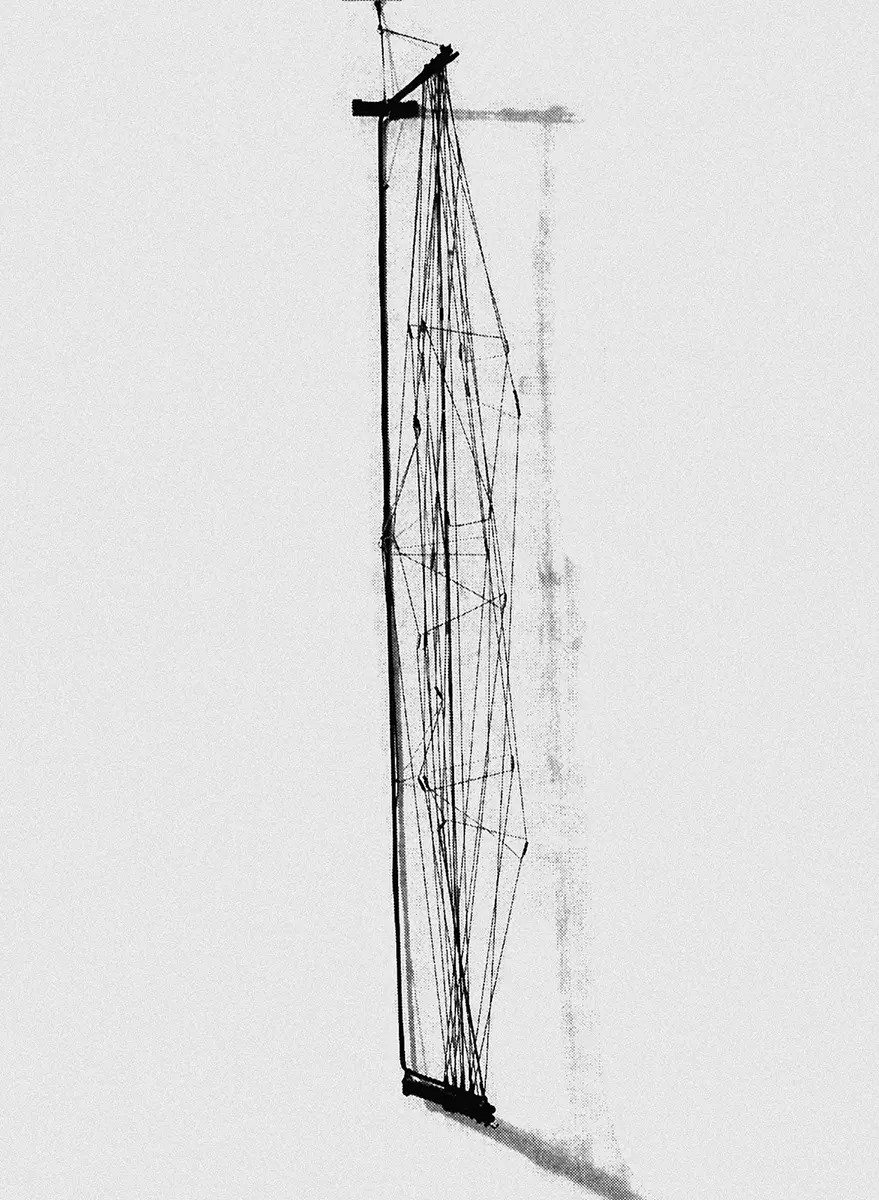
Spurts (1970). These are segmented lines which func tion like micromodules linked together in a vertical se quence. The articulations may be very schematic and elementary, or make use of very complicated and com plex algorithms.
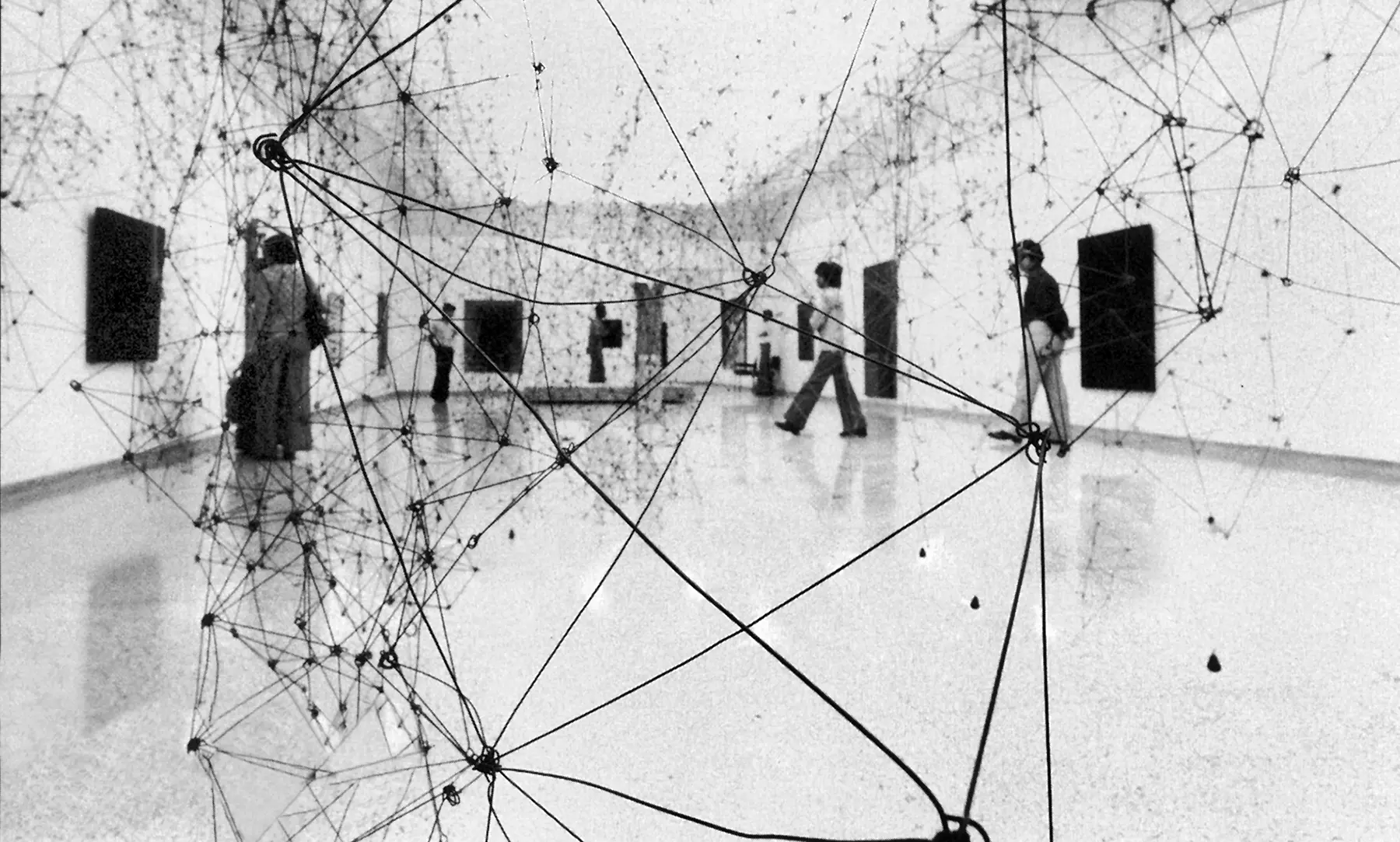
Reticulareas (1969). This is the artist's most significant achievement. They are defined through networks struc tured with triangular or quadrangular modulations pro jected into a succession of lines, points and voids. Their vital expressiveness, mysterious sense of balance and taut lightness have been praised by numerous critics. Mention must also be made of the systemic effects which they generate, since they constitute macrosystems com posed of smaller subsystems characterized by an interdependence of considerable sensitivity.
Derivations. I am using this generic term to cover brief ly all the alternatives which arose as a result of the investigations of the Recticulareas, including: the Meshes (1971), which consist of aerial planes suspended in a square or curved network; the Separated Lines (1973), which are a simplified version of lines and geometric modules; the Clouds (1974), consisting of stable environ
mental networks which are structured horizontally; the Trunks (1976), resolved in the form of aerial spheres, and finally, the Drawings without Paper (1976), made up of overlapping surfaces on the wall which enhance and increase the weight of the lines on space.
Maquettes (1980) and Paper Textures (1980). These were the last aesthetic experiments of Gego. The Maquettes consist of miniscule format pieces which reveal the most intimate and intense kind of sensibility, while the Paper Textures are strips of waste paper (from packages, ciga rette boxes, etc.) worked into delightfully dense textures.
The scope and diversity of the resolutions in Gego's work reveal her interest in investigation. In fact, the different facets of her artistic development reflect an unusual kind of experimentation. In particular, her aes thetic interests were directed towards four aspects: first, the in-depth exploration of structure; second, the sensi bilization of geometry; third, the redimensioning of fili- formism and finally, the simplification of abstraction.
An examination of Gego's different investigations into structure reflects her undoubted interest in its content, behavior and scope. For Gego, structure is apprehended in all its aspecsts - as a vertebrate skeleton, as a naked schema, as an organic ordering and as a network of tensions. Structure is also focused in systemic terms, and seen as a set of relations which make up a self-regulated circuit. In the same way, structure is also understood in its gestaltic sense and seen as a superior whole which is different from the simple parts which may constitute it. Finally, it is seen in terms of contradiction, i.e. as a sign of the possible de-structur ing of what is structured.
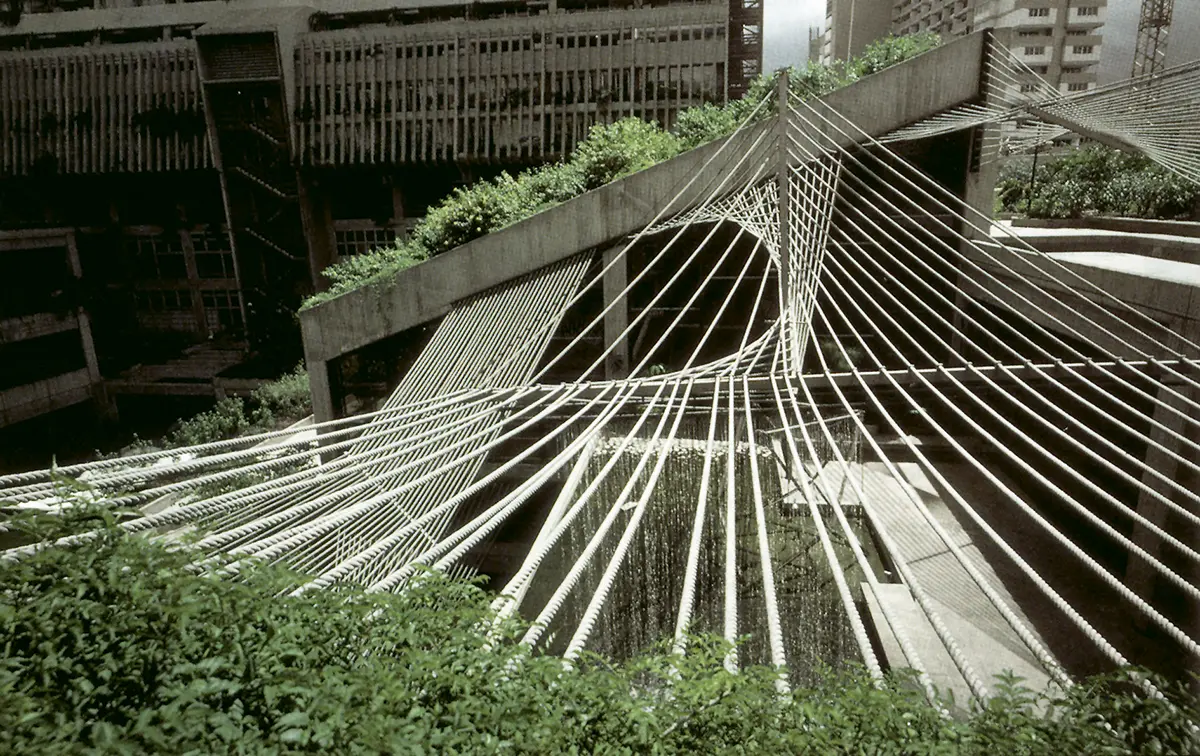
As regards the sensibilization of geometry, one of the most captivating fea tures of her work is precisely its capacity to inflect the intellectualized rationality of orthogonal languages. Gego's geometry is heterodox rather than or thodox, more intuitive than dogmatic, more joyful than poweroriented, with more freedom than rigidity, lyrical rather than asceptic, temperamental rather thansober. All this explains why exactitude and perfection give way to the sensitivity of artisanal action and its impact on the emotions. Gego showed that the rules can be transgressed only when they have been fully mastered in every detail.
Thus we come to another of her most important con cerns, namely the redimensioning of filiformism. In gen eral, filamentous sculpture can be said to be one of the supreme instances of abstract discourse, since it marks the most definitive break with the referential world. While «closed fist» or bulk-based sculpture has always maintained links with the empirical world, filiform pro jections are more centered on self-description and self- affirmation. In this respect, Gego was a major representative and shed much light on the plastic poten tial of the art, personalizing and exploring in depth a discourse in which the filamentous line invades spaces and gives shape to encounters and voids, rhythms and proportions, hieratisms and dynamisms. In this context, her «graffisms», «lineal spatialisms», «floating atmo- spheres» and «aero-sculptures» - call them what we may - go well beyond any traditional concept of sculptural volume.
We must now make a few remarks about the simplification of abstraction. Gego's permanent spirit of investi gation led her towards a veritable economy of resources. But this does not mean that it led to simplification as an end in itself. On the contrary, simplification was merely a means of achieving plastic efficiency and an alternative way of achieving abstract resolution. When this is taken into account in the context of her use of filiformism, it is clear that Gego achieved the highest degree of non- referentiality, without any loss of the mysterious energy of her work or lapsing into formal devices for its resolu tion. Her supreme merit lay in a very simple apprecia tion: her work delights us by its sober and austere poetry.
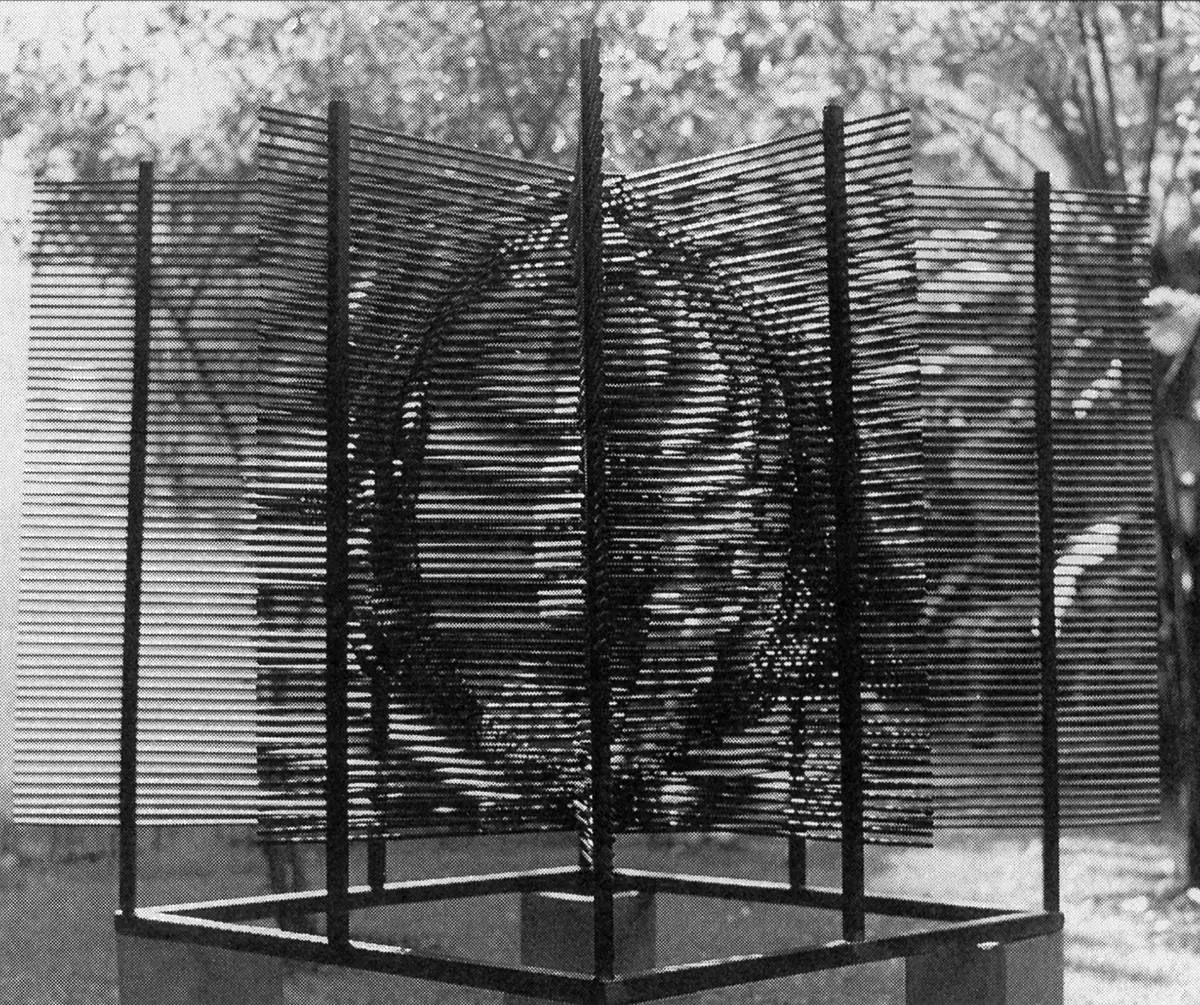
Finally, a word about her technique. It must be remem bered here that she was an architect by training, and account must also be taken of her work in the fields of design and teaching. All these sensibilities came together in the development of the technical procedures employed inherwork. Itisthereforenotsurprisingthatsomeofher pieces were preceded by studies, projects and maquettes.
Similarly, she undertook an analysis of her materi als in order to guarantee coherence between the specific nature of each work and the intrinsic qualities of her resources.
It is within this frame work that Gego adminis tered her constructive qualities. She began with the most unusual elements and brought them together through the dynamics imposed by the filiform nature of her alphabet. There was a generative process at work here, since the links created sugges tions for sometimes unexpected kinds of progressions. Thus to the prefiguration of certain premeditated results were added the emergen cies resulting from immediate encounters. Her works were a response to the unfolding of successive surprises and sudden gratifications: each line, each point, each union and partial product, as well as, of course, each final result became a source of joy and the starting point for subsequent work. Gego delighted in the process with the same intensity which she discovered in the conclusion. Thus technical execution was never tortuous, unlike the case of many constructivist artists. On the contrary, it was the fluid dynamics of a tempered anxiety and a plethoric submission. She knew how to combine in m
as terly fashion constructive structuration and geometric resolution with an artisanal kind of docility and lyrical freshness. This also explains the presence of certain «slips» or «accidents» which highlight the value of manual sen sibility over and above the perfection of mechanical finish. In a sense, Gego reminds us that beyond any demands of a «precious» or «precision-based» aesthetic there are the paramount statutes of human sensibility. Her goal was not to compete with the exactitude of a cybernetic program, and nor did she seek to emulate the instinctive meticulousness of a spider's web. Above all, her concern was to explore the intuitive imprecisions of human praxis.
VÍCTOR GUÉDEZ
Venezuelan art critic. Lives in Caracas.