
Within the broad spectrum of Mexican documentary photography, a special place must be reserved for the work of Graciela Iturbide (Mexico City, 1942). The author of such photographs books as Those who live in the sand (1981), Paper dreams (1985) and Juchitan of the women (1989), this admirable photographic artist - one of the honored in Mexico and with the greatest reputation abroad - presented last year, first in Monterrey and then in Mexico City, an exhibition which is likely to remain in our memory. Entitled Graciela Iturbide: Form and Memory, the retrospective show was exhibited at the Museum of Contemporary Art (MARCO) of Monterrey between February and August, and in rooms 19, 20 and 21 of the Antiguo Colegio de San ll defonso between II September and 24 November. In Mexico City, the show was part of Fotoseptiembre.
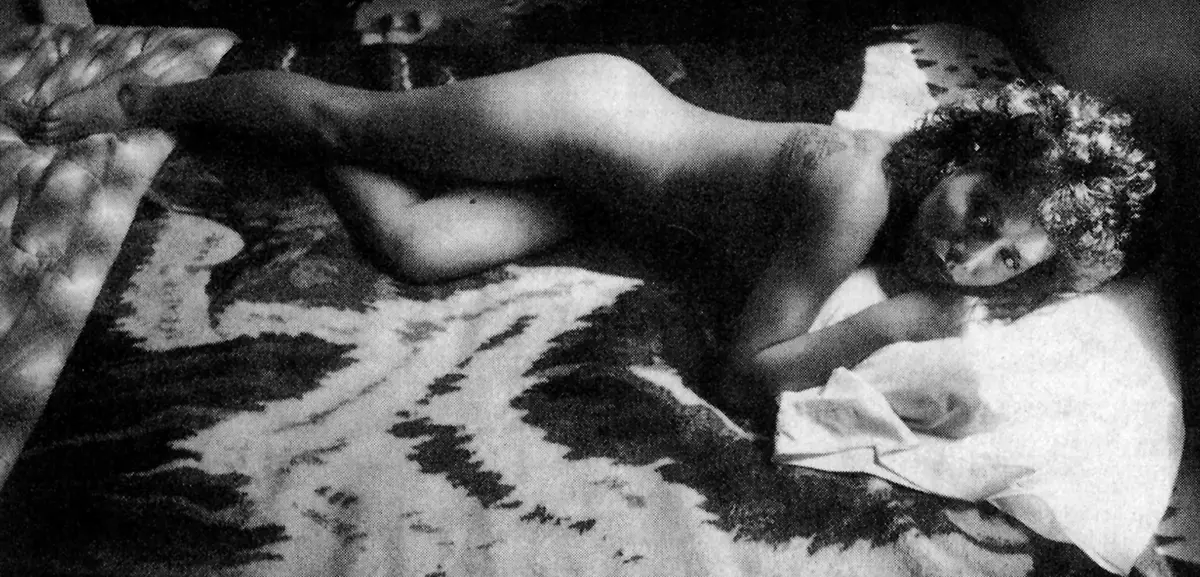
Dedicated to the master Manuel Alvarez Bravo (the great patriarch of Mexican photographic art, and whose assistant Graciela Iturbide was between 1970 and 1972), the show included a total of 93 black and white photographs, dating from 1969, in six thematic series. The exhibition included, of course, such classic works as Mexico City (1969), a crude image of a prostitute; Woman angel (1979), a Seri Indian from the Sonora desert coming down from a cave, wearing her traditional dress and holding a taperecorder in her right hand; Our Lady of the Iguanas (1979), a majestic Juchiteca woman with an iguana hat, recalling two of the most celebrated works of Raul Anguiano, one painted in 1956 and the other in 1971; and The Lord of the Birds (1984), a Nayarita man contemplating with perplexity the poetic flight of the sign-birds.
Five years ago, Iturbide spoke about her work in the following terms: «lt is difficult to find the word to describe this kind of work. In the final analysis it has been called street photography since it is not done in the studio. You go out in search of reality, although the photograph may be very subjective given the complicity between the photographer and his or her subject. My work is of this kind, direct or street photography. I take what reality gives me, I do not construct it in the studio, I go out to look for it. I am interested in communication with people, in being Close to other cultures. I go to a place, I stay awhile to be able to tell, through images, a story about that place»(l).
A woman of great visual culture and with a globe-trotting vocation, Graciela Iturbide goes out in search of her images and always finds them. Without any prejudice, she seeks out men and women of the most varied cultures, always in an attempt to restore their dignity, irrespective of creed or race. Her regionalist images which dignify the human being are without doubt of considerable aesthetic and historical significance. They are not photographic testimonies which reveal injustice or make social criticism, but discover reality itself and endows it with aestheticism. In so doing, Iturbide makes full use of her great sensitivity and talent, but also her enormous cultural knowledge, ranging from abstractionism and surrealism to the photographic lessons of Edward Weston and Manuel Alvarez Bravo.
In the work of Graciela Iturbide, form and memory come together in a harmonious dialectic. Her retrospective exhibition at the MARCO and San lldefonso confirmed all this, enabling us to visualize perfectly her artistic work which is, at the same time, an historical document.
NOTES
l)See Lia Garcia Verastegui, «lnstantaneasde luz. La fotografia en Mexico*, in Memoria de papet, Mexico City, Year 2, No. 3, April 1992, pp.29-30.
ANTONIO ESPINOZA