Meret Oppenheim
lived 73 years (1913-1985) of independence. It was an ambiguous luxury. On the
one hand, it was a life full of external rejections and internal depressions.
On the other, she created a body of very irregular and dissimilar work which
seems to say that the artist reached the point of even becoming independent of
herself. She delivered her great historical blow at the age of 23, with her
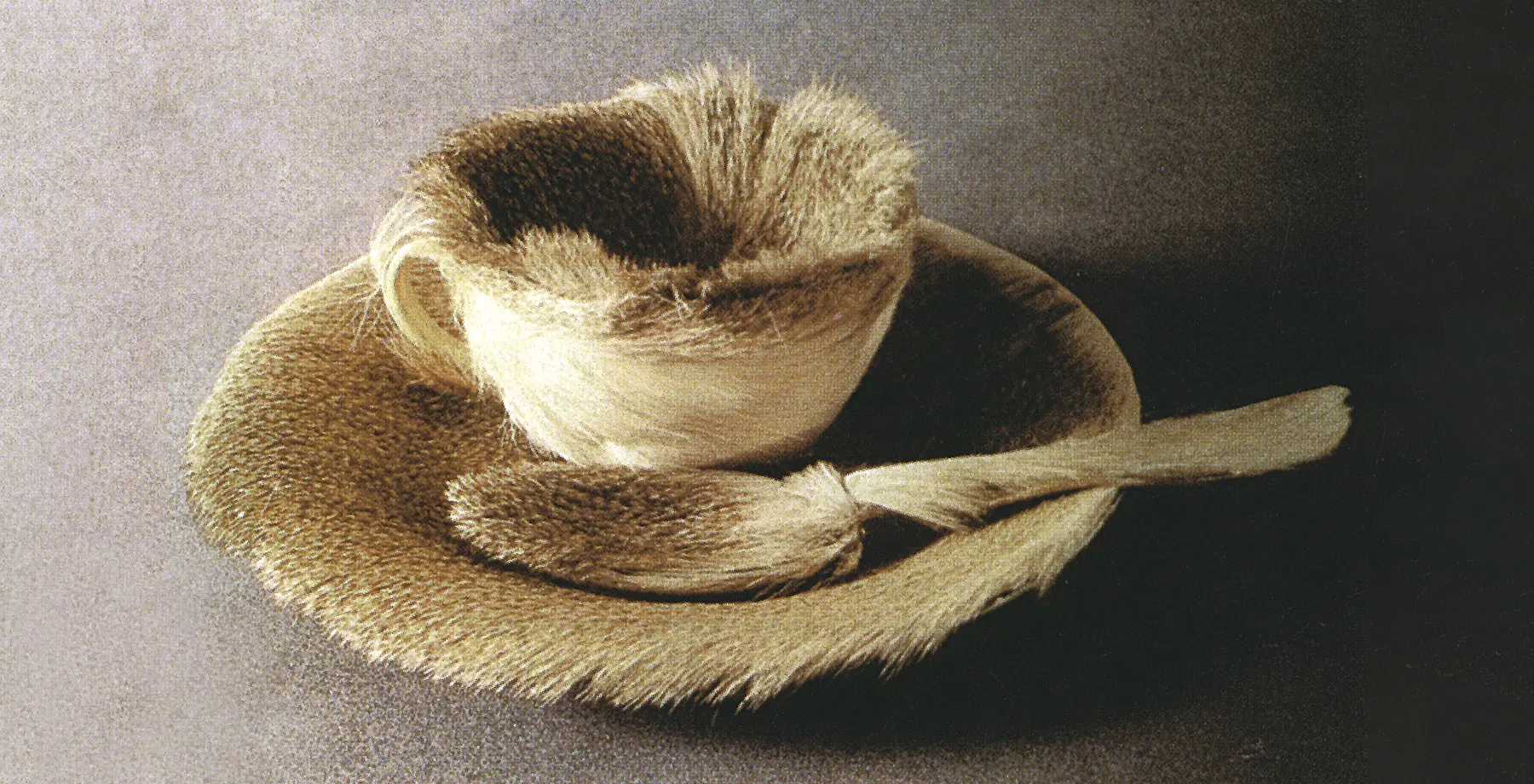
Dejeuner en fourrure (1936) (1), a work which was immediately acquired by the
Museum of Modern Art of New York and promoted as one of the maximum emblems of
surrealism. After that work, of purely casual origin (an observation by Picasso
that anything could be covered with fur and Oppenheim's comment: «like this
cup, for example»)(2), her objects were few and well spaced out. According to
the catalogue raisonné of her work (Bice Curiger), the cup is her first
objectual creation. It was done as part of a Project for sandals, a drawing of
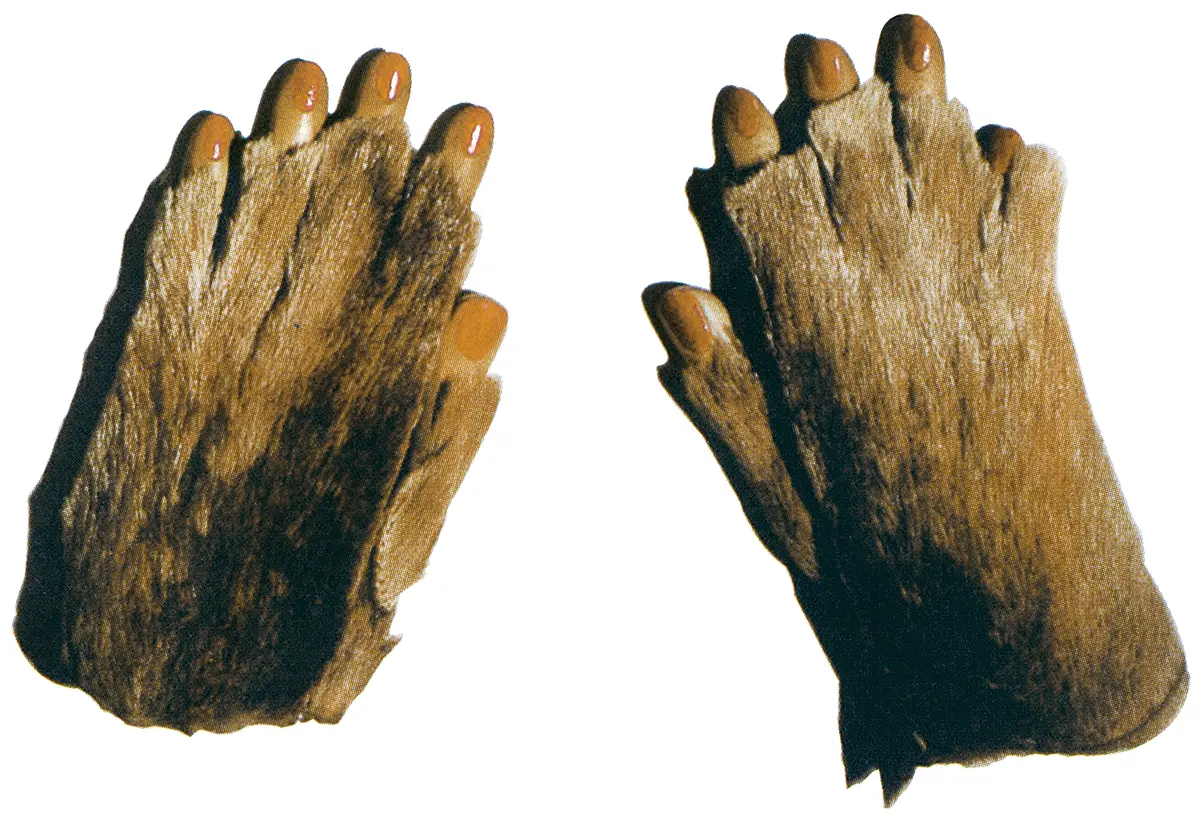
a high-heeled sandal with fur and toes pointing out(3), and the Fur gloves with
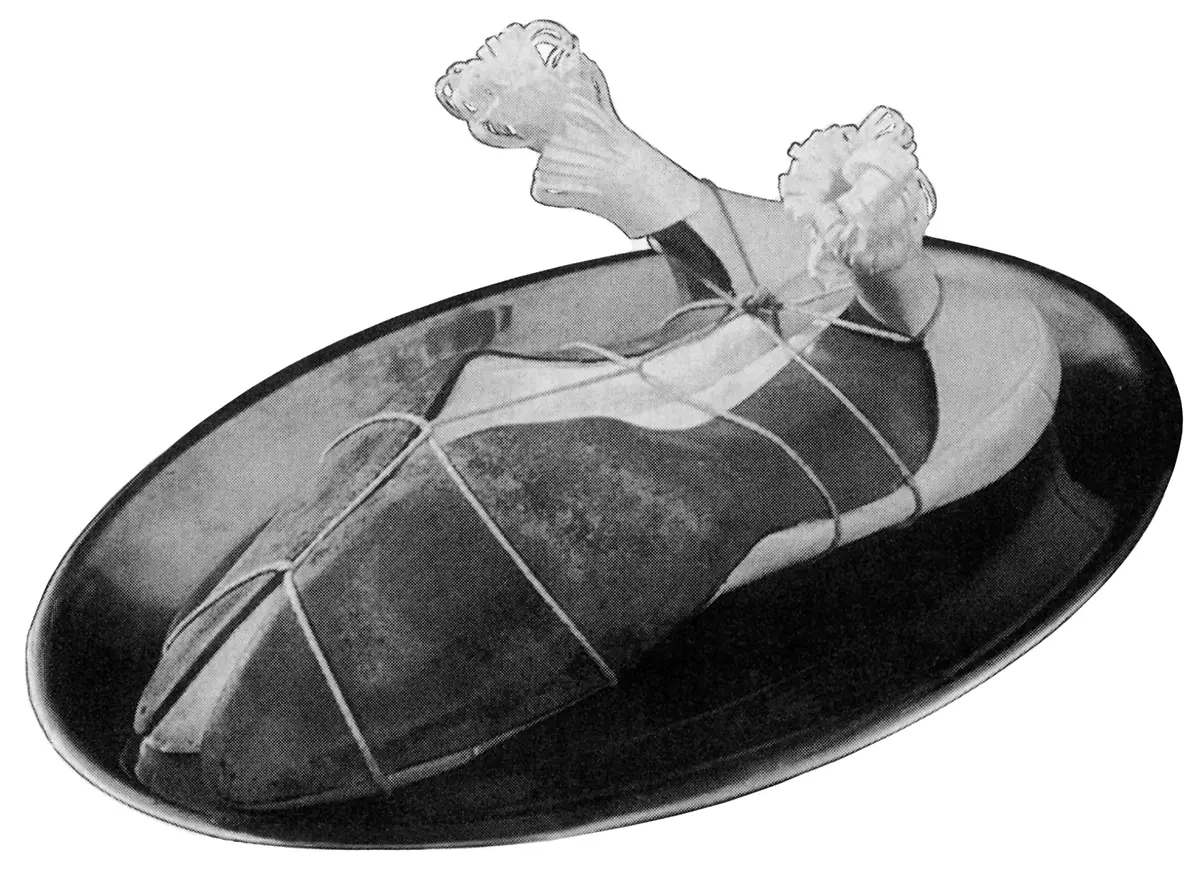
wooden fingers, both from the same year(4). My Nursemaid, also from 1936,
consists of a pair of shoes on a tray with the heels decked out like chicken
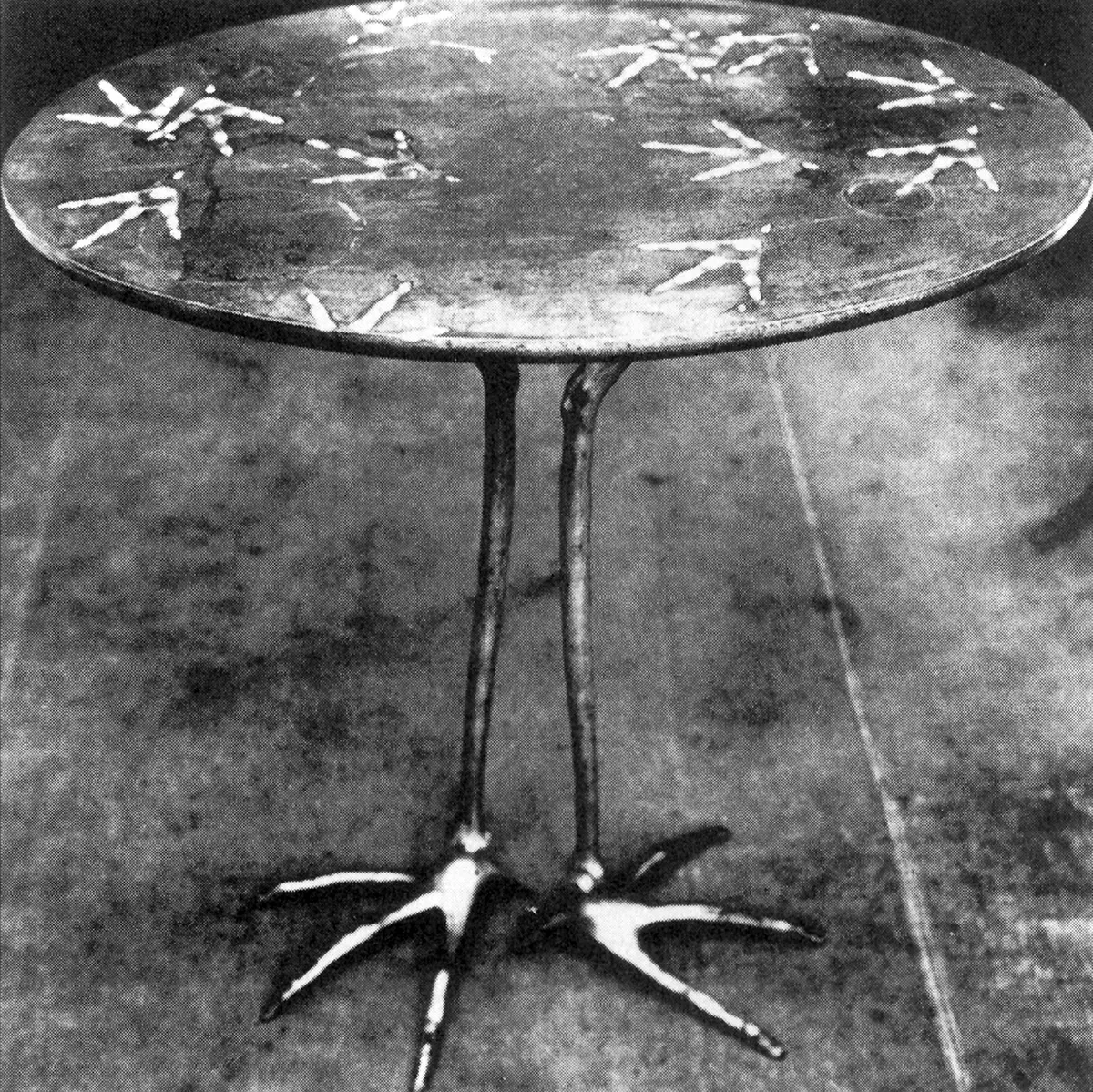
legs roasted in the oven. Table with bird's feet, literally the title sculpted
in wood, with the marks of the feet on the surface of the table, is from 1939;
afterwards, the spaces between works become longer.
During the 1930s, Oppenheim, young and pretty, had difficulties in establishing herself as an artist independent of her physical attractions, and in freeing herself from her image of a talented «groupie». The easy and immediate success of the cup and her incursions into the design of extravagant jewellery, as well as acting as a (memorable) model for Man Ray, coupled with an affair with Max Ernst, all helped create a stereotyped image of her character which became almost impossible to overcome. The lack of focus in her work did not help her and, virtually a prisoner of her cup, Oppenheim lived in a mythical capsule, with no-one having any interest in elucidating her work. Some recognition came in Switzerland, her adopted country (Oppenheim was born in Berlin), and at all the many celebrations in honor of the surrealist movement. But for Meret Oppenheim, an individual and individualistic artist who remained out of sight for a long time, there were feminist rehabilitation attempts and commercial launchings, which generally ended in failure. New York rediscovered her in 1978 (Eugenia Cucalon Gallery), 1980 (Marian Goodman Gallery) and 1988 (Kent Gallery), and finally this year she'll have her first museum-level exhibition in the United States (5).
The exhibition,
like Oppenheim's own life, oscillates between freedom and chaos. But what in
curatorial terms can be attributed as respect for an artist does not,
artistically speaking, bestow any favors. The ups and downs of her career are
too dramatic. There are some works which are private, superficial,
self-therapeutic, and there are others which are impactful, fertile and
evocative. There are also intermediate promising works, but which were never
carried through.
In her best
work, Oppenheim reveals to have an acute extraordinary insight for advertising.
The cup is a clear example of this ability. Although all the literature on this
work has mainly concentrated on its importance within the surrealist movement,
its real impact springs from the synthesis it achieves: the object became its
own symbol and the symbol is formalized in the object which generates it. It is
an integration which is the dream of any advertiser. It satisfies the ambition
of making a given brand dominate all other similar products, so that it
installs itself in the memory instead of the generic object. These works by
Oppenheim anticipate the art of advertising almost by half a century. The work
of Magritte influenced the aesthetics of advertising by means of a perceptual
system. Oppenheim's work, on the other hand, which exerted no major influence
and which had no followers, foretold some of the keys of the art of advertising
which characterize the best ads of today. Her surrealist colleagues had the
power to introduce stylistic changes and the satisfaction of this power. With
Oppenheim, the situation is different — she seemed to know things and her
satisfaction was in knowing them.
Oppenheim never felt comfortable with the surrealist label, perhaps because she was not interested in the symbolic connections and disconnections which obsessed her colleagues. Part of her independence lay precisely in her not wanting any kind of label, in doing what she wanted without having to report to anyone or anything, except, perhaps, her own intuition. But since she did not have an organized intuition, as perhaps Mozart had, quality control becomes difficult. The wisdom with which Oppenheim seems to have contented herself, by not wanting to render accounts, is expressed too sporadically. The common denominator which may give coherence to the message becomes a statistical rather than a volitional product. It is in this sense that Oppenheim's use of her exact eye is not consistent or methodical, and the irregularity is irritating. The public is left to make the discoveries and link them up to a common history which make up the true book which the artist ought to have written. It is the visitor who has to prepare the statistics (to use a metaphor) and reach his or her own personal conclusions.
The Guggenheim Museum show is possibly more an illustration of the challenges facing the curator of such a show than of Oppenheim's successes. What should a curator do faced with such an uneven and conceptually dispersed work? The solution adopted seems to be based on acceptance of the idea that virtually everything which the artist touched is valid. This view has a certain logic in that the artist had the opportunities to destroy or to deny works and that in Oppenheim's case, she herself kept inventories which were subsequently used for compiling the catalogue raisonné. The works, therefore, have been certified individually by the artist. But then comes the decision about how to group the pieces. Chronologically and on the assumption that the artist's development is linear? By themes, supposing that the artist establishes connections with certain things throughout her life? In formal terms, giving greater importance to this factor than to the actual themes? There are many possibilities and any kind of order or lack of order in the grouping of the works necessarily involves an interpretative interference with the artist's creative process. The problem becomes more serious when the artist himself has no curatorial skills for organizing his own work or if there is no structure to guide artistic interpretation.
The latter is
the case with Oppenheim. The problem faced by the curator therefore has both
ethical and aesthetic implications. In the case of the Guggenheim show, it
seems to be that the path chosen was both the most convenient and at the same
time the «cleanest» in ethical terms (at least since there is a washing of
hands). The show seems to say: «This is what Oppenheim did and here it is, hung
in the best possible way». But to present a show in this way means abandoning
one of the fundamental messages which an exhibition must clearly communicate:
What is the reason for mounting it? In a case as complex as that of Meret
Oppenheim, the curator has to assume a responsibility by isolating some of the
interpretative directions proposed by the body of the works, or point to some
possible directions, based on a reading of those works, for organizing them for
the spectator.
The show makes
an attempt to organize the works vaguely by themes. One wall announces that
«thematic links» were being used, following Oppenheim's perceptions of the
«dichotomies between nature and culture, male and female, figuration and
abstractions.» In this way, the show manages to avoid chronology, a valid
criterion, but in many cases the connection is purely formal and clearly empty,
based on a kind of spurious order. In one case, six works dating from 1933 to
1985 are grouped together according to the criterion that there are two
connecting elements (The couple, a dialogue, two legs, etc.). In another case, Fliegender
Hund (Flying Dog, 1973) and Vegetation (1972), the link was provided
by tiny forms in space.
The title of the exhibition is useful and well-intentioned. Beyond the Tea Cup is an attempt to break the stereotype of the «single work artist» and to help Oppenheim emerge from the egg-shell which has encapsulated her in the history of art and in more or less public opinion. The option of showing everything did manage to break this impoverishing schema, with everything remaining within the requirements of the artist. But this attitude, which can be described as one obsessed with honesty and total representativity, does not succeed in transcending the level of anecdote. The show groups together a good hundred or so works, of which barely thirty are of interest and a dozen of essential importance. It is that dozen of works which ensures Oppenheim's presence in the history of art and justifies the show, and it is that dozen which we must seek out carefully. The show does not make our task very easy.
In the ninth
issue of Arteen Colombia (April 1979), I described my first encounter
with Oppenheim's work (Beyond the Tea Cup) in a note on the Basel Art
Fair. I wrote: «Her work is notoriously irregular; there are pictures which
deserve the Inquisition, there are some very Magritte-like drawings, but there
are also objects and the objects are powerful. Although some are so within
their own obviousness (like the cup), others are inexplicable. In both cases,
they are strange magical fetishes which make the spectator feel a member of a
possible tribe, not a distant or exotic tribe.»
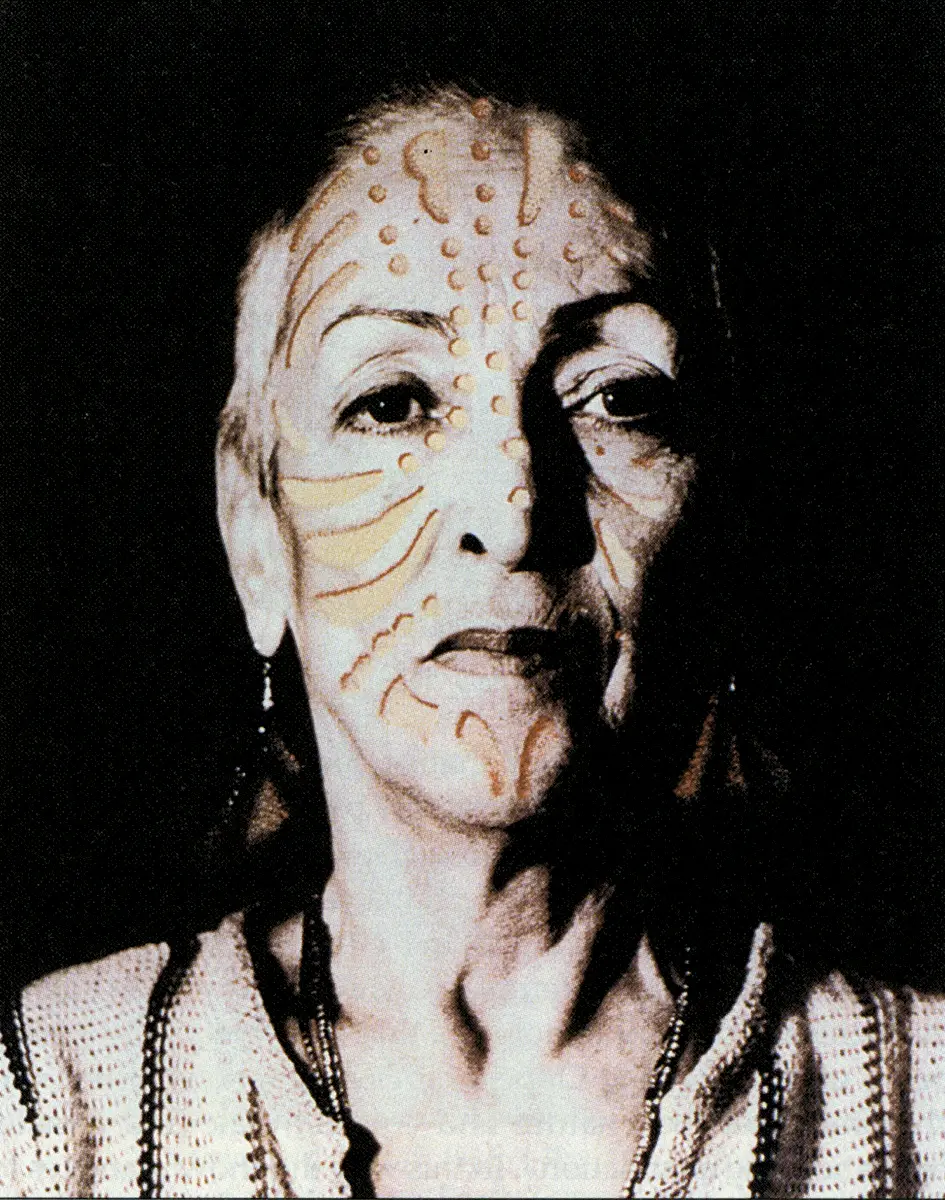
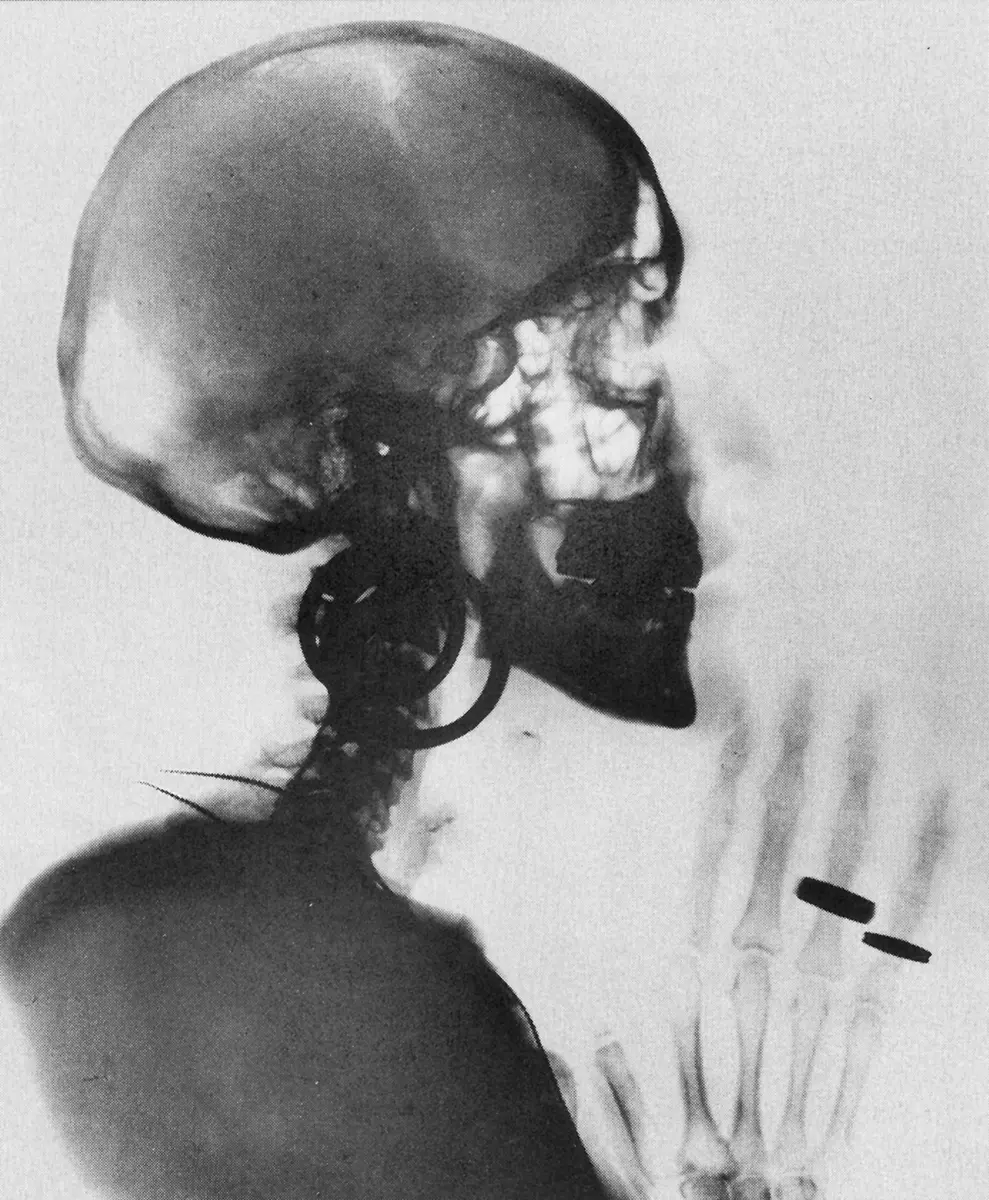
The Basel exhibit was minuscule, defined by what could fit into an art pavilion, although after so many years I do not remember how many or which works were presented. But it is clear that the problems which arose in the relatively complete Guggenheim show were already present in that fragmentary show in Basel, and that the solution had still not been found. I also remember the tribal sensation. A possible tribe, not an exotic one, because Oppenheim managed to combine and communicate magic with humor and everyday wit. That distant impression was fully confirmed by the work shown at the Guggenheim, and there are works which fully address this subject. Portrait with Tattooing is a photograph of Oppenheim's face, carefully touched up with masking and air-sprayed paint until the skin, perforated by the retouching process, acquires the appearance of a thin shell to be used for some ritual. Dating from 1980, the work is one of the twelve which made the visit to the Guggenheim worthwhile.
The use of the
«epidermis», in the wide sense of the word, is a constant theme in Oppenheim's
work and fortunately it was not used as a leitmotif for organizing the
Guggenheim exhibition. In English, one of its variations, fur, the concept
would encompass the grouping together of furry objects which include some of
Oppenheim's most successful pieces, although they would exclude others, such as
the above-mentioned Portrait with Tattooing. But in Spanish, the word piel
(which means skin, fur, hide, pelt) is a much more appropriate term for
examining her work. Many of her best works deal with coverings and wrappings,
and this links the «tea cup» with one of her most mysterious constructions: Word
wrapped in poisonous letters (it becomes transparent) (1970), consisting of
a simple piece of cord hardened with resin to form an absent packet. Or with
the Table with bird's legs, which is not only covered with the marks of
the legs but with gold leaf; another example is her paper strip jacket, dating
from 1976, which was intended for everyday use. Seen in this way, Oppenheim is
the enriching and enriched link between Man Ray's The Enigma of Isadore
Ducasse and the most contemporary of Christo. Ray's sculpture, done in 1920
in honor of the French-Uruguayan poet known as Comte de Lautréamont, who is
credited with being the originator of surrealism, consists of an unknown object
wrapped in rags and string. Although the most trivial analysis of Oppenheim's
work starts with the decontextualization of objects thanks to some «casual» or
unexpected encounter (as in Ducasse), in the work of Ray, Oppenheim, and
Christo, what counts is the mystery added by the wrapping process. In the case
of Oppenheim, and this distinguishes her from the other two, the mystery is
accompanied by an awareness of falseness. Neither the gilt of the table nor the
fur of the cup, for example, disfunctionalize the objects, but simply make them
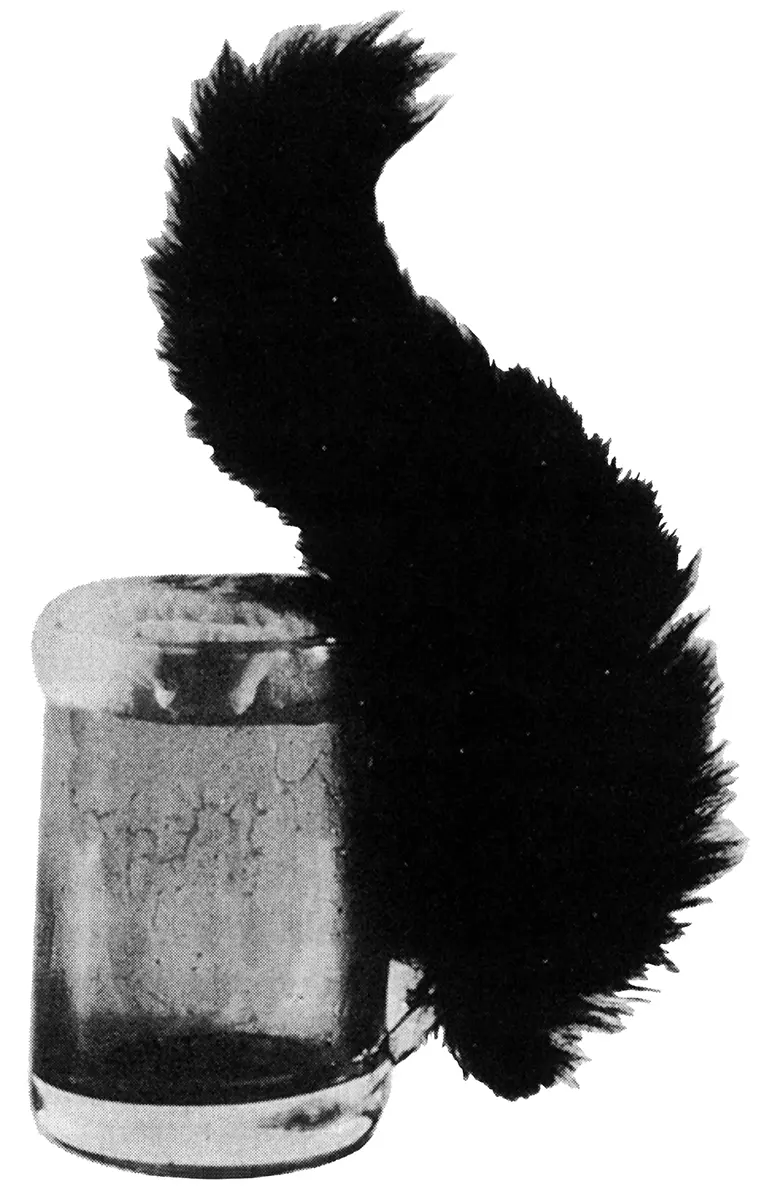
impractical. The same occurs with Eichhörnchen (The Squirrel) of 1960,
in which the tail of a squirrel becomes the handle — rather uncomfortable but
not totally impossible — of a beer glass, but within a visual allegory of the
squirrel as a whole. It is the impractical factor which adds a certain humor to
her work. This unexpected encounter occurs more forcefully not in the case of
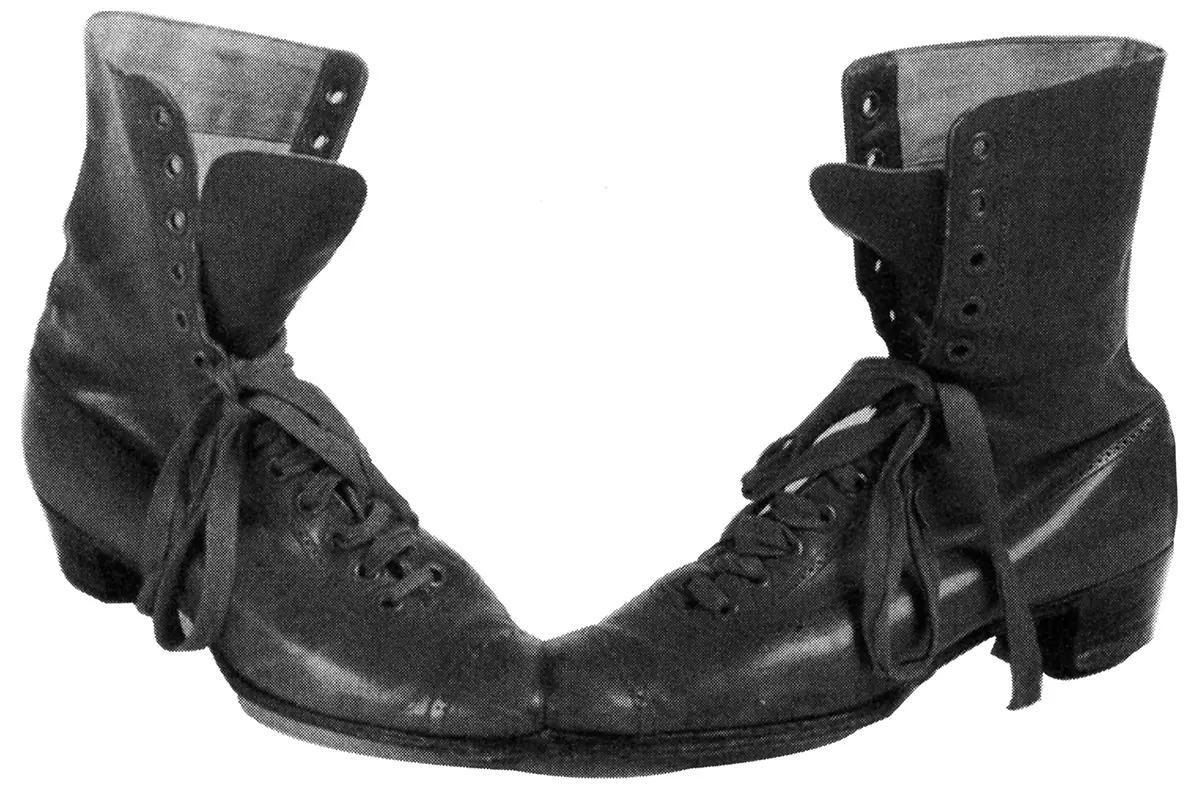
dissimilar objects but between similar objects, as in Das Paar (The
Couple) of 1956, where two woman's boots are soldered together by the tips. And
when something unusual happens, the title explains it. Oppenheim's titles are
rarely arbitrary or parallel to her work. They are generally descriptive and
restrict the evocations of the image. It is therefore not surprising that
Oppenheim did not feel at ease when people called her a surrealist. Her
painting, shown to excess at the Guggenheim, is more susceptible to the
influence of her colleagues and less suggestive in terms of images than her
sculptures and objects. This part of her work suffers even worse with titles
ranging from the banal to the pompous.
Thus, the Guggenheim exhibition fails to establish Oppenheim in this hemisphere, and at the same time extinguishes any possibility of joining it for a number of years. Neither does the catalogue add anything to the catalogue raisonné published six years ago (by one of the curators of the show), except for a short text by Nancy Spector on Man Ray's photographs of Oppenheim. For a long time to come, no doubt, Oppenheim will remain as the author of the cup — a single, unique work, until such time in the unpredictable future when the twelve or so other important works are rehabilitated. There remains, however, the interesting connection between her synthetic images and the commercial advertising image. It is a useful coincidence that the Oppenheim retrospective coincides with an exhibition of pictures (and other things) used in the advertisements for Absolut vodka — underscoring the increasingly fragile division between the «fine» arts and the commercial ones. Something to which we could return in a future article.
NOTES
1. The title was given by Andre Breton; Oppenheim called it «cup, saucer and spoon covered with fur». Bice Curiger, Meret Oppenheim: In Defiance of Freedom, Parkett, Zurich, MIT Cambridge, 1989 and Joseph Helfenstein, in Meret Oppenheim: Beyond the Teacup, exhibition catalogue, Independent Curators Inc., New York, 1996.
2. Curiger, op.cit., p.39. Picasso was admiring a metal bracelet covered with fur which Oppenheim had designed for Schiaparelli.
3. In a similar way to Magritte’s boots with toes in Le modele rouge of 1935.
4. This work is in the Guggenheim show and appears on the catalogue cover, but is not in the catalogue raisonne.
5. Guggenheim Museum, 28 June - 9 October 1996, Museum of Contemporary Art, Chicago, 2 November - 11 January 1997, Bass Museum, Miami Beach, 6 February - 6 April and Joslyn Art Museum, Omaha, 10 May - 6 July.
LUIS CAMNITZER
Uruguayan artist. Professor in the Department of Visual Arts of New York State University, College at Old Westbury.