
Although oxidation and elements in perpetual change continue to be features of Van Wong’s language, it was gold which unifies the four pieces of work presented in this show, giving them an air of sumptuousness and splendor.
Pablo Van Wong contrasts violence, poverty and abandonment with the use of fine finish in gold lamina. This strengthens his allegory and generates counterpoints in form and argument which regard war, solitude and extermination as the sources of his macabre poetry and impressive, though subtle, arguments. These profound works scrutinize the human condition and at the same time dislocate objects from their functions.
The strong images evoke mysticism, punishment, affliction and chaos; at the same time he opposes fragility, religious symbols of Christianity and the illusion of the gold of the gods, with their signs of greed and power.
The artist uses long poetic titles which conjure up the full range of his fine sensibility and a wealth of different resources which reflect his fantasy and inventive capacity.
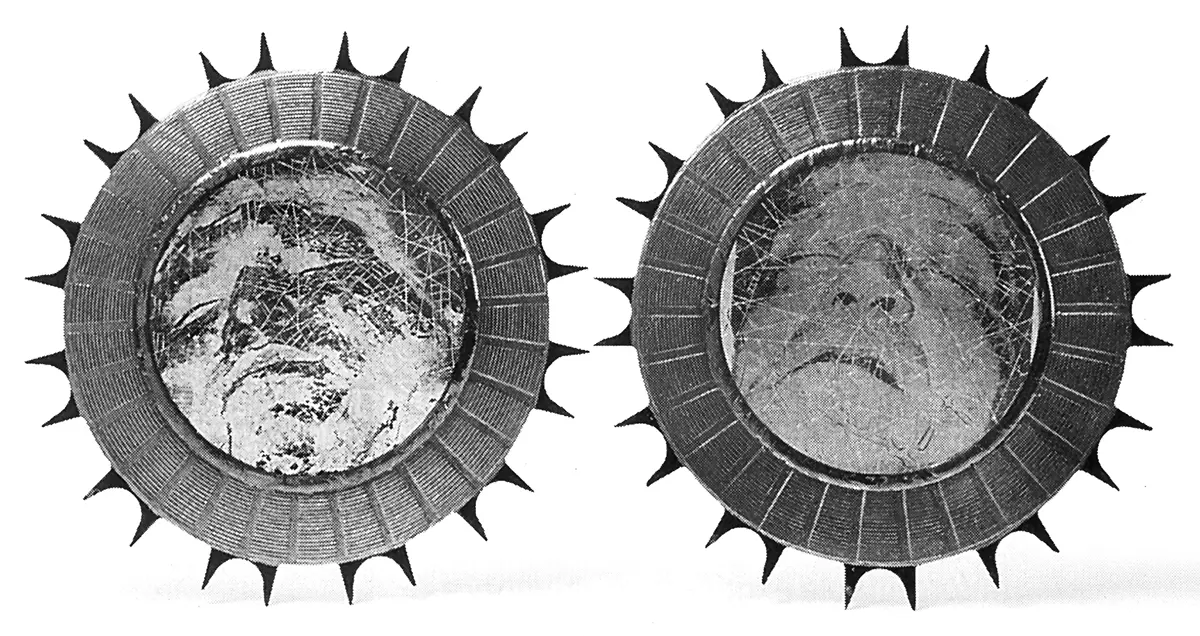
Works such as Night will fall and on white winged horses the shining honored gods will sally forth, made of food cans, glass, metal, velvet and pollution in combustion, redeem the object and create a series of scientific fictions, with fragility and the passage of time appearing as static elements. They will awaken again and everything beautiful will have been nothing more than a brief moment of exaltation, consisting of fifteen pieces in the form of soldier’s helmets made of iron, with oxidized nails laminated in gold, could be read as an ironic treatment of appearance and essence, full of animal qualities, power and astonishment resulting from the decontextualization of agression and corruption. The drum is sounding and it will continue to sound. It either sobs or sings is made of glass, photographs of corpses and gold-covered metal, where he reflects his rigorous process of reflection on the sculptural, photographic and visual essence. In this way Pablo Van Wong achieves a dynamics of thought and materialization which makes a useful contribution to the discussion on artistic creation at the dawn of a new century.
MIGUEL GONZALEZ