
Sacred Arts of Haitian Vodou is the first
comprenhensive exhibition to explore the creative arts produced within Vodou,
the syncretic Afro-Caribbean religion. With over 500 objects, inclusing African
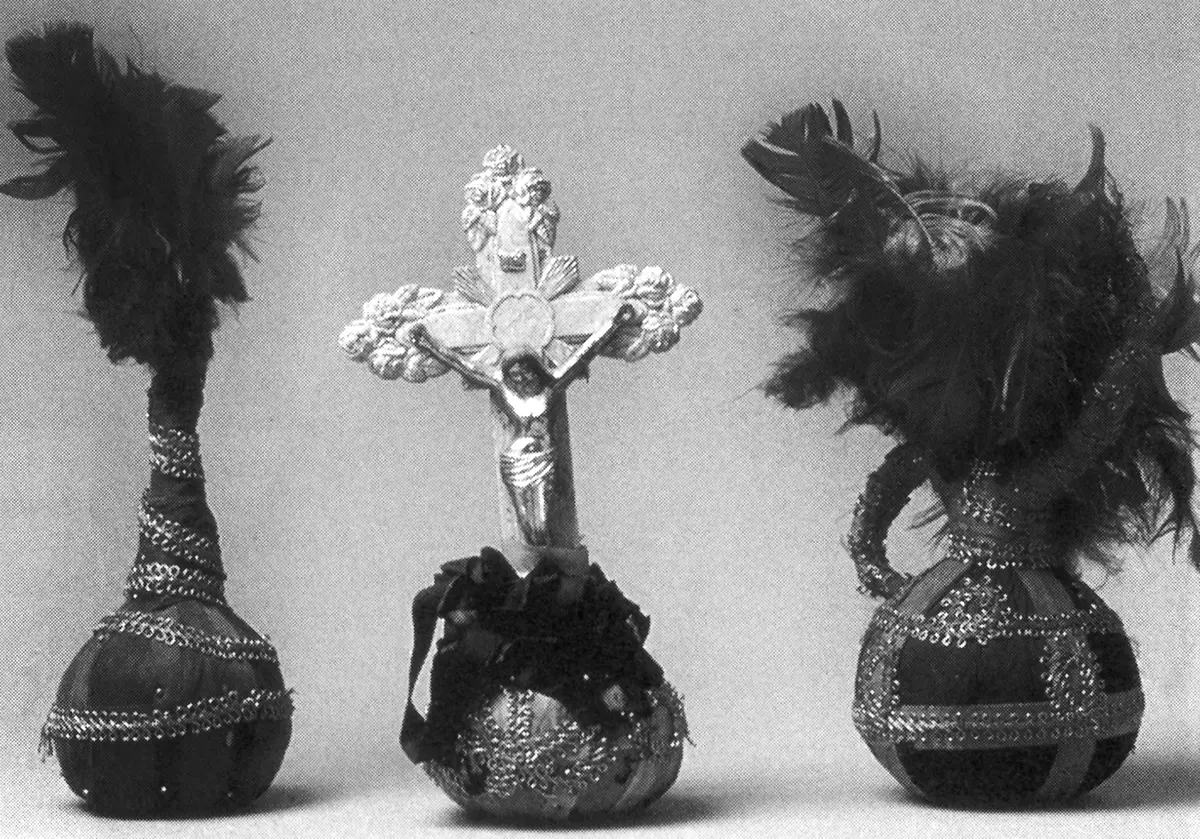
carvings, sequined banners, sacred bottles, dolls, musical instruments,
paintings, altars, videos, photographs and multi- media installations, the
exhibition offers a complete and fascinating glimpse into the complexities of
Vodou while celebrating its aesthetic qualities. Organizes by the UCLA Fowler
Museum of Cultural History, Los Angeles, the exhibition will travel for two
years to eight venues and is accompained by a comprenhensive and scholarly
catalog that will be a valuable resource for Haitian studies. For the Miami
Museum of Art, members of the Haitian art community were invited to create
their own unique addition. Rara Kuyu painted a mural of Ezili Danto, a spirit
of the Vodou pantheon who also depicts the Black Madonna, Mater Salvatoris, in
her syncretic identificaction with Catholicism. Wall murals are an essential
part of Vodou temples and Rara’s image is located in the area dedicated to
altars and ritual spaces and is a superb addition to the exhibition that brings
it into the community.
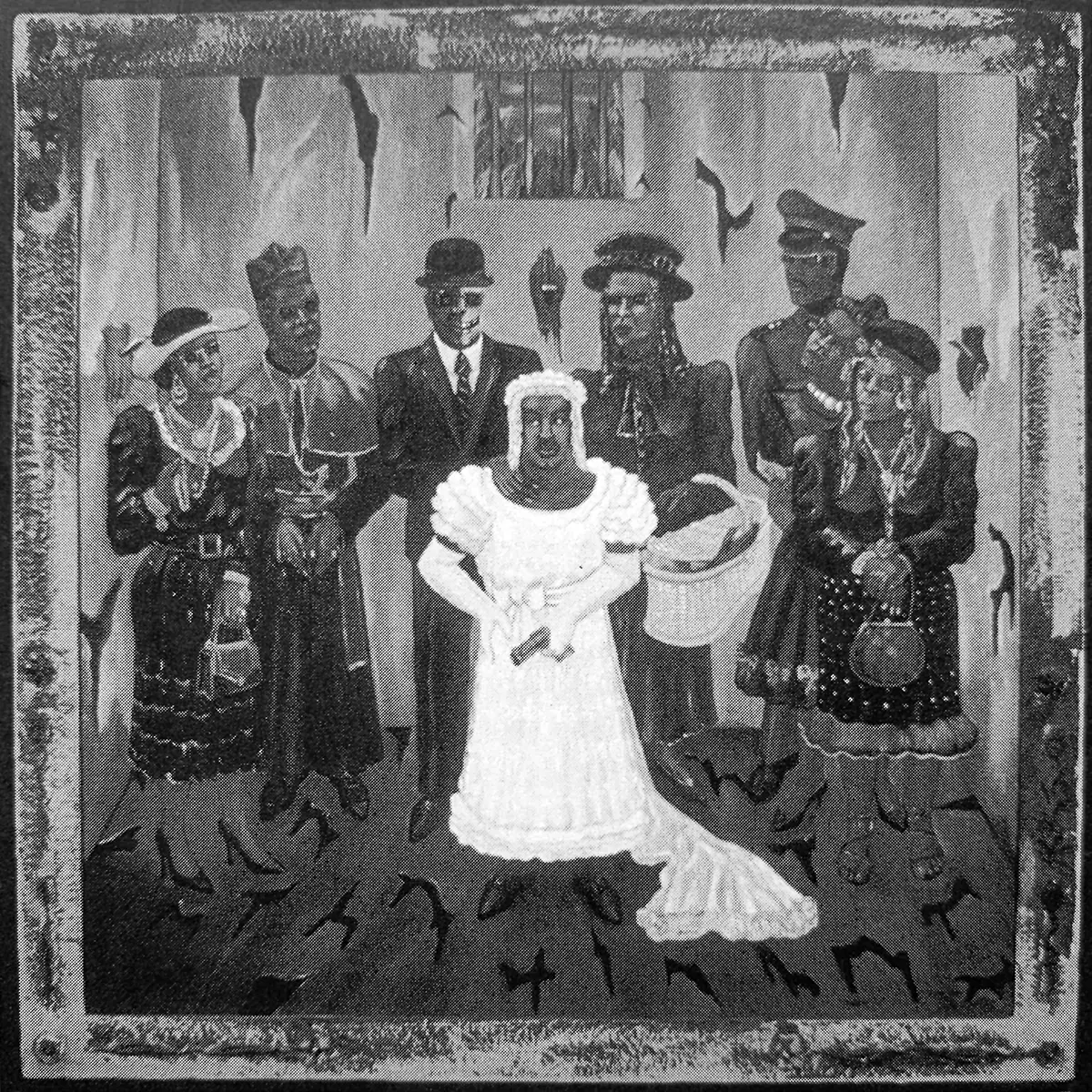
Edouard Duval-Carrie, a premier artist of the modern generation of Haitian artists who now lives in Miami, was invited to supplement the Fowler’s selection of his works with an installation of Spirit Catchers dedicated to the /was (African spirits) who guided the slaves from their homeland across the oceans that he originally conceived in 1993 for the First Vaudoun Cultures Festival in Benin. A painter also known for his radical and sardonic political imaginery (not unusual for Haitian artists for obvious reasons), Duval Carrie is also represented with other works that display his extraordinary portraits of the Duvalier personalities, famous for their abuse of Vodou for violent and personal gain. Mardi Gras at Fort Dimanche, 1992-1993, depicts the Duvalier family (Baby Doc absurdly garbed, in a wedding dress) in Fort Dimanche, the torture chamber of the regime.
Adicionados of Haitian art will enjoy seeing a
wonderful selection of works by well-known and internationally acllaimed
artists Pierrot Barra, Hector Hyppolite and Prefete Duffaut, which were
inspired by Vodou. Especially remarkable are the portraits of the Iwas painted
by Andre Pierre, Haiti’s most famous and beloved living artist and priest, and
the ironwork cemetery markers inscribing the veves (ritual markings) of Georges
Liautaud. The brilliant sequined banners created in honor of the Iwas to announce
temple rituals are installed throughout the exhibition and assist the viewer in
identifying the spirits and their symbols. The banners by Antoine Oleyant are
beautiful glittering desings that can easily compete with modern abstractions
in any media.
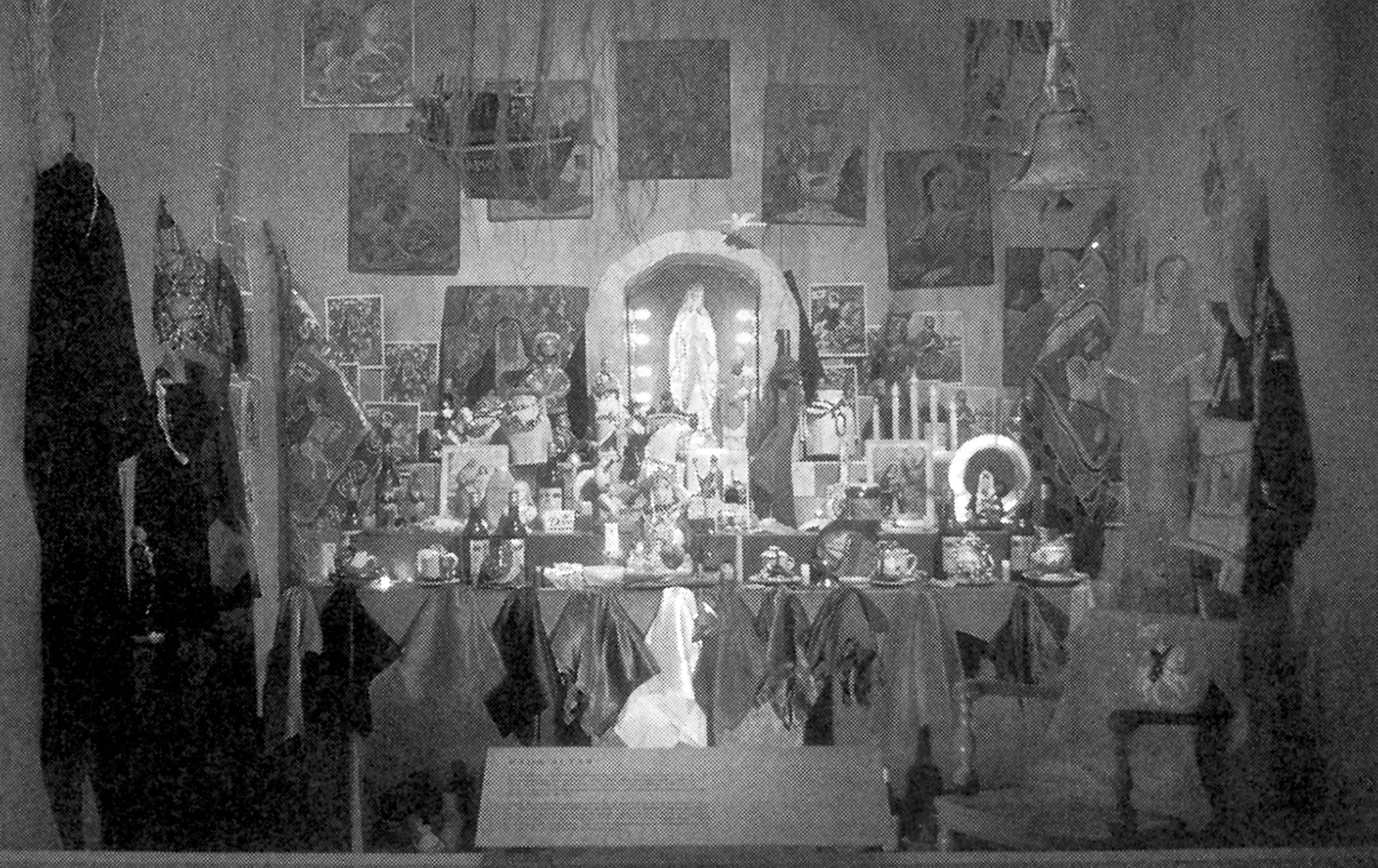
The three altars recreated for the exhibition have a particular identity to serve the /wa to whom they are dedicated. Altars honor and invoke the Iwa and may be located in temple sanctuaries or in domestic private areas. They mark a sacred space where natural and supernatural worlds meet. The altars include images of the Iwa, offerings of jewelry, mirrors, liquor, perfume, and a complex assortment of objects known to please devine tastes. Almost anything can be consecrated and incorporated into altars and the objects range from dolls to holy cards to toys to fruit and flowers. In return for these offerings, the Iwas are expected to answer prayers for health, love or good fortune. The altars and their devotional offerings reveal what is the essence of Haitian Vodou, the ceremonial space, and even in a museum setting they are the most fascinating and powerful assemblages of art and ritual.
The complex nature of this large provocative
exhibition demands time, but it is well worth the effort. Videos, music,
excellent wall texts and labels provide valuable assistance to the viewer
anxious to explore and understand the creative arts produced within Vodou.
CAROL DAMIAN