
The retrospective show of work by Luis F. Benedit (I937) at the Museum of Fine Arts is one of the best mounted exhibitions in a number of years at the Museum and offer an integrated view of the artist’s development. A total of around I40 works covered the production of this artist from Buenos Aires from I960 down to the present, with paintings, drawings, sculptural objects and installations forming part of an organic whole which clearly illustrates his aesthetic interests.
The show confirms the coherence of all his artistic
production, which is closely related to his personal history. Thus the
country-city duality is an important feature of his early training, a duality
which has now given way to the confrontation between nature and science,
cultured and popular elements, the past and the present, convention and
transgression, expression and analysis - all expressed within a varied plastic
language and themes - which are highly dramatic and often ironic.
Luis F. Benedit graduated as an architect two years after his first exhibition in Buenos Aires in I96I. As he himself has recounted, he has a passion for drawing from a very early age and considers himself as a self-taught artist - something which could be seen in this show, where from the early works at the end of the I950s and early I960s there is an informalist character in the figurative representation which is closely linked with the new figuration. Works such as The President, an oil and enamel work on canvas from I960, The Girl Luz from the following year, and Michelin from I962 come close to comic strip effects, with considerable freedom in composition and the handling of the plastic elements. A certain ingenuity or kind of elementality which appeared in his work at that time, is to remain a constant feature up to the present - an attitude related to the influence of the Cobra group in our country and on Benedit in particular. Later this delight in primitive or popular purity will be reflected in his use, as a starting point, of the drawings and paintings of one of his children, and of the paintings of a popular artist from the I930s and I940s, Molina Campos After two years in Spain, Benedit returns to present a joint exhibition with Vicente Marotta on the theme of Blue Beard in I966. It is interesting to note the changes which have occurred in his images, with the subsequent incorporation of flat colors in the painted tinplate figures which gradually brings him close to the pop art current, and which he will develop more fully in his later work in which the images seem to have been taken from certain children’s stories.
The conceptual proposals of his plastic language during this period will become his characteristic style down to the present: the planimetrical presentation of forms based on color, the handling of linework as a structural element and delineator of color, the unfolding of a rich display of fantasy, not only in the development of the scene but in his analytical decomposition of figures into their different interpretations.
During a second period of residence in Italy in Rome, he supplements his architectural studies with an investigation of new industrial materials, such as reverse painted acrylic. Animals also begin to appear in more exact detail in his production and he carries out for the first time his experiences with biology and botany - work which he will present in Buenos Aires in I968, including Ant's nest for carrying with colored ants, done in plexiglass, earth, sugar, water and living ants. In I969, he will create his Microparadise - Habitat for snails, followed by his well-known Biotron, which is really an installation measuring five square meters consisting of a garden of flowers and a honeycomb of bees, reflecting his concern with the visual relationship between nature and science.
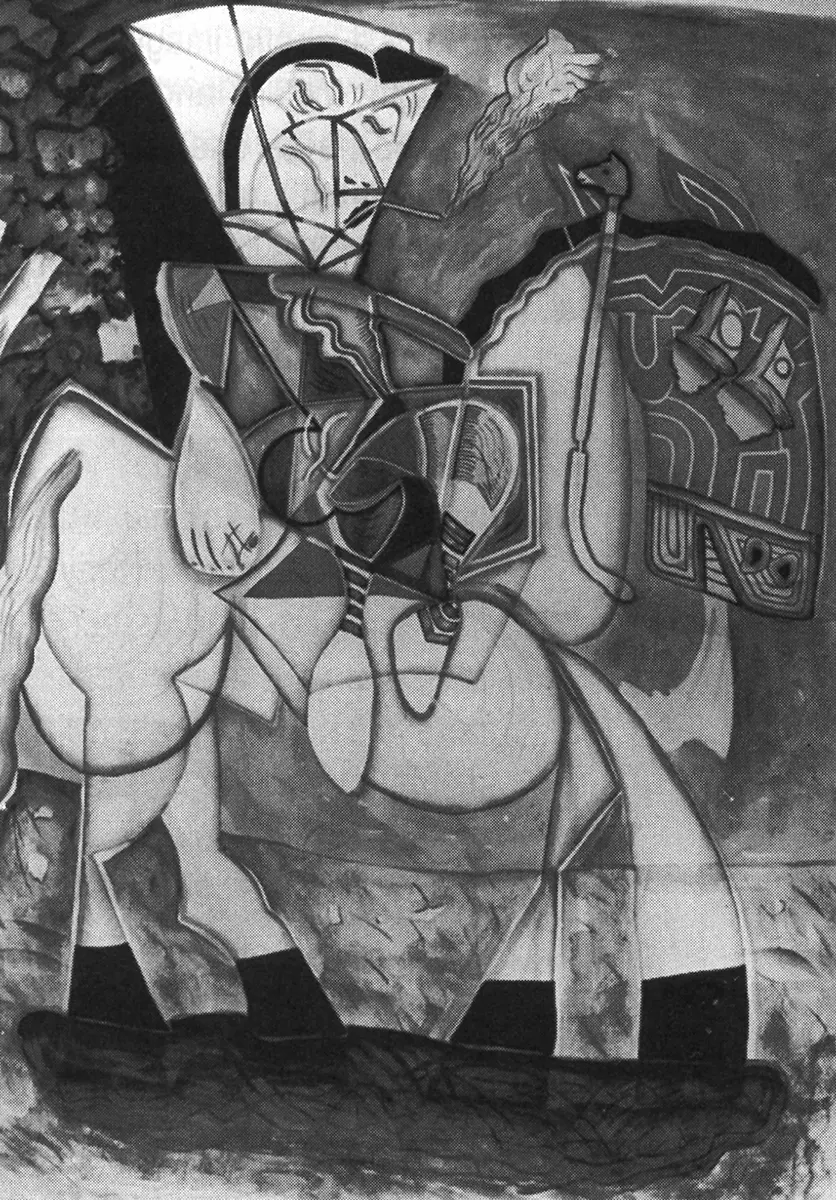
In the second.half of the I970s, and using drawings by his seven-year old son Tomas, Benedit returns to the «ingenuous» kind of representation which characterizes his early work from the I960s, to create his King Kong series and Toy Projects. It is interesting to note in this exhibition that in the case of a work from this period, Snoopy according Tomas (I979), there is Tomas’ own drawing, the analytical pencil and water color development done by Benedit and an object in wood, metal and expoxy resin. The confrontation between the expressive purity of the child’s work and the rational development by the artist provides a just balance to the aesthetic proposal being sought by the artist.
In the following decade, Benedit explores themes of
travellers. Patogonia will be one of these themes, along with a number of
installations between I988 and I994, in which drawings, paintings, objects and
the projection of slides give a new dimension to his artistic qualities and
concerns, which range from the history to ecology and existentialism.
ALBERTO COLLAZO