
During the short time I was a tourist in Mexico, I was surprised to come across with so many people in the subway and on the buses who had suffered accidents to their faces, destroying their noses. Some months later a friend of mine told me that it was not a question of accidents but of plastic surgery. Barbie's canonical nose appeared like an avid ghost, scalpel in hand, on the devalued face of the nation. Epigones of Orlan? A radical enthusiasm for Jeffrey Deitch? Many things became clearer when I also understood that in Mexico, women who refuse to apply the full range of make-up use their face as a kind of avant-garde banner, inequivocally proclaiming some kind of dissidence. Make-up packs, ringlets, highlights and golden tints, blue contact lenses and nose jobs all suggest a kind of colonial sacking of one's own body, and an over-estimation of certain presence-setting stereotypes, as a means of access, whose the classist and colonial cast continues to be very difficult to disguise. The work of Monica Castillo can be seen as an exploration of this intervened face of society...
The brief glory of the neo-Mexicanism
Mónica Castillo (Mexico City, 1969) studied plastic arts at the Scuola Germanica in Rome, Italy, and subsequently at the Akademie der Bildenden Kunste in Stuttgart, for more than seven years. When she returned home, in 1985, she found an exciting environment: there was a very active promotion of young artists who were determined to recuperate from painting-painting a national symbol of figurative, and ill-treated expressionism. A mixture of trans-avant-garde and urban kitsch which plundered the icons of "deep Mexico". This enthusiasm included the national economy and the speculative rigor of the art market of the 1980s, as well as the active attempts by some Mexican galleries to refresh their image before the North American market and the integration outlook following the signing of NAFTA. This period in time ,with its postmodern nostalgia for a Mexico which was retro, docile and consumable, was characterized as neo-Mexicanism and was the first attempt in a long time to form a generational group of a certain quality which could be considered as a movement, in an attempt to inject new content and names into a panorama saturated with boring modern epigones.
Castillo, who had been trained in the acid reflection of the New Fauves of Dusseldorf and Cologne —an expressionism more dramatic than oniric, more sublime than ingenuous— had the advantage of this rigorously technical school, as well as a better philosophical and political training of the symbolic repertoires to be used. In 1986, she joins the group known as La Quinonera.1 Her early works are paradigmatic of the concerns and tastes with which this group dominated the mexican young art panorama up to 1990. It is here that two aspects join together which would characterize her later work —the sacrilegious force of kitsch vis-a-vis the political dilemmas of representation, and a personal artistic consciousness more rooted in a context- based discoursed.2 Her works from this period, gathered together in a show entitled Presentation in Society (OMR Gallery, March-April 1991) also reflected the limitations and embellishments of Mexican painting during those years: visual articulation through collage, parodistic content, popular pastiches of an intimate kind, the use and abuse of the symbolic arsenal of synthetic Catholicism, saturated finish and textures, intervention on the canvas of three dimensional objects of a generally residual or domestic kind.3
However, years later, it is astonishing to realize how Presentation in Society in fact was already heralding her current obsessions. The evidence there pointed towards social voracity and appeals to desire through the consumption of substitutional fetishes. And was not that voraciousness, that rush towards consumption, also ironically referred to, in the title of the show —to the language, to the canon and the institutionalization imposed by the upstart environment of neo-Mexicanism? Without doubt the predominant theme suggested some kind of castration. Truncated hearts and amputated hands, cuts, incisions, wounds —as in Sign I, Sign II, 1988, sent us back to an act of violent removal. (A substraction which furthermore should be linked, in her present self-portraits, to the icon-face, like a splendid folding screen which eludes the body from the reach of another glance). Beyond the feminist critique of physical ill-treatment, the objectualization of the female body and the violence of what has been legitimated as a patriarchal order, all backed up with anecdote, up to 1991 the works dealt with a sacrifice whose test was offered up like New York beefsteaks with crowns of thorns (the artist's parents are orthodox vegetarians), where the offering is exposed carnality, physical presence and a metaphor of the divine body. A citation of the wounded body of Christ with its metaphorical allusions, The Flesh of Christ (1987) or The Mystical Coronation (1990) also refer to the catholic dilemmas about the suffering of Christ's flesh and its adoration as an icon. Through irony rather than through absence, there is a reference to the face as an icon of creed. The face —of Christ, the divine copy, epitomizes the symbolic universe of substitutions. It was therefore not difficult, since three years later, Mónica Castillo would use self-portraits as an ideal genre for the consolidation of her discourse.
The doctrine of the self-portrait
It is true that the artist's husband, the painter Carlos Arias (Santiago de Chile, 1964) had some months before begun to explore the self-portrait in a series of large format works. Castillo has accepted this kind of "contamination" without any guilt.4 However, although both artists also shared a discourse which referred to the figurative dimension of desire and the narrative of the mask identified in terms of sexual attributes, Castillo's work proved very different. She showed little inclination towards scenes based on fantasies of identity. Castillo intelligently assumed the historical pedigree of the self-portrait to depict the full range of modern doctrinaire ideology, including in aesthetic terms, which underlies the genre and its desire for mimesis. In her case, features are transformed into mask and husk, and the false self-referentiality of the academic recipe is given new strength in terms of political denunciation, a refusal to allow her face be like the Rhinoceros of Durer. Such a stripping of flesh indicated an ideological renewal, that of a body which had until then been buried under the make-up of what is good and beautiful, the classical categories of presence. One of the major exhibitions which confirmed the present level of curatorial conceptualization of the Museum of Modern Art of Mexico City was the recent show entitled The Self-Portrait in Mexico in the 1990s. Symptomatically, Mónica Castillo was not included. The chief curator said that the themes of identity, otherness and gender were not obligatory theoretical keys to an analysis, not even in curatorial terms, of portrait-painting in the 1990s. Evidently, for those who give legitimacy to what is happening in Mexico, the self-portrait, as a representational paradigm of a conception of art stranded in modernity, is still considered as a kind of mimetic vocation, capable of flirting with all the figurative stylisms and sublimations possible, a clear proof of things which some critics applaud in terms of mastery, excellence, imagination and mystery... In our case, we are still beset with an arrogant incapacity to distinguish between the conceptual differences separating the "realism" of Javier Marin from that of Jeff Koons, between the "finish" of Santiago Carbonell and that of Mike Bidlo, between the "intention" of a photograph by Flor Garduno and one by Jeff Wall.
Along with Yishai Jusidman and Francis Alys, Monica Castillo has insisted on making use of certain «highly pictorial values» from the academic repertoire, but seen from the standpoint of post-conceptual premises, very far from the modern parameters which still imprison figurative painting in Mexico, making it compete with the legacy of its masters, ever chasing the same legitimizing mirages of style, manufacture, oniric elements, the «subject of the artist» and anecdote.
The face as a sepulchre
The most recent individual show of work by Mónica Castillo (OMR Gallery, October 1994) was entitled Lifevest under your skin, a clearly ironic reference to the useless promise about "lifevests under your seat", a scaffolding which our body has learned to do without, a boring celestial utopia of an announcement of routine from the title the work aims at that safety cushion which lies undated under the most sophisticated of appearances.
The works classified literally as self-portraits were a repeated parody of the passport photograph and its false, bureaucratic objectivity; but in their effrontery, these unfolded images vindicate transvestite strategies, with their use of juxtaposed masks, which proclaim the nomadism of desire. The point is that there is a hint of migration, nomadism and the frontier here: a stranger, who has come from afar, who is searching in a new face for a temporary residence or a permanent resistence. It is the face transformed into an ambiguous and malleable locus of ideological (un) control. They are clones, multiple phenotypes, like a kind of Benetton marketing test, which fantasize about the illusory democratization in consumption, the identification of an exponential face, both private and public. A face so docile to the zapping of Power as television with a parabolic antenna.
These faces, of other Mónicas in the vertigo of anonymity, show the interference of other bodies which refuse to be depicted, of other desires which refuse to be named on the basis of a closed code of expectations. Each image is a blind mirror because of the unrecognizable elements which disrupt all self-portraits; a pulsation of death, the limit where resemblance lies buried without a name.
The poses, coupled with their almost naturalistic finish, exaggerated in their effects, in the classifying manner of positivist zoologists, do not only reinforce this quality of observed specimens. It has to do with a sardonic collision of contradictory codes of identification, a mockery of those who have constructed the canon and who have imposed their view of things; a devastating reflection on (re) presentational conventions, and not only in art, and their technical requirements for achivieving a canonical configuration which is easy to name, place and link with Power, which is also the power of that which is sanctioned as "real".
Sustaining a critical narrative which seems to float from the transitoriness of physical appearance, beyond the manipulated Recognize Me! of the phenotype, with its alibi of negotiability, allows Castillo to embark on a search for new political identities which cannot be encompassed by the parameters of ethnicity and sexuality.
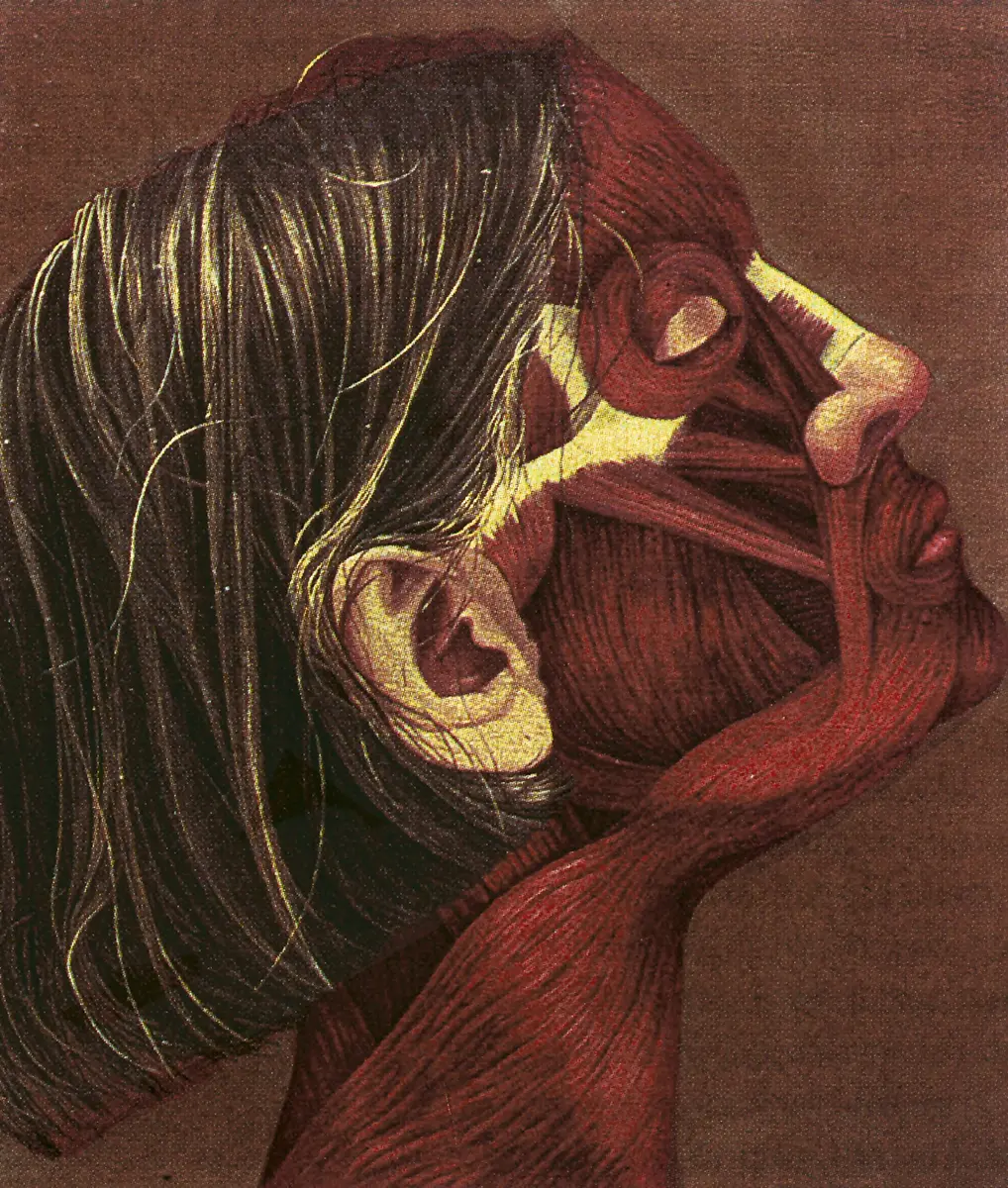
Anatomical Self-Portrait attempts to demask the particular signs of presence such as public identity. Castillo starts with a kind of affective association —the mystery of the body as an anatomical machine, represented by the polychrome plaster doll of Anatomy Fifth Grade, with that mixture of stupor and seduction which marked her entry into the world of language and sexuality. This deconstruction based on a kind of flaying process functions as a fantasm, in the primary meaning of a fantasy of an alternate identity constructed from some under make-up.
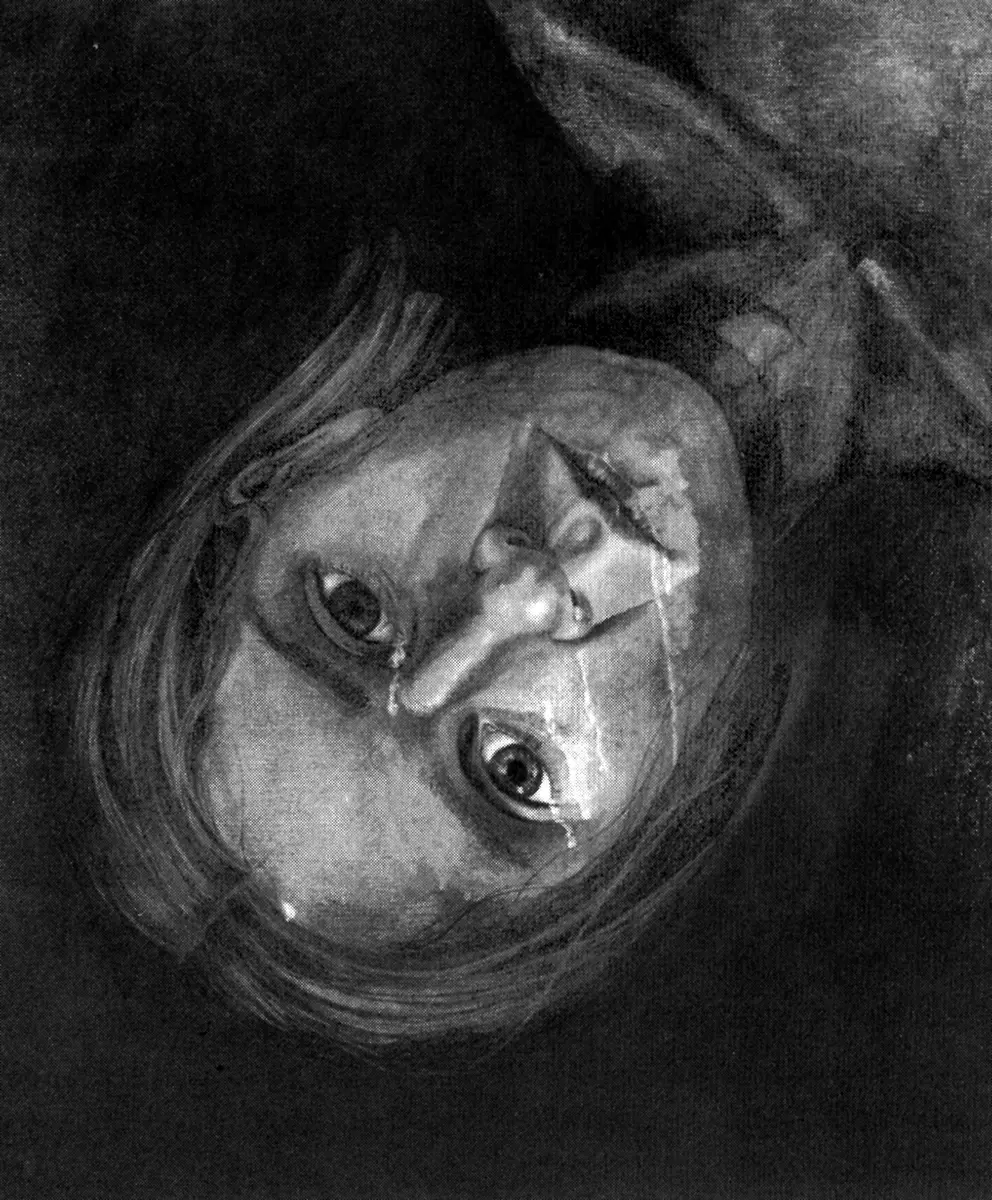
The myth of the face assumed as a secretion of the soul, as a confirmation of some profundity, is evoked in her successive appearances with dandruff, salive, tears, mucus and blood... in a literal eschatalogical confrontation with the sublimated quality of the portrait genre; but also in the political intention to summon up the phobia of the secretion of (post) modern culture —that frantic asepsis, a frenzied search for cleanliness, a vigilance exercised from the market, so that physicality loses its biological nature until it turns into a contour, a muscle, an odor, something given prestige by the high design of its appearance.
During these years Castillo insisted on the spiritual value attached to the accumulation of time and the constancy in the finishing of her works. Here, the weight of the manufacture not only refers back to the gynaeceum, the domestic reclusion of female expression but involves an emotional charge, a physical wasting which is both human and residual, accumulating in an intimate product that functions as an economy less illusory than any talent for reproduction.
A work such as 56 Self-Portraits, carried out consecutively between one 13 July and one 19 September, has been read as a record of time, a chronicle of the wasting process. A less strict interpretation would suggest that it does not express the commiseration towards the deterioration of those patriarchal values of self-esteem and capacities for female seduction which are diminished by physical deterioration. Here the face is used in a different way, with its versatility and power to rebel against everyday stereotypes coming from the sense of mutability, the strength provided by the linking together of such different masks. Once again, the objective is to sabotage established relationships of power (and register) and ways of looking, which tend towards immutable and systemic representations.
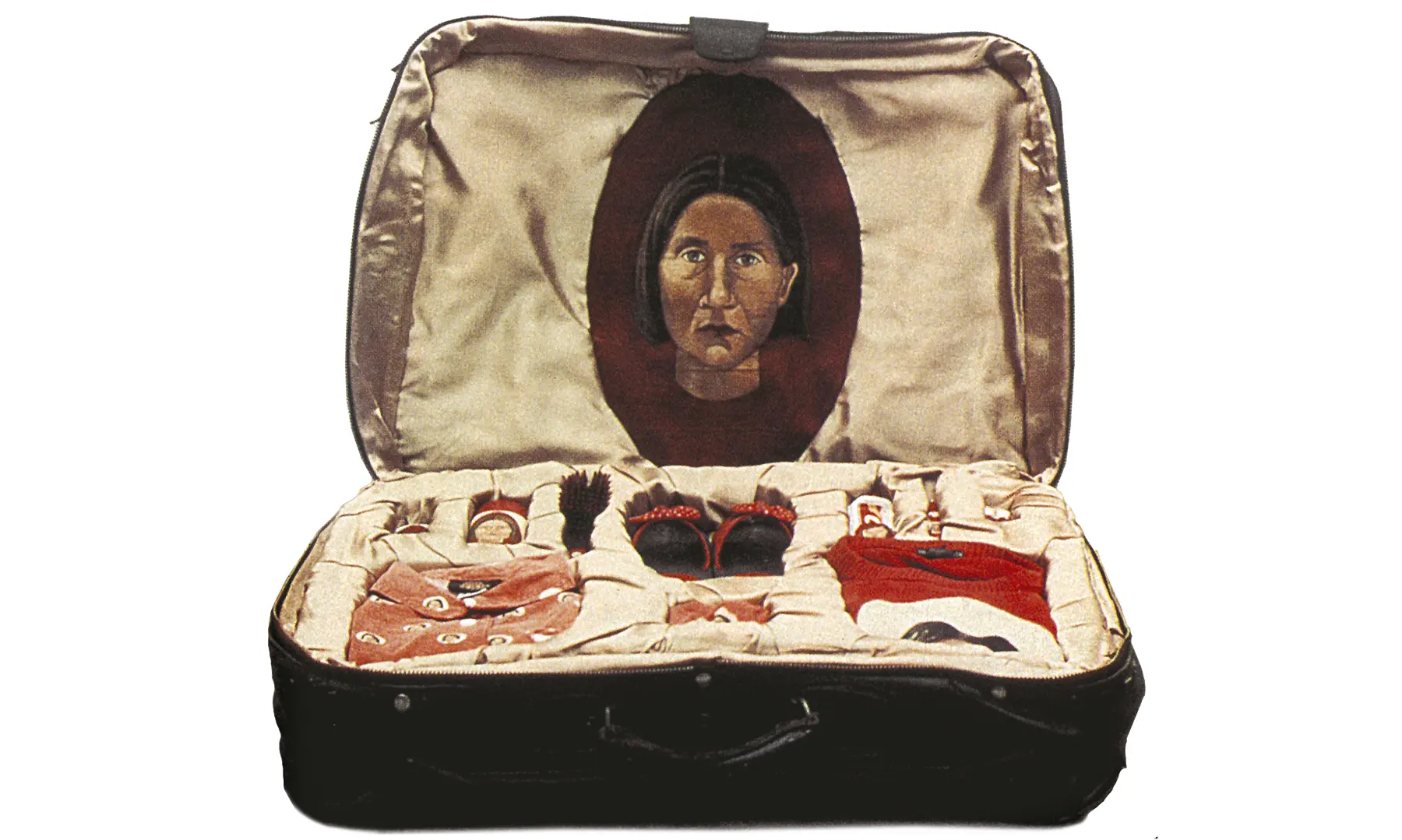
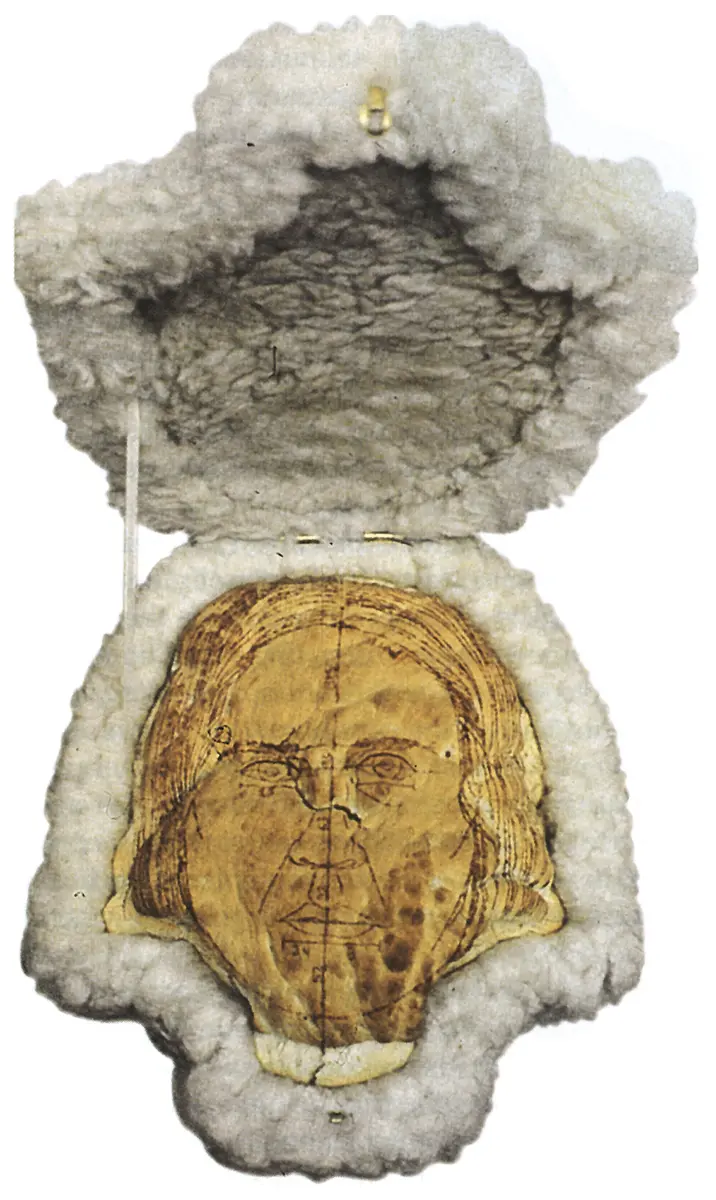
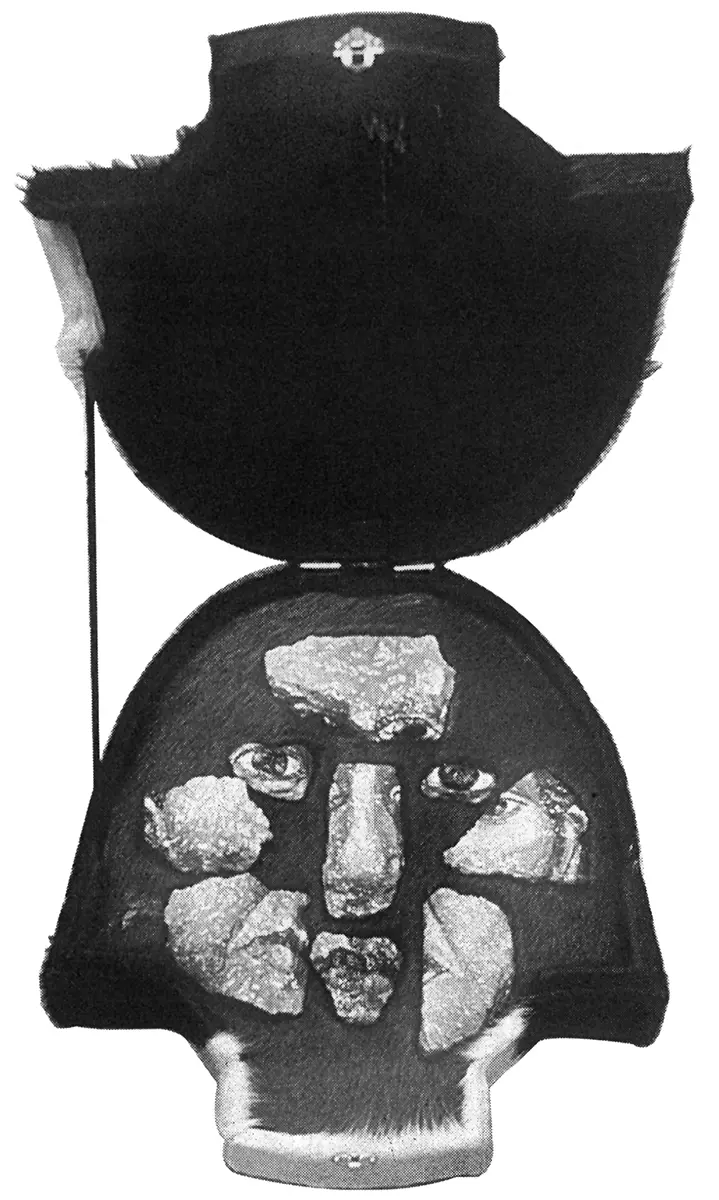
Those works which make use of three-dimensional supports, such as The Suitcase, or the self-portraits in Boxes with Stones, show the body reduced to the face, and are a dramatic expression of a sexuality manqué. The material support of the presence (it may be a stone, a piece of bread, travel accessories) betrays the convention, which is not only pictorial, that mutilates the female body from its careful, sociable surface.
In the Lifevest under your skin show, along with the pieces which used bread as a mold, wrapped in a packet, Castillo also distributed a large number of loaves over the rooms, once again using the mold of her face. These loaves were baked to different degrees, with a variety of finishes and colors. After the show, the loaves were shared out between friends and persons from the art world, each packed in its respectively numbered box. This Distribution of Loaves, which was documented in polaroid photographs showing the new owners of the works, evoked a more sagacious kind of irony: appearance is edible, the mold of its identity is ephemeral. Here self-representation appeals to performance, as a practice able to shun the canons of consumption, immobility and association with the historical and now politically flawed models of (self) representation.
Within the tradition of the female self-portrait in Mexico, Mónica Castillo discards the paradigm of tragic self-commiseration to which Frida Kahlo has accustomed us. Her posture reveals a radical approach which has been confirmed since the end of the 1980s by other artists working self-portraits in terms of photography (Eugenia Vargas, Silvia Gruner, Gustavo Prado, Ana Casas, amongst others). It would appear that painting, as a genre which is still a prisoner of those who have given it modern legitimacy, has preferred a critique of patriarchal attitudes and references to a sexist society, in a beautiful and violent landscape plagued by exotic citations, wounding self-references and tragic histories.
Mónica Castillo knows that the face is not the mirror of the body but rather its tomb and that all self-portraits refer to a kind of removal, to something which has been silenced, lost, hidden, something which is dissimulated in the face. Her works see self (representation) in terms of social construction, through which we negotiate, with all its political and psychological vicissitudes, our alterity and our likeness.
NOTES
1. The Quiñonera has since 1985 grouped together a number of artists who work in adjacent studios in an old house in La Candelaria in Coyoacan, owned by the artists Nestor and Hector Quiñones. At present, the group’s members are Diego Toledo, the Quiñones brothers, Claudia Fernandez and Francisco Fernandez (Taca).
2. It should be noted that the link between contemporary Mexican art and its artistic, political and socio-economic context is not very critical, and that most of the artistic avant-garde discourses are articulated in terms of content and language vis-à-vis the less politicized mainstream parameters.
3. In Mexico too the move towards a new way of conceiving sculpture and the broadening of the concept of installation as a language have come from this practice of adding three-dimensional materials or articulated objects to the pictorial work, sometimes to the point of transforming it into an artifact.
4. Mónica Castillo defends her willingness to remain open to all kinds of influences. She has acknowledged being influenced in her early work by Rocio Maldonando, Ruben Ortiz, Georgina Quintana and Adolfo Patiño.
OSVALDO SÁNCHEZ
Cuban critic and curator resident in Mexico City.