
This recent edition of the Pontevedra Biennial was the twenty fourth since 1969: Despite its continuity, however, the Biennial has not always over the years maintained an even level of coherence and quality. However, it has become a focus of debate and discussion.
The Biennial is divided into various monographic and
collective sections, distributed in different venues in the city's beautiful
historic center, and include a competition section in which many artists
participate.
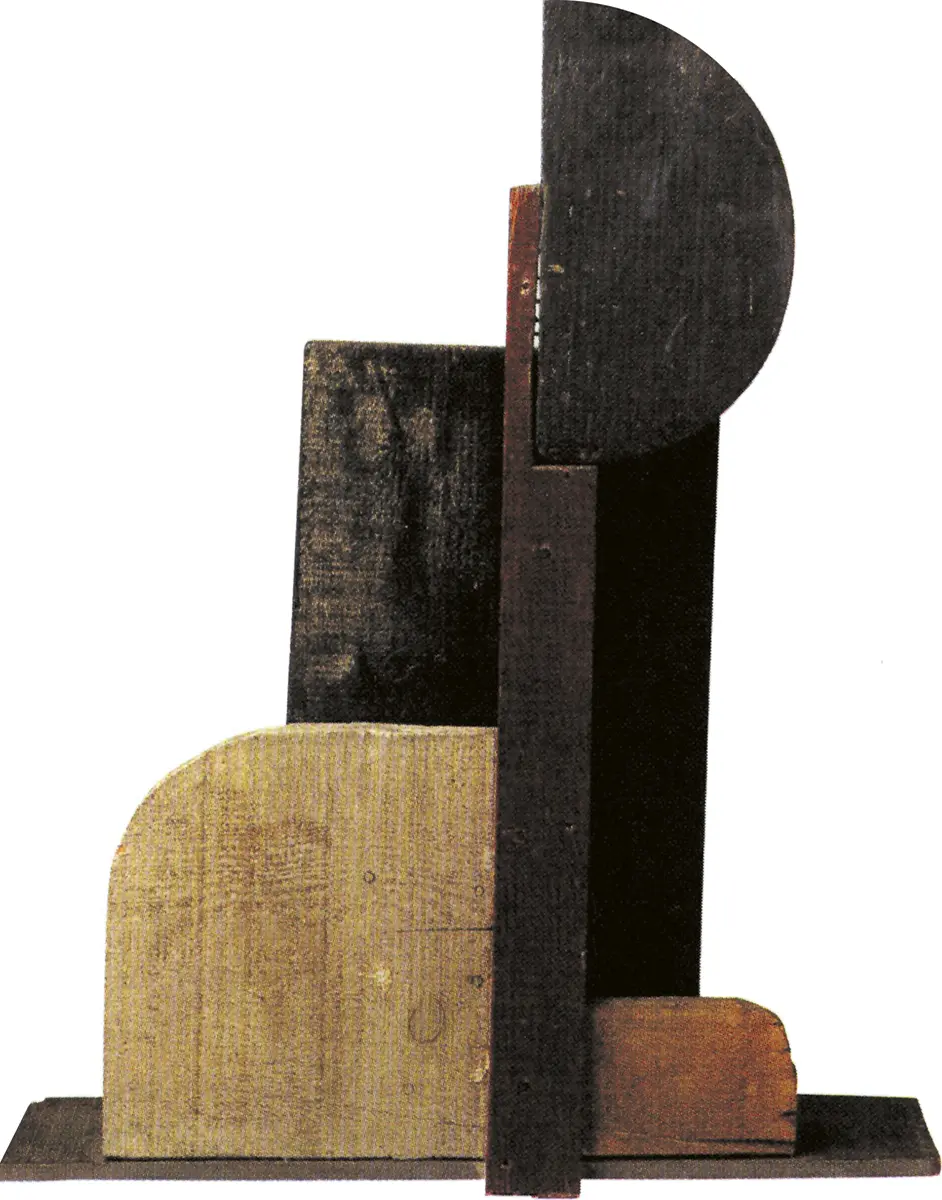
The general character of this last edition has been characterized by an interest in Latin American art. Without doubt, the jewel of the event and the most outstanding exhibition, both in terms of importance and the quality of the work on show, was that devoted to the constructivist work of Joaquin Torres Garcia. Curated by Cecilia de Torres, the show gathers together work from a number of private and public collections from the 1930s and 1940s, along with a delightful selection of toys and three sculptural works in wood. The figure of Torres Garcia is increasing in stature with the passage of time, despite the hermeticism which always characterized his disciples and school. A1 though his influence on Spanish art has always been collateral, there is increasing appreciation in Spain of his aesthetic legacy, which goes well beyond his more formalist followers. No other artist like him has represented his errant quest to construct a total aesthetic discourse which would fuse the main features of the avant-garde (European) and the symbolic implications of an interpretation of the ancestral roots of popular culture (Latin American). From this symbiosis between the academy and symbolism first, the avant- garde afterwords, and finally popular culture, there emerges the need for a theoretical and practical discourse which took shape in his work Constructive Universalism. For all these reasons Torres Garcia must be regarded as the great Latin American avantgarde artist, a figure who was conscious of the multicultural legacy of his continent.
Matters, Memories. Ten Artists from Latin America is
the title of the exhibition which gathers together the work of various Latin
American artists, whose only common denominator is the fact that they work in
Paris. The show, curated by Christine Frerot, includes work by Milton Becerra,
Octavio Blasi, Marie Orensanz, Ana Patricia Palacios, Pancho Quilici, Alberto
Ramirez, Pablo Reinoso, Vivian Scheihing, Julio Villani and Eduardo Zamora.
Each of these artists works in very different ways, with proposals and results
which are often aesthetically contradictory. Althoug it is true that the
current artistic panorama seems to be dispersed and linguistically fractured,
yet it is precisely for this reson that the show seems to lack character - it
does not seem to take up any stance and in no way does it clarify the reality
of Latin American art. If possible, it allows to individual preferences,
without taking into account any appreciation of unity. At a time in which Latin
American art is receiving extremely superficial attention in Europe, and
particularly in Spain, when attempts are being made to abandon and reject the
old labels and descriptions about the «exotic» nature of Latin American ‘ art,
and when it is conceived in general terms as a global art, although without
ceasing to be specific in its differences. A show as unsubtle and so general as
this one can only lead to further confusion. Indeed, the exhibition gives the
impression of having been seen years ago; there is a certain academic air from
the 1970s and 1980s which in the final analysis has little to do with the
current vitality of Latin American art.
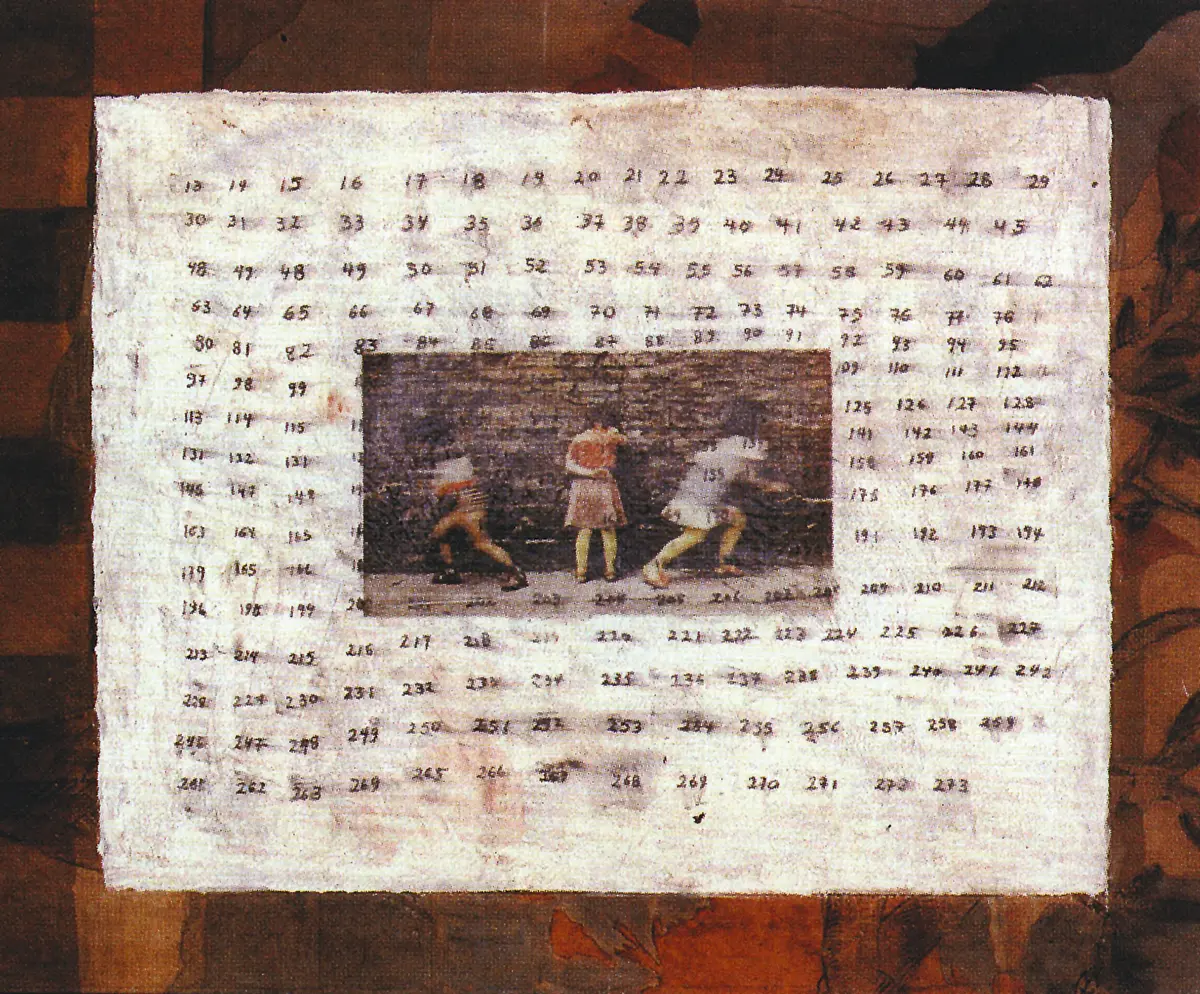
However, special mention must be made of the very interesting pictorial and installation work of Ana Patricia Palacios (Medellin, Colombia, 1961). Her images are worked through a combination of supports which suggests a sense of personal creation whose development will certainly surprise us again in the future.
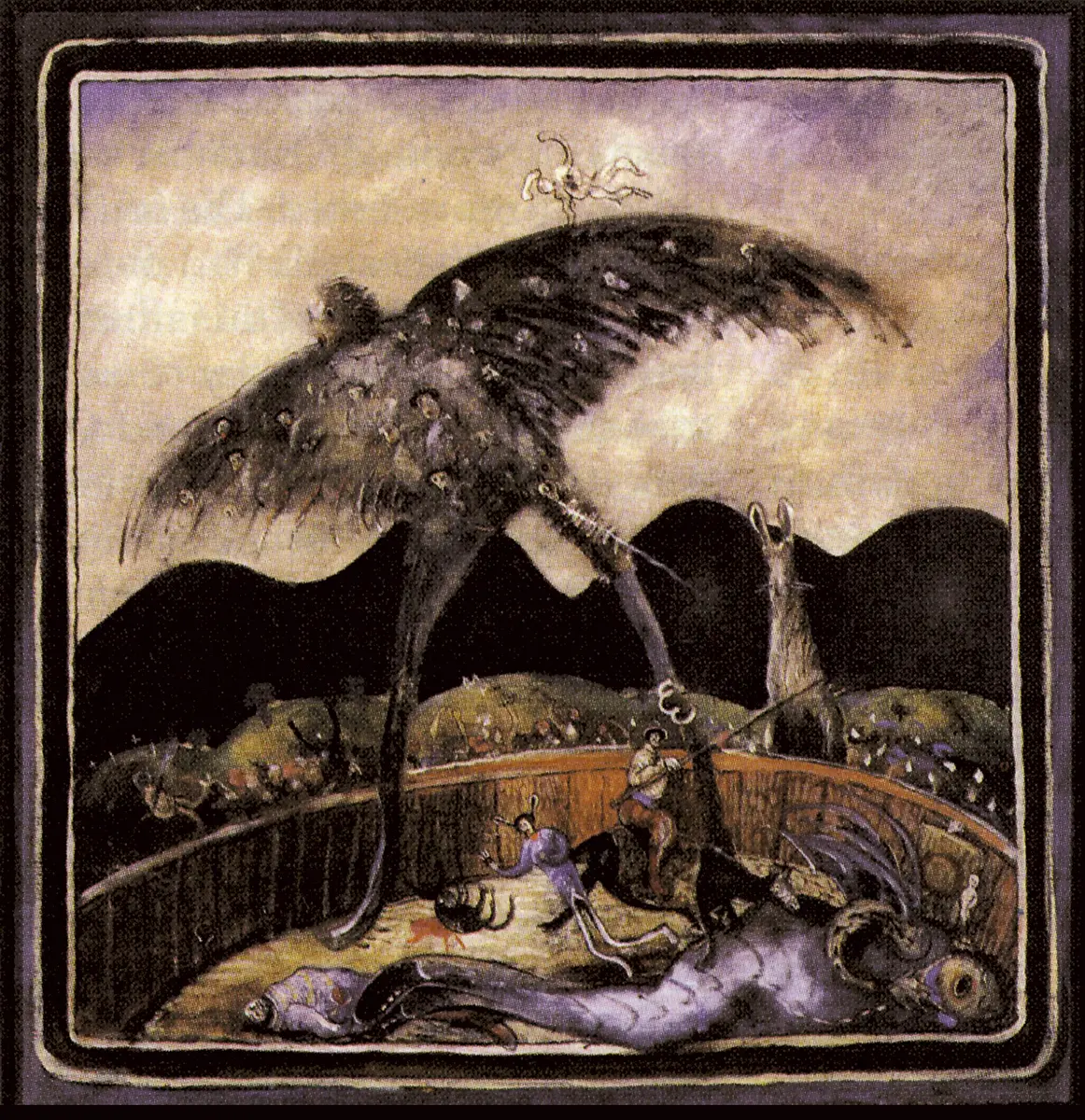
Mention must also be made of the work of Eduardo Zamora (Nuevo Laredo, Mexico, 1942), whose art is decidedly figurative and narrative, linking it back to that of such illustrious Mexican artists as Toledo. Interesting, too, are the proposals of Julio Villani (Maril- ia, Brazil, 1956), which are full of irony.
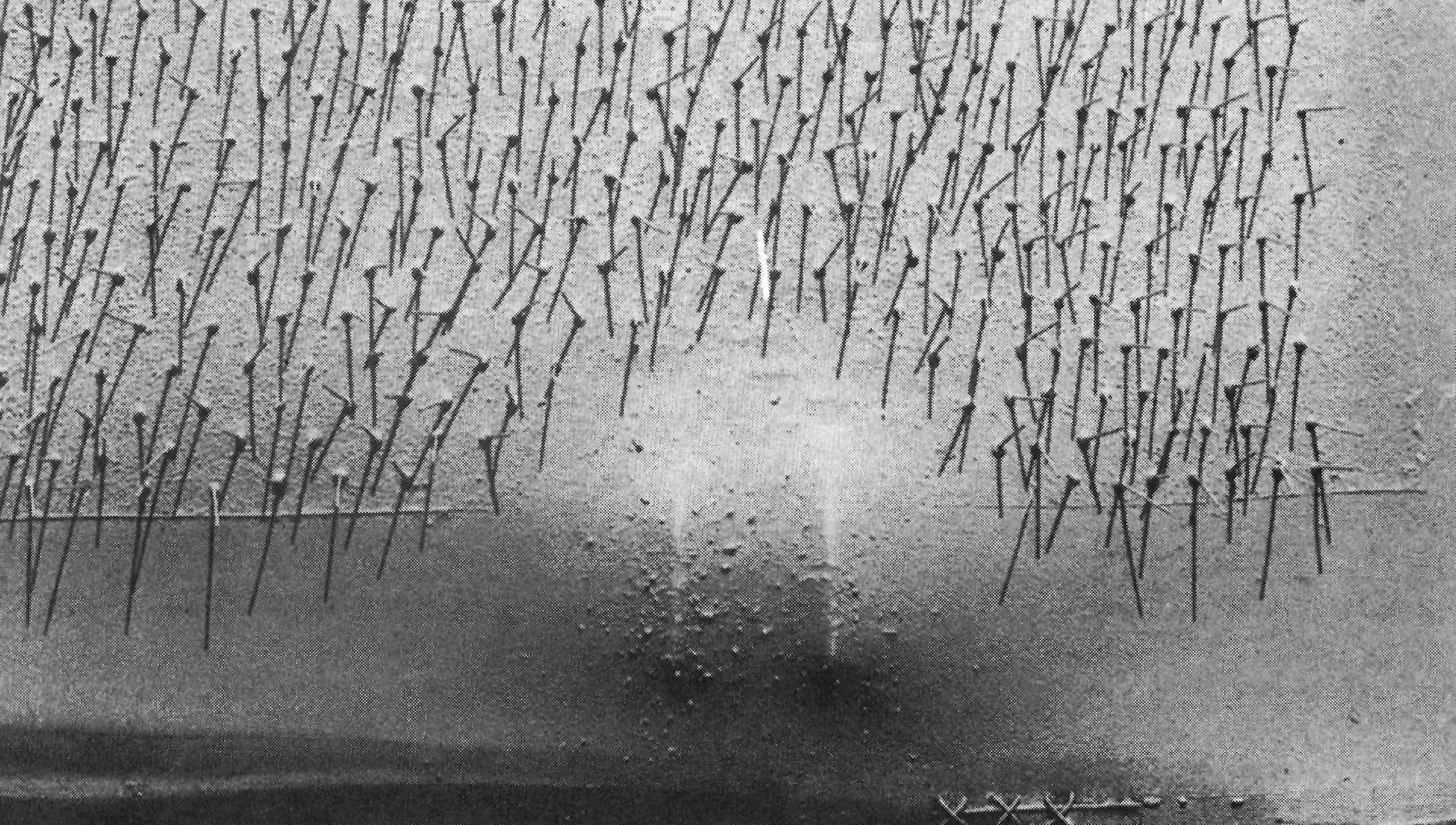
The Pontevedra Biennial has paid homage to Leopoldo Novoa, with an exhibition that gathers some of his recent work, dating from 1993-1996. Novoa was born in Salceda, a small town near Pontevedra, in 1919, when his father, of Uruguayan nationality, was that country's consul in the region.
Novoa's family situation and education reflects the close links between the two countries, and in particular between Galicia and Latin America. Novoa lived in Uruguay and Argentina until the early 1960s, and settled permanently in Paris in 1965, where he has lived since, dividing his time between the French capital and his studio in Armenteira in the province of Pontevedra. His most recent work uses painting to explore texture and matter.
The Biennial also presents an exhibition on the work of Camilo Nogueira (1904- 1982), a sculptor who practised regionalism in a number of public commissions in the province, as well as a show entitled The Walks of Euclid, curated by Alberto Gonzalez Alegra. This show gathers together the work of a number of young Spanish and Portuguese artists who have been consolidating their careers in recent years.
They include Chema Alvargonzalez, Xoan Anleo, Alfonso Berridi, Fernando Brito, Jose Gallego, Alejandro Garmendia, Cristina Mateus, Pedro Mora, Xurxo Oro Claro, Angeles San Jose and Montserrat Soto, who work with very different styles and techniques, but who nevertheless provide an exhaustive overview of the current concerns and interests in the use of space, from the point of view of painting, photography and installation.
In critical and creative terms, this show is without
doubt the most coherent and accurate with the current artistic scene, and it is
the one which generates the most interest.
The Biennial also includes a number of round tables and conferences, with the participation of artists and curators.
In the light of
the results achieved, however, it must be said that the presence of Latin
American art could have been more rigorous. Bearing in mind that collective
shows of Latin American art in Spain are often organized by the public cultural
institutions of the various countries of the continent, which often makes them
excessively «official», the Biennial ought to have adopted a freer and more
independent criterion and opted for a more courageous, creative and coherent
presentation of Latin American art.
SANTIAGO B. OLMO
Spanish art critic and historian. Resident in Madrid.